Museums and archaeology in Turkey provide one of the clearest ways to understand the extraordinary depth of Anatolia’s past.
Turkey is often described as an open-air museum, but the phrase can sound like a travel cliche until you begin moving through the country.
A hill outside Sanliurfa reveals monumental stone enclosures raised by hunter-gatherers before pottery became common. A settlement mound near Konya preserves the tightly packed homes of one of the earliest large communities in human history. Farther north, the remains of a Bronze Age capital recall the power of the Hittites. Along the Aegean coast, marble streets lead through cities shaped by Greek and Roman culture. In Cappadocia, churches were carved into volcanic rock, while Istanbul preserves the monuments of both Byzantine emperors and Ottoman sultans.
These places are not fragments of one historical period. Together, they form an exceptionally long story of human settlement, belief, trade, government, art, and architecture.
Turkey’s museums help make that story understandable.
The objects found across Anatolia are no longer scattered without context. Sculptures, tablets, mosaics, coins, tools, ceramics, royal treasures, religious objects, and ordinary household possessions have been studied, preserved, and arranged so that visitors can follow the lives of the people who once used them.
A stone tool may appear modest beside a marble statue, but it may represent a far greater transformation in human history. A clay tablet from Kültepe can reveal the worries of a merchant nearly four thousand years ago. A Roman sarcophagus can preserve not only artistic skill but also ideas about family, status, and death. An Ottoman kaftan can tell a story about palace ceremony, international trade, and the language of power.
Visiting museums in Turkey is therefore not simply about seeing beautiful objects behind glass.
It is about learning how to read the landscape outside.
Once you understand what you have seen in the museums of Sanliurfa, Ankara, Istanbul, Antalya, Gaziantep, Troy, Ephesus, or Corum, the ruins themselves begin to speak more clearly. The walls of an ancient city are no longer only piles of stone. A carved relief is no longer just decoration. A broken inscription becomes the surviving voice of a lost society.
This guide follows that larger story. It begins with the earliest monumental communities of the Neolithic period and continues through the Hittites, Greek and Roman worlds, Byzantine Empire, Anatolian Seljuks, and Ottomans. It then explores Turkey’s most important archaeology museums, mosaic collections, open-air museums, and several lesser-known institutions that many travelers overlook.
The aim is not merely to produce another list of museums.
It is to show how Turkey’s museums connect thousands of years of civilization—and to help you decide which parts of that extraordinary story you most want to experience.
Why Is Turkey Called an Open-Air Museum?
Turkey’s historical richness is closely connected to geography.
Anatolia lies between the Black Sea, Aegean, Mediterranean, Caucasus, Mesopotamia, and Iranian plateau. It has long formed a natural bridge between regions that modern maps separate into Europe and Asia. Mountain passes, river valleys, fertile plains, coastlines, and inland trade routes repeatedly brought different peoples into contact.
This did not create a simple history in which one civilization neatly replaced another.
Cultures overlapped. Traditions survived, changed, and reappeared in new forms. Local communities adopted outside influences without entirely abandoning their own identities. Cities could be rebuilt many times, with each generation leaving another layer beneath the streets.
At sites such as Troy, successive settlements rose on the same strategic ground. At Hattusha, imperial gateways, temples, and archives reveal the ambitions of a Bronze Age kingdom. Pergamon preserves Hellenistic power alongside later Roman monuments. Ephesus developed over centuries as political authority, religious practice, and the coastline itself changed. Istanbul became a capital of the Roman, Byzantine, and Ottoman worlds.
This depth is one reason archaeology in Turkey often involves digging vertically through time.
A mosque may stand beside a Byzantine structure. A Roman column may have been reused in a later building. A modern town may sit above an ancient city whose streets continue beneath homes, roads, and fields. The country is not a museum because history ended here. It is an open-air museum precisely because people continued to live on the same land.
Turkey’s museums provide the necessary context for this complex landscape.
The artifacts displayed in regional museums usually come from nearby excavations. This means that visiting the museum before or after an archaeological site can completely change the experience. A visitor who sees the finds from Perge and nearby cities in Antalya Museum understands the region differently. Someone who explores Şanlıurfa Archaeological Museum before Gobekli Tepe gains a clearer picture of the wider Neolithic world. The Museum of Anatolian Civilizations in Ankara connects discoveries from across central Anatolia into a long and coherent historical sequence.
The relationship between museum and landscape is one of Turkey’s greatest cultural strengths.
The museum explains what was found.
The archaeological site shows where human life unfolded.
Together, they restore part of the story.
A Journey Through Turkey’s Civilizations
No single museum can represent the entire history of Anatolia.
The story stretches across regions and periods, and every museum preserves a different piece of it. Understanding the broad timeline helps visitors choose museums according to their interests and recognize the connections between objects separated by thousands of years.
The Neolithic World: Before Cities as We Know Them
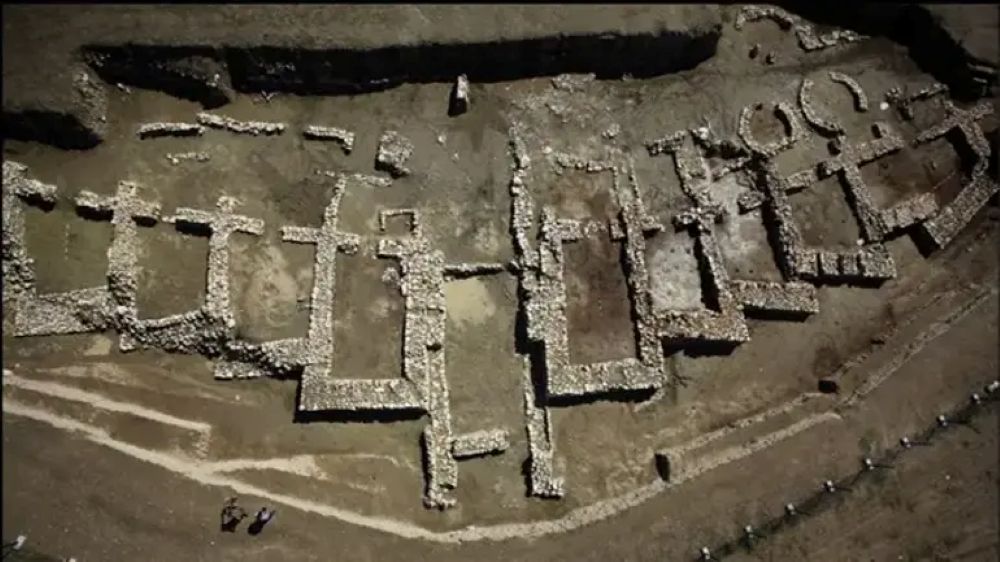
The journey begins long before written history.
During the Neolithic period, communities across Anatolia and Upper Mesopotamia experimented with new ways of living. Hunting and gathering did not disappear overnight, nor did farming begin everywhere at the same time. The transformation was gradual and varied from region to region.
Yet this era changed the human story.
People began forming more permanent communities, cultivating plants, managing animals, storing food, building increasingly complex houses, and creating shared symbolic worlds. The relationship between people, land, animals, ancestors, and ritual took forms that archaeologists are still trying to understand.
Gobekli Tepe has become the most famous symbol of this period.
Its monumental enclosures, erected during the Pre-Pottery Neolithic, contain large T-shaped stone pillars, many decorated with images of wild animals. These structures were built by communities that lived before the widespread adoption of pottery and before fully developed urban life.
Gobekli Tepe overturned the older assumption that monumental construction could emerge only after settled agriculture had produced large, socially complex communities. The site suggests a more complicated relationship between ritual, cooperation, settlement, and food production.
But Gobekli Tepe was not an isolated miracle.
Southeastern Anatolia contains a wider network of Neolithic sites, including Karahantepe and other locations now associated with the Tas Tepeler project. Together, they indicate that the region supported communities capable of organizing labor, shaping enormous stones, creating powerful animal imagery, and gathering around shared spaces.
Many of the artifacts and reconstructions that help visitors understand this world can be seen in Sanliurfa Archaeological Museum. Its galleries place Gobekli Tepe within a wider Neolithic landscape rather than presenting it as a single mysterious monument detached from human life.
Travelers who want to understand this period in depth should also explore our guide to the Neolithic Sites of Turkey, where Gobekli Tepe, Karahantepe, Cayonu, Asikli Hoyuk, Boncuklu Tarla, and other important settlements are examined within their broader archaeological context.
Catalhoyuk and the World of Early Settled Communities
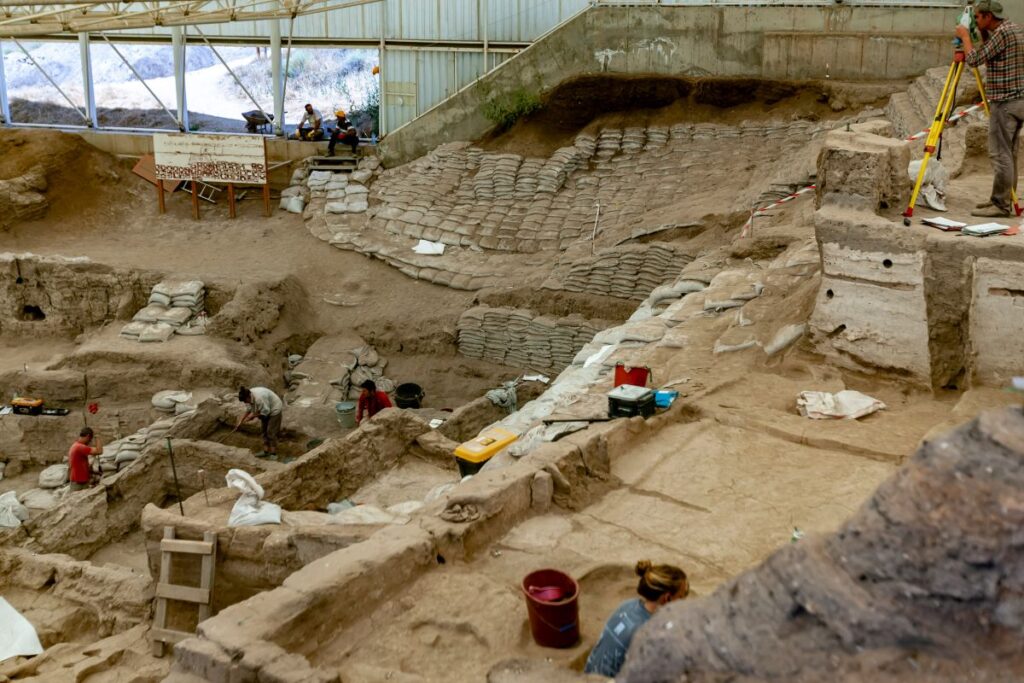
If Gobekli Tepe raises questions about communal ritual and monumental construction, Catalhoyuk brings visitors closer to daily life inside an early settlement.
Located on the Konya Plain, Catalhoyuk developed into a large and densely built Neolithic community. Its houses stood directly beside one another, without the street system expected in a later town. Access was generally from the roofs, and movement across the settlement may have taken place above the houses as much as between them.
Inside these buildings, archaeologists discovered platforms, ovens, storage spaces, burials beneath floors, wall paintings, reliefs, animal installations, and objects connected with domestic and symbolic life.
The houses were not only shelters.
They were places where families cooked, worked, remembered the dead, expressed beliefs, and rebuilt their connection with earlier generations. New structures were sometimes constructed over the remains of older ones, creating a settlement mound formed by centuries of repeated human life.
Catalhoyuk is often described as one of the earliest cities, although archaeologists continue to debate whether “city” is the most accurate term. It lacked many features associated with later urban centers, such as palaces, public streets, monumental temples, and obvious centralized administration.
That uncertainty is precisely what makes it valuable.
Catalhoyuk forces us to question modern assumptions about what a community, town, household, or sacred space must look like.
The site and its finds reveal a society that was organized and symbolically rich, yet very different from the kingdoms and empires that followed. It represents one of the great strengths of Turkey’s museums and archaeological sites: they do not tell only the history of rulers. They also preserve the lives of ordinary households.
The Bronze Age: Merchants, Kingdoms, and the Hittite Empire
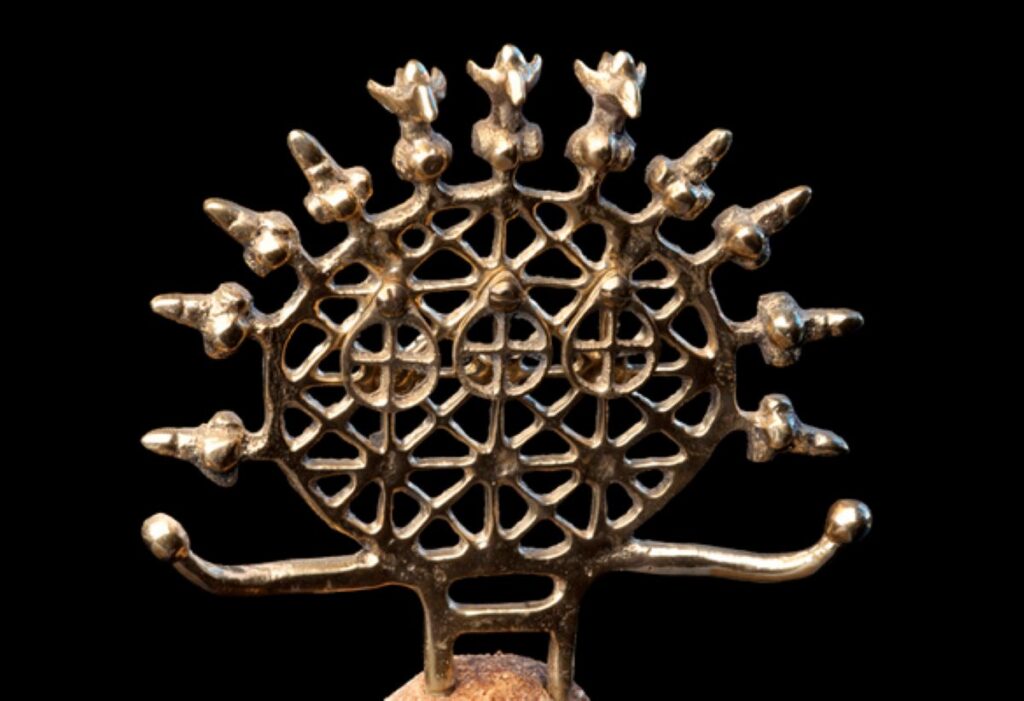
Thousands of years later, Anatolia had entered a very different world.
Settlements had grown into fortified centers. Long-distance trade connected Anatolia with Mesopotamia and surrounding regions. Writing appeared in commercial and administrative life. Kings ruled territories, armies crossed borders, and diplomacy linked powerful states.
One of the most remarkable windows into this period comes from Kultepe, ancient Kanesh, near Kayseri.
Assyrian merchants established a trading colony there during the early second millennium BC. Thousands of cuneiform tablets discovered at the site record loans, taxes, business partnerships, caravan journeys, family relationships, legal disagreements, and private anxieties.
These are not distant royal proclamations.
Many are letters and documents written by merchants and their relatives. They reveal a world of risk, ambition, debt, trust, profit, and family tension that can feel surprisingly familiar.
Kültepe demonstrates that Anatolia had become part of a highly organized international commercial network nearly four thousand years ago. The same long tradition of exchange later continued through the Silk Road in Turkey, Seljuk caravan routes, Ottoman hans, bedestens, and the living marketplace culture explored in our guide to Turkish Bazaars.
The most powerful state to emerge in Bronze Age Anatolia was the Hittite Empire.
Its capital, Hattusha, stood near modern Bogazkale in Corum province. Massive fortifications, ceremonial gates, temples, royal buildings, and archives reflect the scale and organization of the Hittite state.
The Hittites were not an isolated Anatolian people cut off from the wider world. They communicated and competed with the major powers of their age. Their archives preserve treaties, laws, rituals, diplomatic correspondence, and administrative texts. The famous peace agreement associated with the Hittite king Hattusili III and the Egyptian pharaoh Ramesses II belongs to this international political world.
The best museum for following the broad development of Bronze Age Anatolia is the Museum of Anatolian Civilizations in Ankara. Corum Museum and Bogazkoy Museum provide closer regional context for Hattusha and nearby archaeological sites.
This period deserves more than a quick paragraph, which is why our separate guide to the Hittites in Anatolia explores their capital, religion, political system, art, archives, and lasting importance in greater depth.
The Greek and Hellenistic Worlds of Anatolia
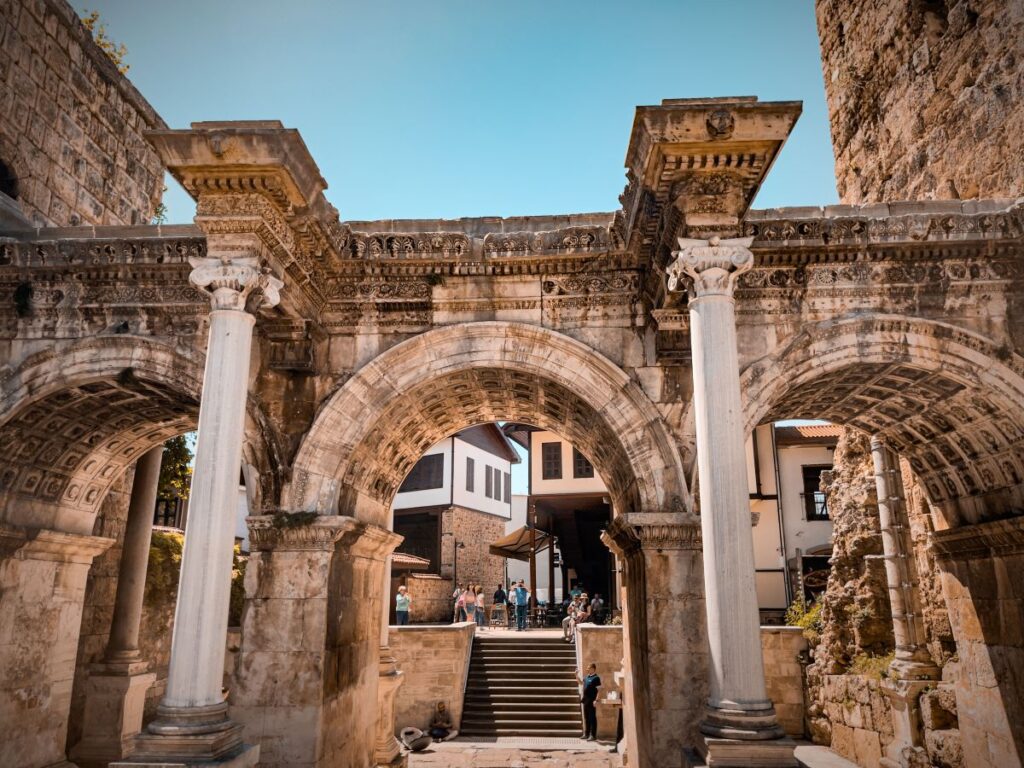
The Greek history of Anatolia cannot be reduced to the arrival of one people at one moment.
Greek-speaking communities developed along the western coast over centuries, interacting with older Anatolian cultures such as the Lydians, Carians, Lycians, and Phrygians. The resulting world was culturally mixed, politically competitive, and exceptionally creative.
Cities including Miletus, Ephesus, Priene, Pergamon, Aphrodisias, and others became centers of trade, philosophy, religion, architecture, and artistic production.
Their temples and theaters are impressive, but museums preserve the evidence that ruins alone cannot show: inscriptions naming citizens and officials, sculptures from sanctuaries, coins reflecting political authority, ceramics used in homes, funerary monuments, and votive objects dedicated to the gods.
Pergamon offers one of the clearest examples of Hellenistic royal culture. Its rulers transformed a hilltop settlement into the capital of a powerful kingdom, with monumental terraces, temples, a theater, palaces, and an important intellectual tradition.
Aphrodisias developed a different identity. Famous for its marble and sculptors, the city produced works that circulated widely across the Roman world. The museum beside the site is essential because it brings the sculptural program of the city back into view.
Travelers interested in this period will find many of these places in our guide to the Ancient Cities of Turkey, which connects the archaeological remains with the historical societies that created them.
Roman Anatolia: Cities of Marble, Empire, and Everyday Life
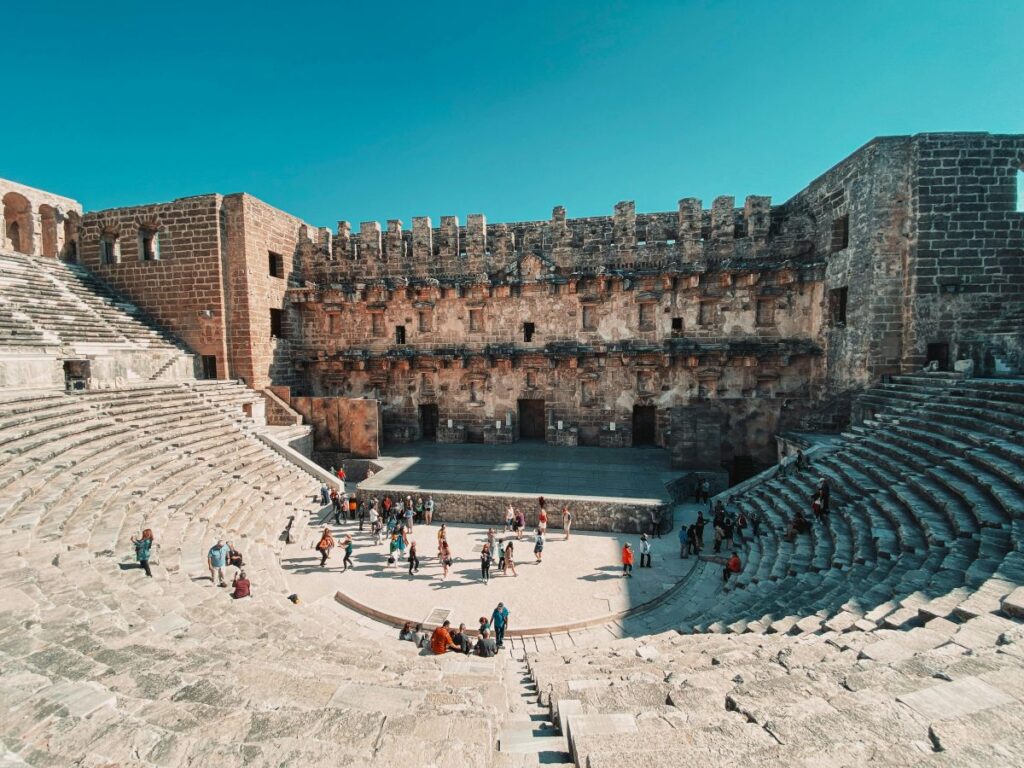
Under Roman rule, many Anatolian cities entered periods of remarkable wealth and monumental development.
The Roman presence did not erase the Greek-speaking culture of western and southern Anatolia. Instead, local traditions continued within the political structure of the empire. Cities competed for prestige by constructing theaters, baths, fountains, temples, stadiums, agoras, and colonnaded streets.
Ephesus became one of the great metropolises of the eastern Mediterranean.
Its Library of Celsus, terrace houses, theater, public spaces, and religious monuments reveal only part of its importance. The artifacts displayed in Ephesus Museum—including statues, household objects, cult images, and finds from major buildings—restore color and human detail to the marble city.
Farther south, Perge, Side, Aspendos, Sagalassos, and other cities flourished within the Roman world. Antalya Museum is particularly important for understanding this region because many of the sculptures discovered at Perge are preserved there.
In Gaziantep, the mosaics of Zeugma open another window onto Roman domestic life. Mythological scenes decorated the floors of wealthy villas, displaying both artistic sophistication and the cultural knowledge expected of their owners.
Hierapolis, beside the white travertines of Pamukkale, combined urban life, religious significance, burial traditions, and thermal waters. Its extensive necropolis is one of the most striking in Turkey. Our Pamukkale Travel Guide explains how the natural landscape and ancient city developed together.
Roman museums and archaeological sites reveal more than imperial grandeur. They show how people ate, bathed, worshipped, traded, entertained themselves, displayed social status, and remembered the dead.
This is where archaeology becomes personal.
Byzantine Anatolia: A New Religious Landscape
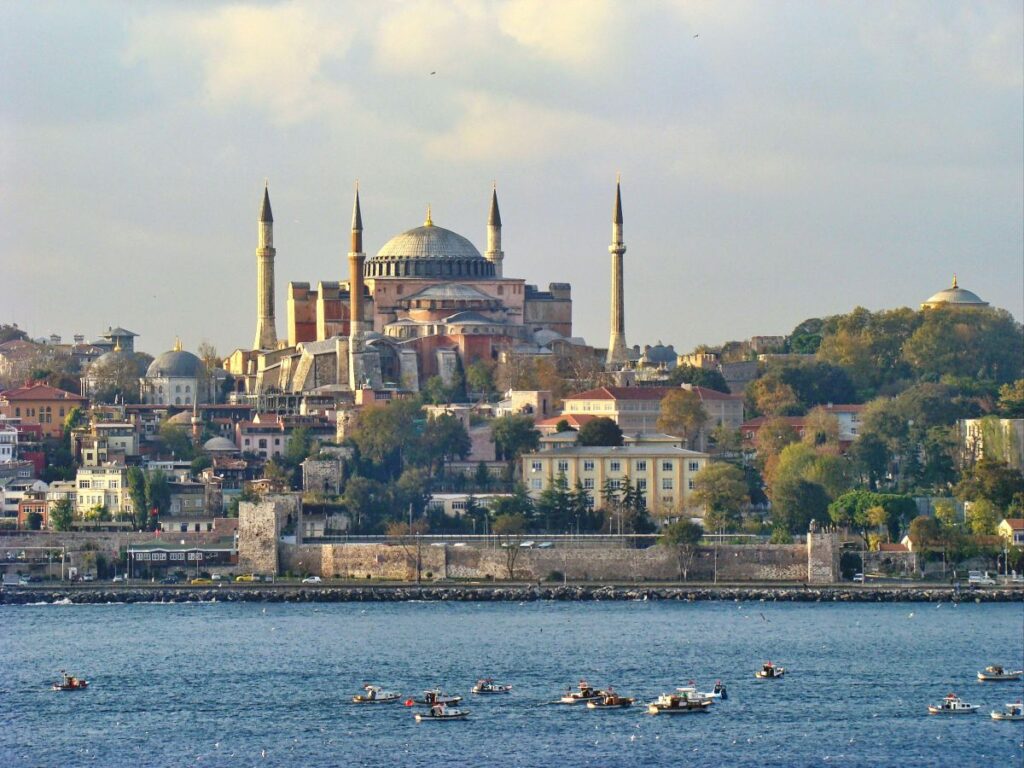
The division between “Roman” and “Byzantine” history is less clear than modern labels suggest.
The people we call Byzantines understood themselves as Romans. Constantinople remained the capital of the Roman Empire in the east, while Christianity increasingly transformed the religious and artistic landscape.
Churches, monasteries, mosaics, icons, pilgrimage centers, and theological debates became central to the cultural history of Anatolia.
Istanbul preserves the most monumental expressions of this world. Hagia Sophia, the remains of the Great Palace, underground cisterns, city walls, and surviving churches reflect the scale and sophistication of Constantinople.
Yet Byzantine history is not limited to the imperial capital.
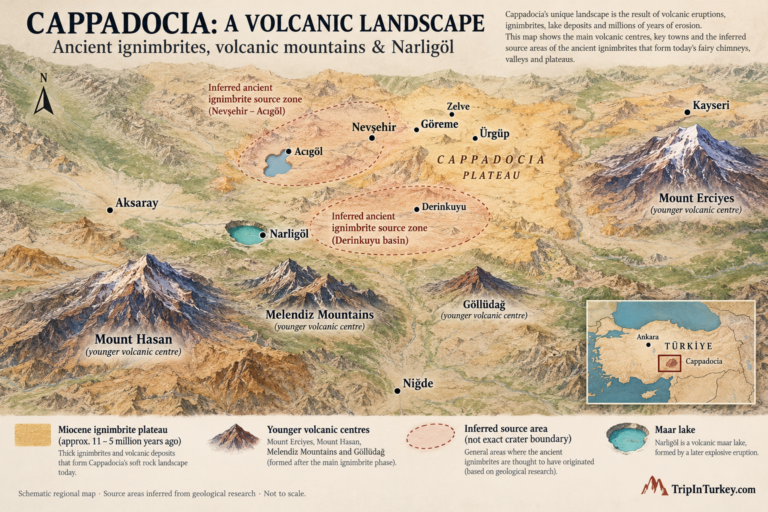
In Cappadocia, communities carved churches, chapels, monasteries, storage rooms, and living spaces into volcanic formations. The painted churches of Göreme and surrounding valleys preserve biblical scenes, saints, crosses, and decorative programs created across different periods.
The region became closely associated with early Christian thought and monastic life. The theological legacy of the Cappadocian Fathers gave this landscape an importance far beyond its dramatic geology.
Visitors interested in the Christian history of Anatolia can continue through our guides to the Important Biblical Sites in Turkey and the Seven Churches of Revelation, both of which connect archaeological places with the religious communities that once lived there.
Museums help visitors understand this world through icons, liturgical objects, architectural fragments, manuscripts, seals, jewelry, and everyday material from Byzantine settlements.
They also reveal continuity. Classical artistic traditions did not vanish with the spread of Christianity; they were adapted to new beliefs, patrons, and visual languages.
The Anatolian Seljuks: Stone, Scholarship, and the Caravan Roads
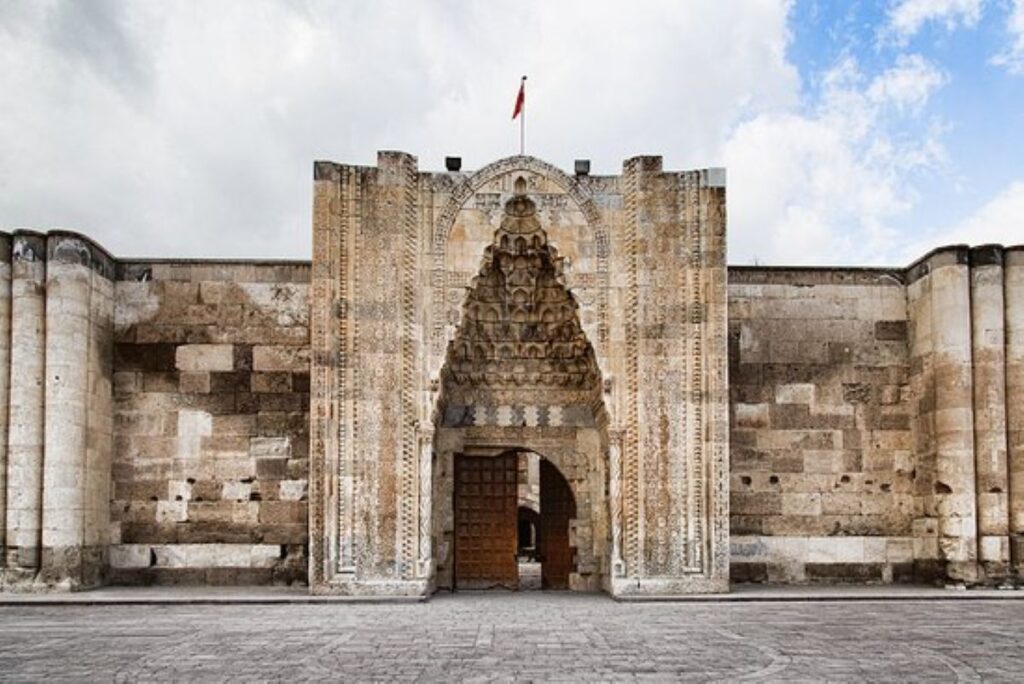
The arrival and political expansion of Turkish groups changed Anatolia again, but did not empty it of its earlier history.
During the Seljuk period, especially in the 12th and 13th centuries, cities such as Konya, Kayseri, Sivas, Erzurum, and others became major centers of government, architecture, trade, religion, and education.
The Seljuks left some of Anatolia’s most distinctive stone monuments.
Mosques, madrasas, tombs, hospitals, bridges, and caravanserais combined practical function with extraordinary decorative craftsmanship. Monumental portals were covered with geometric patterns, vegetal designs, inscriptions, and carved stone details.
Caravanserais reveal the close relationship between architecture and commerce. Built along important routes, they provided shelter, storage, security, and services for merchants and animals crossing Anatolia.
These structures belong to the same long commercial landscape that connects ancient Kültepe with medieval trade routes and later Ottoman bazaars.
Konya is central to understanding Seljuk civilization. Its museums preserve architectural fragments, manuscripts, ceramics, wooden objects, and religious collections connected with the city’s political and spiritual history.
Seljuk heritage is sometimes overshadowed by the ancient and Ottoman periods, but it forms an essential bridge between them. It shaped the urban, artistic, and commercial development of medieval Anatolia and influenced many traditions that continued under later Turkish states.
The Ottoman World: From Bursa to Istanbul
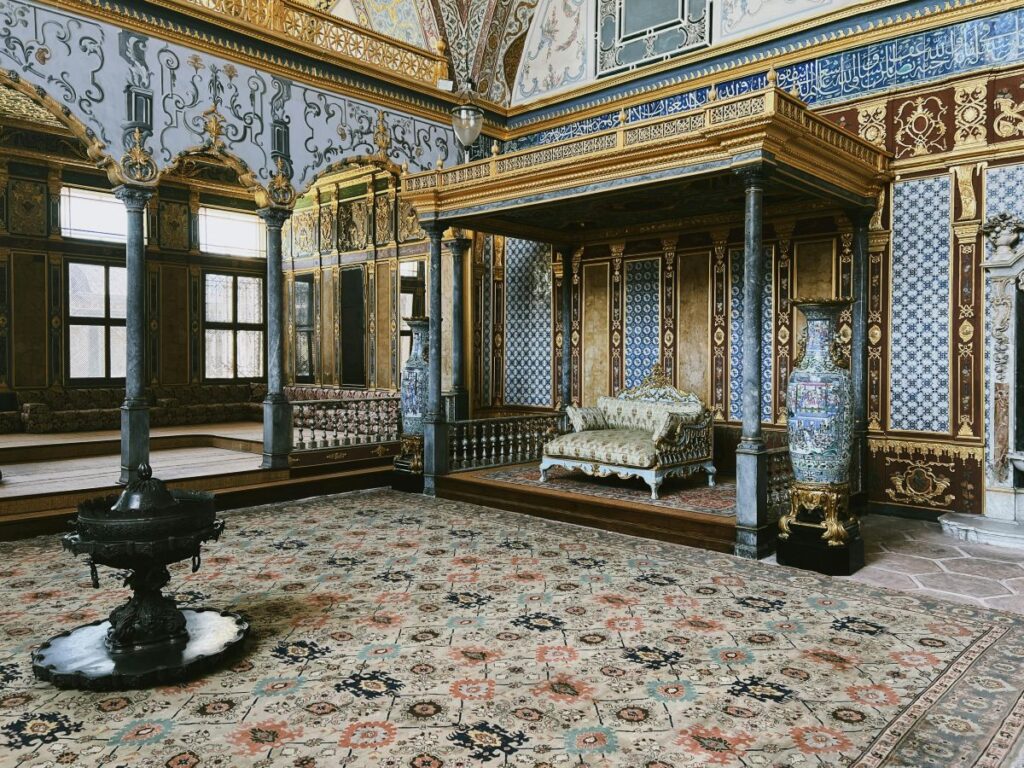
The Ottoman story began in northwestern Anatolia and developed into the history of an empire that connected southeastern Europe, Anatolia, the eastern Mediterranean, the Middle East, and North Africa.
Bursa, the first major Ottoman capital, preserves the early relationship between mosques, charitable foundations, commercial buildings, baths, tombs, and surrounding villages. Its urban organization shows that Ottoman architecture was never only about monumental mosques. Religious, economic, and social institutions were designed to work together.
Edirne later became another imperial center, before the conquest of Constantinople in 1453 transformed the political geography of the region.
In Istanbul, the Ottoman palace, mosque complexes, markets, fountains, schools, libraries, workshops, and residential neighborhoods created a capital whose history can still be read across the modern city.
Topkapı Palace is one of the most important places for understanding Ottoman government and court life. Its collections include weapons, manuscripts, ceramics, textiles, imperial costumes, treasury objects, and gifts exchanged through diplomacy.
But Ottoman history cannot be understood only through the palace.
The empire was also shaped by craftsmen, merchants, sailors, farmers, scholars, religious communities, soldiers, and families. Ethnography museums, regional collections, historic houses, bazaars, and smaller city museums help recover these lives.
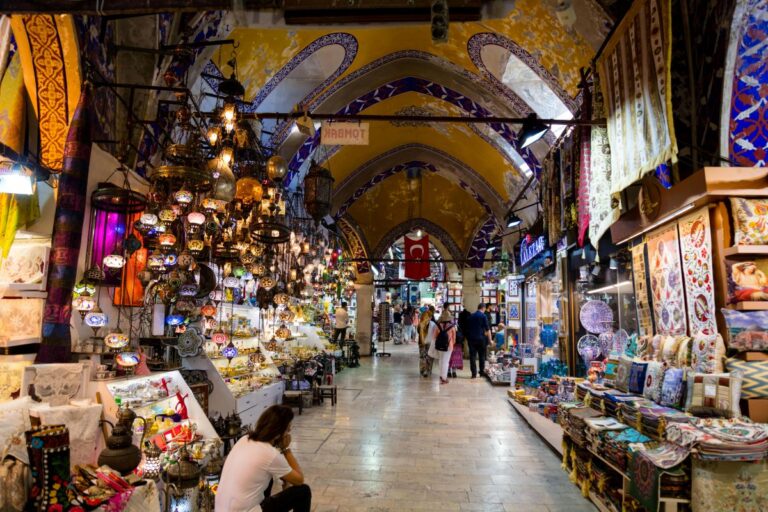
Our guide to Turkish Bazaar Culture explores how bedestens, hans, guilds, trade streets, and charitable foundations became central to Ottoman urban life. The Best Traditional Hammams in Istanbul offers another perspective, showing how public bathing connected architecture, hygiene, social life, and ceremony.
Ottoman museums are therefore most meaningful when they are seen as part of a larger living landscape.
The objects inside explain the streets outside.
Museums as Bridges Between Past and Place
Turkey’s historical depth can initially feel overwhelming.
A traveler may move from a Neolithic enclosure to a Roman theater, a Byzantine church, and an Ottoman bazaar within the same journey. Without context, these experiences can blur into a collection of impressive but disconnected sights.
Museums create the connections.
They explain why settlements emerged in particular landscapes, how technologies changed, how religions influenced art, how rulers communicated power, and how ordinary people organized daily life.
They also remind us that archaeological sites were never ruins to the people who built them.
They were homes, temples, workshops, farms, streets, cemeteries, palaces, marketplaces, and sacred landscapes. They were filled with sound, color, movement, conflict, work, and memory.
The next part of this guide explores the museums that tell these stories most powerfully—from the Museum of Anatolian Civilizations and Istanbul Archaeological Museums to Antalya Museum, Şanlıurfa Archaeological Museum, Zeugma Mosaic Museum, Troy Museum, Ephesus Museum, and several collections that deserve far more attention than they receive.
The Most Important Archaeology Museums in Turkey
Turkey’s archaeological museums are often most rewarding when they are visited as part of a wider journey.
A museum in Ankara may bring together discoveries from settlements separated by hundreds of kilometers. A regional museum in Antalya or Şanlıurfa may instead tell a more focused story, connecting the objects inside directly with the ancient cities and excavation sites nearby. In places such as Ephesus, Troy, Aphrodisias, and Side, the museum and archaeological site can be visited together, allowing the fragments preserved indoors to return mentally to the buildings, streets, sanctuaries, and homes where they were discovered.
This relationship between artifact and landscape is important.
Archaeological sites preserve scale. They allow visitors to walk through gates, theaters, temples, houses, cemeteries, and public spaces.
Museums preserve detail.
They show the sculpture that once stood in the building, the jewelry worn by its inhabitants, the inscription that recorded a decision, the vessel used at a table, and the coins that passed from one hand to another.
The finest archaeological experiences in Turkey usually come from combining both.
The museums below are not simply the largest or most famous. Each provides a different key to understanding the civilizations that shaped Anatolia.
Museum of Anatolian Civilizations, Ankara
For anyone trying to understand the full historical depth of Anatolia, the Museum of Anatolian Civilizations is one of the best places to begin.
Located below Ankara Castle, the museum occupies two restored Ottoman buildings: the Mahmut Paşa Bedesteni and Kurşunlu Han. The setting is appropriate. A museum tracing the civilizations of Anatolia is housed inside structures that once belonged to the commercial life of an Ottoman city.
The exhibition follows history broadly in chronological order, making it easier to understand how one period developed into another. Visitors move through the Paleolithic and Neolithic eras, the Chalcolithic and Bronze Ages, Assyrian trading colonies, Hittite civilization, Phrygia, Urartu, and later periods.
This sequence is the museum’s greatest strength.
At many archaeological sites, visitors encounter one civilization in isolation. Here, the wider picture becomes visible. The museum shows that Anatolia was never dominated by a single cultural tradition. Communities rose, traded, migrated, fought, borrowed ideas, and transformed older beliefs into new forms.
The Neolithic galleries introduce the world of early settled communities through figurines, tools, ritual objects, wall-related imagery, and finds associated with important settlements. These objects reveal how food production, household life, burial, symbolism, and social organization changed during one of humanity’s most important transformations.
The Assyrian trade-colony section brings visitors into the commercial world of Kültepe-Kanesh. Cuneiform tablets record business partnerships, loans, taxes, caravan arrangements, legal disputes, and family correspondence. They make the Bronze Age feel unexpectedly personal. Instead of meeting only kings and warriors, visitors encounter merchants worrying about money, relatives, delayed shipments, and unreliable partners.
The Hittite collections form another major part of the museum.
Stone reliefs, ceremonial objects, seals, tablets, and religious imagery help reconstruct the world of the Hittite state. The great ceremonial reliefs associated with sites such as Alacahöyük are especially powerful. Gods, rulers, animals, musicians, and ritual scenes communicate a political and sacred language developed more than three thousand years ago.
The Phrygian galleries move the story into the world associated with Gordion. Wooden furniture, metal vessels, ceramics, and other finds provide a more intimate image of Phrygian craftsmanship and elite life than the legends of King Midas alone can offer.
This is not a museum that should be rushed.
Two hours may be enough for a general visit, but travelers with a serious interest in archaeology could spend much longer. It is particularly valuable before visiting Hattusha, Gordion, Kultepe, or other central Anatolian sites because it supplies the historical framework that the ruins cannot always provide on their own.
For a broader archaeological journey, combine this museum with our guides to the Neolithic Sites of Turkey, the Hittites in Anatolia, and the Ancient Cities of Turkey.
Istanbul Archaeological Museums
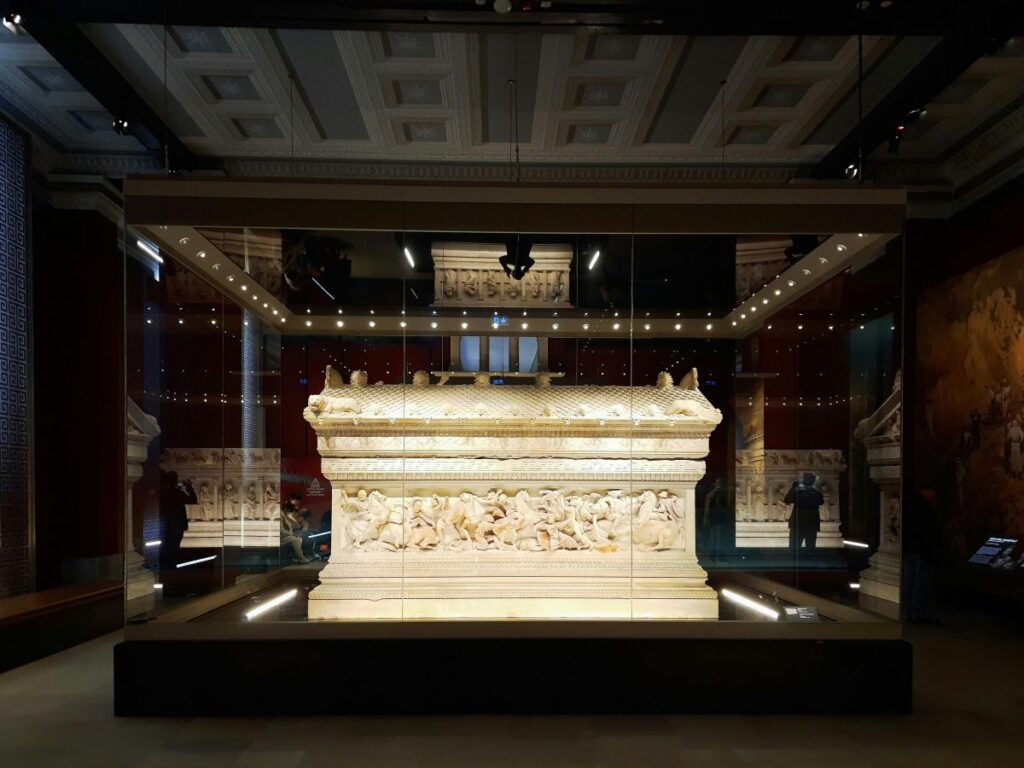
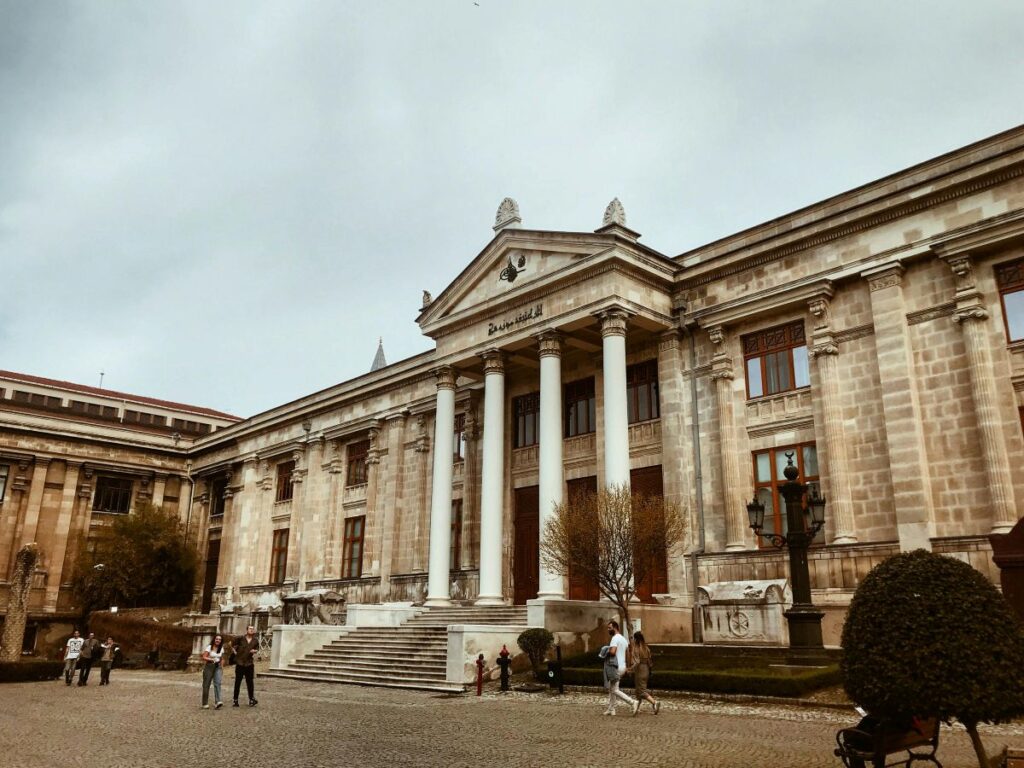
Istanbul Archaeological Museums stand in one of the city’s most historically concentrated areas, close to Topkapı Palace and Gülhane Park.
The complex consists of three principal sections: the Archaeology Museum, the Museum of the Ancient Orient, and the Tiled Kiosk Museum. Together, they hold objects from Anatolia, Mesopotamia, the eastern Mediterranean, the Balkans, and territories once connected through the Ottoman world.
The institution is important not only because of its collections, but also because of its place in the history of archaeology and museology in Turkey.
During the late Ottoman period, archaeological discoveries were increasingly collected, documented, and protected within imperial institutions. Osman Hamdi Bey, painter, archaeologist, museum director, and one of the central figures in the development of Ottoman archaeology, played a decisive role in shaping the museum.
Among the complex’s most famous works are monumental sarcophagi discovered at the royal necropolis of Sidon in present-day Lebanon.
The so-called Alexander Sarcophagus is particularly celebrated. Its name comes from the battle and hunting scenes that include a figure identified with Alexander the Great, not because Alexander himself was buried inside it. The work is remarkable for its deeply carved figures, dramatic movement, and surviving traces of ancient color.
Nearby sarcophagi reveal other approaches to death, kingship, and artistic representation. Their scale can easily dominate the visit, but the museum’s importance extends much further.
Collections from the ancient Near East include cuneiform tablets, inscriptions, reliefs, architectural elements, and objects associated with Mesopotamian, Anatolian, Egyptian, and Levantine cultures. These galleries help visitors understand that Istanbul’s museums preserve not only the history of the city but also the wider cultural world to which Anatolia belonged.
The Tiled Kiosk adds another historical layer. Built during the reign of Mehmed II in the 15th century, it is itself one of the oldest surviving Ottoman structures in the palace environment. Its ceramic collections demonstrate how architectural decoration, color, calligraphy, and craftsmanship developed across different Islamic and Ottoman traditions.
A visit here works especially well after seeing Topkapı Palace.
The palace explains Ottoman power and court life. The archaeology museums reach further back, revealing the many ancient civilizations whose territories and cultural remains eventually became part of the Ottoman imperial landscape.
Allow at least two or three hours for a meaningful visit. Travelers with a strong interest in the ancient Near East, classical sculpture, or ceramics may need considerably longer.
The museum can be incorporated naturally into an Istanbul Travel Guide or a wider exploration of the Best Things to Do in Istanbul. It also pairs well with the Turkey Museum Pass Guide, particularly for travelers deciding which state museums to prioritize.
Antalya Museum
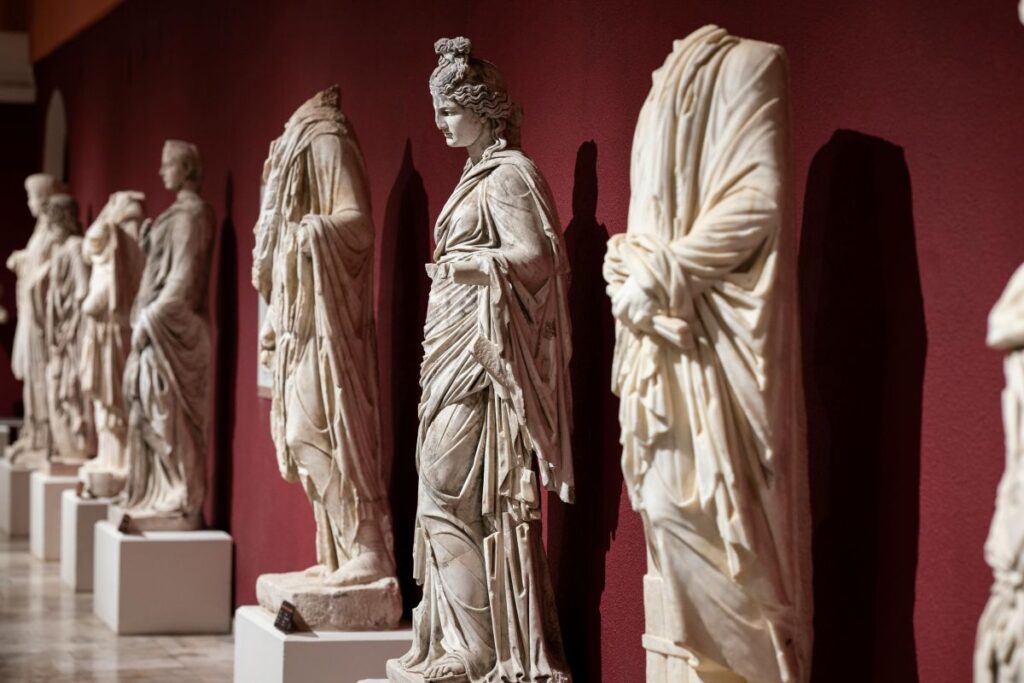
Antalya is known internationally for beaches and resorts, but its surrounding region contains one of the densest archaeological landscapes in Turkey.
Ancient Pamphylia, Lycia, and Pisidia produced cities, sanctuaries, theaters, tombs, and sculptures whose remains are scattered across the province. Antalya Museum brings many of those discoveries together.
The museum is especially famous for its Roman sculpture.
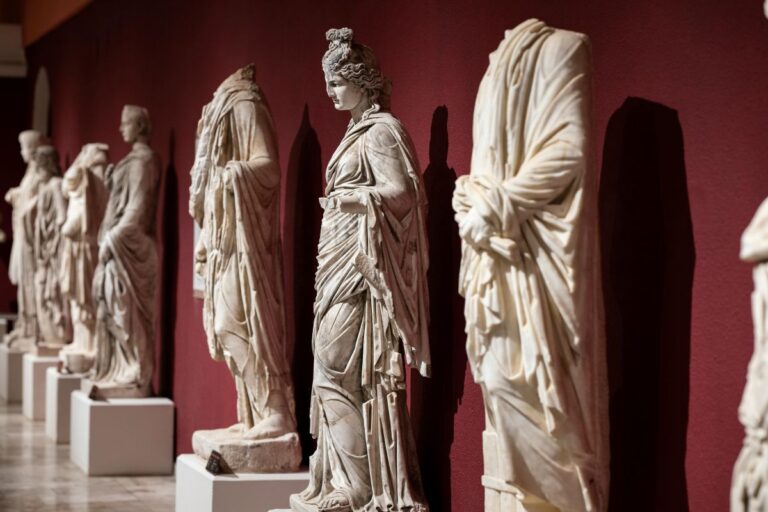
Many of its most impressive statues were excavated at Perge, one of the major ancient cities near Antalya. Inside the museum, gods, emperors, athletes, mythological figures, and members of elite Roman society stand almost at eye level.
This makes the museum an ideal companion to Perge.
At the archaeological site, visitors see the monumental setting: the colonnaded streets, baths, agora, stadium, gates, and public architecture. In the museum, they meet many of the sculptural figures that once filled this urban environment.
The relationship transforms both visits.
Without the museum, Perge can appear as a grand but largely empty city of stone. Without Perge, the statues can seem detached from their architectural world. Seen together, they reveal how Roman cities used art to communicate religion, political loyalty, education, prestige, and civic identity.
The museum’s collections extend far beyond sculpture.
Prehistoric material introduces the earliest human history of the Antalya region. Objects from Lycia, Pamphylia, and Pisidia reveal the diversity of the ancient communities that lived between the coast and the Taurus Mountains. Sarcophagi demonstrate changing attitudes toward death and status, while coins, ceramics, icons, and ethnographic objects carry the regional story into later periods.
The sarcophagus galleries are among the most memorable areas. Their carved scenes combine mythology, family representation, and funerary symbolism. They also remind visitors that Roman art in Anatolia was not merely imported from Italy. Local workshops, patrons, materials, and traditions played major roles in shaping regional artistic production.
Antalya Museum deserves at least two hours and preferably longer.
It should not be treated as a rainy-day substitute for the beach. For culturally curious travelers, it is one of the principal reasons to spend time in central Antalya.
The museum fits naturally into an Antalya Travel Guide and should be combined with the sites described in Best Things to Do in Antalya, especially Perge, Aspendos, Side, and Termessos.
Sanliurfa Archaeological Museum
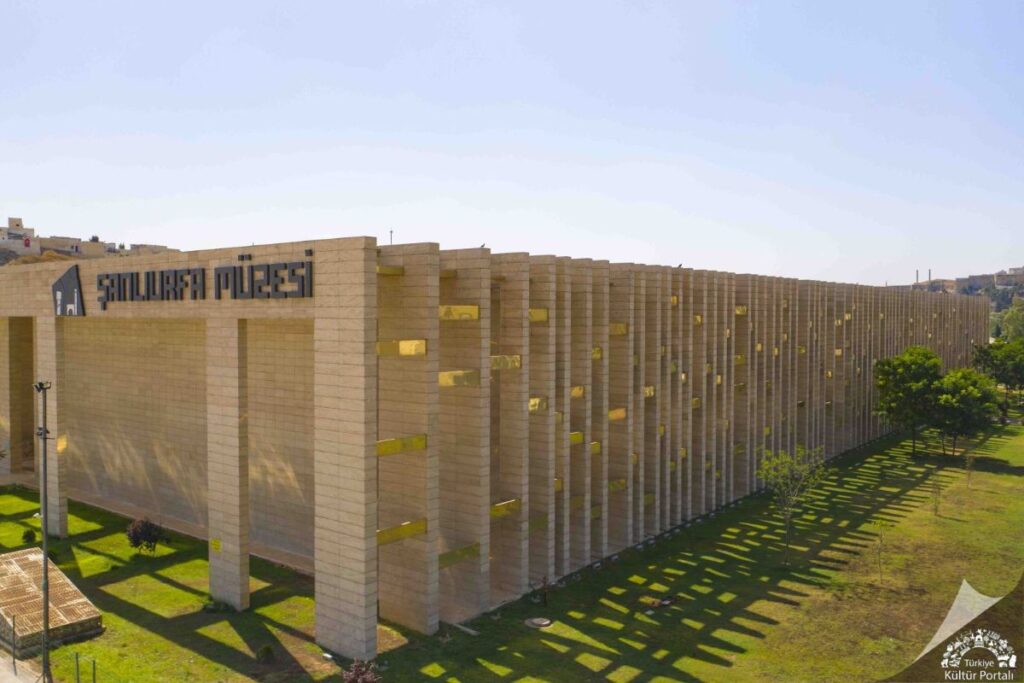
Few museums in Turkey communicate the scale of recent archaeological change as powerfully as Sanliurfa Archaeological Museum.
The museum is central to understanding the prehistoric landscapes of southeastern Anatolia. Gobekli Tepe was added to the UNESCO World Heritage List in 2018. Although Gobekli Tepe is the best-known site, the galleries show that it belonged to a much wider world of early settlements, ritual spaces, stone carving, food production, hunting, and changing relationships between humans and animals.
This broader context is essential.
Gobekli Tepe is often presented in popular media as an isolated mystery. The museum corrects that impression by placing it within a regional archaeological sequence. Finds from Gobekli Tepe, Nevali Cori, and other sites demonstrate that communities across the region were experimenting with architecture, imagery, communal gathering, and new forms of settlement.
One of the museum’s most significant objects is the Urfa Man, often described as one of the oldest known life-sized human statues. Its simplified body, dark inset eyes, and powerful stillness make it unforgettable.
It does not resemble the naturalistic sculpture of Greece or Rome, nor should it be judged by those later standards. It belongs to a different visual world, one in which the human form was being represented monumentally in ways whose full meaning remains uncertain.
The museum also includes architectural reconstructions and large-scale displays that help visitors imagine structures no longer visible in their original contexts. The transfer and presentation of material from Nevali Cori is particularly important because the site itself was submerged following the construction of the Ataturk Dam.
This raises another role of museums that is sometimes overlooked.
Museums do not preserve only portable objects. They can also become the principal surviving memory of landscapes transformed by reservoirs, modern development, agriculture, conflict, or environmental change.
A visit to Sanliurfa Archaeological Museum should ideally come before Gobekli Tepe. The museum provides chronology and context; the archaeological site then supplies landscape and scale.
Travelers should also leave time for the neighboring Haleplibahce Mosaic Museum, which tells a very different story from the Roman period.
For deeper background, connect this section to the Neolithic Sites of Turkey, Gobekli Tepe, Karahantepe, and a future or existing Mesopotamia Travel Guide.
Zeugma Mosaic Museum, Gaziantep
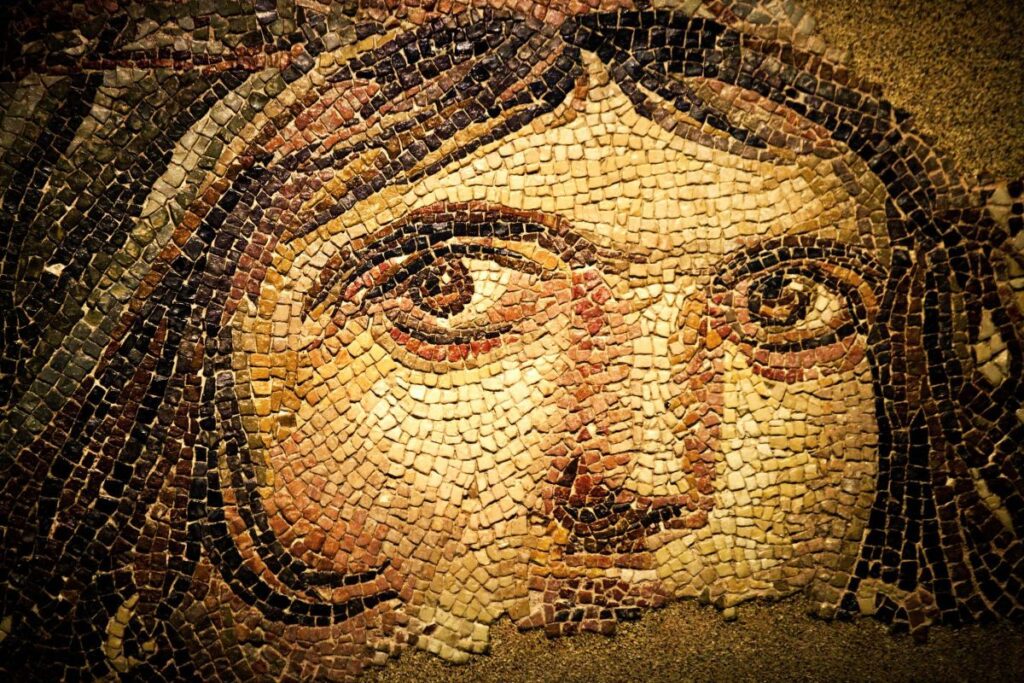
Zeugma Mosaic Museum is one of Turkey’s most visually dramatic museums.
Its collection comes principally from Zeugma, an ancient city established beside the Euphrates. The settlement occupied a strategic position where routes, armies, merchants, and cultures crossed the river.
During the Roman period, wealthy residences were decorated with elaborate mosaics. These floors transformed domestic spaces into displays of mythology, taste, education, and status.
When modern rescue excavations intensified before parts of the ancient city were affected by the Birecik Dam, archaeologists uncovered villas, mosaics, wall paintings, architectural remains, and household material. The discoveries changed international awareness of Zeugma.
Inside the museum, mosaics are displayed on walls and floors, allowing visitors to appreciate their original relationship with rooms, pools, courtyards, and reception spaces.
Mythological subjects appear repeatedly.
Figures from Greek and Roman stories were not chosen merely as decoration. They communicated ideas about love, fate, beauty, hospitality, tragedy, power, and cultural education. A visitor entering a wealthy home would have recognized many of these stories and understood the social messages they carried.
The museum’s most famous image is commonly known as the Gypsy Girl.
Despite the popular name, the identity of the figure is uncertain. The small surviving face is celebrated for its intense gaze, carefully arranged hair, and emotional ambiguity. Its fame can overshadow the museum’s larger mosaics, but it should be understood as one fragment within an extraordinary domestic artistic world.
The museum also helps visitors appreciate how mosaics were made.
Thousands of small stone, glass, and ceramic pieces were arranged to create shading, movement, facial expressions, clothing, water, plants, and architectural depth. Viewed closely, the image breaks into individual tesserae. From a distance, it comes alive.
Zeugma Mosaic Museum should not be visited only as a stop before eating Gaziantep’s famous cuisine. It is one of the finest places in Turkey for understanding Roman domestic culture and the ancient Euphrates frontier.
It can be connected naturally to the Turkish Food Guide, the Ancient Cities of Turkey, and a wider southeastern itinerary including Sanliurfa and Mardin.
Troy Museum
The ancient site of Troy is famous around the world, but its archaeology is more complex than the story of a single war.
The settlement mound contains multiple layers created by communities that built, destroyed, abandoned, and rebuilt their homes over thousands of years. Different Troys belonged to different periods, architectural traditions, and political circumstances.
This complexity can be difficult to understand while walking through the archaeological site.
Walls from several phases overlap. Excavation trenches expose different depths. Later buildings stand near earlier defenses. Without preparation, visitors may leave remembering the wooden horse more clearly than the archaeology.
Troy Museum solves much of this problem.
Located near the site, its architecture and exhibitions guide visitors through the long chronological sequence of the settlement and the surrounding Troad region. Objects, maps, models, reconstructions, and interpretive displays explain how Troy changed over time.
The museum also addresses the history of excavation.
Troy is not only the story of the Bronze Age. It is also a story about the development—and failures—of archaeology. Early excavations brought international attention but also caused serious damage. Important objects were removed from their archaeological context and dispersed among collections outside Turkey.
By presenting this history, the museum encourages visitors to think about ownership, excavation ethics, preservation, and the way ancient sites are transformed into modern symbols.
The Trojan War remains central to the site’s identity, but the museum avoids reducing Troy to a simple illustration of Homer.
Instead, it asks a more interesting question: how did a real settlement become one of the most influential places in world literature and cultural memory?
The museum should ideally be visited before the ruins. It gives visitors the chronological structure needed to interpret what they later see on the mound.
Troy appears can be included in a longer 14-Day Turkey Itinerary connecting Istanbul, Gallipoli, Troy, Pergamon, Ephesus, and other western Anatolian sites.
Ephesus Museum
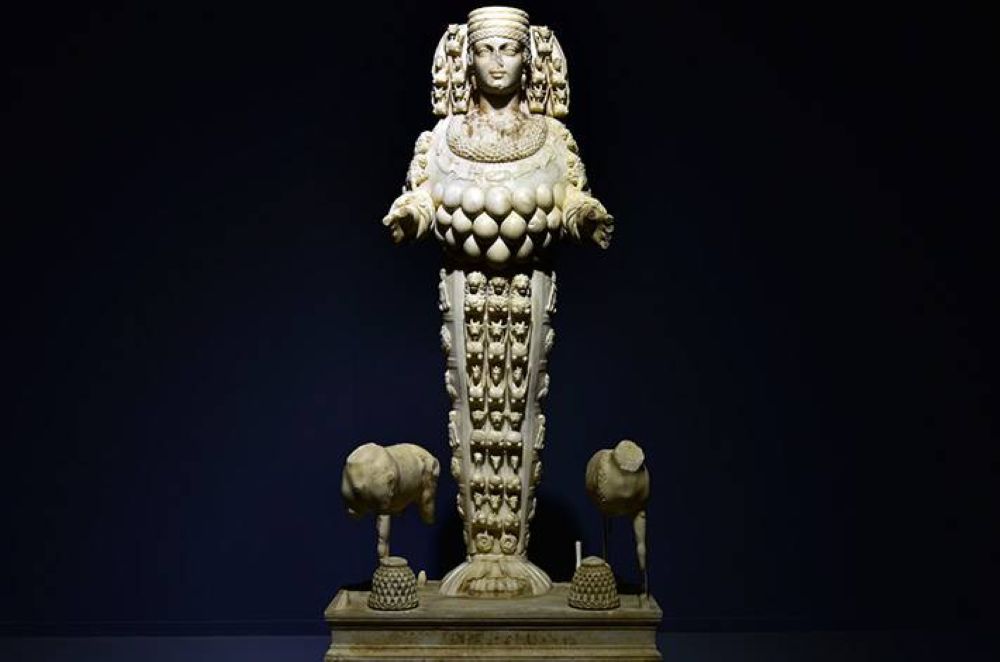
Ephesus is one of the most visited archaeological sites in Turkey, but many travelers leave the region without entering its museum in nearby Selcuk.
That is a mistake.
The ancient city preserves monumental architecture on an extraordinary scale: the Library of Celsus, theater, agoras, streets, fountains, baths, temples, houses, and Christian monuments. Yet most of the movable objects discovered during excavation are protected and displayed in the museum.
The museum restores intimacy to the city.
Statues once associated with temples and public buildings reveal how religious imagery filled the urban landscape. Household finds show the material lives of residents. Coins, jewelry, lamps, ceramics, medical instruments, and small objects connect the monumental city with daily experience.
Among the best-known works are statues associated with Artemis of Ephesus.
The Ephesian Artemis differs visually from the classical huntress familiar from other Greek artistic traditions. Her highly symbolic form reflects the local identity of the goddess and the importance of the great Artemision, once one of the most celebrated sanctuaries of the ancient Mediterranean.
The museum also helps visitors understand that Ephesus was never only a Greek or Roman city.
Its history includes earlier Anatolian traditions, Hellenistic development, Roman prosperity, early Christianity, Byzantine transformation, and the gradual movement of settlement toward the area around Ayasuluk Hill.
This long continuity is one reason the wider Selçuk area deserves more than a rushed day trip.
A thoughtful visit might include Ephesus in the morning, the museum during the hottest part of the afternoon, and later the Basilica of St. John, the remains of the Temple of Artemis, or the old streets of Sirince.
Readers can plan the complete visit through the Ephesus Travel Guide and Best Things to Do in Ephesus.
Aphrodisias Museum
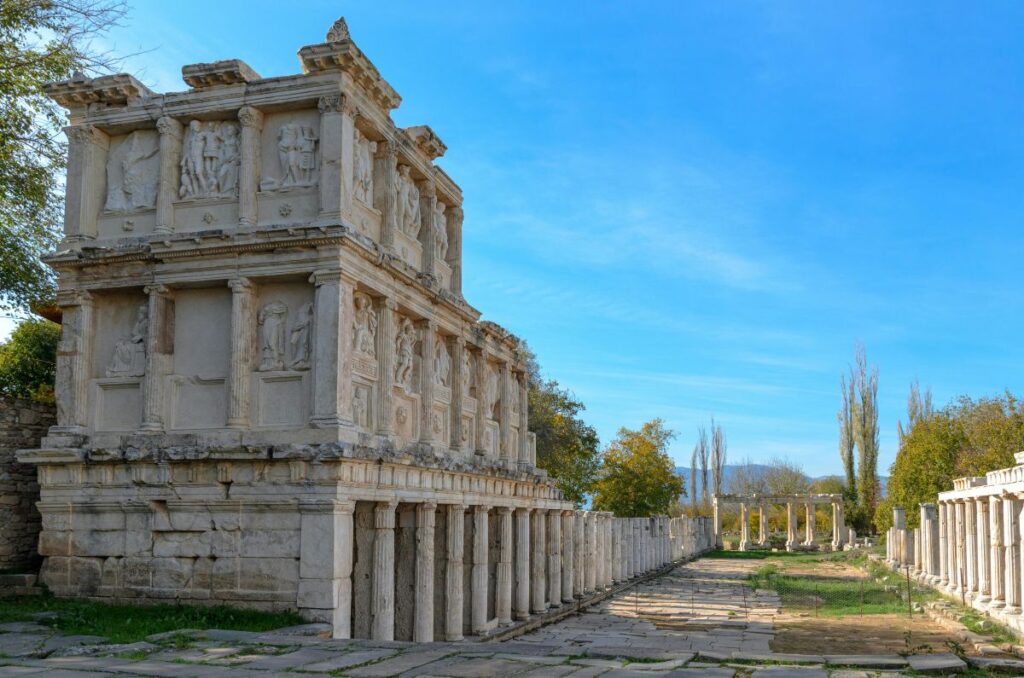
Aphrodisias is one of the most rewarding combinations of archaeological site and museum in Turkey.
The ancient city developed near high-quality marble resources, and its sculptors became famous across the Roman world. Marble was not simply a building material here. It shaped the city’s economy, artistic identity, and international reputation.
The museum stands beside the archaeological site, allowing visitors to move directly between monuments and the works created for them.
Its sculpture collection is exceptional.
Portraits, divine figures, imperial images, reliefs, and architectural decoration demonstrate the technical ability of Aphrodisian workshops. The sculptors understood anatomy, movement, fabric, facial expression, mythology, and political symbolism. Yet their work was not merely an imitation of styles developed elsewhere. Aphrodisias became an artistic center in its own right.
The Sebasteion reliefs are among the museum’s greatest treasures.
They originally formed part of an elaborate architectural complex dedicated to Aphrodite and the Roman imperial family. The reliefs combined mythological scenes with images of emperors, conquered peoples, and imperial power.
Seen together, they reveal how art could connect local identity with the political ideology of Rome.
Aphrodisias is also unusual because the modern history of excavation is closely associated with the photographer and archaeologist Kenan Erim. His work helped bring the site international recognition, and his grave lies near one of the city’s monumental entrances.
The museum is not separate from the site experience.
It is the site’s interpretive center.
Visit the museum after walking through the city. The monuments will give scale to the sculptures, while the sculptures will return human presence and political meaning to the monuments.
Corum Museum and Bogazkoy Museum
Travelers interested in the Hittites should not rely on a single museum.
The Museum of Anatolian Civilizations in Ankara provides the broad imperial picture, but Corum Museum and Bogazkoy Museum bring the story closer to the landscape in which the Hittite state developed.
Corum Museum contains archaeological material from different periods across the province, including finds connected with major Hittite centers. Its displays help explain local chronology, writing, ritual life, seals, ceramics, metallurgy, and burial traditions.
Bogazkoy Museum, located near Hattusha, is more directly connected with the ancient capital.
Visiting it alongside Hattusha and Yazilikaya allows travelers to build a more complete picture. The city walls, gates, temples, and rock sanctuary establish the monumental setting. Museum objects then reveal the smaller material details of administration, religion, craft, and everyday life.
This is particularly important with the Hittites because so much of what we know comes from written archives.
Clay tablets preserve treaties, rituals, laws, prayers, myths, inventories, and diplomatic correspondence. But the Hittite world was not made of texts alone. Pottery, tools, seals, weapons, figurines, architectural remains, and ceremonial objects help reconstruct the physical society behind the documents.
Anyone making the journey to Hattusha should treat the museum as part of the archaeological visit rather than an optional extra.
The region is central to our guide to the Hittites in Anatolia and also appears among the UNESCO World Heritage Sites in Turkey.
Side Museum
Side Museum offers a smaller and more intimate experience than the great museums of Ankara, Istanbul, Antalya, or Sanliurfa.
It is housed within the restored remains of an ancient bath complex in the archaeological area of Side. That setting immediately creates a connection between collection and architecture.
Sculptures, inscriptions, sarcophagi, reliefs, coins, and architectural fragments help explain the prosperity of Side during the Roman period. The city’s position on the Mediterranean connected it with maritime commerce, regional agriculture, imperial politics, and cultural exchange.
Because many visitors come to Side primarily for beaches and resort hotels, the archaeological landscape can be underestimated.
Yet the ancient city contains a theater, temples, agora, baths, streets, harbor-related remains, and later structures reflecting its long history. The museum gives human and artistic detail to this urban setting.
Its size is an advantage for travelers who feel overwhelmed by large collections.
A focused visit of about an hour can provide a strong introduction to the city before exploring the ruins. The museum also demonstrates an important principle: a collection does not need to be enormous to be valuable. Regional context can matter more than scale.
Why These Museums Matter
The museums described above tell overlapping stories, but they are not interchangeable.
Ankara offers the great chronological framework of Anatolia.
Istanbul reveals the enormous geographical reach of archaeology collected during the late Ottoman period.
Antalya brings the sculptural world of Roman Pamphylia back to life.
Sanliurfa places Gobekli Tepe within the wider transformation of the Neolithic world.
Zeugma preserves the artistic interiors of Roman homes beside the Euphrates.
Troy explains how layers of settlement became a global legend.
Ephesus reconnects a monumental city with its religious and domestic objects.
Aphrodisias reveals the power of marble, sculpture, and imperial imagery.
Corum and Bogazkoy return the Hittite story to its central Anatolian landscape.
Side shows how a smaller regional museum can deepen the experience of a single ancient city.
Together, they demonstrate why museums in Turkey should not be treated as places to visit only when the weather is bad.
They are where archaeological landscapes become understandable.
The next part of this guide will move beyond the major archaeology museums to explore Turkey’s finest mosaic collections, open-air museums, overlooked regional treasures, practical Museum Pass advice, and recommendations for choosing the right museums according to your interests and itinerary.
Every Museum Tells Only Part of the Story
By the time travelers have visited several museums in Turkey, a surprising realization begins to emerge.
No single museum explains the history of Anatolia.
Nor is it meant to.
Each museum preserves only one chapter of a story that stretches across more than twelve thousand years. Together, however, they form one of the world’s most remarkable historical narratives.
The journey may begin in Şanlıurfa with the monumental stone pillars of the Neolithic world. It continues in Ankara, where the rise of kingdoms, merchants, and the Hittite Empire introduces the first great political powers of Anatolia. Along the Aegean coast, museums reveal the artistic achievements of Greek cities and the prosperity of Roman urban life. In Cappadocia, painted churches preserve the spiritual landscape of the Byzantine period, while Istanbul’s collections lead visitors into the world of the Ottoman Empire.
These museums are separated by hundreds of kilometers.
Their collections belong to different civilizations, religions, languages, and artistic traditions.
Yet they all describe the history of the same land.
This is perhaps what makes Turkey different from many other destinations. Rather than concentrating history within one city or one civilization, it presents thousands of years of human experience spread across an entire landscape.
Understanding that continuity changes the way every museum is experienced.
Instead of seeing isolated collections, visitors begin to recognize connections. Symbols evolve. Architectural ideas reappear in different forms. Trade routes shift, but continue to link distant regions. Religious beliefs change, yet sacred places often remain important for centuries.
History becomes less about separate civilizations and more about an ongoing conversation between them.
Connecting Museums With Archaeological Sites
One of the most rewarding ways to explore Turkey’s history is to combine museums with the archaeological sites from which many of their collections originate.
Neither experience is complete without the other.
Walking through Ephesus allows visitors to understand the scale of one of the greatest cities of the Roman world. Marble streets, fountains, baths, theaters, and public buildings still define the urban landscape. Yet many of the sculptures, inscriptions, religious objects, and everyday artifacts that once filled those spaces are preserved in the nearby Ephesus Museum.
Only after seeing both does the city begin to feel complete.
The same relationship exists throughout Turkey.
At Perge, the monumental avenues and public architecture reveal the city’s grandeur, while Antalya Museum introduces the sculptures that once stood inside those spaces.
The galleries of Sanliurfa Archaeological Museum explain the symbolic world of Gobekli Tepe long before visitors stand beneath its monumental pillars.
At Troy, the museum transforms what can initially seem like a confusing series of excavation layers into a clear historical sequence stretching across millennia.
Museums preserve the objects.
Archaeological sites preserve the places.
Together they restore the lives of the people who once inhabited them.
This relationship is one of Turkey’s greatest strengths as a cultural destination. Rather than separating collections from the landscapes that produced them, many museums remain closely connected to nearby archaeological sites, allowing visitors to experience history in both its physical and cultural context.
Beyond the Famous Museums
Every visitor knows the names.
The Museum of Anatolian Civilizations.
Istanbul Archaeological Museums.
Antalya Museum.
Sanliurfa Archaeological Museum.
They deserve their reputation.
Yet some of Turkey’s most memorable museum experiences are found far from the country’s busiest tourist routes.
In Burdur Museum, sculptures recovered from nearby Sagalassos reveal one of the finest artistic traditions of Roman Anatolia. The museum rarely appears on standard itineraries, yet it offers remarkable insight into a city that once rivaled many better-known settlements.
In Amasya, archaeological collections share space with the famous Ilkhanid mummies, reminding visitors that Anatolia’s medieval history is every bit as fascinating as its ancient past.
The museums of Corum and Bogazkoy bring visitors closer to the world of the Hittites, allowing the great capital of Hattusha to be understood not only through its monumental ruins but also through the everyday objects, administrative records, and religious traditions preserved nearby.
On the Mediterranean coast, Alanya Archaeological Museum quietly complements the city’s castle and harbor, while in southeastern Anatolia the collections of Mardin Museum reveal centuries of cultural exchange between Anatolia and Mesopotamia.
These museums may never receive the visitor numbers of Ephesus or Istanbul.
They do not need to.
Their importance lies elsewhere.
They remind us that the story of Anatolia was never written only in imperial capitals.
It was also written in provincial towns, regional workshops, trading communities, monasteries, villages, and ports whose histories survive because local museums continue to preserve them.
Choosing Your Own Journey Through History
No traveler experiences Turkey’s museums in exactly the same way.
Some arrive fascinated by humanity’s earliest communities and leave inspired by Gobekli Tepe and Catalhoyuk.
Others are drawn to the marble cities of the Roman Empire, where theaters, baths, libraries, and temples still dominate the landscape.
Some visitors follow the footsteps of early Christianity through Cappadocia, Ephesus, and the Seven Churches of Revelation.
Others are captivated by the artistic achievements of the Seljuks or the ceremonial world of the Ottoman court.
There is no single correct route.
Instead of trying to visit every museum, it is often more rewarding to follow a particular historical theme.
A journey through the Neolithic world naturally connects Gobekli Tepe, Karahantepe, Sanliurfa Archaeological Museum, Catalhoyuk, and the Museum of Anatolian Civilizations.
Those interested in classical antiquity may choose Ephesus, Aphrodisias, Pergamon, Perge, Antalya Museum, and Troy.
Travelers fascinated by Byzantine history can combine Istanbul with Cappadocia, exploring churches, monasteries, mosaics, and museums that preserve the artistic language of the eastern Roman world.
Meanwhile, those wishing to understand the Ottoman Empire may find equal value in Topkapı Palace, regional ethnography museums, historic bazaars, caravanserais, hammams, and the urban landscapes of Bursa and Edirne.
Each route tells a different story.
Together, they reveal how remarkably diverse Turkey’s cultural heritage truly is.
Why Museums Matter Today
Museums are often associated with the past.
In reality, they are also about the future.
Archaeology in Turkey continues to evolve every year. New excavations uncover forgotten settlements, inscriptions, sculptures, mosaics, and architectural remains that reshape our understanding of ancient civilizations. Sites such as Gobekli Tepe and Karahantepe have already transformed long-held ideas about the origins of settled life, while ongoing work across Anatolia continues to add new chapters to that story.
Museums play a central role in this process.
They preserve fragile discoveries, support scientific research, protect cultural heritage, and present new interpretations as archaeological knowledge develops.
They also carry another responsibility.
They connect modern communities with the people who lived on the same landscapes thousands of years ago.
A carved relief, a merchant’s tablet, a mosaic floor, or a fragment of painted plaster is more than an archaeological object.
It is evidence that real people once built homes, traded across continents, worshipped, celebrated, mourned, and imagined their future on the very ground where modern visitors now stand.
For that reason, museums are never simply collections of ancient objects.
They are places where the past continues to speak to the present.
Final Thoughts
The museums of Turkey preserve far more than sculptures, mosaics, manuscripts, or archaeological treasures.
Together, they preserve one of humanity’s longest continuous stories.
From the first farming communities of the Neolithic period to the great kingdoms of the Bronze Age, from the cities of the Greeks and Romans to the churches of Byzantium and the monuments of the Seljuks and Ottomans, every generation left something behind.
Some traces survived as towering monuments.
Others survived as fragments buried beneath centuries of soil.
Museums bring those fragments together.
They restore names to forgotten civilizations, context to archaeological discoveries, and human stories to objects that might otherwise appear silent.
Perhaps that is the greatest value of visiting museums in Turkey.
They remind us that history was never made by ruins alone.
It was made by people.
People who traded, created, believed, travelled, governed, farmed, built, worshipped, and dreamed—just as we do today.
Every museum offers a different chapter.
Together, they tell the extraordinary story of civilization across Anatolia.