Few places in the world are as significant to Christian history as Turkey. Known in antiquity as Asia Minor, this region played a central role in the spread of early Christianity and preserves some of the most important biblical sites outside the Holy Land.
Among the most sacred destinations for Christian travelers are the Seven Churches of Revelation in Turkey, the seven early Christian communities addressed by John the Apostle in the Book of Revelation (Revelation chapters 2 and 3).
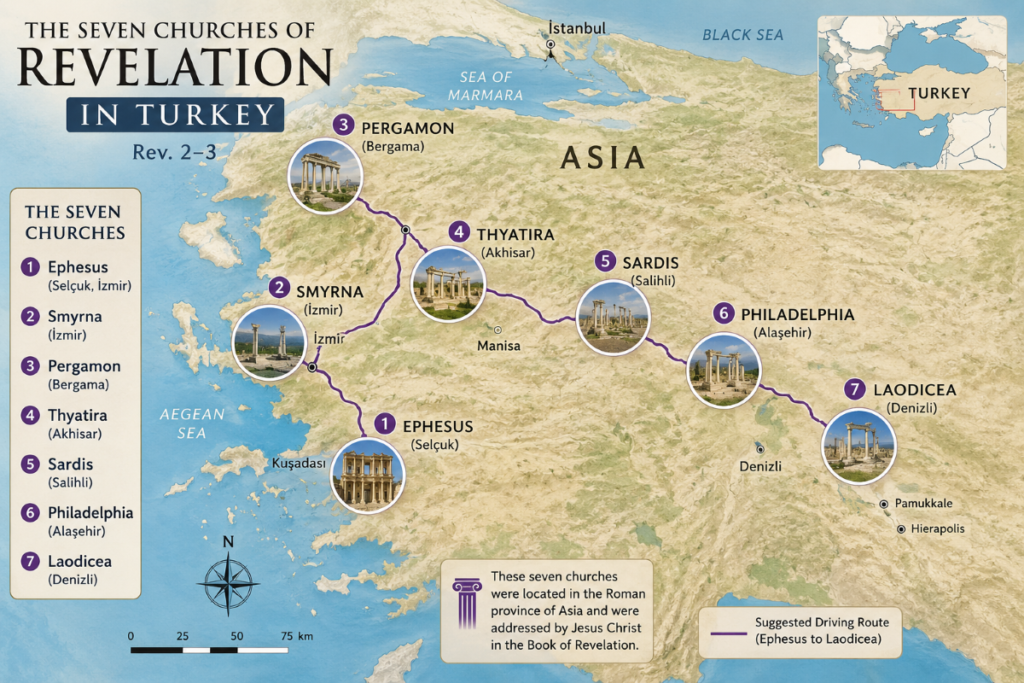
These churches were located in the Roman province of Asia, in what is now western Turkey. Their names are:
- Ephesus
- Smyrna
- Pergamon
- Thyatira
- Sardis
- Philadelphia
- Laodicea on the Lycus
Together, these cities form one of the most meaningful pilgrimage routes in the Christian world. Their messages speak of faithfulness, repentance, perseverance, and spiritual renewal—lessons that continue to inspire believers nearly two thousand years later.
For travelers, visiting the Seven Churches of Revelation offers a unique opportunity to combine biblical history, archaeology, and the extraordinary landscapes of western Anatolia. You can walk along the marble streets of Ephesus, stand in the acropolis of Pergamon, explore the royal city of Sardis, and visit Laodicea, where the famous warning against being “lukewarm” was addressed.
This guide explores the historical and biblical significance of each church, highlights what visitors can see today, and provides context for one of the most important Christian journeys in the world.
In This Guide
Table of Contents
Why the Seven Churches of Revelation Matter
The Seven Churches were not the only Christian communities in Asia Minor, but they were selected because they represented key centers of faith in the late first century CE. The messages addressed to them in Revelation contain praise, warnings, and promises from Christ.
These churches faced challenges that remain relevant today:
- Loss of spiritual passion
- Persecution and suffering
- False teachings
- Moral compromise
- Complacency
- Perseverance under pressure
The sequence of the seven churches follows a circular route beginning at Ephesus and moving north and east before turning southeast toward Laodicea, making them ideal for a pilgrimage itinerary through western Turkey.
Turkey therefore occupies a uniquely important place in Christian history. Few countries offer such a rich concentration of New Testament sites, early churches, and archaeological remains connected to the origins of Christianity.
For additional articles on biblical archaeology and early Christianity, visit the Biblical Archaeology Society: Biblical Archaeology Society.
1. Ephesus — The Church That Had Lost Its First Love
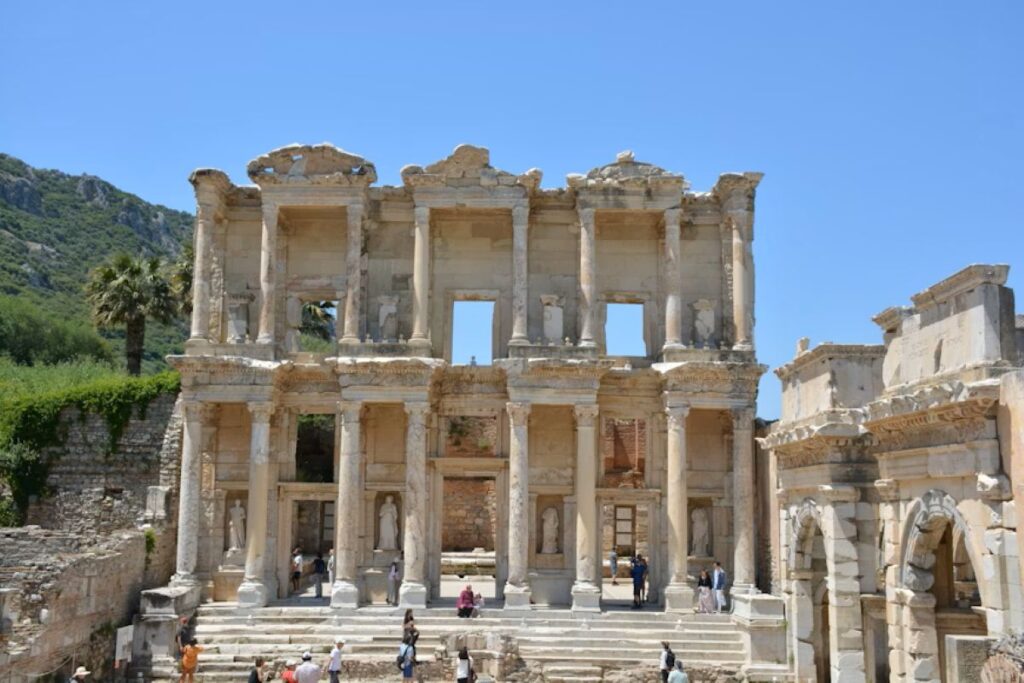
Ephesus was one of the most important cities of the Roman Empire and one of the greatest centers of early Christianity. As the capital of the Roman province of Asia, Ephesus was a wealthy port city known for commerce, philosophy, and the magnificent Temple of Artemis, one of the Seven Wonders of the Ancient World.
Ephesus occupies a central place in the New Testament. Paul the Apostle lived and preached here for several years (Acts 19), and the city later became closely associated with John the Apostle. Christian tradition also links nearby House of the Virgin Mary with the final years of Mary, mother of Jesus.
Message to Ephesus (Revelation 2:1–7)
The church in Ephesus was praised for its perseverance, doctrinal discernment, and rejection of false teachers. Yet Christ delivered a sobering warning:
“You have forsaken the love you had at first.” (Revelation 2:4)
The believers were called to remember their original devotion and return to the passionate faith that had characterized the beginning of their Christian journey.
What You Can See Today
Visitors to Ephesus can explore one of the best-preserved ancient cities in the world, including:
- Library of Celsus
- Great Theatre of Ephesus
- Curetes Street
- Terrace Houses
- Basilica of St. John
- House of the Virgin Mary
Why Ephesus Matters Spiritually
The message to Ephesus remains profoundly relevant. It reminds believers that orthodoxy and diligent service are not enough without genuine love for God.
Travel Tip
Ephesus is often the starting point for Seven Churches tours and one of the most important biblical destinations in the world.
For a deeper exploration, read our guides to Best Things to Do in Ephesus, Biblical Sites in Turkey, and Ancient Cities in Turkey.
2. Smyrna — The Church That Remained Faithful Under Persecution
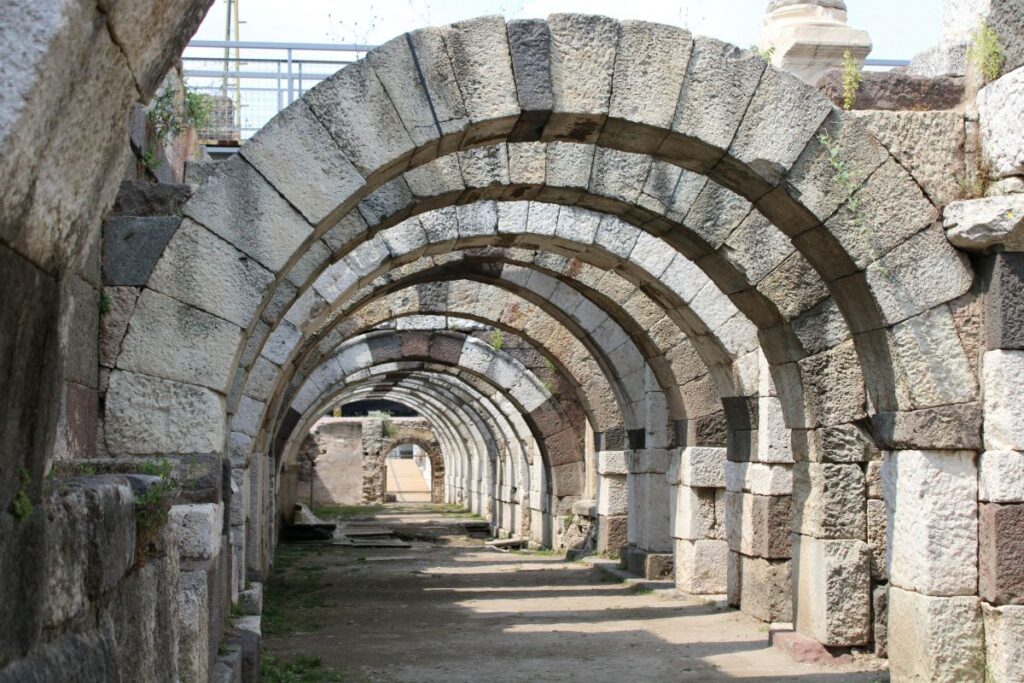
Smyrna, modern-day İzmir, was one of the most prosperous and beautiful cities of the Roman province of Asia. Located on a magnificent natural harbor, Smyrna was an important commercial center and a fiercely loyal supporter of Rome.
Unlike several other churches in Revelation, Smyrna received no rebuke. Instead, the believers were commended for their steadfast faith in the midst of suffering and persecution.
Message to Smyrna (Revelation 2:8–11)
Christ addressed the Christians of Smyrna with words of comfort and encouragement:
“Do not be afraid of what you are about to suffer… Be faithful even to the point of death, and I will give you life as your victor’s crown.” (Revelation 2:10)
The church faced imprisonment, poverty, and hostility, yet they were described as spiritually rich. Their faithfulness became an enduring example of courage under persecution.
Historical Significance
Smyrna occupies a special place in Christian history because it was home to Polycarp of Smyrna, one of the most revered Church Fathers and a disciple of John the Apostle.
In approximately 155 CE, Polycarp was martyred in Smyrna after refusing to renounce Christ. His final testimony became one of the most powerful stories of faith in early Christianity.
He is traditionally remembered as saying:
“Eighty-six years I have served Him, and He has done me no wrong.”
What You Can See Today
Although ancient Smyrna lies beneath the modern city, important remains can still be visited, especially at:
- Smyrna Agora
- The ancient marketplace and Roman structures
- Graffiti and inscriptions connected to early Christian communities
- Churches and monuments associated with Polycarp of Smyrna
The Agora of Smyrna is one of the most impressive urban archaeological sites in western Turkey and offers a fascinating glimpse into the city addressed in Revelation.
Why Smyrna Matters Spiritually
Smyrna represents the suffering church. Its message reminds believers that faithfulness is often tested through hardship and that spiritual richness does not depend on material prosperity.
For many Christian pilgrims, Smyrna is one of the most moving stops on the Seven Churches journey because it speaks directly to the themes of perseverance and courage.
Travel Tip
Because Smyrna is located in the heart of modern İzmir, it is easily combined with visits to Ephesus and Pergamon.
To explore the wider biblical context of western Turkey, see our Biblical Sites in Turkey and 10 Day Biblical Turkey Itinerary.
3. Pergamon — The Church Where Satan’s Throne Was
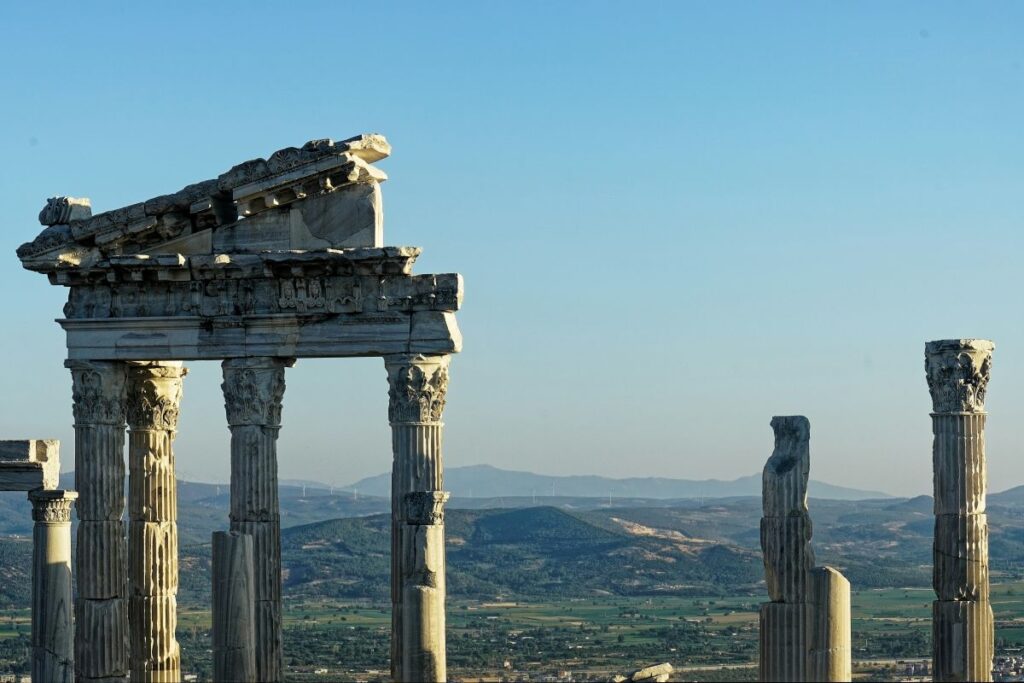
Pergamon was one of the most influential cities of the ancient world and one of the most important centers of religion, politics, and learning in Asia Minor. Perched dramatically on a hill above the fertile plains of western Anatolia, Pergamon was the capital of the Attalid Kingdom and later a major city of the Roman Empire.
The city was famous for its monumental acropolis, its great library, the renowned Asclepieion of Pergamon healing center, and the imposing Altar of Zeus. It was also a major center of emperor worship, where loyalty to Rome was expressed through religious ceremonies.
Message to Pergamon (Revelation 2:12–17)
Christ acknowledged the difficult spiritual environment in which the believers lived:
“I know where you live—where Satan has his throne.” (Revelation 2:13)
Despite intense pagan influence and political pressure, many Christians remained faithful. The church was praised for holding fast to the faith even after the martyrdom of Antipas, described as Christ’s “faithful witness.”
However, the church was also warned against false teachings and moral compromise.
Why “Satan’s Throne”?
Scholars have proposed several interpretations of this striking phrase:
- The monumental Altar of Zeus dominating the acropolis.
- The city’s strong imperial cult and emperor worship.
- The Asclepieion, associated with serpent symbolism.
- Pergamon’s role as a major center of pagan religious life.
Whatever the precise reference, the phrase emphasizes that Christians in Pergamon lived in one of the most spiritually challenging environments of the ancient world.
What You Can See Today
Pergamon is one of Turkey’s most impressive archaeological destinations. Highlights include:
- Pergamon Acropolis
- Ancient Theatre of Pergamon
- Temple of Trajan
- Asclepieion of Pergamon
- The Red Basilica (later associated with early Christianity)
Why Pergamon Matters Spiritually
Pergamon represents the challenge of remaining faithful while surrounded by powerful cultural and political pressures. Its message continues to resonate with believers seeking to uphold their convictions in a world of competing values.
Travel Tip
Pergamon is one of the most dramatic and visually impressive stops on any Seven Churches tour. Its acropolis, steep theater, and panoramic views make it unforgettable for both pilgrims and history enthusiasts.
For more historical context, read our guides to Ancient Cities in Turkey, UNESCO World Heritage Sites in Turkey, and Biblical Sites in Turkey.
4. Thyatira — The Church Called to Resist Compromise
Thyatira, modern-day Akhisar, was a prosperous commercial city situated in the fertile plains of western Anatolia. Unlike the grand imperial capitals of Ephesus and Pergamon, Thyatira was best known as a center of trade and manufacturing.
Ancient inscriptions reveal that the city was home to numerous guilds of dyers, bronze workers, potters, and textile merchants. One of the most famous biblical figures associated with Thyatira is Lydia of Thyatira, the seller of purple cloth mentioned in Acts 16, who became one of the earliest known Christian converts in Europe.
Message to Thyatira (Revelation 2:18–29)
The church in Thyatira received both strong praise and a serious warning.
Christ commended the believers for their:
- Love
- Faith
- Service
- Perseverance
In fact, they were told that their “later deeds are greater than your first” (Revelation 2:19), indicating genuine spiritual growth.
However, the church was rebuked for tolerating a false prophet symbolically referred to as “Jezebel,” who encouraged idolatry and sexual immorality.
The message emphasized that faithful believers must remain steadfast and avoid compromise with surrounding cultural and economic pressures.
Historical Context
Because trade guilds in Thyatira often included ceremonies and meals dedicated to pagan deities, Christians faced difficult choices. Participation could be important for economic survival, yet involvement might conflict with their faith.
This tension made Thyatira a powerful example of the challenge of living faithfully within a commercially driven society.
What You Can See Today
The archaeological remains of Thyatira are modest compared with some other biblical cities, but visitors can still see:
- Ruins of ancient columns and foundations in central Akhisar
- Roman streets and inscriptions
- Archaeological exhibits related to the city’s history
Although much of the ancient city lies beneath the modern town, the biblical significance of Thyatira remains profound.
Why Thyatira Matters Spiritually
Thyatira reminds believers that spiritual compromise can arise even in communities marked by love and service. The message emphasizes discernment, moral integrity, and perseverance in the midst of everyday pressures.
Travel Tip
Thyatira is typically visited between Pergamon and Sardis, making it a natural stop on a Seven Churches itinerary through western Turkey.
After visiting the archaeological sites, consider exploring the nearby museums where sculptures, inscriptions, and early Christian artifacts provide valuable historical context. Our Museums in Turkey guide introduces the country’s most important collections.
5. Sardis — The Church That Needed to Wake Up
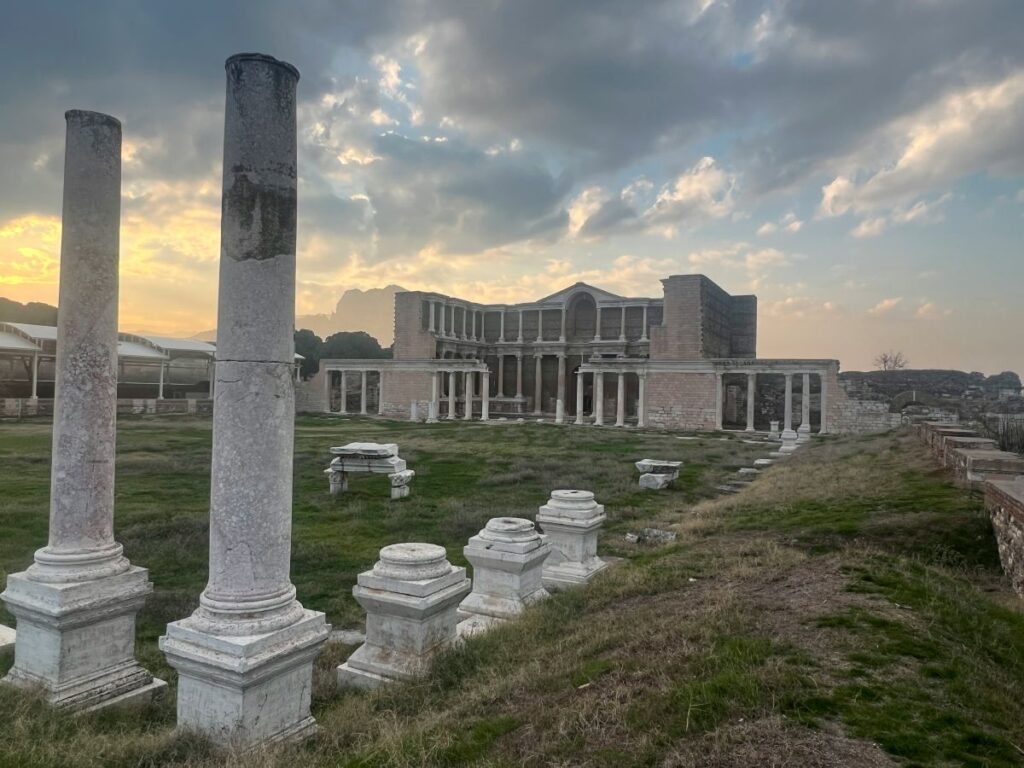
Sardis was once the magnificent capital of the ancient Kingdom of Lydia, one of the wealthiest and most influential states of the Iron Age. The city is forever associated with Croesus, whose legendary riches gave rise to the expression “rich as Croesus.”
Located at the foot of Mount Tmolus (modern Bozdağ), Sardis occupied a strategic position controlling the Hermus Valley and the route between the Aegean coast and central Anatolia. It was here that the Lydians are widely credited with minting some of the world’s earliest coins, an innovation that transformed commerce throughout the ancient world.
By the Roman period, Sardis remained an important urban center and later became one of the seven churches addressed in the Book of Revelation.
Message to Sardis (Revelation 3:1–6)
The message to Sardis contains one of the most striking warnings in Revelation:
“You have a reputation of being alive, but you are dead.” (Revelation 3:1)
The church appeared vibrant and successful on the surface, yet spiritually it had grown complacent. Christ called the believers to wake up, strengthen what remained, and remember the truths they had received.
The central themes are vigilance, repentance, and genuine spiritual renewal.
Historical Background
The warning to “wake up” would have resonated deeply with the city’s history. Sardis was considered nearly impregnable because of its steep acropolis, yet on more than one occasion enemy forces captured the city when defenders failed to remain alert.
This historical memory gives the biblical message exceptional force: no reputation, wealth, or apparent security can replace spiritual watchfulness.
What You Can See Today
Sardis is one of the most impressive archaeological sites in western Turkey. Highlights include:
- Sardis Archaeological Site
- The monumental Roman Gymnasium
- One of the largest ancient synagogues ever discovered
- The Temple of Artemis at Sardis
- Byzantine and early Christian remains
Nearby, the royal burial mounds of Bin Tepe stretch across the landscape, creating one of the most extraordinary funerary landscapes in Anatolia.
Why Sardis Matters Spiritually
Sardis serves as a powerful reminder that outward success does not guarantee inner vitality. Its message challenges believers to remain spiritually awake and authentic rather than relying on appearances.
Travel Tip
Sardis is one of the most fascinating stops on a Seven Churches pilgrimage and is conveniently located between Thyatira and Philadelphia.
For broader historical context, see our guides to Biblical Sites in Turkey, Ancient Cities in Turkey, and UNESCO World Heritage Sites in Turkey.
6. Philadelphia — The Church of the Open Door
Philadelphia, modern-day Alaşehir, was founded in the second century BCE by the Attalid kings of Pergamon and named in honor of the brotherly affection (“philadelphia”) between two rulers. Strategically located on the great east–west trade routes of Anatolia, the city became an important center for commerce, viticulture, and Hellenistic culture.
Philadelphia lay in a seismically active region and was repeatedly damaged by earthquakes, most notably the devastating earthquake of 17 CE. This historical reality gives special resonance to the promises in Revelation concerning stability and permanence.
Among the seven churches, Philadelphia received one of the most encouraging messages and, like Smyrna, was not rebuked.
Message to Philadelphia (Revelation 3:7–13)
Christ addressed the believers with words of affirmation and hope:
“See, I have placed before you an open door that no one can shut.” (Revelation 3:8)
The church was praised for keeping Christ’s word and remaining faithful despite having “little strength.” They were promised protection, vindication, and a permanent place in the presence of God.
One of the most moving promises states:
“I will make them a pillar in the temple of my God. Never again will they leave it.” (Revelation 3:12)
For a city accustomed to earthquakes and instability, the image of becoming an unshakable pillar would have carried profound significance.
Historical Significance
Philadelphia became one of the most enduring Christian communities in Asia Minor. Unlike many neighboring cities, it remained a significant center of Christianity well into the Byzantine period and continued to flourish for centuries.
Its perseverance has made Philadelphia a powerful symbol of steadfast faith and missionary opportunity.
What You Can See Today
Although much of the ancient city lies beneath modern Alaşehir, visitors can still see:
- Remains of Byzantine walls
- Ancient columns and architectural fragments
- The surviving ruins of a large Byzantine church traditionally associated with St. John
While the archaeological remains are more modest than those of Ephesus or Sardis, the spiritual significance of Philadelphia is immense.
Why Philadelphia Matters Spiritually
Philadelphia represents faithfulness, endurance, and opportunity. The “open door” has often been interpreted as a symbol of missionary work, divine favor, and access to God’s kingdom.
For many believers, this is one of the most inspiring messages in the entire Book of Revelation.
Travel Tip
Philadelphia is typically visited after Sardis and before Laodicea on the Lycus, making it an essential stop on any Seven Churches pilgrimage through western Turkey.
7. Laodicea — The Lukewarm Church
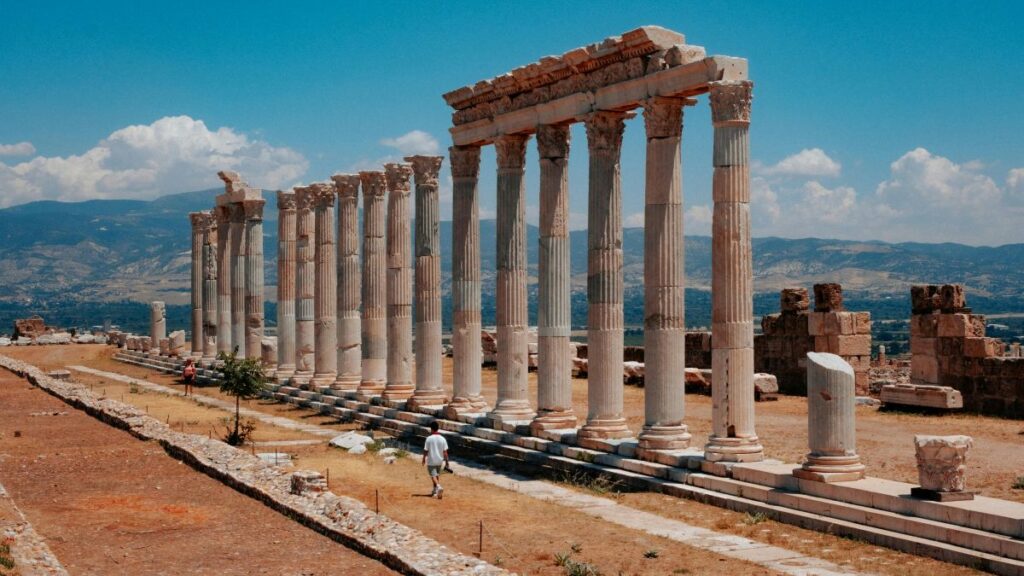
Laodicea on the Lycus was one of the wealthiest and most sophisticated cities of Roman Asia. Situated near modern Denizli, close to Pamukkale and the ancient city of Hierapolis, Laodicea was famous for its banking industry, thriving textile production, and a renowned medical school associated with treatments for eye diseases.
The city’s prosperity was so great that after a devastating earthquake in 60 CE, Laodicea rebuilt itself without financial assistance from Rome. This spirit of self-sufficiency forms the backdrop to one of the most memorable messages in the Book of Revelation.
Message to Laodicea (Revelation 3:14–22)
Laodicea received the strongest rebuke among the Seven Churches. Christ declared:
“Because you are lukewarm—neither hot nor cold—I am about to spit you out of my mouth.” (Revelation 3:16)
The believers believed they were wealthy and in need of nothing, yet spiritually they were described as poor, blind, and vulnerable.
Christ urged them to seek true riches, spiritual sight, and renewed fellowship.
One of the most beloved verses in the New Testament comes from this message:
“Here I am! I stand at the door and knock.” (Revelation 3:20)
This invitation expresses Christ’s desire for restored communion and wholehearted faith.
Why the “Lukewarm” Metaphor Is So Powerful
Laodicea’s water supply likely arrived through aqueducts from nearby hot springs and cool mountain sources. By the time the water reached the city, it had become tepid and mineral-laden.
This everyday experience provided a vivid metaphor that residents would have immediately understood.
What You Can See Today
Laodicea Archaeological Site is one of Turkey’s most impressive and actively restored biblical sites. Visitors can explore:
- Monumental colonnaded streets
- Large churches
- Ancient theaters
- Stadium and baths
- Water channels and aqueduct remains
The extensive restoration work makes Laodicea one of the most visually rewarding stops on a biblical tour of Turkey.
Why Laodicea Matters Spiritually
Laodicea speaks powerfully to themes of complacency, self-reliance, and spiritual indifference. Its message continues to challenge believers to move beyond nominal faith and embrace wholehearted devotion.
Travel Tip
Because of its proximity to Pamukkale and Hierapolis, Laodicea can be visited in the same day and is often one of the most memorable stops on the Seven Churches pilgrimage.
Final Thoughts
The Seven Churches of Revelation are far more than archaeological ruins. They are living testimonies to the earliest generations of Christians who struggled with persecution, temptation, compromise, and perseverance.
From the marble streets of Ephesus to the restored avenues of Laodicea on the Lycus, each city preserves a unique message that remains deeply relevant today.
Together, these seven churches form one of the world’s most meaningful pilgrimage routes. They reveal the extraordinary role that Turkey played in the development of early Christianity and invite travelers to walk through landscapes where the New Testament comes vividly to life.
Whether you are a believer seeking spiritual inspiration, a historian fascinated by the ancient world, or a traveler drawn to biblical archaeology, visiting the Seven Churches of Revelation in Turkey is an unforgettable journey through faith, history, and culture.
You May Also Like
- Biblical Sites in Turkey
- 10 Day Biblical Turkey Itinerary
- Ancient Cities in Turkey
- UNESCO World Heritage Sites in Turkey
- Best Things to Do in Ephesus
- Best Things to Do in Pamukkale