
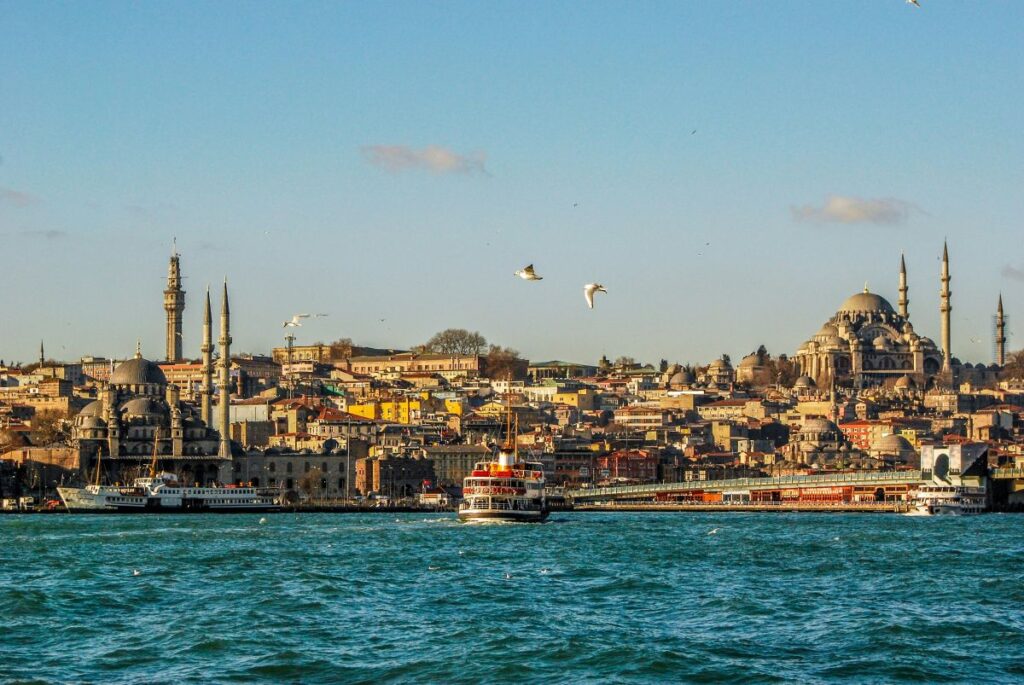
Few cities in the world leave a first impression quite like Istanbul.
For centuries, this city stood at the crossroads of civilizations, connecting Europe and Asia, Christianity and Islam, the ancient world and the modern age. Roman emperors, Byzantine rulers, Ottoman sultans, merchants, pilgrims, and travelers have all walked the same streets that visitors explore today.
Yet what makes Istanbul truly special is not simply its history.
It is the way history remains part of everyday life.
You can spend the morning standing beneath the vast dome of Hagia Sophia, enjoy lunch overlooking the Bosphorus, take a ferry between two continents in the afternoon, and end the day sipping Turkish tea in a neighborhood café where local life continues much as it has for generations.
As a licensed tour guide, I have visited Istanbul countless times over the years. No matter how often I return, the city always reveals something new. Sometimes it is a hidden Byzantine church tucked behind busy streets. Sometimes it is a quiet waterfront neighborhood far from the tourist crowds. And sometimes it is simply the view from a ferry crossing the Bosphorus at sunset.
Many travelers arrive expecting a city of famous landmarks. They leave realizing that Istanbul is much more than Hagia Sophia, the Blue Mosque, or Topkapi Palace.
It is a city of layers.
A city where every district tells a different story.
And for many visitors, it becomes the highlight of their journey through Turkey.
If you’re planning your trip across the country, don’t miss our 10 day Turkey itinerary to see how Istanbul fits into a full route.
The first question many travelers ask is simple: why should I visit Istanbul instead of another European city?
The answer becomes clear within a few hours of arriving.
There is no other city quite like it.
One of Istanbul’s greatest distinctions is its location. The Bosphorus Strait divides the city between Europe and Asia, creating a unique cultural and geographical identity.
Crossing from one continent to another is not a complicated day trip. It can be as simple as boarding a ferry and spending twenty minutes on the water.
For many visitors, that first ferry ride becomes one of their favorite memories of the city.
Few places on earth can match Istanbul’s historical significance.
Originally founded as Byzantium, the city later became Constantinople, the capital of the Eastern Roman Empire. After the Ottoman conquest in 1453, it evolved into one of the world’s most powerful imperial capitals.
Today, traces of these civilizations remain everywhere.
The massive dome of Hagia Sophia, the underground chambers of the Basilica Cistern, the courtyards of Topkapi Palace, and the skyline filled with Ottoman mosques all tell different chapters of the same story.
Walking through Istanbul often feels less like visiting a city and more like moving through a living museum.
Istanbul is not only a destination for history lovers.
It is also one of the best food cities in the world.
From traditional Turkish breakfasts and fresh seafood along the Bosphorus to street foods such as simit, roasted chestnuts, and balik ekmek, the city offers an extraordinary variety of flavors.
Some of the most memorable meals are not found in luxury restaurants but in small family-run establishments hidden within local neighborhoods.
Most cities have a river.
Istanbul has the Bosphorus.
This narrow waterway has shaped the city’s history, economy, and identity for centuries. Palaces, fortresses, mosques, waterfront mansions, and lively neighborhoods line its shores.
Whether viewed from a ferry, a waterfront café, or a rooftop terrace, the Bosphorus remains one of Istanbul’s defining experiences.
One mistake many first-time visitors make is treating Istanbul as a single destination.
In reality, it feels more like several cities combined into one.
Sultanahmet is filled with imperial monuments and historic landmarks. Galata and Karaköy offer cafés, art galleries, and vibrant street life. Kadıköy provides a more local atmosphere on the Asian side. Balat reveals colorful streets and centuries of multicultural history.
Exploring these neighborhoods is often just as rewarding as visiting the city’s famous attractions.
Perhaps the best reason to visit Istanbul is that it constantly defies expectations.
No matter how carefully you plan your itinerary, some of your favorite memories will probably come from moments you never expected: a conversation with a shopkeeper, a sunset ferry ride, a hidden courtyard, or a quiet mosque discovered by accident.
That is what keeps drawing travelers back.
And that is what makes Istanbul one of the most unforgettable cities in the world.
One of the reasons Istanbul remains such a popular destination is its ability to suit almost any budget.
Whether you are a backpacker looking for affordable accommodation or a luxury traveler seeking five-star hotels along the Bosphorus, the city offers a wide range of options. However, many first-time visitors find it difficult to estimate how much they should budget for their trip.
The good news is that Istanbul can be significantly more affordable than many major European capitals, especially when it comes to food and public transportation.
Travelers staying in hostels or simple hotels, using public transportation, and eating at local restaurants can comfortably explore Istanbul on a relatively modest budget.
Street foods such as simit, döner, and balik ekmek provide inexpensive meal options, while the city’s extensive tram, metro, and ferry network keeps transportation costs low.
Most visitors fall into this category.
A comfortable hotel in a central neighborhood, restaurant meals, museum visits, and occasional taxi rides generally provide a balanced and enjoyable experience without excessive spending.
For many travelers, this budget offers the best combination of comfort and value.
Istanbul also caters exceptionally well to luxury travelers.
Historic palace hotels, rooftop restaurants, private Bosphorus cruises, and fine dining experiences can quickly increase daily costs. Fortunately, luxury experiences in Istanbul often remain more affordable than comparable experiences in Western Europe or North America.
Many of Istanbul’s most famous attractions require entrance tickets. Topkapi Palace, Basilica Cistern, and several museums charge admission, while some mosques remain free to enter outside prayer times.
If you plan to visit multiple attractions, checking current ticket prices before your trip is a good idea, as fees can change throughout the year.
Rather than focusing on a strict daily budget, I usually recommend allocating more money to experiences that truly matter to you.
For some travelers, that means staying in a hotel overlooking the Bosphorus. For others, it means enjoying a food tour, visiting additional museums, or taking a sunset cruise.
The good news is that Istanbul offers memorable experiences at nearly every price point.
Istanbul is one of the world’s great cities, but it can also feel overwhelming for first-time visitors.
The city is larger, busier, and more complex than many travelers expect. Fortunately, a few simple tips can make your experience much smoother and far more enjoyable.
One of the biggest advantages you can give yourself in Istanbul is an early start.
Popular attractions such as Hagia Sophia, Topkapi Palace, and the Basilica Cistern become significantly busier later in the day, especially during the peak travel season.
Arriving shortly after opening time not only means shorter queues but also allows you to experience these historic sites before the crowds arrive.
Many of my favorite moments in Istanbul have happened early in the morning, when the streets of Sultanahmet are still quiet and the city feels completely different from its busy afternoon atmosphere.
Visitors often underestimate how much walking Istanbul requires.
The city was built on a series of hills, and many historic neighborhoods feature steep streets, uneven pavements, and cobblestone roads.
Even travelers who normally walk very little often find themselves covering several kilometers each day while exploring the city.
A comfortable pair of shoes will make a bigger difference than most people expect.
Many first-time visitors assume taxis are the easiest way to get around Istanbul.
In reality, public transportation is often faster.
The tram, metro, Marmaray, and ferry network allows visitors to avoid traffic while reaching most of the city’s major attractions efficiently.
An Istanbulkart quickly becomes one of the most valuable items in your pocket.
One common mistake is trying to see everything in a single day.
Istanbul rewards travelers who slow down.
Instead of rushing from one monument to the next, take time to enjoy a ferry ride across the Bosphorus, relax in a neighborhood café, or wander through side streets away from the main tourist routes.
Often, these unplanned moments become the most memorable part of a trip.
Many of Istanbul’s most famous landmarks are active places of worship.
Mosques such as Hagia Sophia and the Blue Mosque may have restricted access during prayer times, and certain areas may be temporarily closed to visitors.
Planning around prayer schedules can help avoid disappointment and create a more respectful experience.
Sultanahmet deserves its reputation, but it is only one part of Istanbul.
Some of the city’s most rewarding experiences can be found in neighborhoods such as Kadıköy, Balat, Karaköy, Beşiktaş, and Ortaköy.
These districts reveal a different side of Istanbul and provide a better understanding of daily life in the city.
Many visitors treat the Bosphorus as something they will see briefly from a distance.
That is a mistake.
The Bosphorus is not simply a waterway. It is one of the defining features of Istanbul and has shaped the city’s history for centuries.
Whether you choose a public ferry, a Bosphorus cruise, or simply a waterfront walk, spending time along the strait should be part of every itinerary.
Do not try to “complete” Istanbul.
Even people who have lived here for years continue discovering new neighborhoods, restaurants, viewpoints, and hidden corners.
Instead of treating the city like a checklist of attractions, allow yourself time to experience it.
The travelers who enjoy Istanbul the most are usually not the ones who see the most places. They are the ones who slow down enough to appreciate the city between the landmarks.
The Bosphorus Strait divides Istanbul between Europe and Asia and is one of the most beautiful waterways in the world.
A Bosphorus cruise is one of the best ways to experience the city. From the water, visitors can admire historic Ottoman palaces, wooden waterfront mansions, ancient fortresses, and modern bridges that connect the two continents.
This is one of the most popular experiences in Istanbul, especially in the evening.
Booking in advance is highly recommended.
Sunset cruises along the Bosphorus are especially popular, offering spectacular views of the city skyline.
The Bosphorus also gives Istanbul its unique character, blending natural beauty with centuries of architecture.
One of the most common questions I hear from travelers is surprisingly simple:
“Where should I stay in Istanbul?”
The answer is not as straightforward as many people expect.
Unlike cities where most attractions are concentrated in a single center, Istanbul stretches across two continents and dozens of distinct neighborhoods. Choosing the right area can dramatically improve your experience, while choosing the wrong one can leave you spending hours in traffic and public transportation every day.
The good news is that there is no bad area on this list. The best neighborhood depends entirely on the type of trip you want to have.
If this is your first visit to Istanbul, Sultanahmet is usually the safest choice.
This is the historic heart of the city and home to many of Istanbul’s most famous landmarks, including Hagia Sophia, the Blue Mosque, Topkapi Palace, and the Basilica Cistern.
One of the biggest advantages of staying here is the ability to explore these sites early in the morning before the crowds arrive. Walking through Sultanahmet at sunrise, when the streets are still quiet and the call to prayer echoes across the square, is an experience many visitors never forget.
The area is heavily geared toward tourism, however. Restaurants tend to be more expensive, and the atmosphere can feel less local than other parts of the city.
For travelers focused primarily on history and sightseeing, that trade-off is usually worth it.
If I were visiting Istanbul for the first time and wanted a balance between sightseeing and local life, I would probably choose Karakoy or Galata.
These neighborhoods sit between historic Istanbul and modern Istanbul. During the day, you can easily reach Sultanahmet by tram or on foot. In the evening, the area comes alive with cafes, restaurants, rooftop terraces, and lively streets.
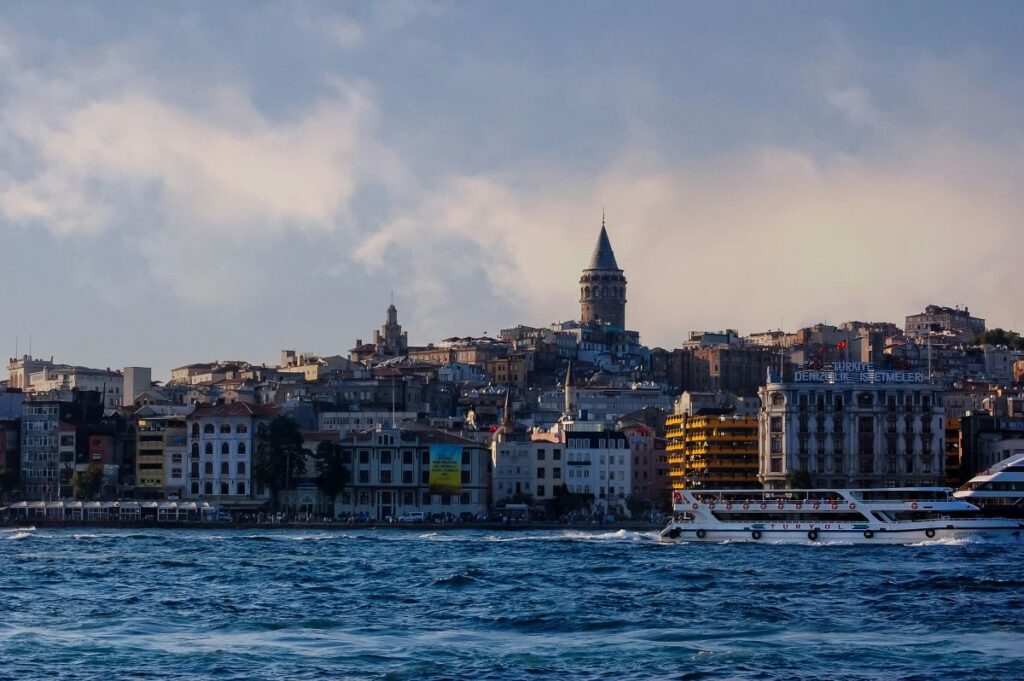
Galata Tower rises above the neighborhood, while narrow side streets reveal art galleries, independent coffee shops, and hidden courtyards.
Many travelers find that Karaköy and Galata offer the most enjoyable overall atmosphere in the city.
Some visitors want history.
Others want energy.
If nightlife, shopping, restaurants, and nightlife are priorities, Taksim and Beyoglu may be a better fit.
The area is centered around Istiklal Street, one of the busiest and most famous avenues in Turkey. During the day, the street is packed with shoppers and street performers. At night, the neighborhood fills with people heading to restaurants, bars, and music venues.
While the area offers excellent transportation connections, it is also busier, louder, and more crowded than Sultanahmet or Kadıköy.
Many travelers never cross to the Asian side of Istanbul.
That is a mistake.
Kadıkoy offers a completely different perspective on the city. Life moves at a slower pace here. The neighborhood is known for its markets, cafes, waterfront promenades, and outstanding food scene.
Unlike Sultanahmet, where most people are visitors, Kadıköy feels like a place where Istanbul residents actually live.
If you have already visited Istanbul once or prefer local experiences over major tourist attractions, Kadıkoy is one of the city’s most rewarding neighborhoods.
For travelers who dream of staying close to the Bosphorus, Besiktas and Ortakoy are excellent choices.
The waterfront atmosphere is one of the area’s biggest attractions. Ferries cross the strait throughout the day, locals gather in parks and cafes, and the Bosphorus Bridge dominates the skyline.
Ortakoy is particularly popular for evening walks and waterfront dining, while Beşiktaş provides easier access to public transportation and daily life in the city.
If it is your first visit to Istanbul, I usually recommend Sultanahmet or Galata.
If you want nightlife and restaurants, choose Beyogglu.
If you want a more local experience, choose Kadıkoy.
If Bosphorus views are your priority, consider Besiktas or Ortakoy.
The good news is that Istanbul’s ferry, metro, tram, and Marmaray networks make it relatively easy to explore multiple neighborhoods regardless of where you stay. The most important thing is choosing an area that matches your travel style rather than simply booking the cheapest hotel available.
At first glance, getting around Istanbul can seem intimidating.
The city is home to more than 15 million people, stretches across two continents, and covers a much larger area than most visitors expect. Many first-time travelers arrive worried about traffic, public transportation, and the challenge of navigating such a vast city.
Fortunately, Istanbul is much easier to explore than it appears.
In fact, once you understand how the transportation system works, moving around the city becomes surprisingly straightforward.
If there is one piece of advice I give to every visitor, it is this:
Buy an Istanbulkart as soon as possible.
This rechargeable transportation card works on trams, metros, ferries, buses, funiculars, and Marmaray trains. Instead of purchasing individual tickets for every journey, you simply tap your card and travel.
Most visitors quickly discover that Istanbulkart becomes one of the most useful items they carry throughout their trip.
For first-time visitors, the T1 Tram Line is probably the most important transportation route in the city.
It connects many of Istanbul’s major attractions, including Sultanahmet, the Grand Bazaar, Eminönü, Karaköy, and Galata.
If your itinerary focuses on the city’s historic landmarks, you will likely use this line every day.
One of the advantages of the tram is that it avoids Istanbul’s notorious traffic. While cars remain stuck on busy streets, the tram continues moving efficiently through the city center.
Istanbul’s metro network has expanded rapidly in recent years.
For longer distances, the metro is often the fastest way to travel. It connects many residential districts, business areas, and major transportation hubs.
Visitors staying around Taksim, Şişli, or other modern neighborhoods will likely find themselves using the metro frequently.
Although the system may look complicated on a map, most routes are clearly marked and easy to follow.
Few cities in the world offer a daily commute as beautiful as Istanbul’s.
Crossing the Bosphorus by ferry is not simply a way to get from one place to another. It is one of the city’s most memorable experiences.
Regular ferries connect Eminönü, Karaköy, Beşiktaş, Üsküdar, and Kadıköy throughout the day.
For a small fare, you can enjoy panoramic views of mosques, palaces, waterfront mansions, and the famous Istanbul skyline.
Many visitors pay for Bosphorus cruises without realizing that public ferries offer some of the same views at a fraction of the cost.
One of Istanbul’s most impressive engineering projects is Marmaray, the railway tunnel that runs beneath the Bosphorus.
For centuries, travelers crossed between Europe and Asia by boat. Today, Marmaray allows passengers to travel between continents in just a few minutes.
It is fast, convenient, and often overlooked by visitors.
Taxis can be useful, particularly late at night or when traveling with luggage.
However, they are not always the most efficient option.
Heavy traffic can dramatically increase journey times, and misunderstandings occasionally occur between drivers and tourists.
Whenever possible, I usually recommend using public transportation during the day and relying on taxis only when necessary.
Ride-hailing applications can also help reduce communication issues.
Most international visitors arrive at Istanbul Airport (IST), located northwest of the city center.
Depending on traffic, the journey into the city can take anywhere from 40 minutes to more than an hour.
Airport buses provide an affordable option, while taxis and private transfers offer greater convenience. Metro connections have also made airport access significantly easier in recent years.
When planning your arrival, always allow extra time for Istanbul traffic, especially during rush hour.
Many travelers worry too much about transportation before arriving.
In reality, Istanbul’s public transportation network is one of the city’s greatest strengths.
Buy an Istanbulkart, learn the tram and ferry routes, and do not be afraid to use public transportation. Not only will you save money, but you will also experience the city the way many locals do.
Some of my favorite memories of Istanbul have come not from the monuments themselves, but from ferry rides across the Bosphorus, tram journeys through historic neighborhoods, and unexpected discoveries made along the way.
One of the most common questions travelers ask is how much time they should spend in Istanbul.
While it is possible to see the main highlights in two days, most first-time visitors will enjoy the city much more with at least three days. This allows enough time to explore Sultanahmet, experience the Bosphorus, visit neighborhoods such as Galata or Kadıköy, and enjoy Istanbul’s food culture without feeling rushed.
Travelers with four or five days can explore beyond the major landmarks and discover some of the city’s most rewarding local neighborhoods.
For a detailed day-by-day breakdown, read our complete guide:
One of the reasons Istanbul remains such a fascinating destination is that it can be visited throughout the year.
Unlike beach destinations that depend heavily on the summer season, Istanbul offers a mix of history, culture, food, museums, and neighborhood life that can be enjoyed in almost any month. However, the experience changes considerably depending on when you visit.
For many travelers, spring is the best time to visit Istanbul.
The weather is generally mild, gardens begin to bloom, and the city feels alive without becoming overwhelmingly hot. Walking through Sultanahmet, exploring the Bosphorus waterfront, or wandering the streets of Galata is far more comfortable during spring than during the peak summer months.
This is also the season when Istanbul’s parks and gardens look their best. Tulip displays, green spaces, and outdoor cafés create a particularly pleasant atmosphere throughout the city.
If someone asks me for the ideal time to visit Istanbul, spring is usually my first recommendation.
Summer is Istanbul’s busiest tourism season.
The long daylight hours allow visitors to pack more sightseeing into each day, and the Bosphorus becomes especially lively with ferries, waterfront restaurants, and outdoor events.
The downside is the heat and crowds.
Popular attractions such as Hagia Sophia, Topkapi Palace, and the Basilica Cistern can become extremely busy, particularly during the middle of the day. Hotel prices are often higher, and waiting times at major sites increase significantly.
If you visit during summer, starting your days early becomes even more important.
Autumn is another excellent season to visit Istanbul.
The summer crowds gradually begin to decrease, temperatures become more comfortable, and the city takes on a more relaxed atmosphere. Many experienced travelers actually prefer autumn to spring because the weather often remains pleasant well into October.
This is an ideal time for Bosphorus cruises, neighborhood walks, and outdoor dining.
The softer light of autumn also makes it one of the best seasons for photography.
Winter reveals a very different side of Istanbul.
The city is quieter, hotel prices are often lower, and many attractions become easier to visit without long queues. While snowfall is not guaranteed, Istanbul occasionally receives enough snow to transform its historic skyline into something truly memorable.
The main disadvantage is the weather. Rain, wind, and shorter daylight hours can make sightseeing less comfortable, especially around the Bosphorus.
However, travelers interested in museums, history, food, and local culture often find winter surprisingly rewarding.
For most visitors, April, May, September, and October offer the best balance of pleasant weather, manageable crowds, and excellent sightseeing conditions.
If your priority is outdoor exploration, Bosphorus cruises, and walking through Istanbul’s historic neighborhoods, these months are difficult to beat.
That said, Istanbul is one of those rare cities that remains rewarding regardless of the season. Whether you arrive during a sunny spring afternoon or a snowy winter morning, the city always seems to find a way to leave an impression.
No matter how much time you have in Istanbul, certain experiences should not be missed.
Most first-time visitors begin with the city’s iconic landmarks. Hagia Sophia, the Blue Mosque, Topkapi Palace, and the Basilica Cistern provide an introduction to Istanbul’s extraordinary history and the civilizations that shaped it.
Beyond the historic center, a Bosphorus cruise offers a completely different perspective on the city. From the water, Istanbul’s skyline unfolds in a way that simply cannot be appreciated from the streets.
Travelers looking to explore beyond the major attractions should spend time in neighborhoods such as Galata, Karaköy, Balat, and Kadıköy. These districts reveal a more local side of Istanbul and often become some of the most memorable parts of a visit.
Other popular experiences include exploring the Grand Bazaar, relaxing in a traditional Turkish bath, tasting local street food, and taking a ferry between Europe and Asia.
For a complete list of attractions, hidden gems, and local experiences, read our detailed guide:
Planning a trip to Istanbul? These guides will help you make the most of your visit and explore more of Turkey.
Discover Istanbul’s top attractions, local neighborhoods, Bosphorus experiences, food recommendations, and hidden gems.
 Read Best Things to Do in Istanbul
Learn about the history of Turkish baths, what to expect during a hammam experience, and which baths are worth visiting.
Looking for a different side of the city? Explore local neighborhoods, hidden corners, and experiences that many visitors miss.
Read Non-Touristy Places in Istanbul
Plan your budget with practical information about accommodation, transportation, food, and attraction costs throughout Turkey.
Read Turkey Travel Costs
Compare the seasons and discover the ideal time to visit different regions of Turkey.
Read Best Time to Visit Turkey
Continuing your journey through Turkey? Learn everything you need to know before visiting Cappadocia.