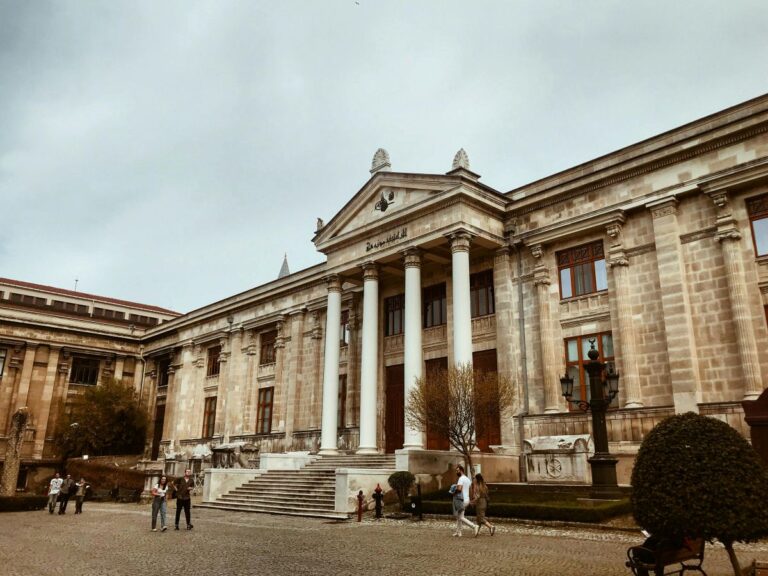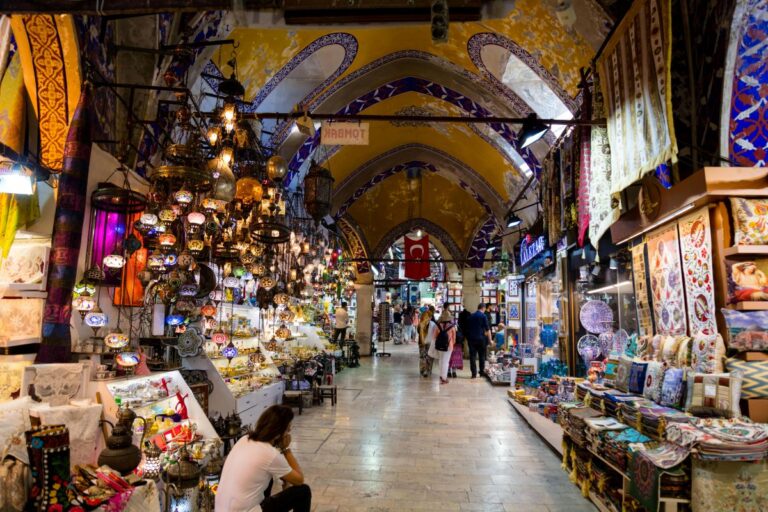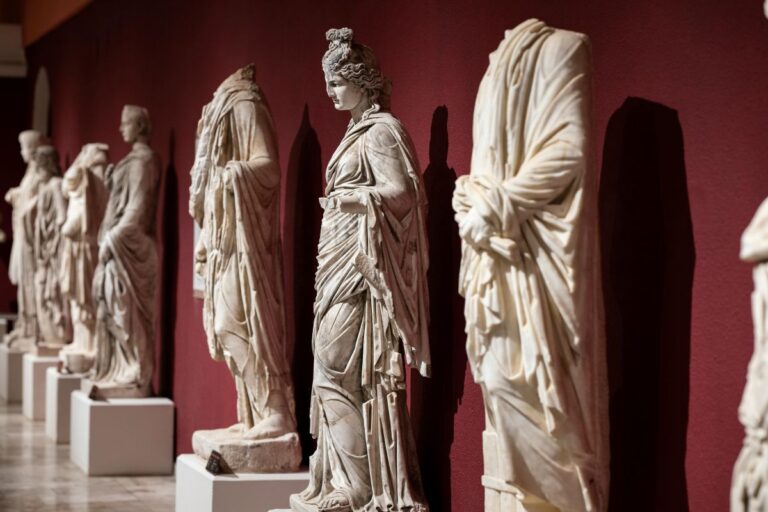
Today, UNESCO recognizes 22 World Heritage Sites in Turkey, ranging from the rock churches of Cappadocia to the ancient ruins of Ephesus and the archaeological wonders of Gobeklitepe. This complete guide covers every UNESCO site in Turkey with history, travel tips, and a map to help you plan your trip.
Turkey is one of the most historically and culturally rich countries in the world. Stretching across both Europe and Asia, this remarkable land has served as a bridge between civilizations for thousands of years. From Neolithic temples and Hittite capitals to Greek cities, Roman metropolises, Seljuk mosques, Ottoman masterpieces, and extraordinary cultural landscapes, Turkey preserves an unparalleled concentration of human heritage.
These sites span more than 12,000 years of human history. They include the world’s oldest known temple complex at Gobekli Tepe, the underground cities and rock-cut churches of Goreme National Park and the Rock Sites of Cappadocia, the marble streets of Ephesus, the colossal statues of Mount Nemrut, and the cosmopolitan skyline of Historic Areas of Istanbul.
For travelers, exploring UNESCO sites in Turkey is far more than checking famous landmarks off a list. Each site tells a different chapter in the story of humanity: the birth of agriculture, the rise of empires, the spread of Christianity, the flowering of Islamic art, and the creation of extraordinary architectural traditions.
This comprehensive guide introduces all 22 UNESCO World Heritage Sites in Turkey, explains why each one matters, and offers inspiration for planning unforgettable journeys across one of the world’s greatest open-air museums.
Several of Turkey’s UNESCO World Heritage Sites are best understood alongside the museums that preserve their archaeological discoveries. Our comprehensive Museums in Turkey guide explores these collections in greater detail.
Why Turkey Has So Many UNESCO World Heritage Sites
Few countries can match Turkey’s cultural and geographical diversity. Anatolia has been home to some of the world’s most influential civilizations, including the Hittites, Phrygians, Urartians, Greeks, Romans, Byzantines, Seljuks, and Ottomans.
Its strategic position between Europe, Asia, and the Middle East made it a crossroads of trade, religion, and ideas. Major events in world history unfolded here:
- The earliest monumental temples were built in southeastern Anatolia.
- The Hittites established one of the great empires of the Bronze Age.
- The first coins were minted in ancient Lydia.
- St. Paul traveled through Anatolia during his missionary journeys.
- Byzantine emperors ruled from Constantinople.
- The Ottoman Empire transformed cities such as Bursa, Edirne, and Istanbul.
UNESCO recognition reflects this extraordinary continuity and diversity.
In This Guide
Table of Contents
1. Historic Areas of Istanbul
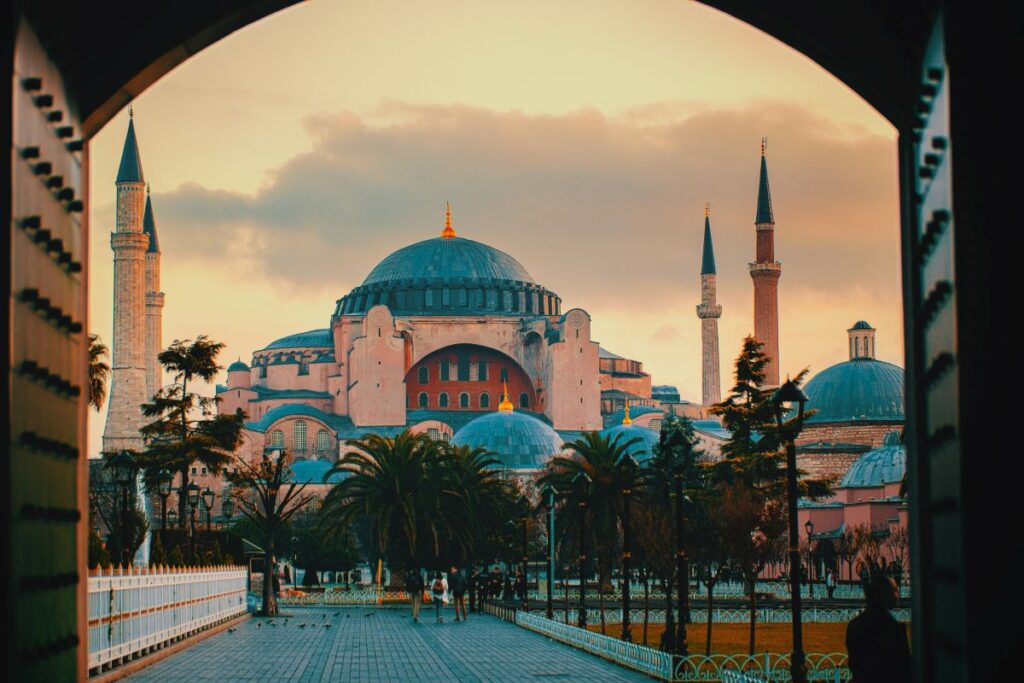
Historic Areas of Istanbul represent one of the most significant urban landscapes in world history. For more than 1,600 years, this extraordinary city served as the capital of the Roman, Byzantine, and Ottoman Empires.
The UNESCO-listed core includes icons such as Hagia Sophia, Topkapı Palace, Sultan Ahmed Mosque, and the Hippodrome of Constantinople.
Originally founded as Byzantium, renamed Constantinople, and later known as Istanbul, the city stood at the crossroads of Europe and Asia and shaped the history of Christianity, Islam, trade, and imperial politics.
Walking through the historic peninsula reveals an unparalleled concentration of monuments that illustrate the transformation of one city across multiple civilizations and religions.
Planning a visit? Explore our detailed guide to Best Things to Do in Istanbul.
2. Goreme National Park and the Rock Sites of Cappadocia
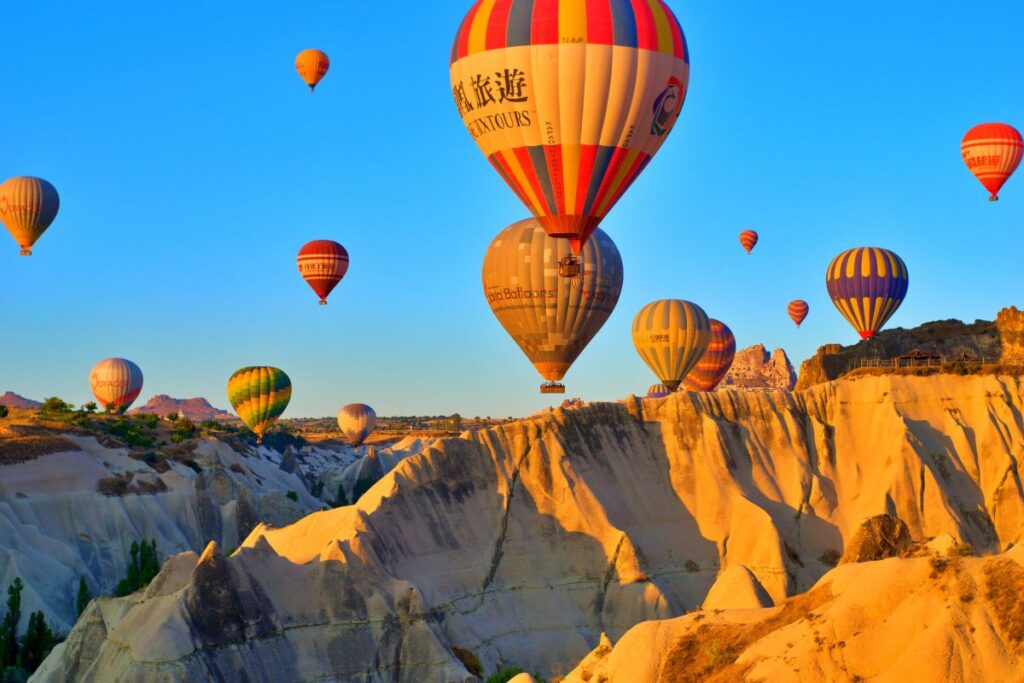
Goreme National Park and the Rock Sites of Cappadocia form one of the most extraordinary UNESCO World Heritage Sites in the world. Although UNESCO uses this official title, the designation encompasses far more than Göreme Open-Air Museum alone. It includes a vast cultural landscape of volcanic valleys, rock-cut churches, monastic complexes, underground cities, and ancient settlements spread across several provinces of central Anatolia.
For most travelers, this UNESCO site is simply known as Cappadocia—a region famous for surreal fairy chimneys, cave dwellings, hot air balloons, and some of the most remarkable examples of early Christian art anywhere in the world.
Millions of years ago, eruptions from Mount Erciyes, Mount Hasan, and Mount Göllü covered the region with thick layers of volcanic ash. Over time, wind and water carved the soft tuff into valleys, pinnacles, and cone-shaped formations. Human communities transformed this unusual geology into homes, monasteries, churches, and entire underground cities.
During the early centuries of Christianity, Cappadocia became an important center of monastic life. Believers carved sanctuaries directly into the rock and decorated them with vivid frescoes depicting scenes from the Bible. The region is also associated with major theological figures such as Basil the Great, Gregory of Nazianzus, and Gregory of Nyssa, collectively known as the Cappadocian Fathers.
Highlights of the UNESCO Site
The UNESCO designation covers numerous places of exceptional importance, including:
- Goreme Open-Air Museum
- Derinkuyu Underground City
- Kaymaklı Underground City
- Zelve Open Air Museum
- Pasabag
Together, these sites reveal how generations adapted to the landscape and created one of the world’s most distinctive cultural environments.
Why Cappadocia Matters
Cappadocia is exceptional because it combines geology, archaeology, religious history, and living tradition in a single landscape. Few UNESCO sites offer such a rich blend of natural beauty and human creativity.
For travelers, it is one of Turkey’s most unforgettable destinations. Whether you are exploring underground cities, admiring Byzantine frescoes, hiking through rose-colored valleys, or watching hot air balloons rise at sunrise, Cappadocia delivers one of the most extraordinary experiences in the world.
Planning a visit? Explore our complete guides to Cappadocia, including Best Things to Do in Cappadocia and How Many Days in Cappadocia.
3. Great Mosque and Hospital of Divrigi
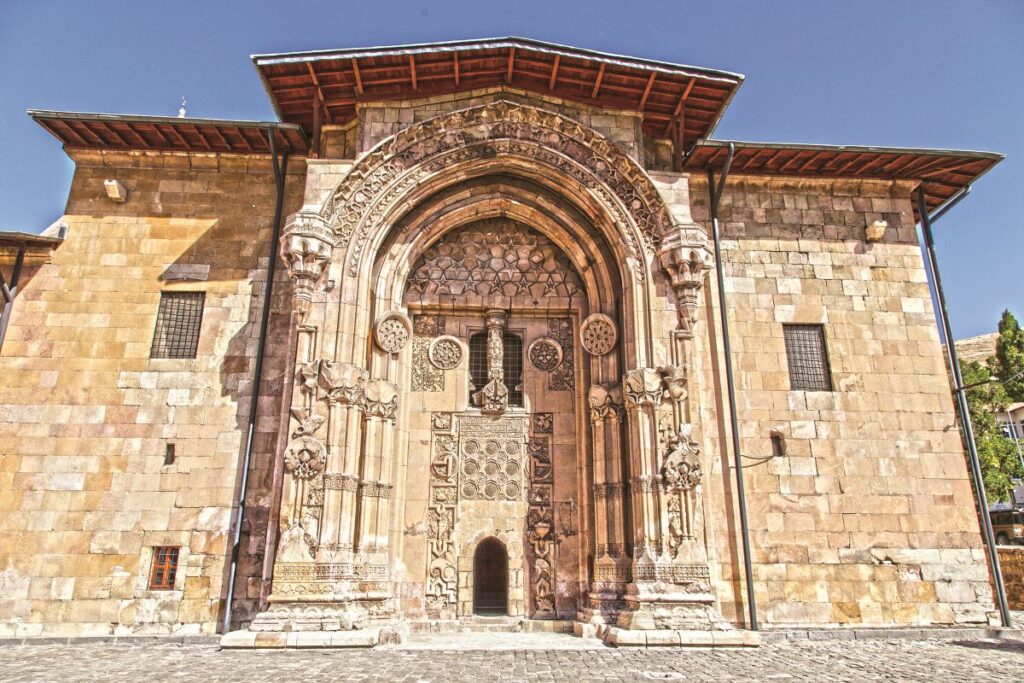
Great Mosque and Hospital of Divrigi is one of the finest masterpieces of medieval Islamic architecture and one of the most extraordinary monuments in Anatolia. Built in 1228–1229 during the Mengucek dynasty, this remarkable complex combines a congregational mosque with a hospital, reflecting the close relationship between faith, science, and charitable care in the medieval Islamic world.
Commissioned by the ruler Ahmet Shah and his wife Turan Melek, the structure is renowned for its astonishing stone carvings. Every portal is covered with intricate geometric, floral, and calligraphic motifs that demonstrate an extraordinary level of artistic imagination and technical skill.
The complex was designed by the architect Khurramshah of Ahlat, whose work is often compared to a monumental sculpture carved directly into stone. The ornamentation changes with the movement of sunlight, creating subtle visual effects throughout the day.
Beyond its artistic importance, the adjoining hospital illustrates the advanced understanding of medicine and public welfare in the medieval Islamic world. Patients were treated in a setting intended to promote healing through architecture, light, and sound.
Why Divrigi Matters
Divrigi is widely considered one of the greatest achievements of Anatolian Seljuk and early Turkish-Islamic art. Its architectural originality has no true parallel elsewhere in the world.
For many travelers, reaching Divrigi requires a detour into eastern central Anatolia, but the reward is immense. This UNESCO site remains one of Turkey’s most remarkable and least-visited treasures, offering a profound encounter with the artistic brilliance of the 13th century.
4. Hattusha: The Hittite Capital
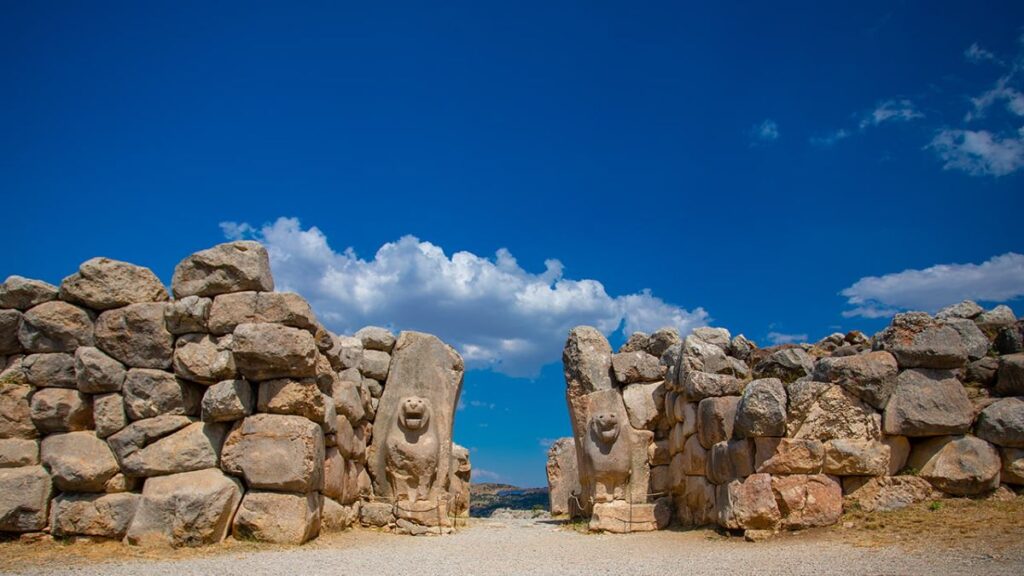
Hattusha was the capital of the Hittite Empire, one of the great powers of the Late Bronze Age. Flourishing between the 17th and 12th centuries BCE, the Hittites ruled much of Anatolia and northern Syria and stood alongside ancient Egypt, Assyria, and Babylonia as one of the dominant civilizations of the Near East.
Located in the rugged hills of central Anatolia, Hattusha was protected by massive fortification walls, monumental gates, and strategic high ground. The city covered a vast area and contained royal residences, temples, administrative buildings, and sacred spaces that reveal the sophistication of Hittite urban planning.
One of the most famous monuments is the Lion Gate, guarded by imposing stone lions. Nearby, the King’s Gate and the enigmatic Yerkapı demonstrate the scale and ambition of Hittite engineering. Just outside the city lies Yazılıkaya, an open-air sanctuary decorated with extraordinary rock reliefs depicting gods, goddesses, and royal figures.
Hattusha is also famous for the thousands of cuneiform tablets discovered in its archives. These texts include diplomatic correspondence, legal documents, myths, rituals, and the famous Treaty of Kadesh, one of the earliest known international peace agreements.
Why Hattusha Matters
Hattusha transformed our understanding of ancient Anatolia and the broader Bronze Age world. Its archives revealed the Hittite language, religion, diplomacy, and imperial administration, while its monuments testify to the power of a civilization that once rivaled the greatest kingdoms of the ancient Near East.
For history lovers, Hattusha is one of Turkey’s most important archaeological destinations and an essential stop for anyone interested in the origins of written history and statecraft.
To learn more about the civilization that built Hattusha, read our detailed guide to the Hittite Empire.
5. Nemrut Mountain
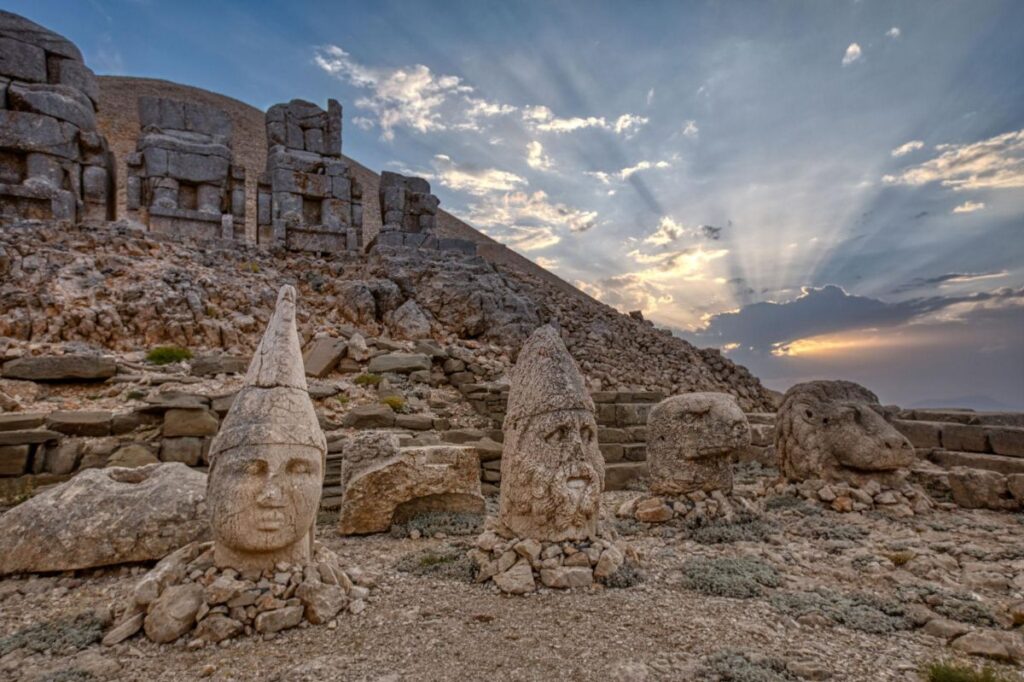
Mount Nemrut is one of the most extraordinary and enigmatic archaeological sites in the world. Rising to an altitude of 2,150 meters in southeastern Turkey, this remote mountain sanctuary was created in the 1st century BCE by Antiochus I Theos of Commagene, ruler of the small but culturally sophisticated Kingdom of Commagene.
Antiochus sought to unite Persian and Hellenistic traditions and to present himself as a semi-divine ruler descended from both Greek and Iranian ancestors. To commemorate this vision, he ordered the construction of a monumental tomb sanctuary at the summit of Nemrut.
The site is dominated by colossal limestone statues representing a unique pantheon that combines Greek and Persian deities, including Zeus-Oromasdes, Apollo-Mithras, Heracles-Artagnes, and the deified king himself. Although the heads of these statues have fallen from their original seated bodies, they remain among the most iconic images in world archaeology.
Two ceremonial terraces, on the eastern and western sides of the mountain, offer breathtaking views—especially at sunrise and sunset, when the statues are bathed in dramatic light. Behind them rises a vast artificial tumulus of crushed stone, believed to conceal the royal burial chamber, which has never been conclusively located.
Why Mount Nemrut Matters
Mount Nemrut is remarkable not only for its scale and setting but also for the philosophical and religious vision it embodies. It represents one of the most striking attempts in antiquity to merge different cultural traditions into a single royal ideology.
For travelers, Nemrut provides one of Turkey’s most unforgettable experiences. Standing among the giant stone heads above the clouds creates a profound sense of mystery and connection to one of Anatolia’s most fascinating kingdoms.
Planning a visit? See our Eastern Turkey Itinerary for practical tips on including Mount Nemrut in a broader journey through southeastern Anatolia.
6. Hierapolis-Pamukkale
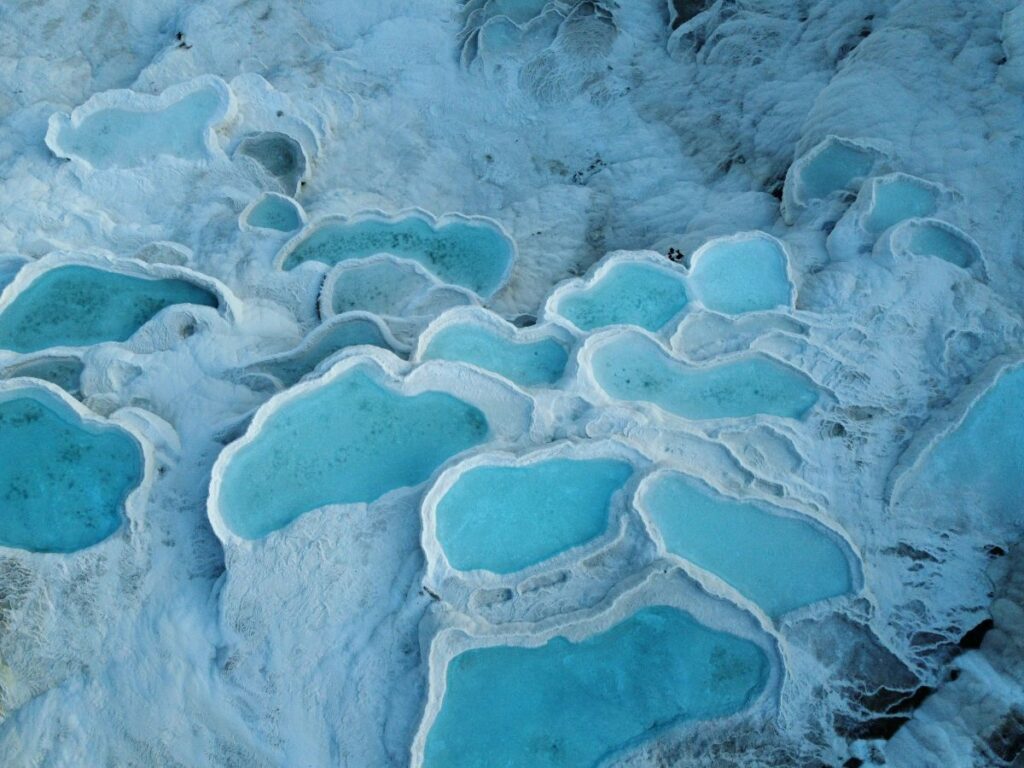
Hierapolis-Pamukkale is one of Turkey’s most spectacular UNESCO World Heritage Sites, combining extraordinary natural beauty with the remains of a major Greco-Roman and early Christian city. Few places in the world offer such a striking blend of geology, archaeology, and religious history.
The dazzling white terraces of Pamukkale were formed over thousands of years as mineral-rich thermal waters flowed down the hillside and deposited layers of calcium carbonate. The result is a surreal landscape of gleaming travertine pools that has attracted visitors since antiquity.
Above these terraces lies Hierapolis, founded in the 2nd century BCE by the kings of Pergamon and later transformed into a flourishing Roman spa city. Visitors can explore an exceptionally well-preserved theater, extensive necropolis, colonnaded streets, baths, temples, and early Christian monuments.
Hierapolis also holds deep significance in Christian history. According to ancient tradition, Philip the Apostle was martyred here, and a monumental octagonal shrine, the Martyrium of St. Philip, was built in his honor. Together with nearby Laodicea on the Lycus and Colossae, Hierapolis formed one of the most important Christian regions of Roman Asia Minor.
Why Hierapolis-Pamukkale Matters
This UNESCO site is exceptional because it unites natural wonder and human history in a single landscape. Visitors can walk barefoot across the famous travertines and, within minutes, explore the monumental ruins of an ancient city that served as a center of healing, pilgrimage, and early Christianity.
For travelers, Hierapolis-Pamukkale is one of the most memorable destinations in Turkey and a perfect example of how nature and culture can create a truly extraordinary World Heritage Site.
Planning a visit? Explore our detailed guide to Best Things to Do in Pamukkale.
7. Xanthos-Letoon
Xanthos-Letoon preserves the political, religious, and artistic heart of ancient Lycia, one of the most distinctive civilizations of the eastern Mediterranean. This UNESCO World Heritage Site consists of two closely connected locations: Xanthos, the former Lycian capital, and Letoon, the principal sanctuary of the Lycian League.
The Lycians developed their own language, script, funerary traditions, and federal political system. Their unique culture blended Anatolian, Greek, and Persian influences and later inspired political thinkers interested in early forms of representative government.
Xanthos became famous in antiquity for dramatic acts of resistance. Ancient authors describe how its inhabitants chose collective self-sacrifice rather than surrender to invading armies, making the city a symbol of independence and courage.
The archaeological remains include theaters, temples, inscriptions, monumental tombs, and some of the finest examples of Lycian funerary architecture. Letoon, dedicated to the goddess Leto and her children Apollo and Artemis, served as the spiritual center of the Lycian world.
Why Xanthos-Letoon Matters
Xanthos-Letoon offers a rare opportunity to explore a civilization that was both deeply rooted in Anatolia and fully connected to the wider Mediterranean world. Its inscriptions were crucial in deciphering the Lycian language, while its monuments reveal an original and highly sophisticated culture.
For travelers interested in archaeology, mythology, and lesser-known ancient civilizations, Xanthos-Letoon is one of the most rewarding UNESCO sites in Turkey.
Xanthos is also featured in our comprehensive guide to Ancient Cities in Turkey, which explores some of the most remarkable archaeological sites across Anatolia.
8. City of Safranbolu
City of Safranbolu is one of the best-preserved Ottoman towns in the world and a remarkable window into the urban life of Anatolia during the 18th and 19th centuries. Nestled in the forested hills of the Black Sea region, Safranbolu prospered as an important stop on the caravan routes connecting the interior of Anatolia with the ports of the Black Sea.
The town takes its name from saffron, one of the most valuable spices in the world, which has been cultivated in the surrounding region for centuries. During its golden age, wealthy merchants built elegant timber-framed mansions, inns, baths, mosques, fountains, and workshops, many of which survive in exceptional condition today.
Walking through the cobbled streets of Safranbolu feels like stepping back into the Ottoman era. Traditional houses with projecting upper stories line narrow lanes, while the historic bazaar continues to host craftsmen producing copperware, leather goods, sweets, and other local specialties.
Key monuments include the Cinci Han, a grand caravanserai that once welcomed merchants and travelers, and Cinci Hamam, one of the finest surviving Ottoman bathhouses in Anatolia.
Why Safranbolu Matters
Safranbolu is an outstanding example of traditional Ottoman urban planning and domestic architecture. Unlike many historic towns that were heavily altered in the modern era, Safranbolu has retained the scale, materials, and atmosphere of a prosperous provincial center.
For travelers interested in architecture, cultural heritage, and everyday life in the Ottoman world, Safranbolu offers one of the most authentic and atmospheric experiences in Turkey.
9. Archaeological Site of Troy
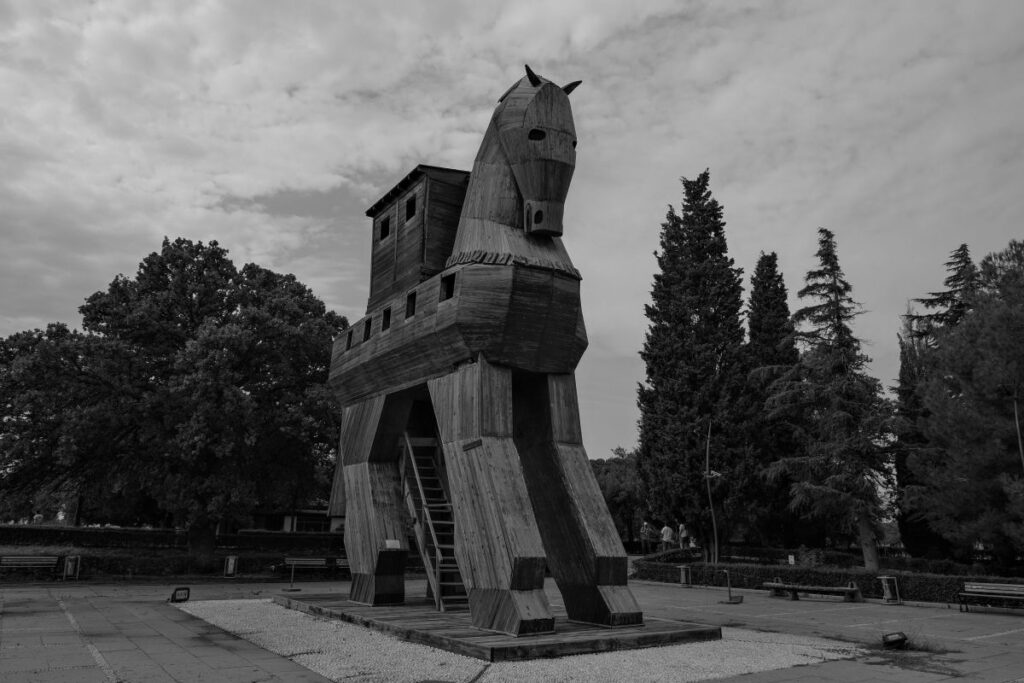
Archaeological Site of Troy is one of the most famous archaeological sites in the world, celebrated as the legendary setting of the Iliad and the Trojan War. For centuries, Troy occupied the boundary between myth and history, inspiring poets, historians, and travelers from antiquity to the present day.
Located near the entrance to the Dardanelles, Troy controlled one of the most strategic waterways of the ancient world, linking the Aegean Sea with the Black Sea. Its position made it an important center of trade and cultural exchange for more than four thousand years.
Archaeological excavations have revealed that Troy was not a single city but a sequence of settlements built one atop another, designated Troy I through Troy IX. These layers span from the Early Bronze Age to the Roman period and illustrate the extraordinary longevity of the site.
The city’s fame was immortalized by Homer, whose Iliad recounts the conflict between the Greeks and Trojans and introduces enduring figures such as Achilles, Hector, and Helen of Troy. Although the precise historical basis of the Trojan War remains debated, the archaeological significance of Troy is unquestionable.
Visitors can walk through fortification walls, gates, temples, theaters, and the remains of settlements spanning millennia. Nearby, the Troy Museum provides one of the finest archaeological presentations in Turkey, offering rich context for the discoveries and legends associated with the site.
Why Troy Matters
Troy occupies a unique place at the intersection of archaeology, literature, and mythology. Few places on Earth have shaped the cultural imagination of humanity as profoundly as this ancient city.
For travelers, Troy offers the rare opportunity to stand in a landscape that has inspired stories of heroism, conflict, and destiny for nearly three thousand years.
Troy is also featured in our comprehensive guide to Ancient Cities in Turkey, which explores some of the most remarkable archaeological sites across Anatolia.
10. Selimiye Mosque and Its Social Complex
Selimiye Mosque is widely regarded as the masterpiece of Mimar Sinan, the greatest architect of the Ottoman Empire and one of the most accomplished builders in world history. Completed in 1575 during the reign of Selim II, the mosque represents the culmination of Sinan’s lifelong pursuit of architectural perfection.
Located in Edirne, the former Ottoman capital before the conquest of Constantinople, the complex dominates the city skyline with its harmonious proportions and four slender minarets. Sinan himself described Selimiye as his “masterpiece,” a statement that reflects both technical confidence and artistic achievement.
The mosque’s central dome, supported by an elegant system of arches and piers, creates an immense and unified interior space filled with light. Delicate İznik tiles, refined calligraphy, and balanced geometric design contribute to an atmosphere of extraordinary serenity.
Beyond the mosque itself, the social complex includes educational and charitable buildings that illustrate the Ottoman concept of integrating worship, learning, and community service into a single urban ensemble.
Why Selimiye Mosque Matters
Selimiye Mosque represents one of the highest achievements of Islamic architecture anywhere in the world. Its engineering brilliance, aesthetic harmony, and spiritual power place it among the greatest religious monuments ever constructed.
For travelers, Selimiye offers an unforgettable encounter with the artistic and intellectual sophistication of the Ottoman Empire and stands as one of Turkey’s most important architectural treasures.
11. Neolithic Site of Catalhoyuk
Catalhoyuk is one of the most important archaeological sites in the world for understanding the origins of settled life. Dating back more than 9,000 years, this remarkable Neolithic settlement offers an unparalleled glimpse into the transition from mobile hunter-gatherer societies to permanent farming communities.
Located on the Konya Plain in central Anatolia, Çatalhöyük flourished between approximately 7400 and 6200 BCE. At its peak, it was one of the largest and most densely populated settlements of its time, with thousands of inhabitants living in closely packed mudbrick houses.
One of the most distinctive features of Çatalhöyük is its unusual urban layout. Houses were built directly adjacent to one another without streets, and residents entered through openings in the roofs. The rooftops functioned as circulation spaces, creating a unique architectural landscape unlike any modern city.
Inside the houses, archaeologists discovered wall paintings, sculpted installations, burials beneath floors, and figurines that reveal complex symbolic and ritual practices. These discoveries transformed our understanding of early social organization, religion, and domestic life.
The site gained international prominence through the work of James Mellaart and later Ian Hodder, whose multidisciplinary excavations made Catalhoyuk one of the most intensively studied prehistoric settlements in the world.
Why Catalhoyuk Matters
Catalhoyuk is a cornerstone in the study of human civilization. It provides crucial evidence about agriculture, architecture, social structure, ritual behavior, and the emergence of large permanent communities.
For travelers interested in archaeology and the deep history of humanity, Catalhoyuk offers an extraordinary opportunity to stand at one of the earliest chapters of urban life.
12. Bursa and Cumalikizik: The Birth of the Ottoman Empire
Bursa and Cumalikizik: The Birth of the Ottoman Empire commemorates the formative landscape of one of history’s most influential empires. Before Istanbul became the imperial capital, Bursa served as the first major urban center of the expanding Ottoman state and laid the foundations of Ottoman architecture, administration, and culture.
Conquered in 1326 by Orhan Gazi, Bursa quickly evolved into a thriving political, commercial, and spiritual center. The city became famous for its külliyes—integrated complexes combining mosques, schools, kitchens, baths, and charitable institutions. These complexes established a distinctive Ottoman model of urban planning that would later shape cities across three continents.
The UNESCO inscription includes several early Ottoman monuments, among them:
- Ulu Cami (Bursa Grand Mosque)
- Yesil Mosque
- Yesil Tomb
- Muradiye Complex
- Koza Han
Also included is Cumalikizik, an exceptionally well-preserved Ottoman village at the foot of Mount Uludag. Its stone-paved streets and traditional timber houses provide a vivid impression of rural life in the early Ottoman period.
Why Bursa and Cumalikizik Matter
This UNESCO site illustrates how a frontier principality evolved into a global empire. The architectural and urban innovations developed in Bursa became the blueprint for later Ottoman capitals such as Edirne and Istanbul.
For travelers, Bursa and Cumalikizik offer an extraordinary opportunity to experience the origins of Ottoman civilization in a setting where monumental architecture and traditional village life remain remarkably intact.
13. Pergamon and Its Multi-Layered Cultural Landscape
Pergamon and Its Multi-Layered Cultural Landscape is one of the most remarkable archaeological and historical sites in the Mediterranean world. Rising dramatically above the modern town of Bergama, ancient Pergamon was the capital of the Attalid Kingdom and one of the greatest intellectual and artistic centers of the Hellenistic age.
During the 3rd and 2nd centuries BCE, Pergamon rivaled Alexandria and Athens as a center of scholarship and culture. Its famous library reportedly held hundreds of thousands of scrolls and gave its name to parchment (pergamenum), an innovation associated with the city.
The acropolis crowns a steep hill and contains royal palaces, temples, stoas, and one of the most dramatic ancient theaters in the world. The city was also home to the monumental Altar of Zeus, whose sculptural friezes are considered masterpieces of Hellenistic art.
At the foot of the acropolis lies the Asclepieion of Pergamon, one of antiquity’s most celebrated healing centers. Patients from across the Roman world came here seeking treatment through medicine, ritual, and dream interpretation.
Pergamon also occupies an important place in Christian history as one of the Seven Churches of Revelation. The Book of Revelation describes it as the place “where Satan’s throne is” (Revelation 2:13), a phrase that reflects the city’s intense religious and imperial significance.
Why Pergamon Matters
Pergamon is extraordinary because it preserves multiple layers of human achievement: Hellenistic kingship, Roman medicine, early Christianity, and later Islamic and Ottoman heritage.
For travelers, it offers one of Turkey’s richest and most rewarding archaeological experiences, combining spectacular landscapes with profound historical depth.
Pergamon is also featured in our comprehensive guide to Ancient Cities in Turkey.
14. Diyarbakir Fortress and Hevsel Gardens Cultural Landscape
Diyarbakir Fortress and Hevsel Gardens Cultural Landscape is one of the most impressive urban and agricultural landscapes in the Middle East. Overlooking the upper Tigris River, this UNESCO World Heritage Site illustrates the enduring relationship between a fortified city and the fertile gardens that sustained it for thousands of years.
The massive black basalt walls of Diyarbakir Fortress stretch for nearly six kilometers and are among the longest and best-preserved city walls in the world. Much of the present fortifications date to the Roman and Byzantine periods, though the site’s history extends back far earlier and continued through Islamic, Seljuk, and Ottoman eras.
Within and around the fortress, numerous civilizations left their mark, including Assyrians, Persians, Romans, Arabs, Artuqids, and Ottomans. The city became one of the most important political and cultural centers of Upper Mesopotamia.
At the foot of the walls lie the Hevsel Gardens, a lush agricultural zone that has supplied the city with food and water for millennia. Poplar groves, orchards, vegetable plots, and wetlands create a unique cultural landscape where urban life and agriculture remain closely intertwined.
Why Diyarbakır and Hevsel Matter
This UNESCO site is exceptional because it combines monumental military architecture with a living agricultural system that has functioned continuously since antiquity.
For travelers interested in Mesopotamian history, Islamic architecture, and cultural landscapes, Diyarbakir offers one of Turkey’s most distinctive and historically layered destinations.
To explore the broader historical context of this region, read our in-depth guide to Mesopotamia.
15. Ephesus
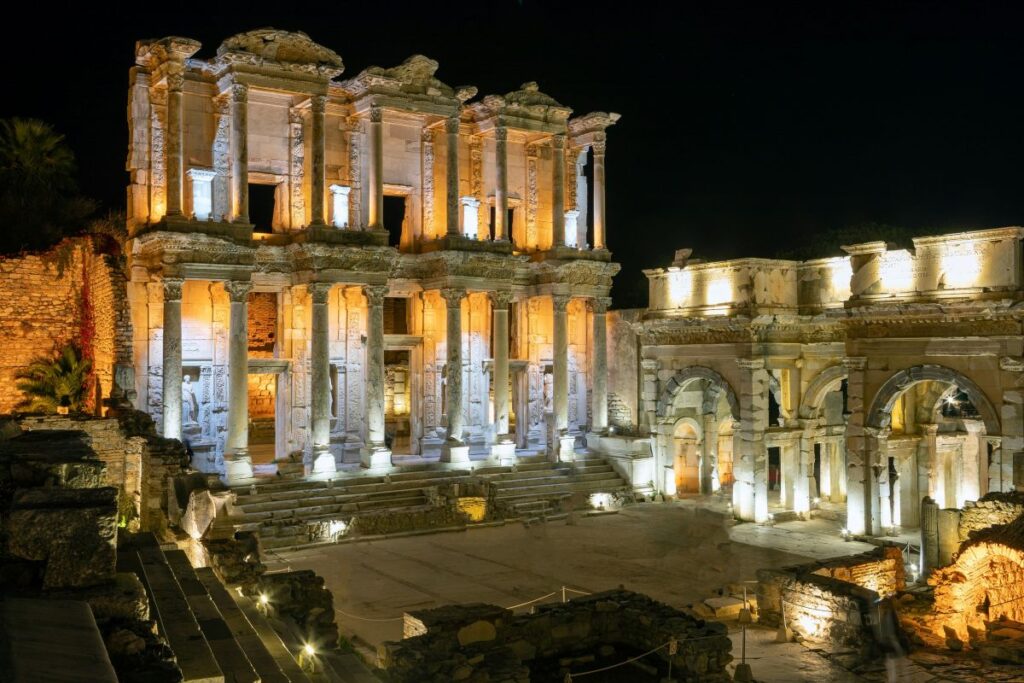
Ephesus is one of the most celebrated archaeological sites in the world and arguably the best-preserved classical city in the eastern Mediterranean. Walking through its marble streets offers an extraordinary opportunity to experience the scale, sophistication, and daily life of a major Roman metropolis.
Originally founded near the Aegean coast and later rebuilt in the Hellenistic period, Ephesus flourished under Roman rule as the capital of the province of Asia. At its height, it was one of the largest and wealthiest cities of the Roman Empire, with a population that may have exceeded 200,000 inhabitants.
The city is famous for iconic monuments such as the Library of Celsus, the Great Theatre of Ephesus, Curetes Street, the Terrace Houses, and the remains of the Temple of Artemis, one of the Seven Wonders of the Ancient World.
Ephesus also occupies a central place in Christian history. Paul the Apostle spent considerable time here, and the dramatic events described in Acts 19 took place in the city. Ephesus is one of the Seven Churches of Revelation and is closely associated with John the Apostle and the tradition of the House of the Virgin Mary.
Why Ephesus Matters
Ephesus combines extraordinary archaeology with immense historical and spiritual significance. It illuminates the worlds of Greek urbanism, Roman administration, early Christianity, and the interaction of diverse religious traditions.
For travelers, Ephesus is an essential destination and one of the most unforgettable UNESCO World Heritage Sites in Turkey.
Planning a visit? Explore our detailed guide to Best Things to Do in Ephesus.
16. Archaeological Site of Ani
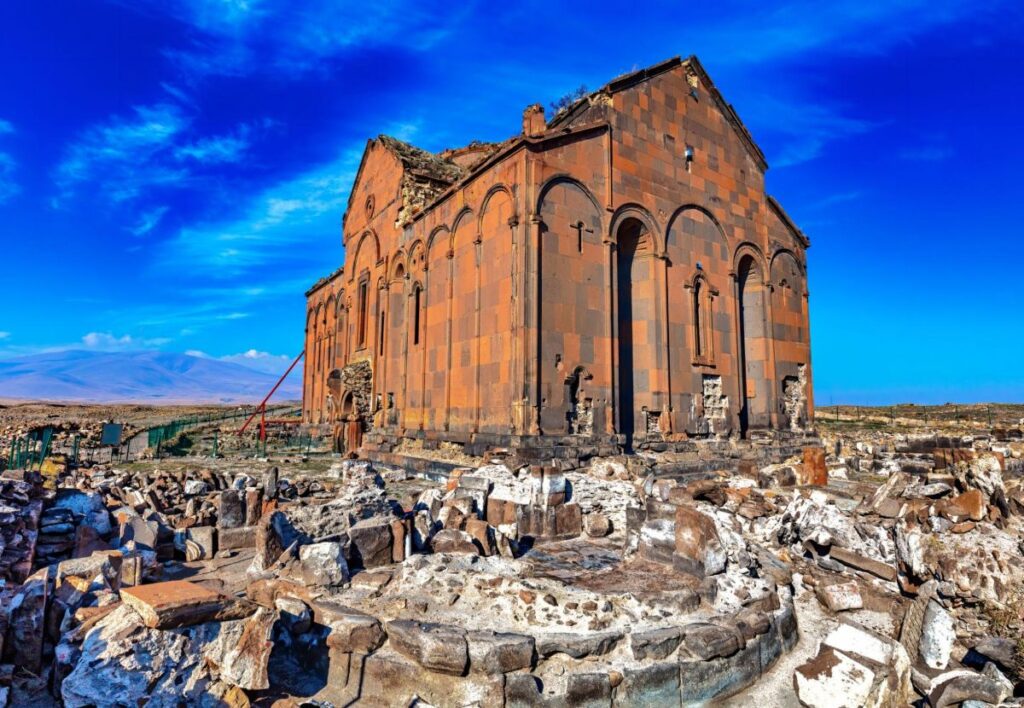
Archaeological Site of Ani is one of the most atmospheric and historically significant medieval cities in the world. Perched dramatically on a windswept plateau above the gorge of the Akhurian River along the present-day border between Turkey and Armenia, Ani preserves the haunting remains of a once-thriving metropolis known as the “City of 1,001 Churches.”
During the 10th and 11th centuries, Ani served as the capital of the Bagratid Armenian Kingdom and became one of the largest and most prosperous cities of the medieval world. Situated on major trade routes linking the Caucasus, Anatolia, and Central Asia, the city flourished as a center of commerce, architecture, and religious life.
Visitors can explore the magnificent Cathedral of Ani, designed by the renowned architect Trdat, along with the Church of St. Gregory of Tigran Honents, the Church of the Redeemer, city walls, palaces, and bridges. These monuments display a remarkable synthesis of Armenian, Byzantine, Seljuk, and Georgian influences.
Ani later passed through the hands of Byzantines, Seljuks, Georgians, Mongols, and other powers, each leaving traces within its monumental landscape. Earthquakes, shifting trade routes, and political upheavals eventually led to the city’s decline and abandonment.
Why Ani Matters
Ani is extraordinary for its dramatic setting, architectural innovation, and historical significance as one of the great cities of the medieval Silk Road.
For travelers, few places in Turkey evoke such a powerful sense of grandeur and melancholy. Walking among the ruined churches and fortifications of Ani offers an unforgettable encounter with one of the world’s most remarkable lost cities.
17. Aphrodisias
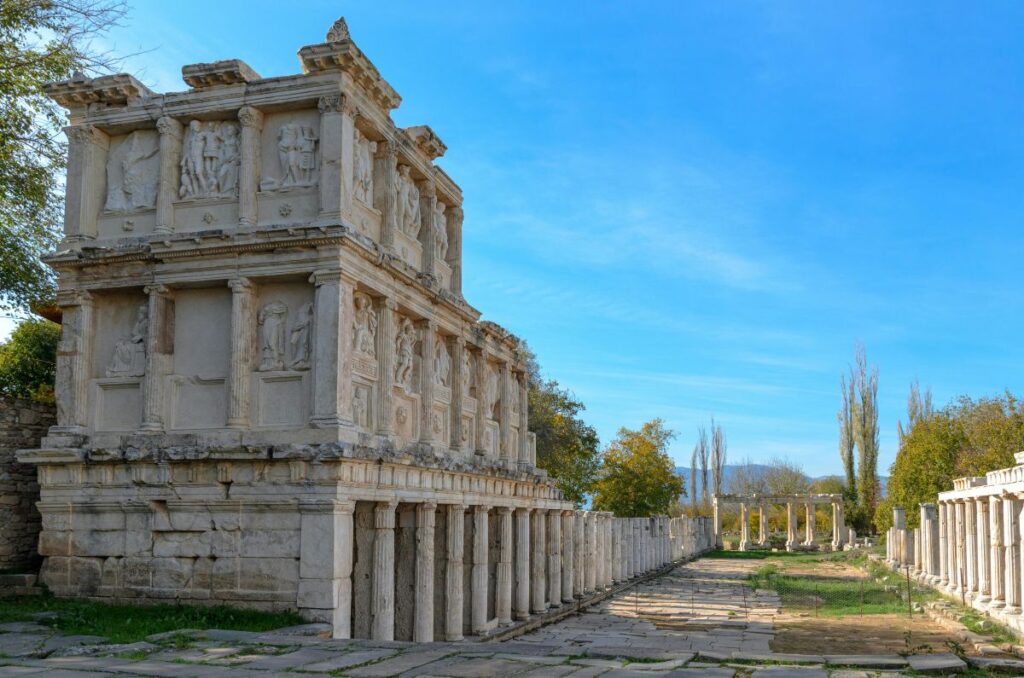
Aphrodisias is one of the most elegant and best-preserved ancient cities in Turkey. Dedicated to Aphrodite, the city flourished as a major religious center and as one of the most celebrated schools of sculpture in the Roman world.
Located in the fertile interior of southwestern Anatolia, Aphrodisias benefited from nearby quarries of exceptionally fine white marble. This resource supported a thriving artistic tradition, and the city’s sculptors produced statues and reliefs that were exported throughout the Roman Empire.
The archaeological remains are outstanding. Highlights include the monumental Tetrapylon gateway, the Temple of Aphrodite, the Sebasteion relief complex, the council house (Bouleuterion), baths, agora, and one of the best-preserved stadiums in the ancient world, capable of accommodating tens of thousands of spectators.
Aphrodisias also played an important role during the transition from paganism to Christianity. The Temple of Aphrodite was eventually transformed into a Christian basilica, illustrating the profound religious changes that reshaped the city in Late Antiquity.
Why Aphrodisias Matters
Aphrodisias is exceptional for the quality of its preservation and for the extraordinary artistic achievements of its sculptural school. Few ancient cities allow visitors to appreciate so vividly the relationship between local craftsmanship, religion, and imperial culture.
For travelers interested in archaeology, art history, and classical civilization, Aphrodisias is one of Turkey’s most rewarding and unforgettable destinations.
18. Gobekli Tepe
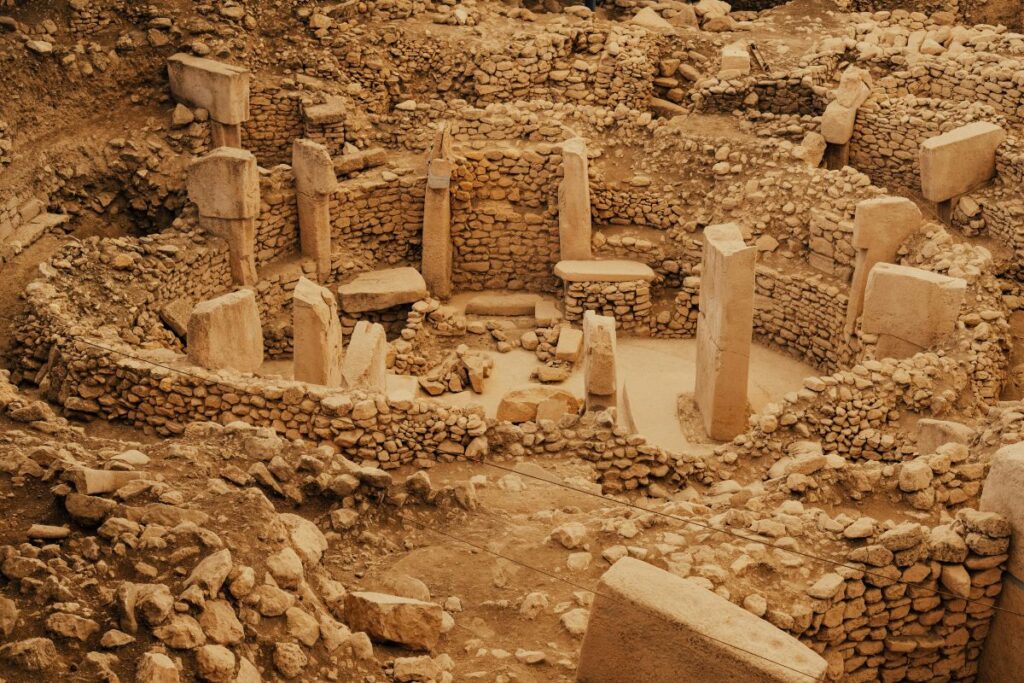
Gobekli Tepe is one of the most revolutionary archaeological discoveries in modern times. Dating to approximately 9600 BCE, this extraordinary sanctuary predates Stonehenge by more than six thousand years and the Egyptian pyramids by nearly seven thousand years.
Located on a hilltop near Sanliurfa, Gobekli Tepe consists of circular and oval enclosures built from massive T-shaped limestone pillars, some weighing up to sixteen tons. Many are decorated with finely carved reliefs of animals such as foxes, snakes, vultures, boars, and cranes.
The site was first recognized by Klaus Schmidt, whose excavations transformed our understanding of early human societies. Gobekli Tepe demonstrated that large-scale ritual architecture emerged before settled agriculture, challenging long-held assumptions about the origins of civilization.
Rather than being a simple village, Gobekli Tepe appears to have been a ceremonial center where hunter-gatherer communities gathered for ritual activities, feasting, and social interaction. Its discovery has profoundly influenced debates about religion, cooperation, and the development of complex societies.
Why Gobekli Tepe Matters
Gobekli Tepe forces us to rethink one of the most fundamental questions in human history: what motivated people to build monumental structures and organize large communities?
For travelers, visiting Gobekli Tepe offers a rare opportunity to stand at one of the earliest known sacred landscapes on Earth and to contemplate the deep roots of human spirituality and creativity.
To explore this extraordinary site in greater detail, read our comprehensive guide to Gobeklitepe.
19. Arslantepe Mound
Arslantepe Mound is one of the most important archaeological sites in the Near East for understanding the emergence of early states and centralized political authority. Occupied for more than six thousand years, the mound preserves a long sequence of settlements that document the transformation from village societies to increasingly complex urban and administrative systems.
The most significant discoveries date to the late 4th millennium BCE, when Arslantepe developed into a major regional center. Excavations revealed one of the world’s earliest known palatial complexes, complete with administrative offices, storerooms, seals, and evidence of centralized redistribution.
Among the most remarkable finds are some of the earliest known swords ever discovered. These arsenical copper weapons indicate that technological innovation and organized political power were already well developed in eastern Anatolia more than five thousand years ago.
The site was excavated for decades by Italian archaeologists, whose work demonstrated that early forms of bureaucracy, social hierarchy, and state organization emerged in this region at a very early date.
Why Arslantepe Matters
Arslantepe provides crucial evidence for the origins of government, administration, and institutional power. Its palace complex and early weapons reveal a society undergoing profound transformation.
For travelers interested in the deep history of civilization, Arslantepe is one of Turkey’s most significant yet still relatively underappreciated UNESCO World Heritage Sites.
20. Gordion
Gordion was the capital of the Phrygian Kingdom and one of the most important archaeological sites in Anatolia. Located on the great plateau of central Turkey, Gordion is inseparably linked with legend, kingship, and one of antiquity’s most enduring stories.
The site is best known as the city of King Midas, whose name became synonymous with immense wealth and the famous “golden touch.” Although the legend is mythical, archaeology confirms that Gordion was indeed the center of a powerful Iron Age kingdom that dominated much of central Anatolia during the 8th century BCE.
Gordion also gave the world the story of the Gordian Knot. According to tradition, Alexander the Great solved the seemingly impossible knot, symbolically claiming dominion over Asia.
Visitors can explore the ancient citadel mound, defensive structures, and nearby tumuli scattered across the landscape. The most famous is the monumental burial mound traditionally associated with Midas, one of the largest tumuli in the world and an extraordinary feat of ancient engineering.
Why Gordion Matters
Gordion is exceptional because it combines archaeological significance with legendary narratives that have shaped world culture for more than two millennia.
For travelers, it offers a compelling encounter with the Phrygian civilization and the enduring stories of King Midas and Alexander the Great, making it one of the most fascinating UNESCO World Heritage Sites in Turkey.
21. Wooden Hypostyle Mosques of Medieval Anatolia
Wooden Hypostyle Mosques of Medieval Anatolia is one of Turkey’s most distinctive UNESCO World Heritage inscriptions. Added to the World Heritage List in 2023, this serial property brings together five extraordinary mosques that showcase the sophisticated woodworking traditions and architectural ingenuity of medieval Anatolia.
The inscription includes:
- Aslanhane Mosque
- Esrefoglu Mosque
- Sivrihisar Grand Mosque
- Mahmut Bey Mosque
- Ahi Serefeddin Mosque
These mosques are characterized by forests of finely crafted wooden columns supporting broad flat ceilings, creating warm and harmonious interiors that differ markedly from the large domed mosques more commonly associated with Ottoman architecture.
Many preserve painted decorations, carved capitals, and structural systems that have survived for centuries. Their enduring stability is a testament to the high level of technical knowledge possessed by Seljuk and post-Seljuk craftsmen.
Why the Wooden Hypostyle Mosques Matter
This UNESCO inscription highlights an architectural tradition that is both technically sophisticated and aesthetically unique. It demonstrates how wood was used to create monumental sacred spaces of remarkable beauty and durability.
For travelers and architecture enthusiasts, these mosques offer a fascinating perspective on the diversity of Islamic architecture in Anatolia and the creativity of medieval artisans.
22. Sardis and the Lydian Tumuli of Bin Tepe
Sardis and the Lydian Tumuli of Bin Tepe is the newest UNESCO World Heritage Site in Turkey and one of the most historically significant archaeological landscapes in Anatolia. It preserves the capital of the ancient Kingdom of Lydia together with one of the largest royal necropolises in the world.
During the 7th and 6th centuries BCE, Sardis was the seat of the powerful Lydian kings, most famously Croesus, whose legendary wealth gave rise to the expression “rich as Croesus.” Lydia occupies a unique place in world history because it is widely associated with the invention and standardization of coinage, a development that transformed commerce across the ancient world.
The archaeological remains of Sardis include a monumental Roman gymnasium, one of the largest ancient synagogues ever discovered, the Temple of Artemis, and extensive residential and civic areas. The site also played an important role in early Christianity as one of the Seven Churches of Revelation.
Nearby lies Bin Tepe, meaning “Thousand Hills,” a vast landscape dotted with royal burial mounds. The largest tumulus, traditionally attributed to King Alyattes, ranks among the largest ancient tombs in the world and powerfully illustrates the scale and ambition of the Lydian monarchy.
Why Sardis and Bin Tepe Matter
This UNESCO inscription brings together economic innovation, royal power, religious diversity, and Biblical history in a single extraordinary landscape.
For travelers, Sardis offers one of Turkey’s richest archaeological experiences, while the tumuli of Bin Tepe provide a dramatic reminder of the wealth and influence of one of Anatolia’s most fascinating civilizations.
Final Thoughts
Exploring the UNESCO World Heritage Sites of Turkey is a journey through the story of human civilization itself. Few countries offer such an extraordinary concentration of cultural and natural treasures within a single destination.
From the prehistoric pillars of Göbekli Tepe and Çatalhöyük to the imperial capitals of Hattusha, Pergamon, and Ephesus; from the rock-cut churches and underground cities of Cappadocia to the Ottoman masterpieces of Bursa, Edirne, and Safranbolu, Turkey presents an unparalleled mosaic of cultures, religions, and artistic traditions.
These 22 UNESCO World Heritage Sites reveal how Anatolia has served as a bridge between continents and civilizations for more than twelve thousand years. Here, the earliest temples were built, some of the world’s first cities emerged, great empires rose and fell, Christianity spread across Asia Minor, and Islamic and Ottoman architecture reached extraordinary heights.
For travelers, these sites offer far more than impressive monuments. They provide a deeper understanding of the ideas, beliefs, and achievements that shaped the modern world. Whether you are fascinated by archaeology, history, religion, architecture, or cultural landscapes, Turkey is one of the most rewarding destinations on Earth.
If you are planning a journey through Turkey, these UNESCO sites offer the perfect framework for unforgettable itineraries and lifelong memories.
Further Reading
Continue exploring Turkey’s extraordinary heritage with our in-depth guides:
- Ancient Cities in Turkey
- Biblical Sites in Turkey
- 10 Day Biblical Turkey Itinerary
- Hittites: The Forgotten Empire of Anatolia
- Gobeklitepe
- Karahantepe
- Mesopotamia: The Cradle of Civilization
Official Resources
For official information about World Heritage Sites, visit the UNESCO World Heritage Centre.
For readers interested in archaeological and historical background, the Metropolitan Museum of Art – Heilbrunn Timeline of Art History provides excellent scholarly overviews.