Few archaeological sites in the world capture the imagination quite like Ephesus.
Once one of the largest cities in the Roman Empire, Ephesus welcomed merchants, pilgrims, emperors, and travelers from across the Mediterranean. Today, its remarkably preserved streets, temples, theaters, and public buildings allow visitors to step directly into the ancient world.
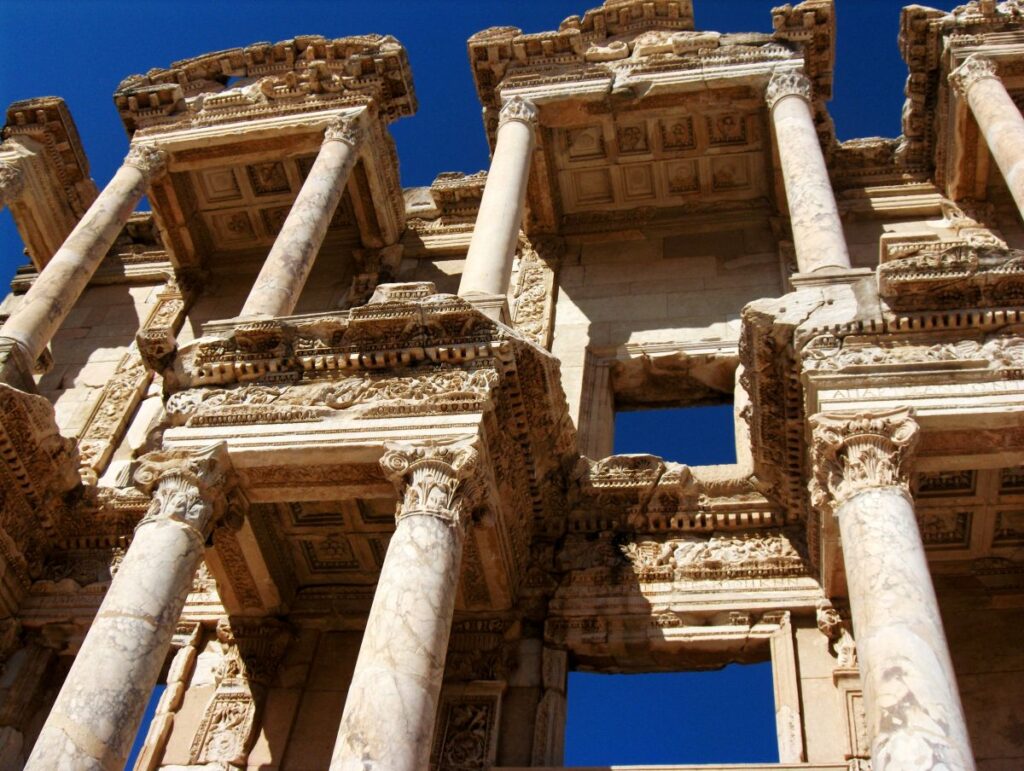
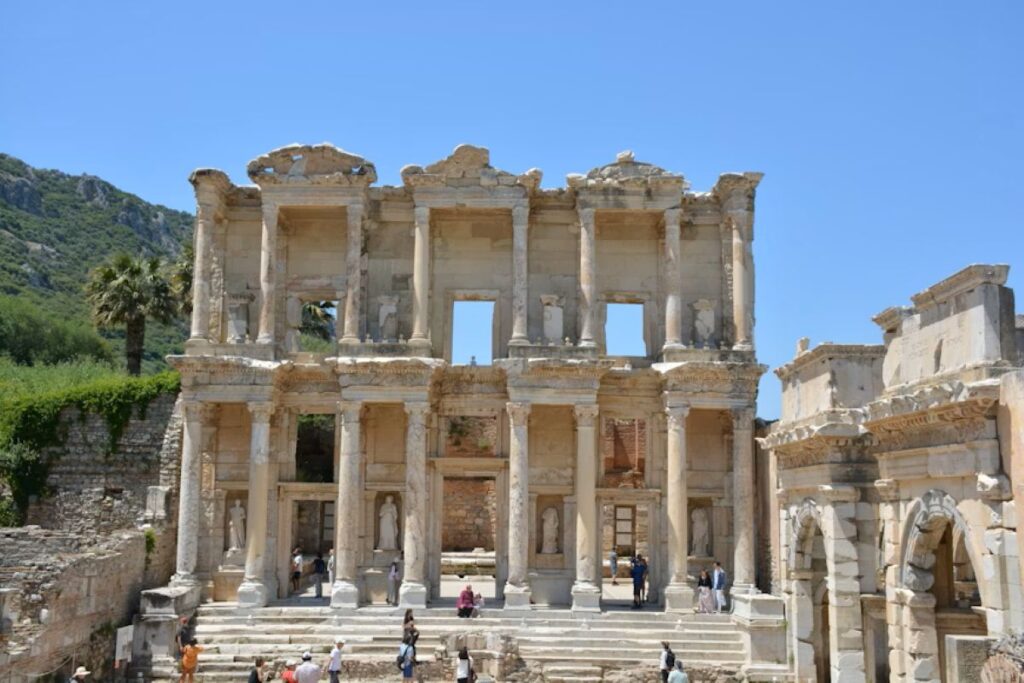
Unlike many archaeological sites where only scattered ruins remain, Ephesus still feels like a city. Walking along its marble streets, passing grand monuments, and standing before the iconic Library of Celsus makes it surprisingly easy to imagine what daily life looked like nearly two thousand years ago.
As a licensed tour guide, I have visited Ephesus countless times over the years. Yet every visit reveals something new. Some travelers are fascinated by Roman engineering, others by early Christian history, while many simply find themselves amazed by the scale of the site.
Whether you are interested in history, archaeology, religion, or photography, Ephesus is one of the most rewarding destinations in Turkey.
If you’re planning a full trip across the country, don’t miss our 10 day Turkey itinerary to see how Ephesus fits into a complete route.
The History of Ephesus
Few ancient cities in the Mediterranean can match the historical significance of Ephesus.
Its story began thousands of years ago, but the city reached its golden age during the Roman period when it became one of the largest and most prosperous cities in the empire. At its peak, Ephesus was home to more than 200,000 people and served as a major commercial gateway between East and West.
Merchants arrived from across the Mediterranean, goods flowed through its harbor, and magnificent public buildings transformed the city into one of the most important urban centers of the ancient world.
Ephesus was also an important center of early Christianity. According to Christian tradition, Saint Paul preached here, and the Gospel of Ephesians was addressed to the city’s early Christian community. The nearby House of the Virgin Mary and the Basilica of Saint John continue to attract pilgrims from around the world today.
Over time, the harbor gradually filled with silt from the Küçük Menderes River, reducing the city’s importance as a trading center. By the medieval period, much of Ephesus had been abandoned, leaving its monuments buried beneath layers of earth.
What makes Ephesus remarkable today is not simply its history but its preservation. Walking along Curetes Street, standing before the Library of Celsus, or sitting in the Great Theatre allows visitors to experience an ancient city in a way that few archaeological sites can offer.
For many travelers, Ephesus is not just a collection of ruins. It is one of the closest opportunities to step directly into the world of the Roman Empire.
A guided tour can make a big difference in understanding the history and significance of the site.
 Check Prices & Availability
Why Visit Ephesus?
Turkey is home to hundreds of ancient sites, but Ephesus stands apart.
What makes it unique is not only the quality of its monuments but also the scale of preservation. Visitors can walk along original Roman streets, stand inside one of the largest theaters in the ancient world, and explore neighborhoods that once housed wealthy citizens.
Ephesus was also one of the most important cities of early Christianity. Saint Paul spent time here, the Epistle to the Ephesians was addressed to its Christian community, and nearby religious sites continue to attract pilgrims today.
For many travelers, Ephesus becomes the highlight of their journey through western Turkey.
To explore all the highlights and plan your visit in detail, check our best things to do in Ephesus guide.
Where Is Ephesus?
One of the most common misconceptions among travelers is that Ephesus is a city.
In reality, Ephesus is an archaeological site located near the modern town of Selçuk in western Turkey.
Most visitors reach Ephesus from one of three locations:
- Selcuk (5 minutes)
- Kusadasi (20–25 minutes)
- Izmir (approximately 1 hour)
Cruise passengers arriving in Kusadasi often visit Ephesus as a shore excursion, while independent travelers frequently choose either Selcuk or Izmir as their base.
Selcuk or Kusadasi: Where Should You Stay?
Stay in Selcuk If…
You enjoy history, local culture, and a slower pace of travel.
Selcuk sits just minutes from Ephesus and offers easy access to the Basilica of Saint John, the Ephesus Museum, Ayasuluk Hill, and the nearby village of Sirince. The atmosphere feels relaxed and authentic, making it ideal for travelers interested in archaeology and cultural experiences.
Stay in Kusadasi If…
You prefer seaside resorts, larger hotels, and a wider selection of restaurants and nightlife.
Kusadasi serves as the region’s main tourist hub and provides excellent accommodation options. It is particularly popular with cruise passengers and travelers combining historical sightseeing with beach time.
Nearby Attractions
While Ephesus itself is the main highlight of the region, several other important historical sites are located nearby.
These include:
• The House of the Virgin Mary
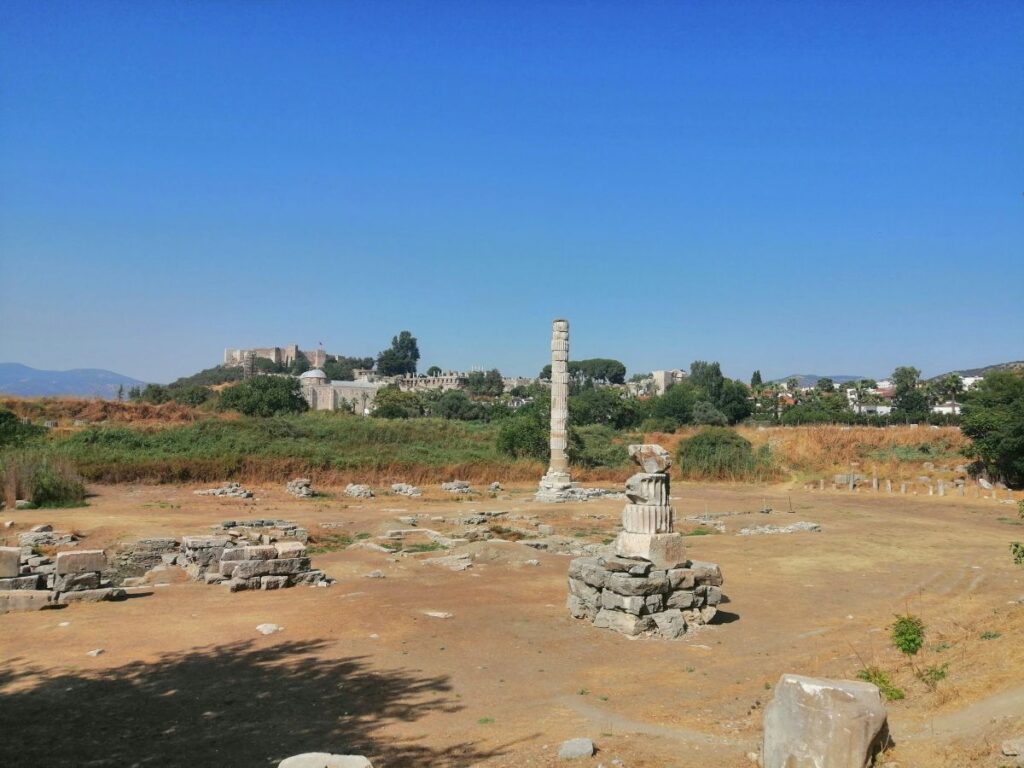
• The Temple of Artemis
• The Basilica of St. John
• The town of Selcuk
• Sirince Village
• Ephesus Musuem in Selcuk
These locations provide additional historical context and make the region one of the richest cultural areas in Turkey.
Many travelers combine Ephesus with nearby Pamukkale, so you can also explore the best things to do in Pamukkale.
How Much Time Do You Need?
The answer depends on your interests.
Quick Visit
Allow 2–3 hours if you plan to see only the main archaeological site.
Standard Visit
Allow 4–5 hours to explore Ephesus comfortably, including the Terrace Houses and major monuments.
Full-Day Experience
A full day allows time for Ephesus, the House of the Virgin Mary, Basilica of Saint John, Ephesus Museum, and the charming village of Şirince.
For most travelers, a half-day to full-day visit provides the ideal balance.
How to Visit Ephesus
Independent Visit
Travelers comfortable exploring on their own can easily visit Ephesus independently from Selcuk, Kusadasi, or İzmir.
Guided Tour
A guided tour helps bring the ruins to life by explaining the stories behind the monuments, daily life in Roman Ephesus, and the city’s role in early Christianity.
Cruise Excursion
Most cruise visitors arrive from Kusadasi and typically combine Ephesus with nearby religious or cultural sites.
Private Guide
For travelers with a strong interest in history, archaeology, or biblical heritage, a private guide often provides the most rewarding experience.
Best Time to Visit Ephesus
The best time to visit Ephesus is during the spring and autumn months when the weather is pleasant and the crowds are smaller. Between April and June and again from September to October, temperatures are comfortable for walking around the large archaeological site.
Summer can be very hot in this region of Turkey, especially between July and August. Temperatures often exceed 35°C (95°F), and there is very little shade inside the ancient city. If you visit during summer, it is highly recommended to arrive early in the morning or later in the afternoon to avoid the intense heat.
Spring is one of the most beautiful times to visit Ephesus. The surrounding countryside becomes green, and wildflowers often bloom around the ruins, creating a unique atmosphere for photography and exploration.
Autumn is another excellent season, with warm temperatures and fewer tour groups compared to summer. Many travelers find that September and October offer the perfect balance of comfortable weather and manageable crowds.
No matter when you visit, arriving early in the day is the best strategy. Not only will you avoid large tour groups, but you will also enjoy softer light that makes the ancient ruins even more impressive.
Visiting Ephesus is an unforgettable experience, but a little preparation can make your trip even better. The ancient city is quite large, and exploring it comfortably requires some planning.
First, wear comfortable walking shoes. Most of the streets in Ephesus are made of ancient marble stones that can be uneven and slippery. Good footwear will help you walk safely while exploring the ruins.
Second, bring water, sunscreen, and a hat, especially during warmer months. The site is mostly open and exposed to the sun, so protecting yourself from heat is very important.
Another helpful tip is to start your visit from the upper entrance and walk downhill toward the lower gate. This route allows you to see the most famous monuments — including the Library of Celsus, Curetes Street, and the Great Theatre — while walking mostly downhill.
If you want a deeper understanding of the history, consider hiring a local guide or using an audio guide. Many fascinating stories about Roman life, religion, and trade in Ephesus become much clearer with expert explanations.
Finally, take your time. Ephesus is not just a collection of ruins — it is a place where thousands of years of history come together, and exploring it slowly allows you to truly appreciate its significance.
Explore Ephesus in Detail
While Ephesus itself is the main attraction, the surrounding area offers much more than ancient ruins.
Highlights include the Library of Celsus, Great Theatre, Terrace Houses, House of the Virgin Mary, Basilica of Saint John, Temple of Artemis, Ephesus Museum, and the picturesque village of Sirince.
Read our complete Best Things to Do in Ephesus guide.
Final Thoughts
Ephesus is far more than an archaeological site.
It is a place where Roman history, early Christianity, archaeology, and modern Turkish culture intersect. Whether you spend a few hours exploring its streets or dedicate an entire day to the surrounding region, Ephesus offers one of the most memorable historical experiences in Turkey.
For many visitors, it is not simply a stop on an itinerary—it becomes one of the highlights of their entire trip.