Imagine standing in central Anatolia on a cold autumn evening in the thirteenth century.
The sun is disappearing behind the horizon. A caravan of merchants slowly moves across the open landscape. The camels are exhausted after a full day of travel. Their loads include Chinese silk, Persian textiles, spices from India, precious stones from Central Asia, and goods destined for markets hundreds or even thousands of kilometers away. The Silk Road in Turkey played a crucial role in connecting Asia and Europe, transforming Anatolia into one of the world’s most important centers of trade and cultural exchange.
The merchants have been on the road for weeks.
Some left Samarkand months ago.
Others began their journeys in Persia.
A few are heading toward Constantinople, while others plan to continue toward Venice and the markets of Europe.
As darkness approaches, a massive stone structure appears in the distance.
Relief spreads through the caravan.
They have reached a caravanserai.
Behind its thick walls they will find safety, food, water, shelter, and fellow travelers from distant lands.
For another night, both merchants and merchandise will survive.
This scene was repeated thousands of times across Anatolia during the age of the Silk Road.
Long before airplanes, trains, highways, and the internet, the Silk Road connected continents, cultures, and civilizations. It transformed cities into commercial centers, spread religions across Asia and Europe, carried scientific discoveries between empires, and helped shape the world we know today.
Silk road in Turkey was of the most important positions within this network. Its geography made Anatolia the bridge between East and West, turning the region into one of history’s greatest crossroads.
To better understand the civilizations that shaped Anatolia, explore our guide to Ancient Cities in Turkey.
Silk Road In Turkey Is More Than a Road
Most people imagine the Silk Road as a single road stretching from China to Europe.
In reality, it was far more complex.
The Silk Road was a network of routes rather than a single highway. These routes crossed deserts, mountains, grasslands, rivers, and seas. Some passed through Central Asia. Others moved through Persia. Many eventually converged in Anatolia before continuing toward Europe.
The term “Silk Road” itself is surprisingly modern. It was introduced in the nineteenth century by German geographer Ferdinand von Richthofen.
The merchants who traveled these routes never called it the Silk Road.
To them, it was simply the world of trade.
Yet despite the modern name, the impact of this network was ancient and immense.
For over fifteen centuries it functioned as the closest thing the world had to globalization.
Goods traveled across continents.
Ideas traveled with them.
So did religions, technologies, languages, artistic styles, and scientific knowledge.
The Silk Road was not simply carrying products.
It was carrying civilization itself.
The Silk Roads connected civilizations through trade, cultural exchange, science, and religion for centuries.
The Legend of How Silk Was Discovered
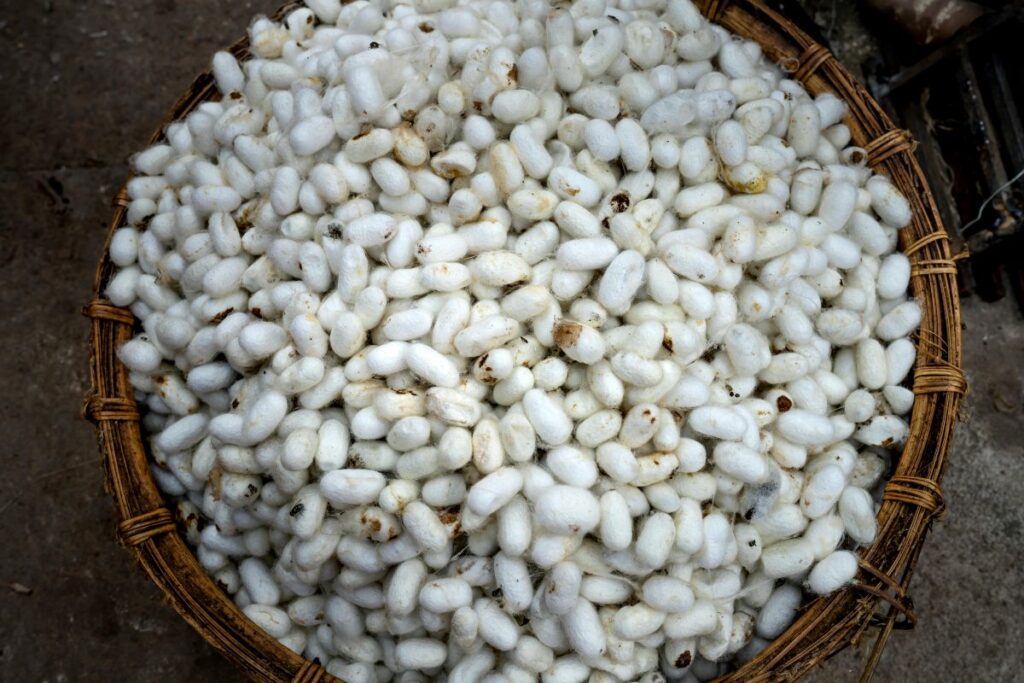
Like many important inventions, the story of silk begins with a legend.
According to Chinese tradition, silk was discovered around 2700 BC by Empress Leizu, wife of the legendary Yellow Emperor.
One day, while drinking tea beneath a mulberry tree, a silkworm cocoon reportedly fell into her cup.
The hot water softened the cocoon.
As she attempted to remove it, a fine thread began to unravel.
The more she pulled, the longer the thread became.
Fascinated by its strength and beauty, she began studying the cocoon and eventually learned how to spin silk fibers into thread.
The legend continues by crediting her with teaching silk production throughout China.
Historians cannot confirm whether the story is true.
What is certain is that China developed silk production thousands of years before the rest of the world.
And for a very long time, China intended to keep that advantage.
The World’s Most Valuable Secret
Today it is difficult to imagine a fabric being treated as a state secret.
In ancient China, however, silk production was among the most closely guarded secrets in the world.
The process required raising silkworms, cultivating mulberry trees, harvesting cocoons, and carefully extracting delicate silk fibers.
For centuries, Chinese rulers protected this knowledge with extraordinary determination.
Historical accounts suggest that revealing the secrets of silk production or smuggling silkworm eggs outside China could be punishable by death.
Foreign merchants could buy silk.
They could wear silk.
They could sell silk.
But they could not learn how it was made.
As a result, silk became one of the most mysterious luxury products on Earth.
Roman writers described silk with fascination.
Some even believed it grew on trees.
Others imagined it was harvested from strange plants somewhere beyond the known world.
The mystery only increased its value.
Why Silk Was Worth More Than Gold
To understand the importance of the Silk Road, it helps to understand the value of silk itself.
Silk possessed several qualities that made it extraordinary.
It was:
- lightweight
- soft
- durable
- beautiful
- difficult to produce
Unlike many luxury products, silk was practical as well as prestigious.
It could be transported over long distances without losing value.
A relatively small amount of silk could represent a fortune.
As demand grew across Persia, Byzantium, and Europe, merchants were willing to travel enormous distances to obtain it.
In some periods, silk was effectively treated like currency.
Entire trade networks developed around the desire to acquire it.
How Silk Escaped China
No secret remains hidden forever.
One of the most famous stories connected to the Silk Road concerns the moment silk production finally left China.
According to historical tradition, two monks traveled east during the sixth century and learned the secrets of sericulture, the cultivation of silkworms.
When they returned to the Byzantine Empire during the reign of Emperor Justinian I, they reportedly carried silkworm eggs hidden inside hollow bamboo staffs.
Whether every detail of the story is true remains debated.
However, historians generally agree that Byzantine agents eventually obtained the knowledge necessary to produce silk locally.
For the first time, China no longer held a complete monopoly.
The consequences were enormous.
Silk production gradually spread westward.
New manufacturing centers emerged.
Trade patterns changed.
Yet the routes connecting East and West remained as important as ever.
Because the Silk Road was never only about silk.
It was about connection.
The Countries Connected by the Silk Road
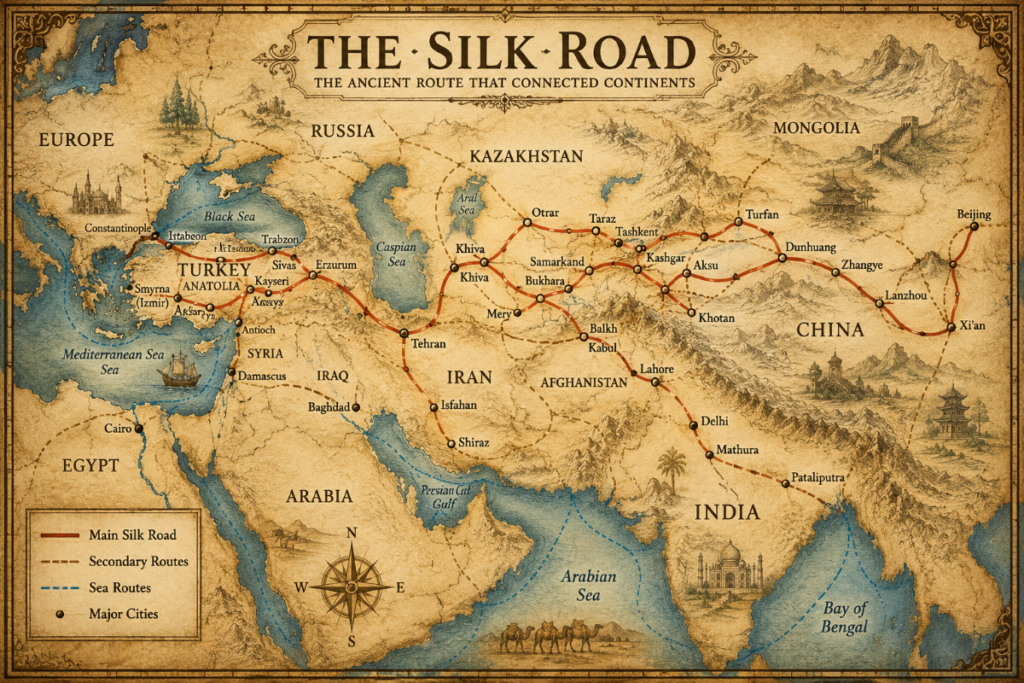
The Silk Road connected many of history’s greatest civilizations.
China
The birthplace of silk, paper, and porcelain.
Central Asia
Cities such as Samarkand and Bukhara became wealthy centers of trade and learning.
India
Source of spices, textiles, and valuable luxury goods.
Persia
A vital intermediary between East and West.
Anatolia
The bridge connecting Asia and Europe. That is silk road in Turkey.
The Mediterranean World
The final destination for many eastern products before they reached Europe.
Why Anatolia Became So Important
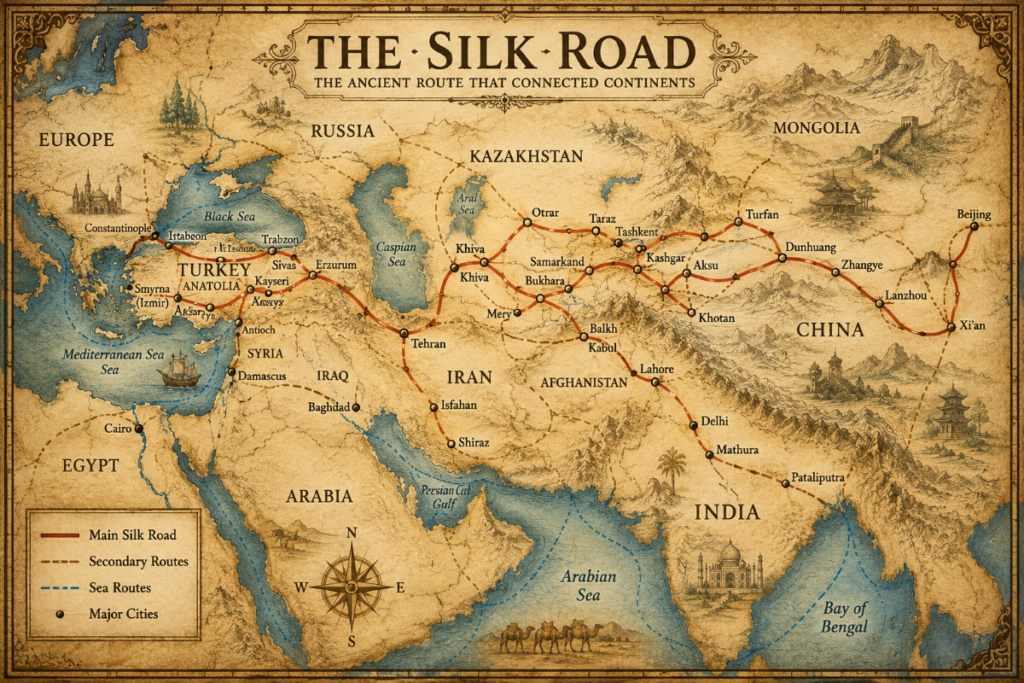
Geography made Anatolia indispensable.
Any merchant moving between Asia and Europe eventually encountered Anatolia. Silk road in Turkey was a must bridge to use.
The region connected:
- Central Asia
- Persia
- The Black Sea
- The Mediterranean
- Europe
As a result, important trade cities emerged across Anatolia, including:
- Kayseri
- Konya
- Sivas
- Erzurum
- Aksaray
These cities grew wealthy from commerce and became major cultural centers.
Even today, travelers crossing central Turkey often follow routes remarkably similar to those used by merchants centuries ago.
The Seljuks and the Golden Age of Trade
Following the Battle of Manzikert in 1071, the Seljuk Turks gradually established control over much of Anatolia.
Unlike many medieval rulers, Seljuk sultans recognized that prosperity depended on secure trade.
Merchants generated wealth.
Wealth generated taxes.
Taxes strengthened the state.
Because of this, Seljuk rulers invested heavily in roads, bridges, security systems, and perhaps most importantly, caravanserais.
Their goal was simple:
Make Anatolia the safest place for merchants to do business.
And for centuries, they largely succeeded.
The Seljuk period also played an important role in shaping the cultural landscape of Cappadocia.
The Caravan: A Moving City
Modern travelers often imagine a caravan as a handful of camels crossing the desert.
The reality was often far more impressive.
Large caravans could include:
- dozens or hundreds of camels
- merchants from different countries
- translators
- guides
- cooks
- guards
- servants
- craftsmen
In many ways, a caravan resembled a small moving city.
The goods they carried represented enormous investments.
Bandits, harsh weather, disease, accidents, and political instability could destroy an entire trading venture.
For merchants, security was everything.
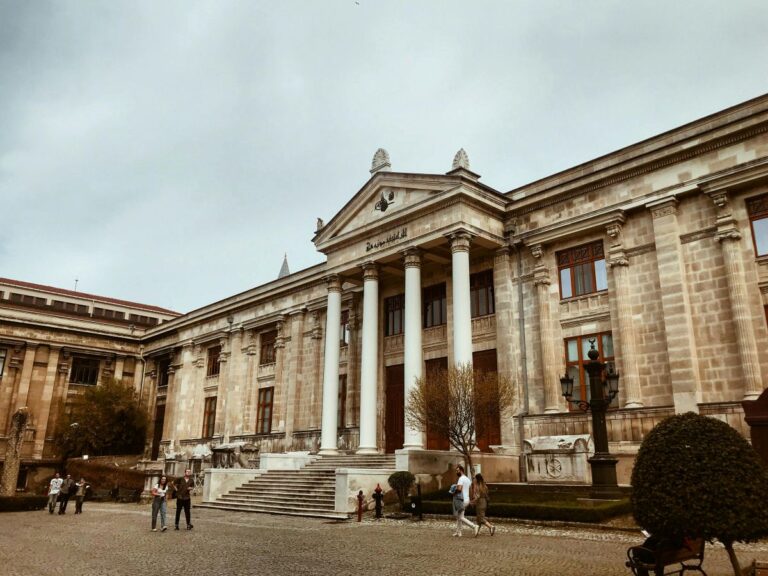
The history of trade in Anatolia can also be followed through museums that preserve merchant tablets, coins, ceramics, and caravan-related artifacts. Discover more in our Museums in Turkey guide.
The Laws That Protected Trade on the Silk Road
The success of the Silk Road in Turkey did not depend only on roads, caravanserais, and geography.
It also depended on trust.
Merchants would not risk transporting valuable goods across thousands of kilometers unless they believed their investments were protected.
The Seljuk Sultans understood this reality better than many rulers of their time.
As a result, they created laws and policies designed to encourage trade and attract merchants from across Eurasia.
One of the most remarkable examples was the state’s commitment to merchant security.
Historical sources indicate that merchants who suffered losses due to robbery, piracy, or attacks while traveling under Seljuk protection could sometimes receive compensation from the treasury. For this reason, many historians describe the Seljuk system as one of the earliest forms of state-backed commercial insurance.
This policy was revolutionary for the medieval world.
The message was clear:
If the state expected merchants to use its roads, the state also had a responsibility to protect them.
The Seljuks also invested heavily in military patrols, guards, and infrastructure maintenance. Bridges were repaired, roads were improved, and caravanserais were maintained to support long-distance commerce.
Some historical accounts even suggest that local authorities could be held accountable if trade routes within their jurisdiction became unsafe.
In practice, these policies transformed Anatolia into one of the safest commercial regions of the medieval world.
For merchants traveling between Asia and Europe, security often mattered more than distance.
As a result, many traders deliberately chose routes passing through Seljuk Anatolia which is the silk road in Turkey.
One of the Earliest Trade Protection Systems in History
The Seljuks developed an unusually advanced approach to commercial security for the medieval world.
Merchants traveling through Anatolia benefited from state protection, military patrols, fortified caravanserais, and legal guarantees designed to encourage trade.
In certain circumstances, traders who suffered losses due to robbery or attacks could receive compensation from the state treasury.
Although this system was not insurance in the modern sense, many historians regard it as one of the earliest examples of state-backed commercial protection.
The underlying idea was remarkably modern:
If trade generated prosperity for the state, protecting merchants became a responsibility of the state.
This policy helped establish Anatolia as one of the safest and most attractive commercial regions on the Silk Road.
The Architecture of Caravanserais: Fortresses Built for Trade
At first glance, many caravanserais look more like castles than hotels.
This was intentional.
The Silk Road carried enormous wealth. Merchants often traveled with precious goods worth fortunes, making them attractive targets for bandits and raiders.
For this reason, Seljuk architects designed caravanserais to function as both inns and defensive structures.
Most caravanserais shared several architectural features:
Monumental Entrance Portals
The most impressive part of many caravanserais is the entrance gate.
These portals were often decorated with intricate stone carvings, geometric patterns, floral motifs, and Seljuk artistic designs.
Beyond their beauty, the gates symbolized the authority and protection of the state.
Thick Defensive Walls
Caravanserais were surrounded by massive stone walls that could withstand attacks.
From the outside, they often resembled military fortresses.
The walls protected both merchants and their valuable cargo during the night.
Large Open Courtyards
Inside the complex, travelers entered a spacious courtyard.
Camels, horses, and pack animals were unloaded here.
The courtyard served as the social and commercial heart of the caravanserai.
Merchants from different regions exchanged news, discussed business, and shared information about routes ahead.
Covered Winter Halls
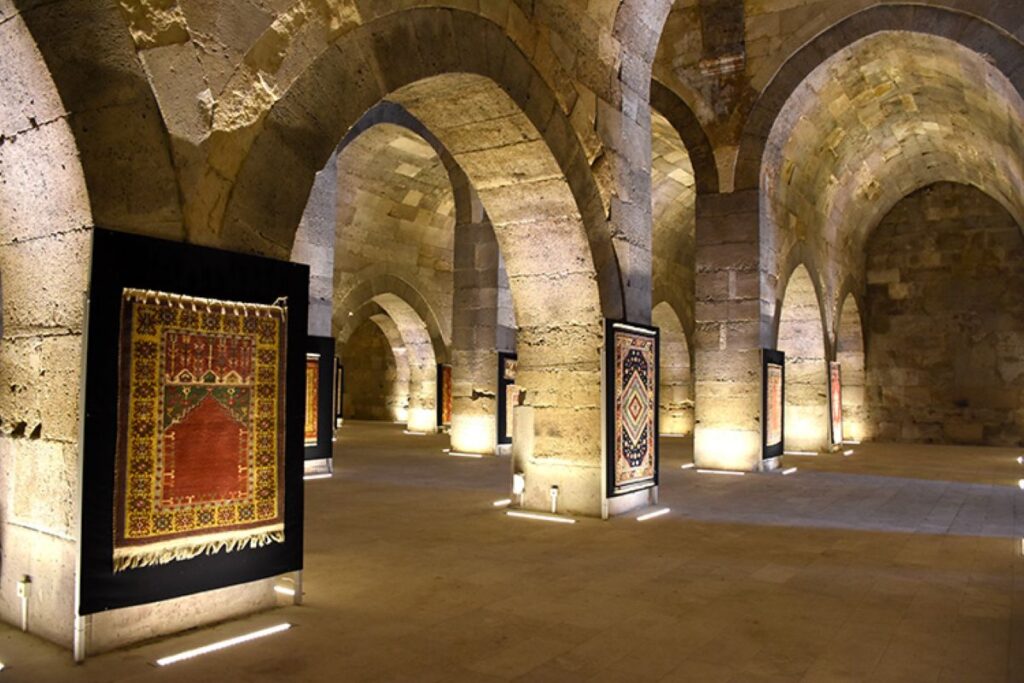
Because Anatolian winters could be harsh, many caravanserais included large covered halls where travelers and animals could shelter during cold weather.
These halls often featured impressive vaulted ceilings supported by thick stone pillars.
Stables and Storage Areas
Animals were as important as the goods they carried.
Caravanserais therefore included extensive stables, feeding areas, and storage rooms designed to protect merchandise from weather and theft.
Mosques and Prayer Areas
Many major caravanserais contained a small mosque or prayer space.
Some, like Sultanhanı, even feature elevated mosque structures within the courtyard itself.
Workshops and Services
Travelers could find blacksmiths, farriers, cooks, veterinarians, and craftsmen inside larger caravanserais.
In many ways, they functioned as self-contained service centers for long-distance travel.
More Than a Place to Sleep
A caravanserai was not simply a hotel.
It was:
- a warehouse,
- a marketplace,
- a repair center,
- a stable,
- a place of worship,
- and a secure refuge.
For merchants crossing thousands of kilometers of unpredictable terrain, these buildings represented civilization itself.
At the end of a long day on the Silk Road, the sight of a caravanserai on the horizon meant safety, rest, and the promise that the journey could continue tomorrow.
Why Caravanserais Were Built Every 30–40 Kilometers
One of the most fascinating aspects of the Seljuk trade system was the careful placement of caravanserais.
Most were built approximately 30 to 40 kilometers apart in silk road in Turkey and all over.
This was not a coincidence.
A loaded camel typically traveled around 30 to 40 kilometers during a full day of travel. After sunset, both animals and humans needed food, water, shelter, and rest.
The Seljuks designed their network accordingly.
A merchant leaving one caravanserai in the morning could usually reach the next by evening.
In effect, caravanserais functioned much like modern highway hotels.
But unlike many hotels today, they often welcomed travelers free of charge for a limited stay.
The state understood that helping merchants ultimately benefited the economy as a whole.
The First Sight of Safety
Imagine spending weeks crossing mountains and open plains.
The weather changes unexpectedly.
Bandits may be hiding along remote routes.
Your entire fortune travels beside you on the backs of camels.
Then, just before sunset, massive stone walls appear on the horizon.
This was the experience thousands of merchants had when approaching a caravanserai.
These structures were designed to inspire confidence.
Their thick walls resembled fortresses.
Their monumental entrance portals announced that travelers had entered a place protected by the authority of the state.
For exhausted merchants, a caravanserai represented something priceless:
Safety.
Caravanserai Architecture: Fortresses of Commerce
Many surviving caravanserais remain among the finest examples of Seljuk architecture.
From the outside, they often look more like castles than inns.
Their defensive features included:
- thick stone walls
- limited entry points
- fortified gates
- watch positions
Inside, visitors found:
- sleeping quarters
- stables
- warehouses
- kitchens
- bakeries
- prayer rooms
- baths
- courtyards
- workshops
Some even offered medical assistance for travelers and animals.
These were not simple roadside shelters.
They were carefully planned commercial centers designed to support long-distance trade.
Sultanhan: The Greatest Caravanserai of Anatolia
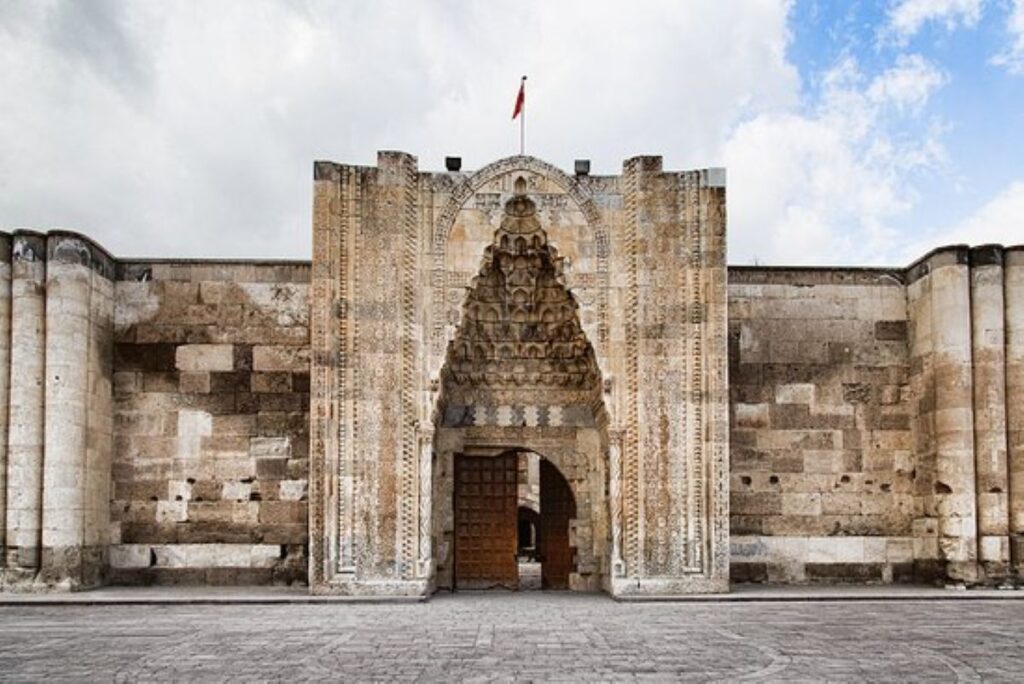
Among all the caravanserais of Turkey, none is more famous than Sultanhan.
Located near Aksaray on the most important Silk Road in Turkey, Sultanhan was originally built in 1229 during the reign of Sultan Alaeddin Keykubad I.
Even today, it remains one of the largest and most impressive caravanserais ever constructed.
Visitors entering its monumental stone portal immediately understand the scale of Seljuk ambition.
The courtyard, mosque, storage areas, and covered halls demonstrate the sophistication of medieval trade infrastructure.
Standing inside Sultanhan today, it is easy to imagine caravans arriving from Persia, Central Asia, and beyond.
Few places in Turkey provide such a direct connection to the age of the Silk Road.
Several Anatolian caravanserais, including Sultanhan, are now recognized for their historical significance as part of UNESCO’s World Heritage listings.
One of the World’s Earliest Commercial Insurance Systems
Perhaps the most remarkable aspect of Seljuk trade policy was its approach to merchant protection.
Modern insurance companies did not exist.
Yet the Seljuks understood that merchants would avoid dangerous routes.
To encourage commerce, the state sometimes compensated traders who suffered losses due to robbery or attacks while traveling under Seljuk protection.
Many historians regard this as one of the earliest examples of state-supported commercial insurance.
This policy sent a powerful message:
The government stood behind trade.
If merchants prospered, the state prospered as well.
Such policies helped transform Anatolia into one of the most attractive commercial regions of the medieval world.
More Than Silk: What Traveled Through Anatolia?
Although silk gave the Silk Road its name, merchants transported many other products through Anatolia.
Caravans carried:
- spices from India
- paper from China
- porcelain from East Asia
- precious stones from Central Asia
- glassware from the Mediterranean
- textiles from Persia
- metals from Anatolia
- perfumes and dyes
The variety of goods reflects the truly global nature of medieval trade.
In many ways, the Silk Road was the world’s first international marketplace.
Many of the regions connected to the Silk Road were also home to some of the most important ancient civilizations in Mesopotamia and Anatolian history.
The Road That Carried Religions and Ideas
The Silk Road transported far more than merchandise.
It carried ideas.
Through these routes traveled:
- Buddhism
- Christianity
- Islam
Scientific knowledge moved as well.
Astronomy, medicine, mathematics, architecture, and engineering techniques spread between civilizations.
A merchant might arrive carrying silk and leave carrying knowledge.
The Silk Road was not simply an economic network.
It was one of history’s greatest engines of cultural exchange.
Trade routes helped spread not only goods, but also religions and cultural traditions across Anatolia.
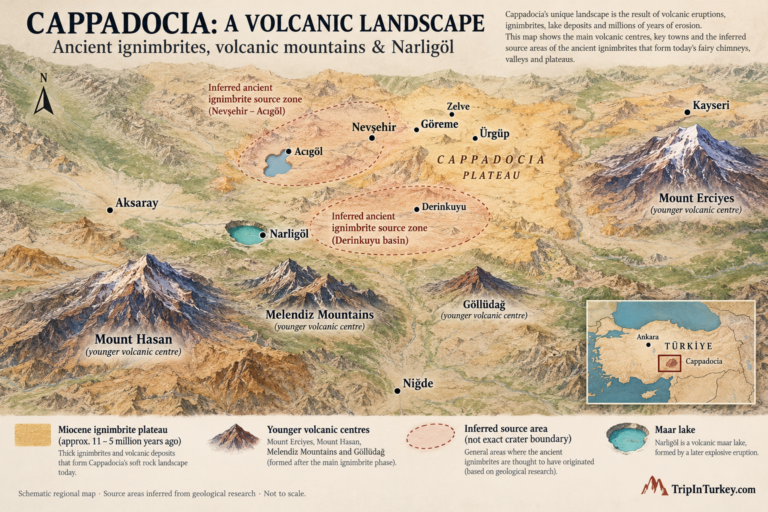
Cappadocia and the Silk Road
Today, most visitors associate Cappadocia with hot-air balloons and fairy chimneys.
Yet for centuries, the region occupied an important position within Anatolian trade networks.
Nearby Kayseri served as one of the major commercial centers of central Anatolia, linking trade routes coming from Persia and eastern regions with western Anatolia and the Mediterranean.
Merchants, pilgrims, scholars, and travelers passed through this region long before tourism existed.
Many of the caravanserais still standing around Cappadocia remind visitors that the region was once connected to one of the greatest trade networks in human history.
Today, visitors know Cappadocia for its fairy chimneys and hot-air balloons, but its history stretches far beyond modern tourism.
Walking Through Silk Road History Today
Today, travelers exploring Turkey can still follow parts of this remarkable story.
They can visit:
- Sultanhanı near Aksaray
- Sarı Han in Cappadocia
- Ağzıkara Han
- Alay Han
- Zazadin Han near Konya
These buildings once welcomed merchants from distant lands who spoke different languages, practiced different religions, and carried goods from across Eurasia.
The camels are gone.
The caravans have disappeared.
The trade routes have changed.
Yet the caravanserais remain.
Their stone walls continue to tell the story of a world connected long before modern globalization.
Final Thoughts
The Silk Road was one of humanity’s greatest achievements. Anatolia was the main silk road in Turkey.
It linked distant civilizations, encouraged cultural exchange, spread new ideas, and transformed the economies of entire regions.
Turkey occupied a central position within this vast network.
Its caravanserais, trade cities, and strategic geography made Anatolia one of the most important crossroads in world history.
Long before the modern age, the Silk Road connected people across thousands of kilometers.
Its legacy continues to shape Turkey—and the world—today.
When visitors stop at Sultanhan, Sari Han, or another ancient caravanserai, they are not simply looking at old stones.
They are standing in places where merchants once arrived exhausted after weeks of travel.
The walls have survived.
The roads have changed.
But the story remains the same.
For centuries, these routes connected continents, cultures, and civilizations—and few places tell that story better than Turkey.
You may also enjoy our guides to Ancient Cities in Turkey, Mesopotamia, Cappadocia History, Biblical Sites in Turkey, and UNESCO World Heritage Sites in Turkey.