There are places in Turkey where history does not sit quietly behind glass.
It speaks, bargains, smells of roasted coffee, echoes with hammer sounds, and waits behind old stone gates.
A Turkish bazaar is one of those places.
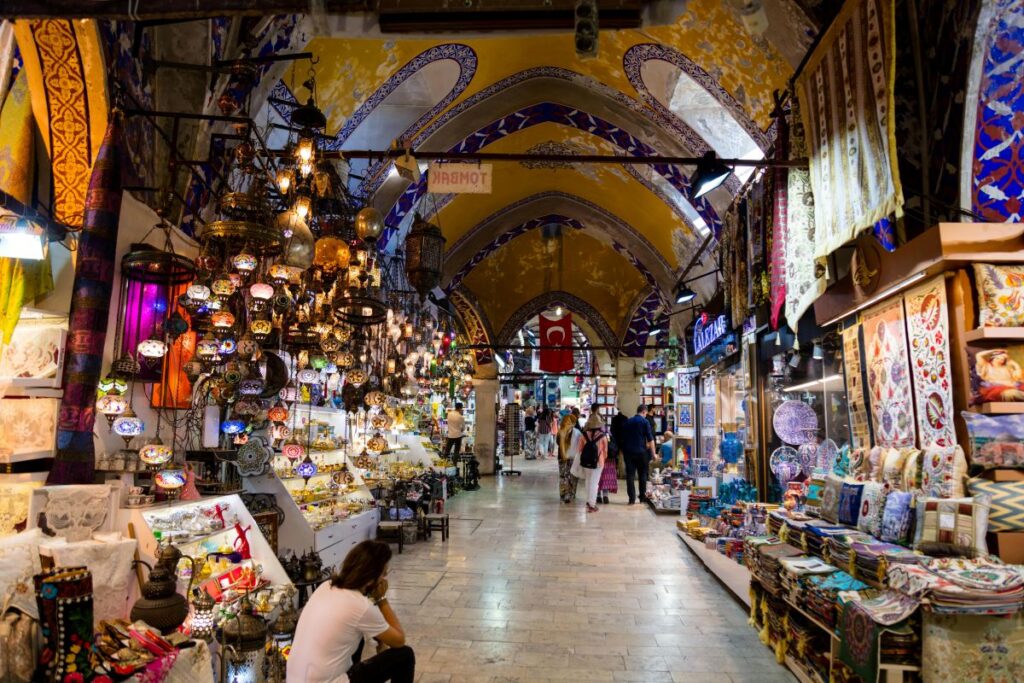
At first glance, Turkish bazaars may look like colorful shopping areas. You see carpets hanging from wooden beams, copper coffee pots shining under shop lights, pyramids of spices, trays of Turkish delight, leather bags, ceramics, silk scarves, and shopkeepers inviting you inside for tea.
But a bazaar in Turkey is never just a place to buy things.
It is a living memory of trade routes, empires, craftsmen, pilgrims, merchants, and travelers. It carries the story of Anatolia from the Assyrian traders of Kültepe to the Silk Road caravans, from Seljuk caravanserais to Ottoman bedestens, and from old guild traditions to the lively markets that still shape daily life today.
To walk through a Turkish bazaar is to step into one of the oldest commercial traditions in the world.
If you’re planning a trip across the country, our How Many Days in Turkey guide is great to understand the perfect place to start your journey before exploring its historic bazaars.
The Roots of Bazaar Culture in Anatolia
Long before the Ottoman Empire, long before Istanbul became an imperial capital, and long before covered markets filled the streets of Anatolian cities, merchants were already crossing this land.
One of the earliest and most important chapters of this story begins near modern Kayseri, at Kultepe, ancient Kanesh.
Around the early second millennium BC, Assyrian merchants from northern Mesopotamia established a major trading colony there. They brought tin, textiles, silver, and other goods into Anatolia, and in return they traded with local kingdoms and communities. What makes Kültepe so extraordinary is not only the trade itself, but the records it left behind.
Thousands of clay tablets found at Kultepe reveal a highly organized commercial world. These tablets include contracts, loans, taxes, family letters, business disputes, marriage arrangements, and legal cases. They show that Anatolia was already part of an international trading network nearly four thousand years ago.
This is where the story of Turkish bazaar culture truly begins.
Of course, the merchants of Kültepe did not walk through Ottoman-style covered bazaars. They did not drink Turkish coffee or sell carpets under domed stone roofs. But the spirit was already there: long-distance trade, trust between merchants, written agreements, storage of valuable goods, and the importance of market towns.
Anatolia learned early that geography could become destiny.
Sitting between Mesopotamia, Iran, the Caucasus, the Aegean, the Black Sea, and the Mediterranean, this land was never isolated. Goods, people, languages, religions, and ideas constantly passed through it. Over time, this movement created not only wealth, but also a deep culture of exchange.
The Silk Road and the Rise of Trade Cities
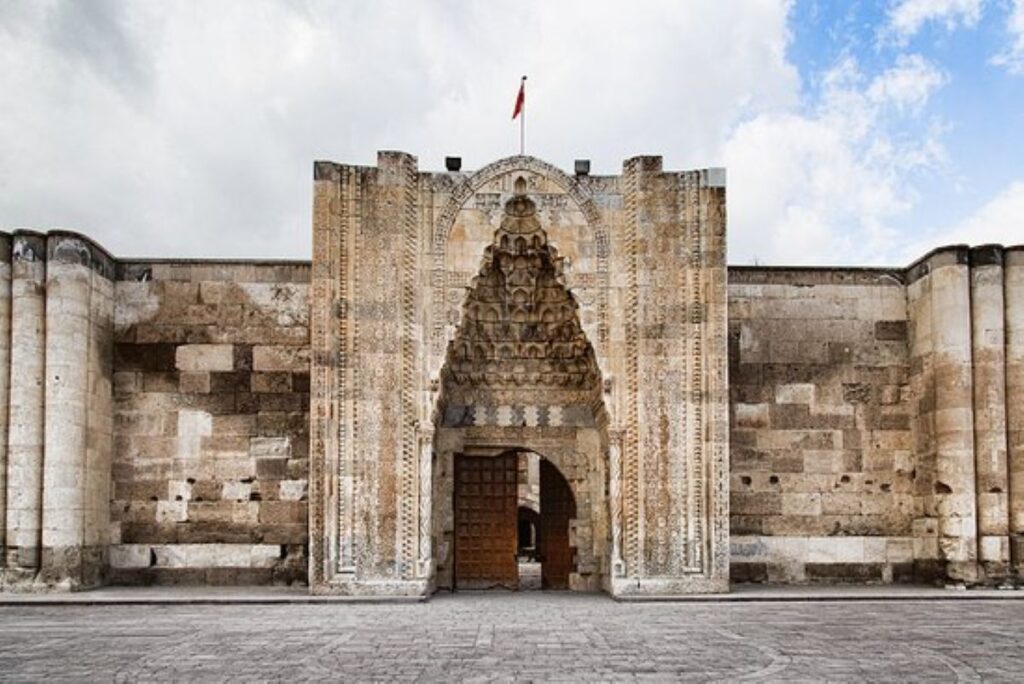
The Silk Road was not a single road. It was a vast network of routes connecting China, Central Asia, Iran, Anatolia, the Mediterranean, and Europe.
Anatolia became one of the most important bridges in this network.
Caravans crossed the plateau carrying silk, spices, ceramics, precious stones, paper, perfumes, metals, textiles, and horses. These journeys were long and risky. Merchants needed safe roads, reliable resting places, food, water, storage rooms, animal care, and protection from bandits.
This need shaped the landscape of Turkey.
During the Seljuk period, especially from the 12th and 13th centuries onward, caravanserais were built across Anatolia. Many stood roughly a day’s journey apart. These monumental stone buildings worked like fortified hotels for merchants and travelers. Inside their walls were courtyards, stables, rooms, storage areas, prayer spaces, and sometimes small workshops.
A merchant could arrive with camels and mules, rest, feed the animals, store valuable goods, repair equipment, meet other traders, and continue the journey the next day.
But caravanserais were only one part of the story.
Many of these caravan routes eventually led travelers to Cappadocia, where caravanserais, underground cities, and volcanic landscapes created one of Anatolia’s most important crossroads.
Where roads met, towns grew. Where towns grew, markets formed. Where markets became permanent, bazaars appeared.
This is why so many historic cities in Turkey still have a similar pattern: a mosque, a bath, a han, a bedesten, narrow shopping streets, fountains, workshops, and food sellers all gathered around the old commercial center.
In Turkey, a bazaar was never separate from the city.
It was the city’s heart.
These commercial routes later became part of the network explored in our guide to the Silk Road in Turkey, where caravan cities and historic trade centers still preserve this remarkable heritage.
What Is a Bedesten?
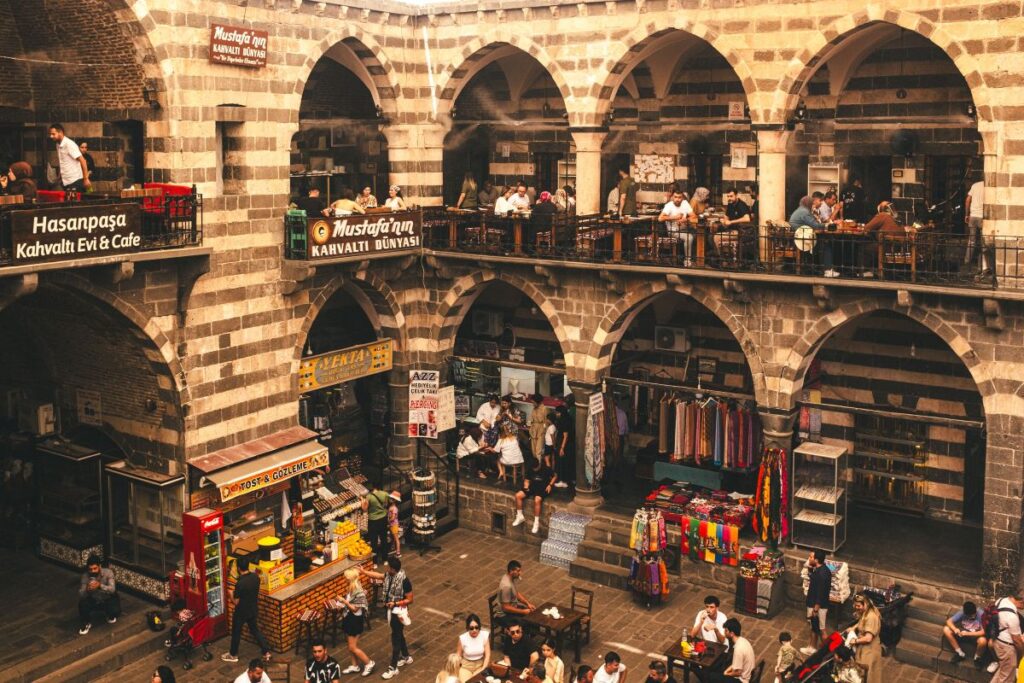
To understand Turkish bazaars, you need to understand the bedesten.
A bedesten was the most secure and prestigious part of an Ottoman bazaar. The word is connected with the idea of a place where valuable cloth and luxury goods were sold, but in practice, bedestens became far more than textile markets.
They were strong stone buildings with thick walls, domed roofs, iron doors, and controlled entrances. The most valuable goods of the city were sold and stored there: silk, gold, jewelry, precious fabrics, fine weapons, rare objects, manuscripts, and imported luxury items.
In many Ottoman cities, the bedesten functioned almost like a financial center. It was a place of trust. Merchants stored wealth there, expensive goods were protected there, and trade agreements were often made nearby.
The existence of a bedesten also said something about the importance of a city. A town with a bedesten was not just a local market town. It was a serious commercial center.
This is why Istanbul, Bursa, Edirne, Kayseri, and many other Ottoman cities developed around their bedestens and bazaars.
The bedesten was the locked chest of the city.
The surrounding bazaar was its living body.
The Ottoman Bazaar: A City Within the City
The Ottoman bazaar was beautifully organized.
Different crafts and trades often had their own streets. Goldsmiths worked near goldsmiths. Coppersmiths worked near coppersmiths. Carpet sellers gathered in one area. Leather workers, spice merchants, bookbinders, shoemakers, and fabric sellers each had their own corners.
This was practical for customers. If you wanted a copper tray, you went to the coppersmiths’ street and compared the work of several masters. If you wanted silk, you visited silk merchants. If you needed a saddle, shoes, a knife, a wedding gift, a prayer rug, or a chest, you knew where to go.
But the system was also social.
Crafts were passed from master to apprentice. Reputation mattered. A dishonest merchant could damage not only his own name, but the honor of his trade. Guilds and professional traditions helped control quality, prices, training, and ethical behavior.
This is why the Turkish bazaar is not only about goods. It is about relationships.
Tea is part of that relationship. Conversation is part of it. Asking where someone is from, explaining how a carpet is woven, showing the difference between handmade and machine-made ceramics, or giving advice without forcing a sale are all part of the old bazaar rhythm.
In a good bazaar, time slows down.
You are not only shopping.
You are entering a conversation.
Grand Bazaar, Istanbul: The Imperial Market
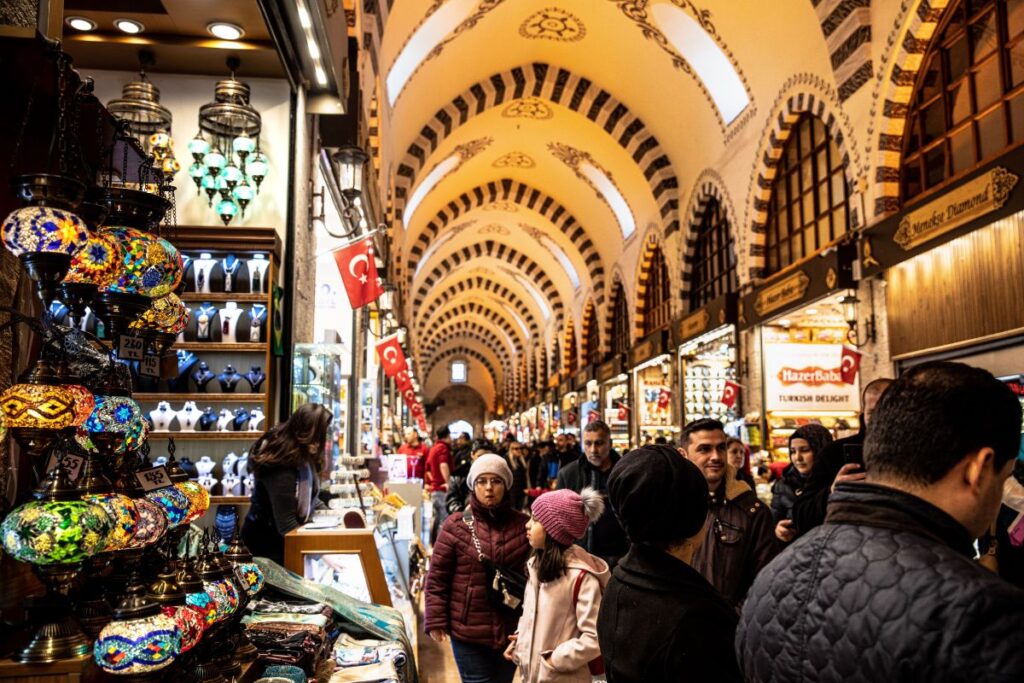
No bazaar in Turkey is more famous than the Grand Bazaar of Istanbul, known in Turkish as Kapalıçarşı.
Its story begins shortly after the Ottoman conquest of Constantinople in 1453. Sultan Mehmed II, known as Mehmed the Conqueror, ordered the construction of the first bedesten that would become the core of the Grand Bazaar. The İç Bedesten, or Inner Bedesten, is usually dated to the mid-15th century, with 1461 often given as the symbolic foundation date of the bazaar.
At first, it was not the enormous labyrinth visitors see today.
It began as a secure commercial building where valuable goods could be sold and protected. Over the centuries, streets, shops, hans, workshops, and gates grew around it. The bazaar expanded until it became one of the largest and most famous covered markets in the world.
During the Ottoman period, the Grand Bazaar was not a tourist attraction. It was one of the financial hearts of the empire. Jewelers, money changers, textile merchants, carpet dealers, armor sellers, book merchants, and traders from different regions did business there. Goods from the Balkans, Iran, Arabia, India, Europe, and Central Asia passed through Istanbul, and the bazaar reflected this global world.
Today, the Grand Bazaar can feel busy, crowded, and sometimes very touristic. But if you walk away from the main souvenir streets and enter the quieter lanes, you can still feel the older character of the place.
There are still family businesses that have worked in the same trade for generations. There are still small workshops hidden above shops. There are still jewelers, leather sellers, carpet merchants, calligraphers, and antique dealers who understand the bazaar not as a shopping mall, but as an inherited world.
What to buy in the Grand Bazaar:
Handmade carpets and kilims are among the most meaningful purchases, but they require time and knowledge. Good sellers will explain the region, material, knotting technique, dyes, and age of a piece. Ceramics from İznik and Kütahya styles are also popular, especially plates, bowls, and tiles with tulip, carnation, and geometric patterns.
Gold jewelry remains one of the bazaar’s traditional strengths. Turkish lamps, leather bags, antique objects, textiles, chess sets, and small souvenirs are also common.
The most important advice is simple: do not rush.
The Grand Bazaar rewards people who wander.
After exploring the Grand Bazaar, many visitors continue to nearby landmarks featured in our Best Things to Do in Istanbul guide.
Egyptian Bazaar, Istanbul: The Scent of the Empire
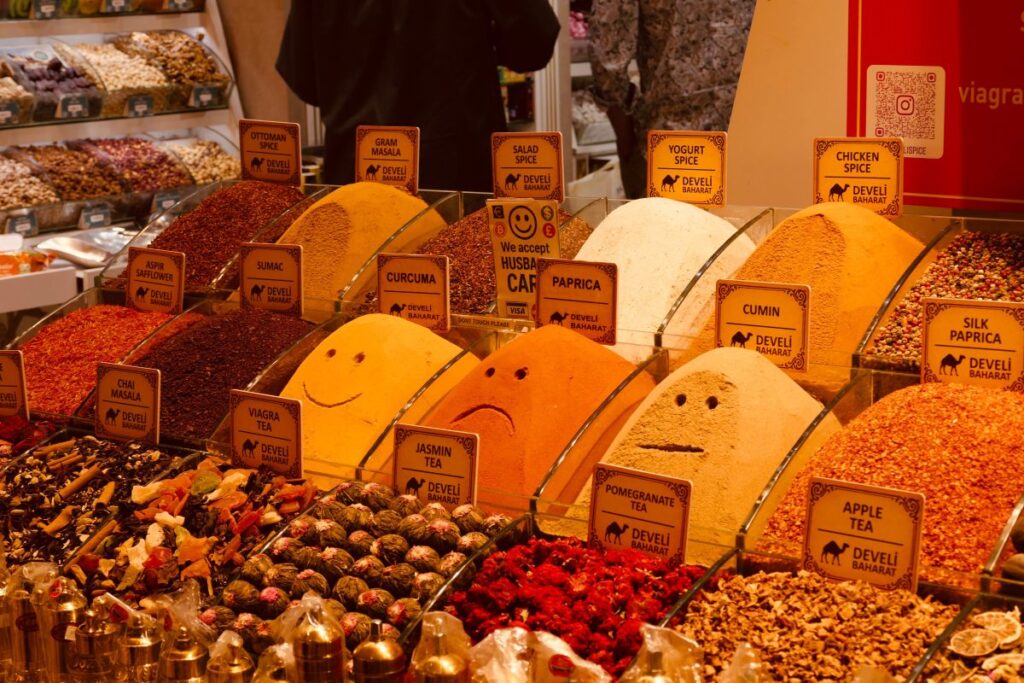
If the Grand Bazaar represents imperial commerce, the Egyptian Bazaar represents scent.
Known in Turkish as Misir Carsisi, it stands near the New Mosque in Eminonu, close to the Golden Horn. It was built in the 17th century as part of the New Mosque complex and became closely associated with the spice trade.
Its name is usually connected with Egypt because revenues from Ottoman Egypt helped fund the complex, and many goods arriving in Istanbul came through Egyptian trade routes. Spices from the East, medicinal herbs, dried fruits, perfumes, and luxury food products filled its shops.
For centuries, this was one of Istanbul’s most fragrant commercial spaces.
Even today, the experience begins before you buy anything. You smell cinnamon, cloves, saffron, dried mint, rose, pistachio, coffee, sesame, and sweet lokum. The bazaar is smaller than the Grand Bazaar, but it is easier to explore and has a warmer atmosphere for many visitors.
What to buy in the Egyptian Bazaar:
Spices are the obvious choice, but visitors should buy from shops with good turnover and clear labeling. Saffron, sumac, pul biber, dried mint, cumin, and Ottoman-style spice mixtures are popular. Turkish delight is another classic, especially pistachio, rose, pomegranate, and double-roasted varieties.
You can also buy dried figs, apricots, nuts, herbal teas, natural soaps, Turkish coffee, and small edible gifts that are easy to carry home.
Don’t leave without trying a cup of freshly ground coffee alongside Turkish delight—two traditions deeply rooted in local culture and explained in our guide to Turkish Coffee.
The Egyptian Bazaar is not only about shopping. It is one of the best places in Istanbul to understand how food, medicine, trade, and empire once met in the same street.
Many of the spices sold here are also essential ingredients in traditional dishes featured in our Turkish Food Guide.
Koza Han, Bursa: Silk, Shade, and Ottoman Elegance
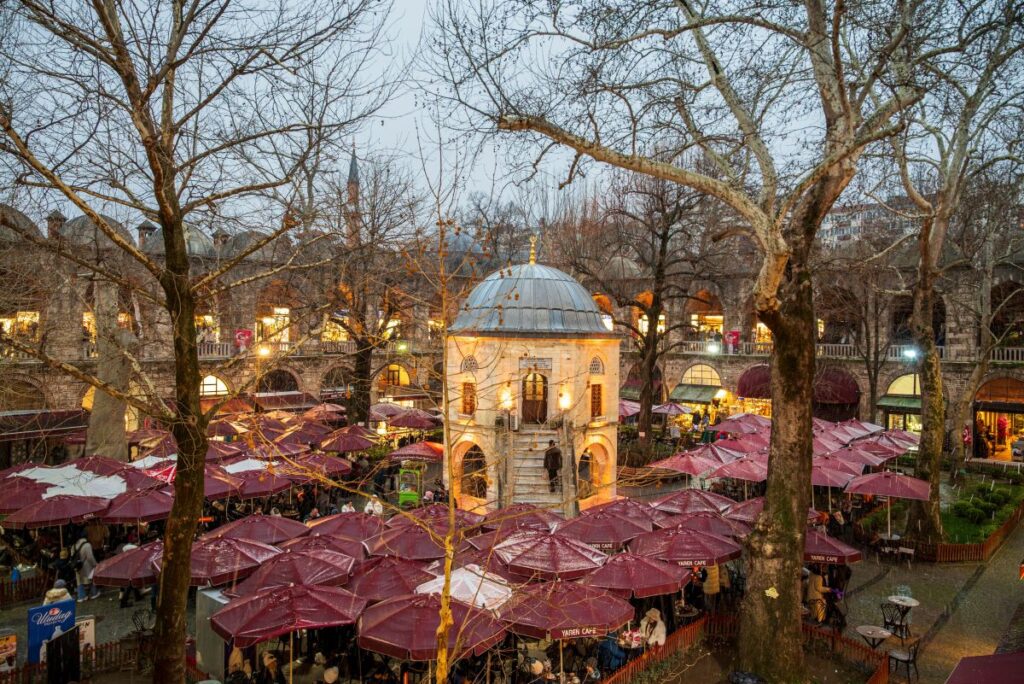
Bursa has a different atmosphere from Istanbul.
It was the first major capital of the Ottoman Empire, and it grew wealthy through trade, especially silk. One of the most beautiful reminders of this past is Koza Han.
Koza means “silk cocoon,” and the name tells you almost everything.
Koza Han was built in the late 15th century by Sultan Bayezid II as a commercial han connected with the silk trade. Bursa was one of the great silk centers of the Ottoman world. Raw silk arrived through eastern trade networks, was processed and sold in the city, and then traveled onward to other markets.
Unlike the crowded energy of the Grand Bazaar, Koza Han feels calm. Its courtyard, stone arches, upper galleries, and tea garden create one of the most graceful commercial spaces in Turkey.
You do not need to buy anything to enjoy Koza Han.
Sit under the trees, order tea, and look around. The building itself tells the story: merchants upstairs, storage and trade around the courtyard, people meeting in the center, the rhythm of business softened by Ottoman architecture.
What to buy in Koza Han:
Silk scarves are the classic purchase. You can also find silk fabrics, shawls, textiles, and elegant gifts. For travelers interested in traditional crafts, Koza Han is one of the best places in Turkey to buy silk with a real historical connection to the place.
It is not just a silk market.
It is Bursa’s memory in architectural form.
Kemeralti Bazaar, İzmir: The Open-Air Labyrinth of the Aegean
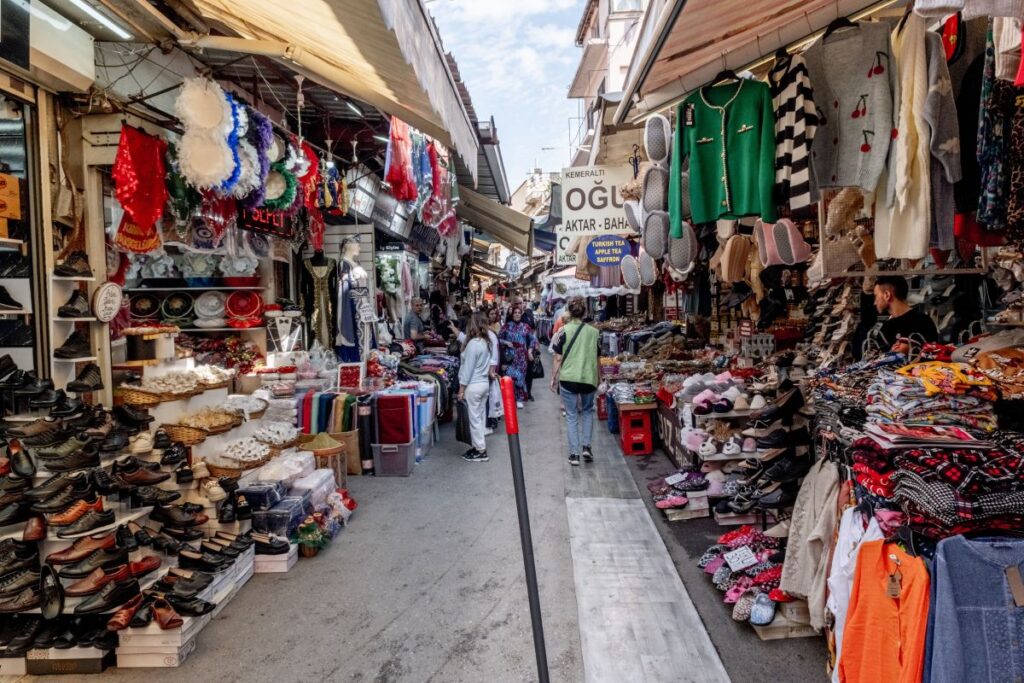
Kemeralti is one of Turkey’s great historic bazaars, but it feels very different from Istanbul’s covered markets.
This is not a single building. It is a large open-air commercial district in the heart of Izmir, with streets, hans, mosques, synagogues, fountains, courtyards, coffeehouses, food stalls, and shops woven together like a living maze.
The area became especially important from the 17th century onward, when Izmir grew into one of the major port cities of the Ottoman Empire. Because the city was connected to the Aegean and Mediterranean trade routes, merchants from different communities and countries did business here.
Kemeralti still carries that port-city feeling.
It is local, noisy, practical, and full of life. You may pass a shop selling wedding dresses, then a coffee grinder, then a fish restaurant, then a tiny mosque, then an old han, then a street full of jewelry shops. It is not polished like a museum, and that is exactly its charm.
What to buy in Kemeralti:
Turkish coffee is one of the best things to buy here, especially freshly ground coffee from old shops. İzmir is also a good place for olive oil, olives, local food products, spices, textiles, handmade jewelry, leather goods, and antiques.
Kemeralti is also a place to eat. Boyoz, kumru, lokma, sambali, fish, pickles, and strong Turkish coffee make the bazaar as much a food experience as a shopping experience.
This is the bazaar for travelers who want to feel daily life rather than only take photographs.
Gaziantep Coppersmith Bazaar: The Sound of Copper
Some bazaars are remembered by smell.
Gaziantep’s Coppersmith bazaar is remembered by sound.
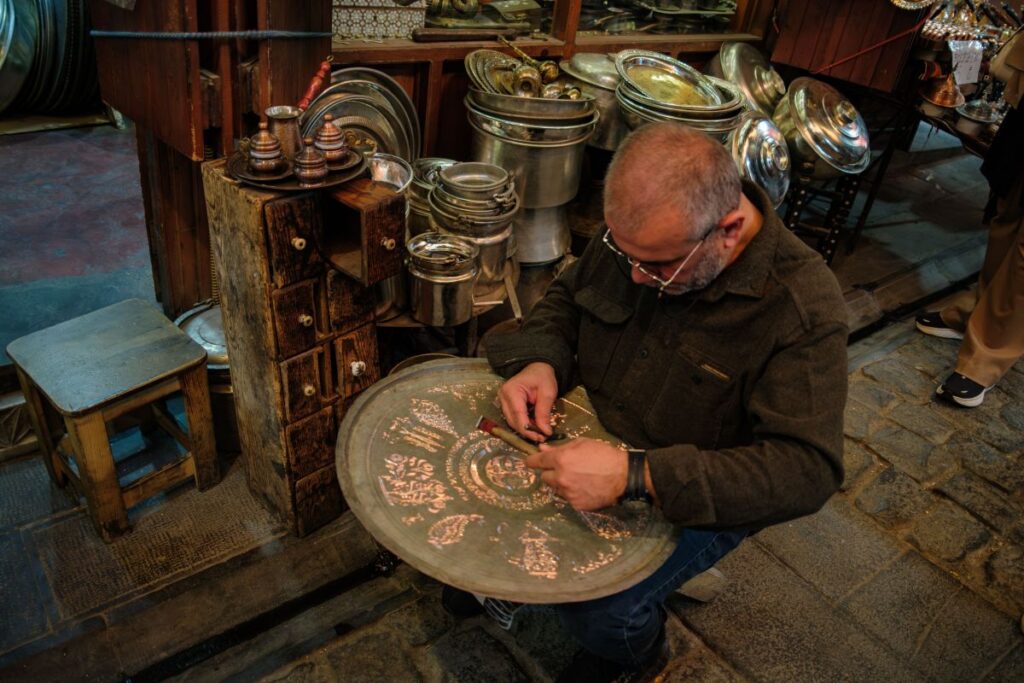
Before you see the workshops, you hear them: the repeated rhythm of hammers striking copper. This sound is not decoration. It is work. It is craft. It is a tradition that has survived into the modern city.
Gaziantep has long been known for its food, trade, and crafts. Its coppersmiths are part of that identity. In the old bazaar area, craftsmen still shape copper by hand, turning flat metal into coffee pots, trays, bowls, pans, and decorative pieces.
The experience is powerful because it is not only a display for visitors. It is a working craft environment.
You can watch a master lift a hammer again and again, each strike leaving a small mark. Over time, those marks become pattern, texture, and character. A handmade copper tray is not perfect in the industrial sense. That is why it is beautiful.
What to buy in Gaziantep Coppersmith Bazaar:
Copper coffee pots, serving trays, small bowls, cezves, engraved plates, and kitchenware are the most meaningful items. Gaziantep is also famous for pistachios, baklava, spices, pepper paste, and local food products, so the bazaar visit can easily become part of a wider food experience.
If you buy copper, ask whether the inside is properly lined for food use. Decorative pieces and kitchen pieces are not always the same.
Gaziantep’s bazaar teaches something important: in Turkey, shopping can still bring you face to face with the hand that made the object.
Food lovers visiting Gaziantep should also explore our complete Turkish Food Guide, where many of the city’s famous flavors are explained in greater detail.
Kayseri Bazaar and Bedesten: Trade Memory Near Kultepe
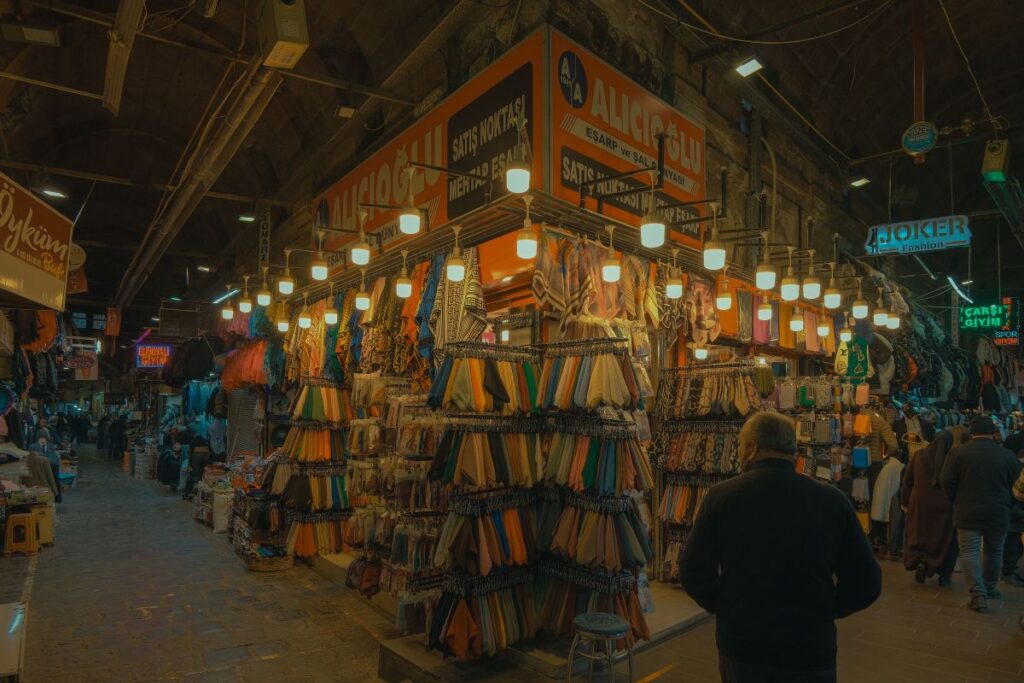
Kayseri is one of the most important commercial cities in Anatolia, and its trading character is not accidental.
Just outside the modern city lies Kultepe-Kanesh, the ancient Assyrian trading colony where thousands of clay tablets were found. This gives Kayseri a special place in the long story of Anatolian commerce.
When you walk through Kayseri’s historic bazaar area, you are not simply visiting an Ottoman market. You are in a region where trade has shaped life for nearly four thousand years.
The city later became important under the Seljuks and Ottomans as well. Its covered bazaar, hans, and bedesten reflect that continuity. Kayseri has always been a place of merchants: practical, disciplined, business-minded, and connected to wider routes.
What to buy in Kayseri:
Kayseri is famous for pastırma and sucuk, two of Turkey’s most iconic meat products. It is also a good place for carpets, kilims, textiles, spices, and local food items. Silver and jewelry can also be found in the bazaar area.
For travelers going to Cappadocia, Kayseri is often just an airport city. That is a mistake. Its commercial history reaches much deeper than most visitors realize.
Kayseri is where the old Anatolian merchant spirit still feels close to its ancient roots.
Edirne Bedesten: The Bazaar of an Ottoman Capital
Before Istanbul became the Ottoman capital, Edirne was one of the empire’s most important cities.
Its location near the Balkans made it a strategic and commercial center. Merchants, soldiers, diplomats, craftsmen, and travelers passed through Edirne for centuries.
The Edirne Bedesten was built in the early 15th century during the reign of Sultan Mehmed I, as part of the commercial and charitable world connected with the Old Mosque. Like other bedestens, it was designed to protect valuable goods and support the economic life of the city.
Its domed structure still reflects the seriousness of Ottoman commerce.
This was not a casual market hall. It was a secure place for valuable trade, connected to the city’s religious and social institutions. In the Ottoman system, markets often helped support mosques, schools, kitchens, and public services through foundation revenues.
What to buy in Edirne:
Edirne is famous for fruit-shaped soaps, local sweets, textiles, small souvenirs, and decorative objects. The city is also known for tava ciğeri, although that is something to eat rather than pack in your suitcase.
The Edirne Bedesten is especially meaningful for travelers interested in Ottoman history. It reminds us that bazaars were not only economic places; they were part of how Ottoman cities were built and sustained.
Safranbolu Bazaar: An Ottoman Town Still Breathing
Safranbolu is one of the best-preserved Ottoman towns in Turkey and a UNESCO World Heritage Site.
Its importance came partly from its position on historic trade routes. From the medieval period into the Ottoman era, Safranbolu served as an important caravan station. Its houses, streets, mosques, baths, and market areas still preserve the feeling of an old Anatolian town.
The bazaar area is not as grand as Istanbul’s Grand Bazaar, but it may be more atmospheric.
Here, the beauty lies in scale. Narrow streets, wooden shopfronts, stone paving, small workshops, and traditional crafts create a sense of continuity. Safranbolu feels less like a place built for tourists and more like a town that carefully kept its memory.
What to buy in Safranbolu:
Saffron is the symbolic product, although true saffron is precious and should be bought carefully. Safranbolu lokumu is also popular. You can also find handmade leather goods, wooden crafts, copper items, textiles, and small local souvenirs.
Traditional shoemaking, blacksmithing, and woodwork are part of the town’s craft heritage. Even when these crafts are not as common as they once were, the bazaar still helps keep them visible.
Safranbolu is a reminder that a bazaar does not need to be huge to be important.
Sometimes the most powerful history is found in quiet streets.
Safranbolu is one of the best-preserved Ottoman towns included in our guide to Turkey’s UNESCO World Heritage Sites.
Other Bazaars Worth Knowing in Turkey
Turkey has many other bazaars and market districts that deserve attention.
In Konya, the old bazaar areas around the Mevlana Museum reflect the city’s Seljuk and Ottoman layers. Konya was one of the great Seljuk capitals, and its commercial culture was tied to caravan routes, religious institutions, and craft traditions.
In Sanliurfa, the bazaar around Gumruk Han and the old market streets offers one of the most atmospheric experiences in southeastern Turkey. Isot pepper, copper, textiles, prayer beads, and local clothes fill the shops. The bazaar is closely connected with the city’s food culture and sacred atmosphere.
In Mardin, the old streets are full of stone architecture, silver workshops, soap sellers, spice shops, and local crafts. The city’s position between Mesopotamia and Anatolia gives its bazaar culture a different flavor from western Turkey.
Travelers interested in southeastern Turkey often combine Mardin with the ancient sites featured in our Mesopotamia Travel Guide.
In Antalya, the old Kaleici bazaar is more touristic today, but it still reflects the city’s long Mediterranean identity. Textiles, ceramics, leather, jewelry, spices, and souvenirs are common, and the setting inside the old town makes it pleasant for visitors.
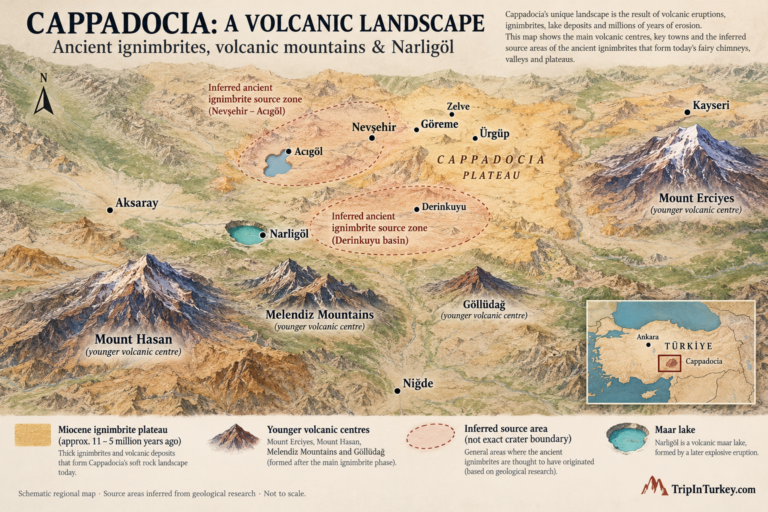
In Cappadocia, towns such as Avanos, Urgup, and Goreme have smaller shopping areas rather than huge historic bazaars. But the craft tradition is strong, especially pottery in Avanos, carpets, local wines, dried fruits, and handmade objects.
Every region has its own market language.
That is what makes bazaar culture in Turkey so rich.
What Should You Buy in Turkish Bazaars?
The best thing to buy in a Turkish bazaar is not always the most expensive object.
It is the object that belongs to the place.
In Istanbul, carpets, ceramics, jewelry, spices, Turkish delight, and leather goods make sense because they reflect the city’s imperial and commercial identity.
In Bursa, silk is the natural choice.
In Gaziantep, copper and pistachio products tell the story of the city better than generic souvenirs.
In Safranbolu, saffron, lokum, leather, and wood crafts fit the town’s character.
In İzmir, coffee, olive oil, local foods, jewelry, and antiques connect well with Kemeraltı’s Aegean atmosphere.
In Kayseri, pastırma, sucuk, carpets, and local products match the city’s merchant personality.
In Mardin, silver filigree, soap, spices, and local textiles are more meaningful than mass-produced gifts.
The rule is simple: buy what the city is known for.
A handmade object with a local story will always be better than a cheap souvenir that could be sold anywhere.
Bargaining in Turkish Bazaars
Many visitors are unsure about bargaining in Turkey.
The truth is that bargaining depends on the place and the product.
In touristic bazaars, especially for carpets, leather, lamps, antiques, and souvenirs, bargaining is expected. Prices may begin higher because negotiation is part of the process. In local food shops, spice shops with fixed labels, modern stores, cafes, and small grocery-style businesses, bargaining is usually not appropriate.
The best way to bargain is with respect.
Do not insult the product. Do not make an impossibly low offer just to play a game. Do not bargain for a long time if you have no intention of buying. And do not feel pressured to buy simply because someone offered you tea.
Tea is hospitality, not a contract.
A good bazaar conversation should feel human. Ask questions. Listen. Compare quality. Take your time. If the price is too high, smile and walk away politely.
Sometimes you will be called back.
Sometimes you will not.
Both are part of the bazaar.
How to Recognize Quality
Not everything sold in Turkish bazaars is handmade, antique, or local.
This is important.
Many visitors imagine that every carpet is handmade, every lamp is Turkish, every ceramic is traditional, and every antique is genuine. That is not true. Like markets everywhere in the world, Turkish bazaars include a mix of high-quality handmade pieces, ordinary factory products, imported souvenirs, and tourist items.
This does not mean you should avoid bazaars.
It means you should shop with awareness.
For carpets and kilims, ask about the region, material, age, dyes, and whether the piece is handmade. For ceramics, look at the painting quality, glaze, weight, and origin. For copper, ask whether the item is handmade and whether it is suitable for food use. For spices, buy from busy shops where products are fresh. For antiques, be careful about export rules and authenticity.
The best sellers educate you.
They do not rush you.
Bazaar Etiquette for Visitors
A Turkish bazaar is lively, but it still has its own etiquette.
Greet people when entering a shop. A simple “Merhaba” is always appreciated. Ask before taking close-up photos of shopkeepers, craftsmen, or private interiors. Do not block narrow streets for long photo sessions. Be careful when touching delicate textiles, ceramics, or antiques.
If someone invites you in, you can smile and say no politely. You do not need to be rude. A simple “Thank you, maybe later” is enough.
If you accept tea, enjoy it slowly. Tea is part of the culture of conversation. It does not automatically mean you must buy something.
Most importantly, do not treat the bazaar as a performance created only for tourists.
For many people, this is their workplace, their family business, and their inherited craft.
Respect changes the whole experience.
Before shopping, it’s worth reading our practical Turkey Travel Tips to better understand local customs and cultural etiquette.
The Bazaar as a Living Museum
Turkey has many excellent museums, but bazaars offer something different.
A museum preserves objects after their active life has ended. A bazaar shows traditions still in motion.
In Gaziantep, the copper master is still hammering.
In Bursa, silk is still sold in the old han.
In Istanbul, gold merchants still work near centuries-old bedestens.
In İzmir, people still drink coffee in Kemeraltı’s historic streets.
In Safranbolu, old Ottoman urban life still shapes the rhythm of the town.
This is why bazaars matter.
They are not frozen monuments. They are living spaces where history continues through daily habits: opening the shop in the morning, sweeping the entrance, making tea, greeting neighbors, arranging goods, negotiating prices, and closing the shutters at night.
The Turkish bazaar survives because it is useful, not only because it is beautiful.
Final Thoughts
A Turkish bazaar is one of the best places to understand Turkey.
It brings together history, trade, food, architecture, craftsmanship, hospitality, and daily life in one place. Its roots reach back to the Assyrian merchants of Kültepe. Its roads were shaped by the Silk Road. Its security and organization were refined by Seljuk and Ottoman institutions. Its heart was the bedesten. Its soul was the relationship between merchant, craftsman, traveler, and customer.
Today, Turkey’s bazaars continue this long story.
Some are grand and famous, like the Grand Bazaar of Istanbul. Some are fragrant, like the Egyptian Bazaar. Some are elegant, like Koza Han. Some are loud with craft, like Gaziantep’s Bakırcılar Çarşısı. Some are open-air labyrinths, like Kemeraltı. Some are quiet and atmospheric, like Safranbolu.
Each bazaar has its own character.
But they all share the same deeper meaning.
When you walk through a Turkish bazaar, you are not only shopping. You are walking through centuries of exchange, memory, and human connection.
And sometimes, the best souvenir is not the carpet, the copper pot, the silk scarf, or the spice you carry home.
It is the conversation you had along the way.
Historic bazaars are only one part of Turkey’s incredible heritage. If you’re looking for more unforgettable places, don’t miss our guide to the Best Places to Visit in Turkey.