Introduction: The Rediscovery of a Lost Empire
For centuries, the Hittite Civilization weas little more than a mysterious name mentioned in ancient Egyptian and Biblical texts. Ancient historians knew that a powerful kingdom once existed somewhere in Anatolia, but its location and history remained largely unknown.
This changed dramatically in the early twentieth century when archaeologists began excavating the ruins of Hattusa, a massive ancient city located near modern Bogazkale in central Turkey. Beneath its walls lay thousands of clay tablets written in cuneiform, the writing system of ancient Mesopotamia.
These tablets revealed the story of one of the most powerful states of the Late Bronze Age, an empire that rivaled Egypt, controlled vast territories across Anatolia and Syria, and maintained diplomatic relations with many of the major powers of the ancient world.
The Hittite Empire, which flourished between approximately 1600 and 1200 BCE, played a crucial role in shaping the political and cultural landscape of the ancient Near East.
Origins of the Hittites in Anatolia
The origins of the Hittites remain the subject of ongoing scholarly debate. Linguistic evidence suggests that the Hittite language belonged to the Indo-European language family, making it one of the earliest known Indo-European languages recorded in written form.
Before the rise of the Hittite state, Anatolia was inhabited by a variety of local cultures collectively known as the Hattians. They were the first founded country in Anatolia. There are many very early neolithic settlements in Anatolia as Catalhoyuk, Asiklihoyuk and Gobeklitepe but Hattians were not a small settlement or tribe but a country ruling the whole centre of Anatolia which is modern Turkey, today. The Hittites adopted many elements of Hattian culture, including religious traditions and place names.
The name Hatti was later used by the Hittites themselves to refer to their kingdom, demonstrating how cultural continuity shaped the development of early Anatolian states.
Travelers exploring Cappadocia today are not only discovering fairy chimneys and cave churches, but also a region deeply rooted in the ancient history of Anatolia.
Hittite Religion and Mythology
Religion played a central role in Hittite society. The Hittites worshiped hundreds of deities and often referred to their pantheon as the “Thousand Gods of Hatti.”
Their beliefs combined native Anatolian traditions with influences from Mesopotamia, Syria, and the Hurrian world. Storm gods, sun goddesses, fertility deities, and mountain spirits were all honored through elaborate rituals and festivals.
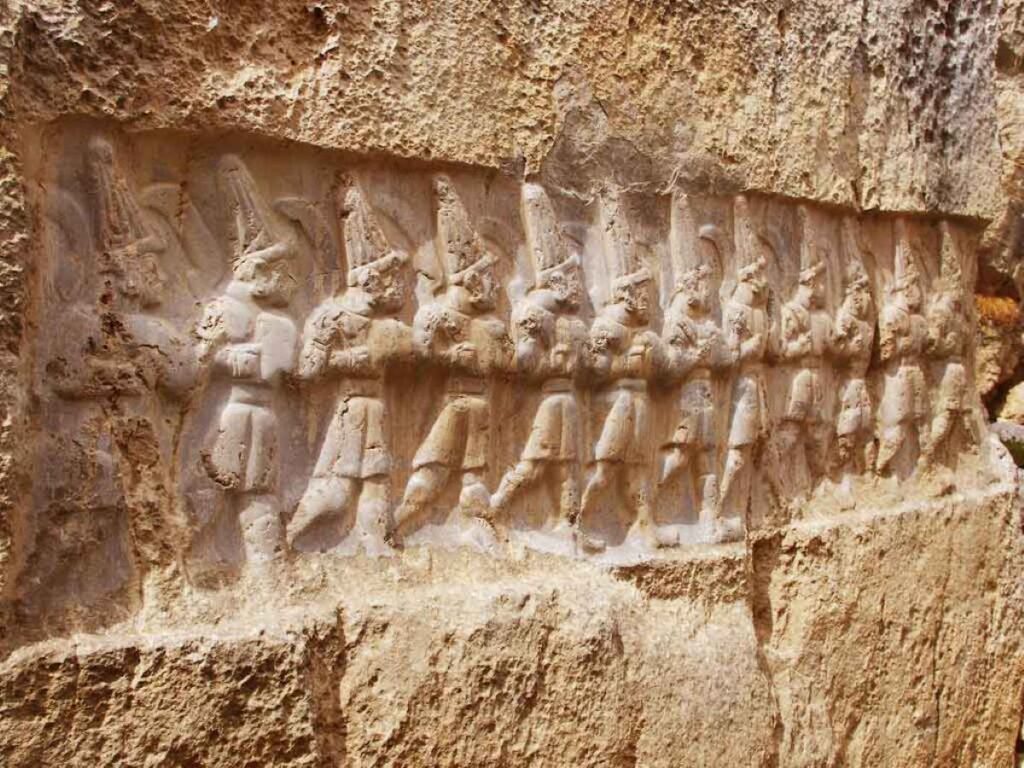
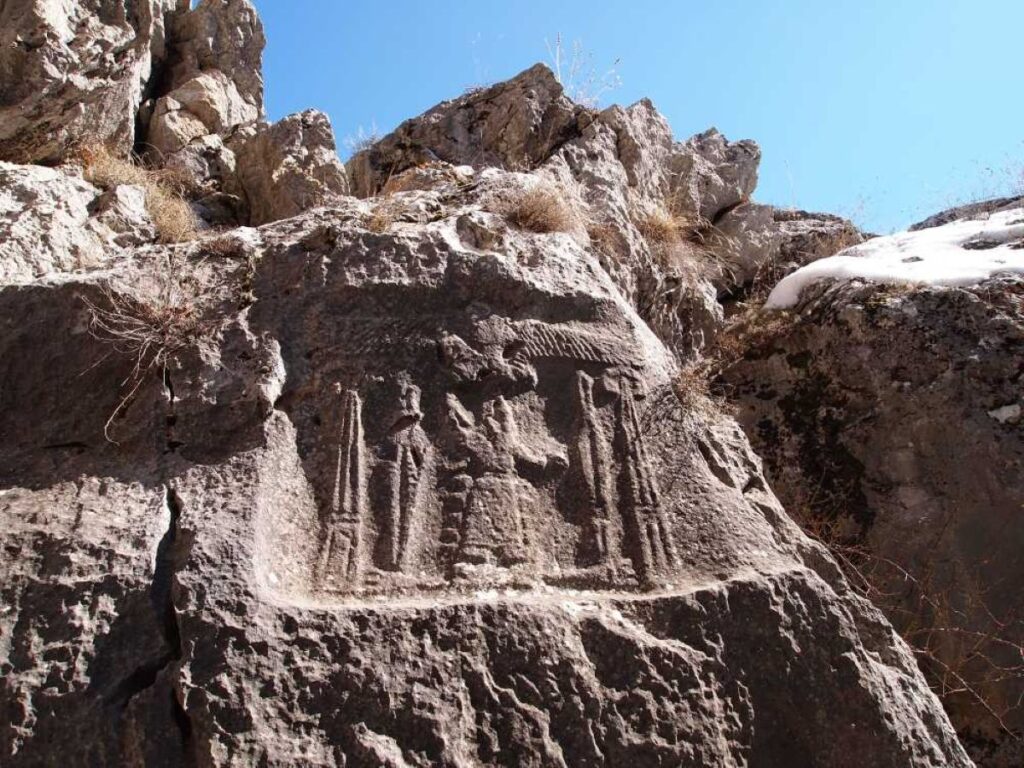
One of the most important sacred sites was Yazılıkaya, located near Hattusa. This open-air sanctuary contains rock reliefs depicting processions of gods and goddesses, providing one of the most remarkable visual records of Bronze Age religion.
Hittite myths helped preserve stories that were transmitted across the ancient Near East and influenced later cultural traditions.
Cappadocia was also part of the broader Hittite world, and travelers can explore the region today through this detailed guide to Best Things to Do in Cappadocia.
Hittite Law and Administration
The Hittites developed one of the most sophisticated legal systems of the Bronze Age. Their laws regulated property rights, marriage, trade, inheritance, and criminal offenses.
Compared with some neighboring civilizations, Hittite law was often more practical and less severe. In many cases, financial compensation replaced corporal punishment.
The empire was governed through a highly organized bureaucracy centered in Hattusa. Royal officials, governors, military commanders, and scribes helped administer territories stretching across Anatolia and northern Syria.
Thousands of clay tablets discovered in the royal archives reveal a remarkably advanced state structure and provide invaluable insights into ancient governance.
Assyrian Trade Colonies and the Economic Foundations of Anatolia
Long before the emergence of the Hittite Empire, central Anatolia was already part of a thriving commercial network connecting the civilizations of Mesopotamia with the mineral-rich lands of Anatolia.
One of the most important archaeological sites illustrating this trade system is Kultepe, the location of the ancient city Kanesh.
During the 20th to 18th centuries BCE, Assyrian merchants established a series of trading colonies known as karums throughout Anatolia. These colonies served as commercial centers where merchants exchanged goods between Mesopotamia and Anatolia.
The most important of these colonies was located at Kanesh (Kultepe).
Thousands of clay tablets discovered at Kultepe provide detailed records of commercial transactions, family correspondence, contracts, and legal disputes. These documents represent one of the earliest written archives of economic life in human history.
The Assyrian merchants traded items such as:
• tin used for bronze production
• luxury textiles from Mesopotamia
• silver and gold from Anatolia
This trade network played a critical role in stimulating economic growth and urban development in Anatolia, setting the stage for the later rise of the Hittite state.
Rise of the Hittite Kingdom
The first major ruler of the Hittite state was Hattusili I, who reigned around 1650 BCE. Hattusili established Hattusa as the capital and launched military campaigns across Anatolia and northern Syria.
Under his successors, particularly Suppiluliuma I, the Hittite kingdom expanded into a powerful empire.
Suppiluliuma I conquered large territories in Syria, including the city of Aleppo, and defeated the kingdom of Mitanni, which had previously dominated the region.
By the 14th century BCE, the Hittite Empire had become one of the dominant powers of the Near East, rivaling both Egypt and Assyria.
Hattusa: The Imperial Capital
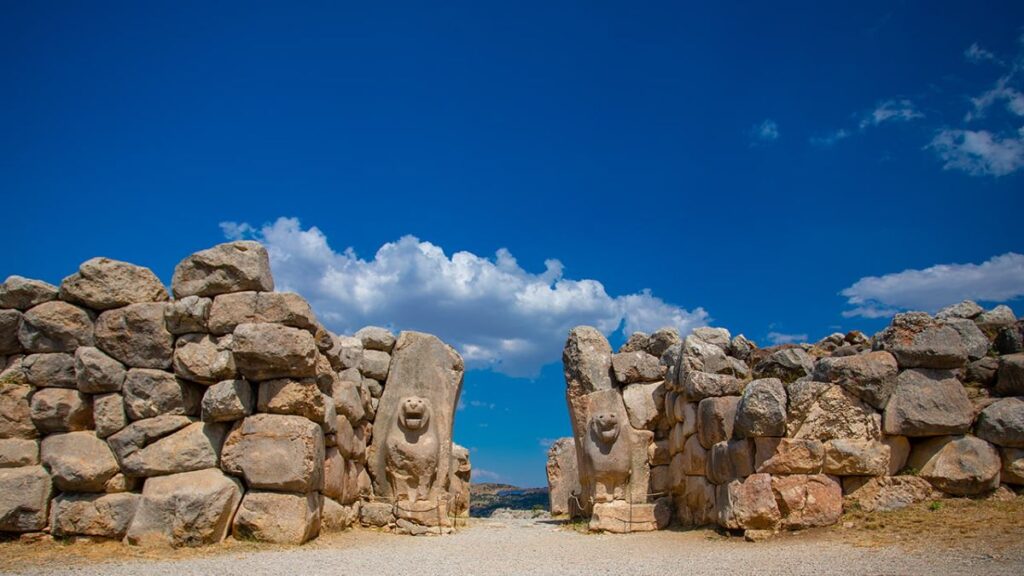
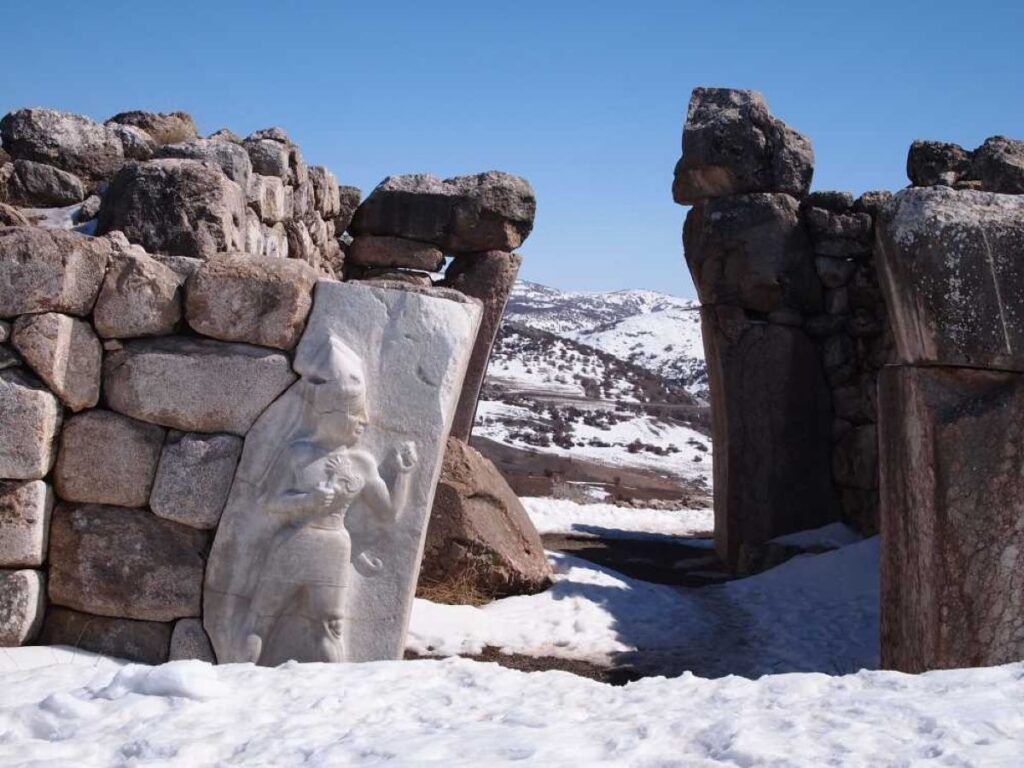
The capital city of Hattusa is located in centre of Turkey and it is only about 2.5 hour drive away from Cappadocia. It was one of the most impressive urban centers of the Bronze Age. You can have a one-day trip from Cappadocia to Hattusa and back. Cappadocia was also the land of the Hittites for centuries and you can visit importants sites belong to the Hittites in Cappadocia. Best things to do in Cappadocia
Surrounded by massive stone walls stretching more than 6 kilometers, the city contained:
• royal palaces
• temples
• administrative buildings
• fortified gates
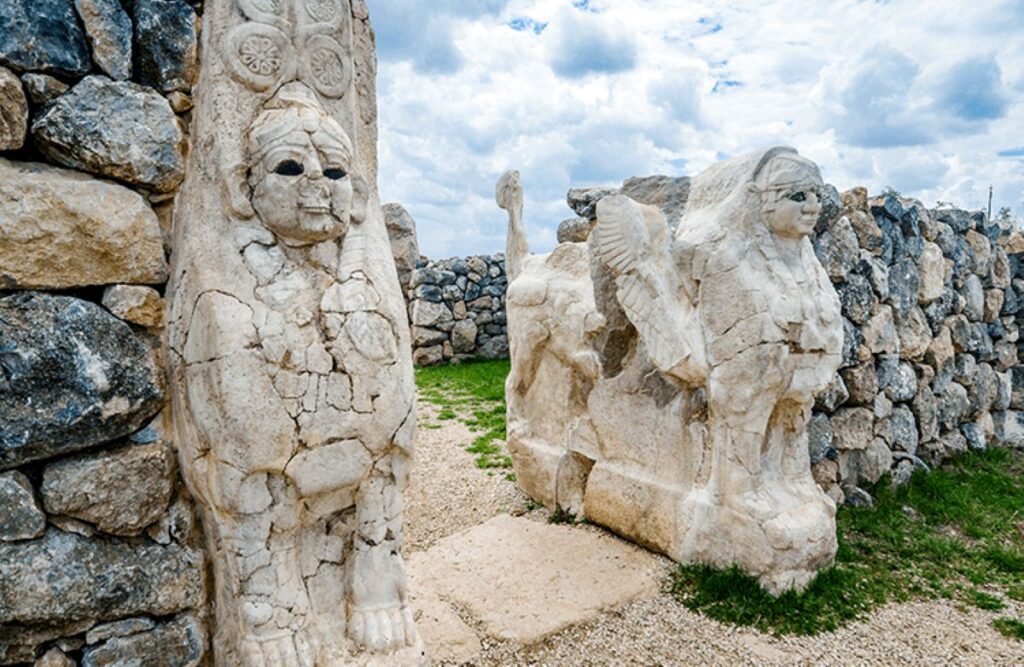
Among the most famous structures are the Lion Gate, the King’s Gate, and the Sphinx Gate, each decorated with monumental stone sculptures.
Nearby lies the sacred sanctuary of Yazilikaya, an open-air temple where relief carvings depict the Hittite pantheon of gods and goddesses.
These reliefs provide important insight into Hittite religious beliefs and mythology.
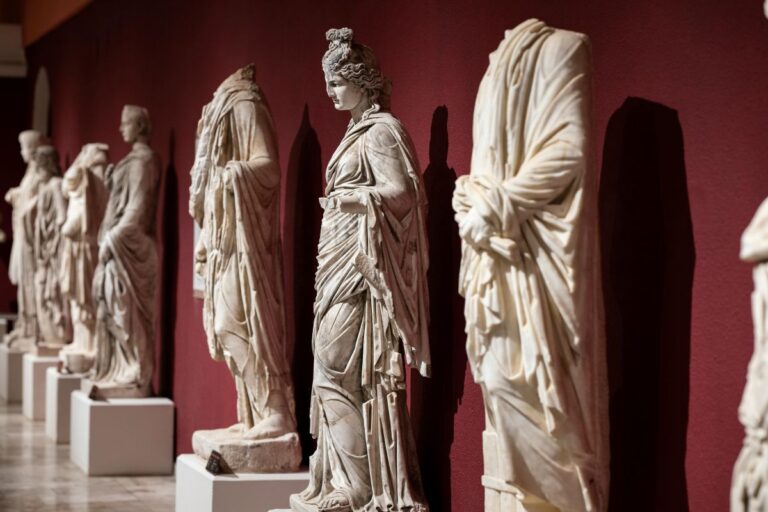
Many of the finest Hittite artifacts are displayed in the Museum of Anatolian Civilizations, one of the country’s most important museums. Read our Museums in Turkey guide for a broader introduction to Turkey’s museum landscape.
The Battle of Kadesh and the Rivalry with Egypt
One of the most famous military confrontations of the ancient world occurred between the Hittite Empire and New Kingdom Egypt.
The conflict culminated in the Battle of Kadesh, fought around 1274 BCE between the Hittite king Muwatalli II and the Egyptian pharaoh Ramesses II.
The battle took place near the city of Kadesh, located along the Orontes River in modern Syria.
Ramesses II later described the battle as a great Egyptian victory in monumental inscriptions carved on temple walls across Egypt.
However, archaeological and textual evidence suggests the outcome was more ambiguous. The Hittites retained control of Kadesh and much of Syria after the battle.
The Treaty of Kadesh: The First Peace Treaty in History
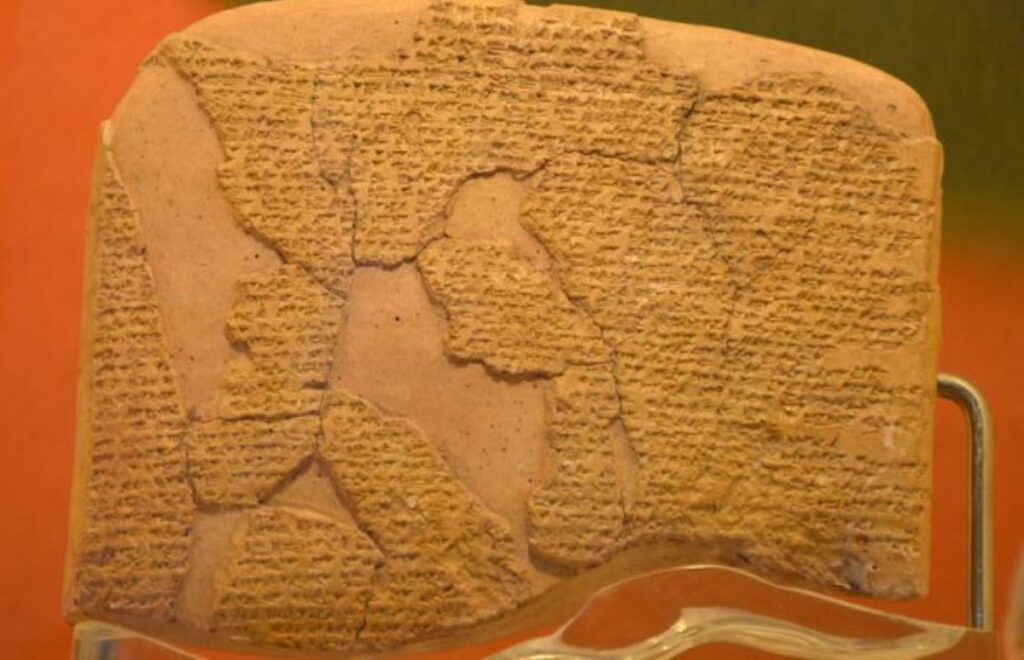
Following years of conflict, the Hittites and Egyptians eventually negotiated one of the most remarkable diplomatic agreements of the ancient world.
Around 1259 BCE, the Hittite king Hattusili III and the Egyptian pharaoh Ramesses II signed what is widely considered the earliest known international peace treaty.
The treaty established:
• mutual defense agreements
• political alliances
• extradition of fugitives
Copies of the treaty were written in Akkadian cuneiform and Egyptian hieroglyphs.
A replica of the treaty is displayed today at the United Nations headquarters in New York, symbolizing one of the earliest examples of international diplomacy.
Collapse of the Hittite Empire
Around 1200 BCE, the Hittite Empire collapsed during the widespread turmoil known as the Bronze Age Collapse.
Several factors likely contributed to this collapse:
• invasions by the mysterious Sea Peoples
• internal political instability
• disruptions to trade networks
• climate change and drought
By the early 12th century BCE, Hattusa had been abandoned, and the once-powerful empire disappeared.
However, smaller successor states known as the Neo-Hittite kingdoms continued to exist in parts of Syria and southeastern Anatolia.
The Hittites and Cappadocia
Cappadocia was part of the broader Hittite cultural landscape and remained strategically important throughout the Bronze Age.
The region’s volcanic terrain, fertile plains, and central location made it a natural crossroads linking Anatolia with Mesopotamia and Syria.
Several archaeological discoveries in central Anatolia indicate that the Hittites maintained strong political and economic connections throughout the area.
Travelers exploring Cappadocia today are not only visiting a land of fairy chimneys and cave churches, but also a region deeply rooted in the ancient history of Anatolia.
Legacy of the Hittites
Although their empire vanished more than 3,000 years ago, the Hittites played a crucial role in the history of the ancient Near East and Mesopotamia. There are important UNESCO sites to visit today and they give great chance to learn more about the Hittites.
Their diplomatic traditions, legal systems, and military innovations influenced neighboring civilizations, including Assyria, Babylon, and Egypt.
Modern archaeological research continues to uncover new insights into this remarkable civilization.
Why the Hittites Still Matter Today
The Hittites were among the first civilizations to build a true international empire in Anatolia.
They pioneered diplomatic treaties, advanced legal systems, large-scale administration, and military innovations such as chariot warfare.
Their archives transformed our understanding of the Bronze Age and revealed the complexity of ancient Anatolian civilization.
Today, the Hittites remind us that Turkey has been a center of human civilization for thousands of years, linking Europe, Asia, and the Middle East.
FAQ
Who were the Hittites?
The Hittites were an ancient Anatolian civilization that formed a powerful empire during the Bronze Age.
Where was the Hittite Empire located?
The Hittite Empire was centered in Anatolia, with its capital at Hattusa in modern Turkey.
What is the Treaty of Kadesh?
The Treaty of Kadesh is the oldest known peace treaty in history, signed between the Hittites and Egypt.
What is Kultepe?
Kultepe was an important Assyrian trade colony in Anatolia and a key center of early commerce.
You May Also Like
- Mesopotamia: Cradle of Civilization
- Gobeklitepe: The World’s Oldest Temple
- 15 Ancient Cities in Turkey You Must Visit
- Biblical Sites in Turkey
- Seven Churches of Revelation in Turkey