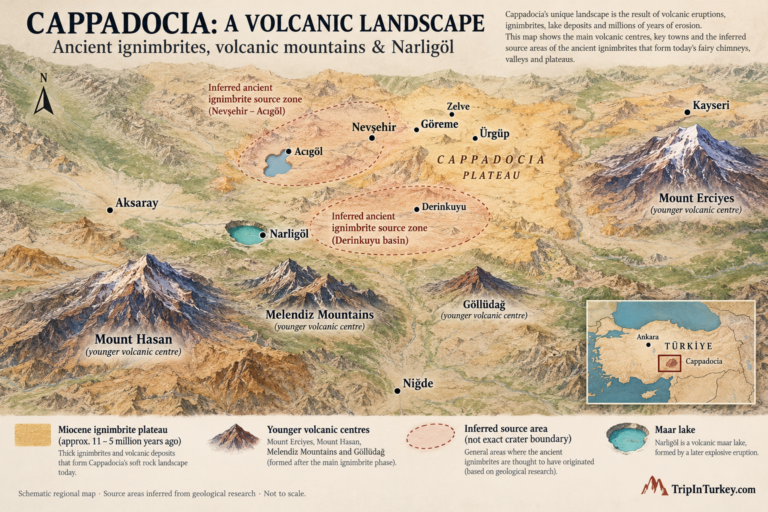
To understand the underground cities of Cappadocia, it is important to understand Anatolia itself.
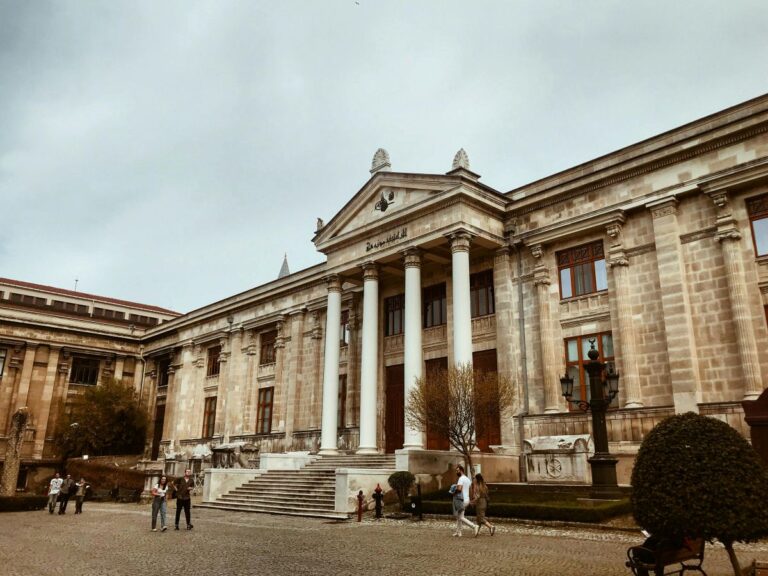
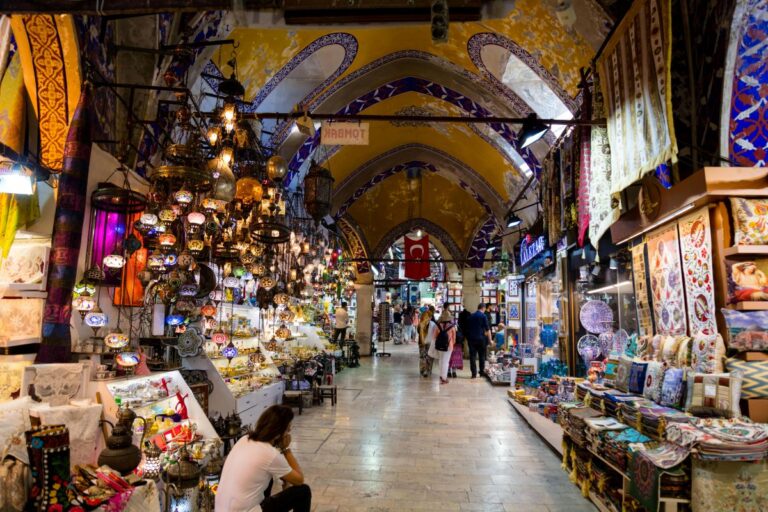
Few regions in the world have witnessed as much history as Anatolia. Situated between Europe and Asia, modern Turkey has served as a bridge between continents for thousands of years. Major trade routes, including branches of the Silk Road, passed through central Anatolia, connecting East and West. Caravanserais, trading centers, and prosperous cities flourished along these routes.
More than twenty major civilizations have left their mark on Anatolia, including the Hittites, Phrygians, Persians, Romans, Byzantines, Seljuks, and Ottomans. This rich historical heritage is one of the reasons Turkey is home to so many archaeological sites, ancient cities, temples, and monuments.
However, this strategic location brought challenges as well as opportunities.
Throughout history, empires fought for control of Anatolia. In times of war, invasion, or political instability, local communities needed safe places to protect their families.
Some researchers believe the earliest underground shelters in Cappadocia may have originated during the Hittite period around the second millennium BC. Over the centuries, these spaces were expanded and improved by later civilizations, eventually becoming the vast underground cities visible today.
The purpose was not for people to live underground permanently.
During peaceful times, communities lived above ground in villages and towns. The underground cities functioned as emergency refuges where non-combatants—including children, elderly people, and those unable to fight—could take shelter while conflicts unfolded on the surface.
Because families sometimes remained underground for extended periods, these cities contained everything necessary for survival. Visitors today can still see storage rooms, kitchens, living quarters, wells, ventilation shafts, wineries, churches, and even stables for animals.
The underground cities also served practical purposes during times of peace. Thanks to the constant temperature of the volcanic rock—typically around 13–15°C (55–59°F) year-round—they provided ideal conditions for storing food and agricultural products.
Some chambers were used as wineries and storage facilities. This is particularly interesting because Cappadocia has one of the oldest winemaking traditions in Anatolia. Viticulture in the region dates back thousands of years and continues today, making wine production an important part of Cappadocia’s cultural heritage.
The underground cities gained renewed importance during the Roman and early Byzantine periods. Before Christianity became legally accepted in the Roman Empire during the fourth century, many early Christians sought refuge in Cappadocia’s valleys, cave churches, and underground settlements. These hidden spaces provided protection and allowed communities to continue practicing their faith during periods of uncertainty.
Many of the communities who sought refuge underground also worshipped in Cappadocia’s famous rock-cut churches and monasteries, which you can explore in our guide to Cappadocia History.
For this reason, the underground cities of Cappadocia are not simply engineering marvels. They are monuments to survival, adaptation, and the resilience of the people who lived in one of history’s most contested crossroads.
To better understand the region above ground, be sure to read our complete Cappadocia Travel Guide, covering valleys, cave churches, museums, and local experiences.
Life Beneath the Earth
Walking through an underground city today, most visitors ask the same question:
“How did people actually live here?”
At first glance, the tunnels appear narrow and the chambers seem surprisingly small. It is difficult to imagine entire communities spending days, weeks, or even months beneath the earth.
Yet the underground cities of Cappadocia were carefully designed to support human life during times of danger.
The upper levels were often used for animals. Keeping livestock close to the entrance reduced odors in the deeper sections while ensuring families could bring their most valuable possessions underground. Deeper levels contained living quarters, kitchens, storage rooms, and communal spaces.
Food storage was essential. Large chambers were used to store grain, dried fruits, legumes, and other supplies that could last for long periods. Because the temperature inside the volcanic rock remains relatively stable throughout the year—usually around 13–15°C (55–59°F)—these underground spaces functioned as natural refrigerators long before modern technology existed.
Water was equally important. Many underground cities included wells that provided access to fresh water without requiring people to leave their shelters. Some wells were even designed so that enemies on the surface could not easily contaminate the water supply.
Perhaps the most impressive feature was ventilation. Visitors are often surprised to learn that fresh air could reach even the deepest levels. Massive ventilation shafts circulated air throughout the complex, making long-term occupation possible. Derinkuyu’s famous shaft extends more than 50 meters below the surface and remains one of the greatest engineering achievements of the underground cities.
Religion also played an important role in daily life. Small churches and chapels carved into the rock allowed communities to continue worshipping even during periods of conflict. In some underground cities, archaeologists have identified gathering spaces and educational areas that may have been used for teaching and community activities.
Many visitors imagine underground life as dark and uncomfortable. While it certainly presented challenges, these cities were remarkably sophisticated for their time. They were not simple hiding places. They were fully functioning communities designed to help people survive some of the most uncertain periods in Anatolian history.
The story of the underground cities is only one chapter in Anatolia’s long history, which stretches back thousands of years to some of the world’s earliest settlements. Read our article about Neolithic Sites of Turkey
Derinkuyu Underground City: The Deepest Underground City in Cappadocia
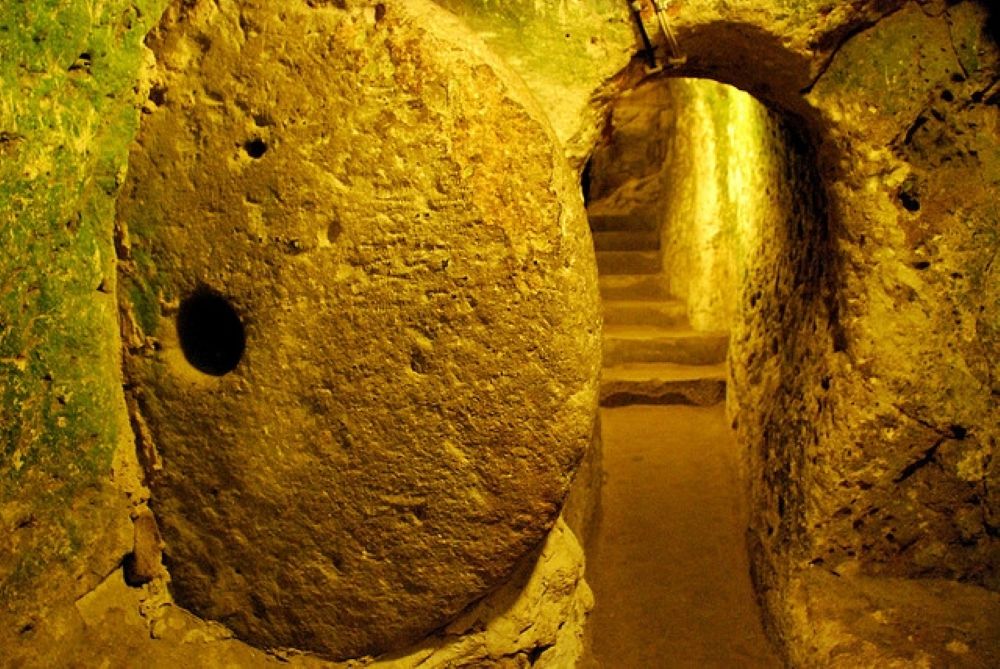
If there is one underground city that symbolizes Cappadocia, it is Derinkuyu.
Located about 40 kilometers south of Nevşehir, Derinkuyu is the deepest and most impressive underground city open to visitors today. Descending approximately 85 meters below the surface, it reveals just how sophisticated life beneath the earth could become.
One of the most fascinating aspects of Derinkuyu is its modern discovery. In 1963, a local resident reportedly noticed a mysterious space behind a wall in his house. When the wall was opened, a hidden passageway led to a network of tunnels and chambers that had remained largely forgotten for centuries. Further exploration revealed one of the most extraordinary underground settlements ever discovered.
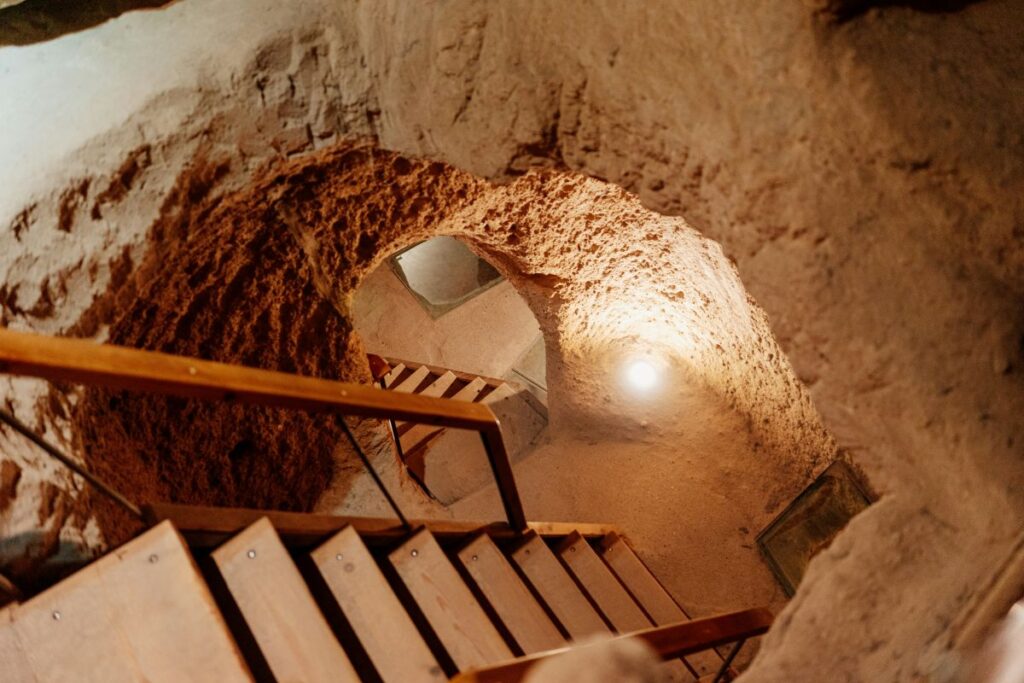
Today, visitors can explore several levels connected by narrow corridors and stairways. As you move deeper into the city, it becomes easier to understand that this was not simply a temporary shelter. It was a carefully planned refuge capable of supporting an entire community during times of danger.
Archaeologists believe Derinkuyu may have accommodated around 8,000 people along with their animals and supplies. The city contains storage rooms, kitchens, wineries, stables, living quarters, churches, wells, and communal spaces. Every section served a practical purpose.
One of the first areas visitors encounter is the stable section. Animals were typically kept on the upper levels, making them easier to manage while reducing odors in the deeper living areas below. Nearby storage rooms held grain and other food supplies that could sustain families for extended periods.
As you descend further, the engineering becomes increasingly impressive. Massive circular stone doors could be rolled into place from the inside, sealing tunnels and protecting residents from potential attackers. Some of these stone doors weigh hundreds of kilograms and remain one of the most recognizable features of Cappadocia’s underground cities.
Perhaps the most remarkable feature is the ventilation system. A central shaft extends deep into the city, supplying fresh air to multiple levels. Without this innovation, long-term occupation would have been impossible. Even today, visitors can feel air circulating through parts of the complex.
Religion also played an important role in underground life. Derinkuyu contains chapels and religious spaces where communities could continue worshipping during periods of refuge. One of the most interesting sections is a large barrel-vaulted chamber believed to have served as a missionary school during the Byzantine period.
Walking through Derinkuyu can be a surprisingly emotional experience. The narrow tunnels, low ceilings, and enclosed spaces help visitors imagine what life might have been like for the people who once sought safety beneath the earth. At the same time, the scale and sophistication of the city reveal an extraordinary level of planning and engineering.
Today, Derinkuyu remains one of the most visited attractions in Cappadocia and offers perhaps the best introduction to the underground world hidden beneath central Anatolia.
Today, Derinkuyu remains one of the most popular attractions featured in our guide to the Best Things to Do in Cappadocia.
Kaymakli Underground City: A Glimpse into Daily Life Beneath Cappadocia
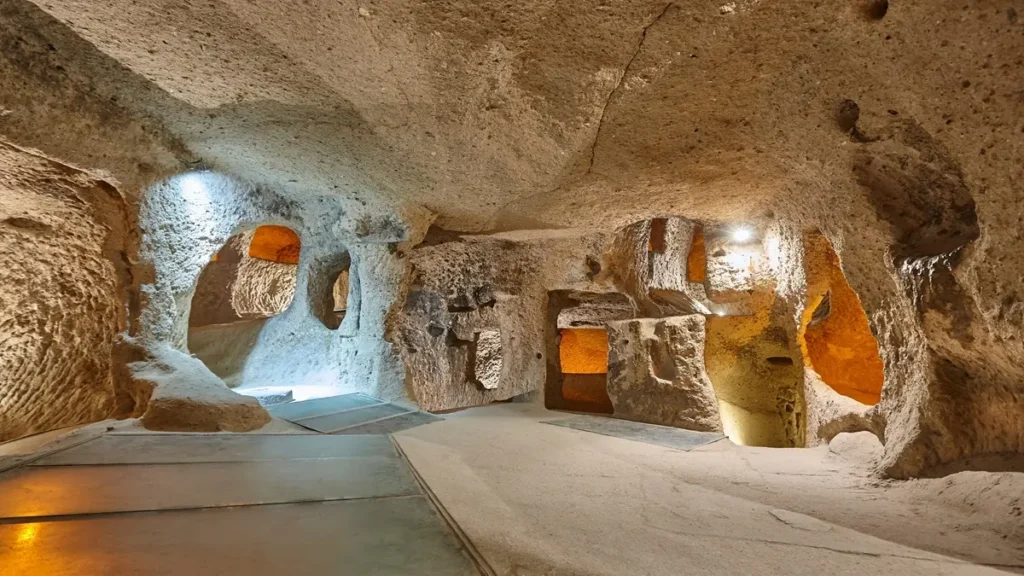
While Derinkuyu is often described as the largest and deepest underground city in Cappadocia, many visitors find Kaymaklı even more fascinating.
Located just 20 kilometers from Nevsehir, Kaymakli offers a different perspective on underground life. Rather than impressing visitors with depth, it reveals how entire communities organized their daily lives beneath the surface.
The city consists of multiple levels carved into the volcanic tuff, although only a portion is currently open to visitors. Archaeologists estimate that approximately 3,000 to 4,000 people may have used the underground complex during periods of refuge.
One of the first things visitors notice is how interconnected the city feels. Narrow passageways connect storage rooms, kitchens, living spaces, workshops, and communal areas, creating the impression of a carefully planned underground neighborhood.
Unlike Derinkuyu, which often feels defensive and fortress-like, Kaymakli provides a clearer picture of everyday life. Large storage areas suggest that families prepared extensively for periods of danger. Clay jars once held wine, oil, grain, and other essential supplies, while separate rooms were used for food preparation and daily activities.
Wine production appears to have played an important role here. Cappadocia has one of Anatolia’s oldest winemaking traditions, and several chambers in Kaymaklı are believed to have been used for processing and storing wine. Even today, vineyards remain an important part of the region’s landscape and economy.
The city also contains stables, ventilation shafts, churches, and living quarters. As in Derinkuyu, heavy circular stone doors could seal tunnels from the inside, protecting residents during times of conflict.
One of the most intriguing theories surrounding Kaymaklı is the possibility that it was connected to Derinkuyu through a network of underground tunnels. While some connecting passages have been identified, the full extent of these connections remains uncertain and continues to be studied by archaeologists.
Visitors often ask whether they should visit Derinkuyu or Kaymakli.
The truth is that each offers a different experience.
Visitors often combine Derinkuyu and Kaymakli with a broader exploration of the region’s valleys, viewpoints, and cave churches. Read our guide Cappadocia Travel Guide to have more information about Cappadocia.
Derinkuyu impresses with its scale, depth, and engineering. Kaymakli, on the other hand, helps visitors understand how people actually lived underground. If Derinkuyu feels like an underground fortress, Kaymaklı feels like an underground town.
For travelers with limited time, Derinkuyu is usually the first recommendation. However, those interested in daily life, architecture, and the practical realities of underground communities often find Kaymakli equally rewarding.
Together, these two cities provide the most complete introduction to Cappadocia’s hidden world beneath the earth.
Ozkonak Underground City: Cappadocia’s Ingenious Defense System
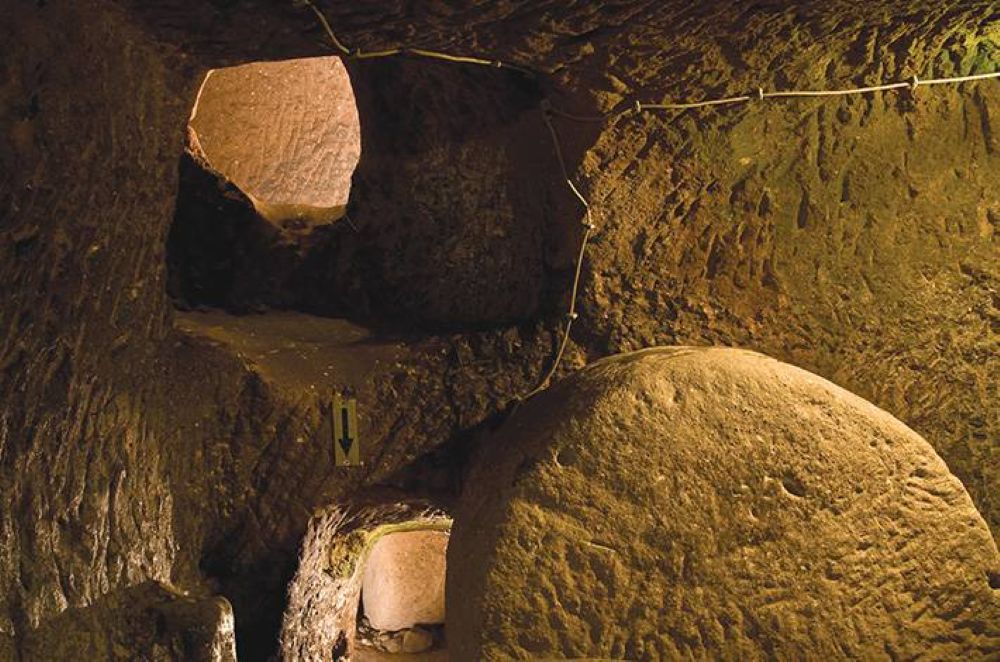
While Derinkuyu and Kaymakli are the most famous underground cities in Cappadocia, Ozkonak offers something unique.
Discovered in the 1970s and located near Avanos, Ozkonak may not be as large as Derinkuyu, but it contains some of the most interesting defensive features found anywhere in the region.
According to local tradition, the city was expanded into the slopes of Mount Idis and used as a refuge during periods of instability. Like other underground settlements in Cappadocia, it contains living quarters, storage rooms, ventilation shafts, wells, and communal areas. However, what makes Ozkonak special is its security system.
Visitors can still see small communication holes carved between different levels. These allowed residents to communicate with one another without moving through the main corridors. In times of danger, messages could quickly pass throughout the underground complex while minimizing movement and confusion.
Even more fascinating are the narrow openings positioned above some tunnels. Archaeologists believe these may have been used as defensive features. If attackers managed to enter the city, defenders could potentially use these openings to observe movement below or hinder their advance. Whether used for spears, stones, or other defensive measures, they demonstrate the strategic thinking behind Cappadocia’s underground architecture.
Like other underground cities, Ozkonak relied on large circular stone doors to seal important passageways. These doors could be rolled into place from the inside, creating barriers that were extremely difficult to overcome.
Because Ozkonak receives fewer visitors than Derinkuyu and Kaymakli, many travelers find the experience more relaxed and intimate. The narrower corridors and compact layout often make it easier to imagine how people actually moved through the city during periods of refuge.
For visitors interested in military history and defensive engineering, Ozkonak offers some of the most intriguing evidence of how underground communities protected themselves in a region that experienced centuries of conflict and invasion.
Mazi Underground City: An Authentic Hidden Gem
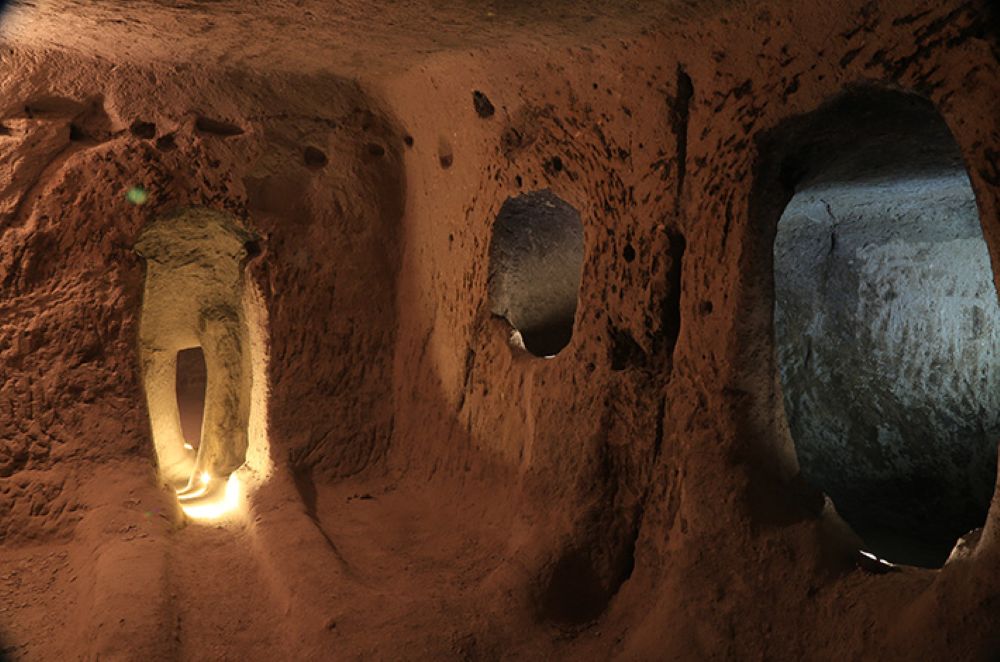
Located in a small village southeast of Nevsehir, Mazi Underground City remains one of Cappadocia’s lesser-known treasures.
Unlike Derinkuyu and Kaymakli, which receive thousands of visitors each year, Mazi offers a quieter and more authentic experience. Many travelers who visit describe it as feeling less like a tourist attraction and more like an archaeological discovery.
The underground city was carved directly beneath the village and contains several entrances leading into different sections of the complex. Archaeologists believe it was used primarily during the Byzantine period, although some parts may be older.
One of the most interesting aspects of Mazi is its strong connection to agriculture. The surrounding countryside has long supported farming communities, and many of the underground chambers appear closely linked to the storage of agricultural products. Large storage rooms, food depots, and work areas suggest that the underground city played an important role in protecting both people and valuable supplies.
The city’s layout differs from Derinkuyu and Kaymakli in several ways. Passageways are generally wider, while some chambers feel more spacious and practical. Visitors can still see examples of stone doors that once sealed important sections of the city during times of danger.
Because Mazi remains relatively unknown, it offers a rare opportunity to experience an underground city without large crowds. The atmosphere feels more personal and allows visitors to better appreciate the ingenuity of the communities who created these remarkable spaces.
For travelers seeking a deeper understanding of Cappadocia beyond the most famous attractions, Mazi is one of the region’s most rewarding underground cities.
Tatlarin Underground City: Cappadocia’s Archaeological Surprise
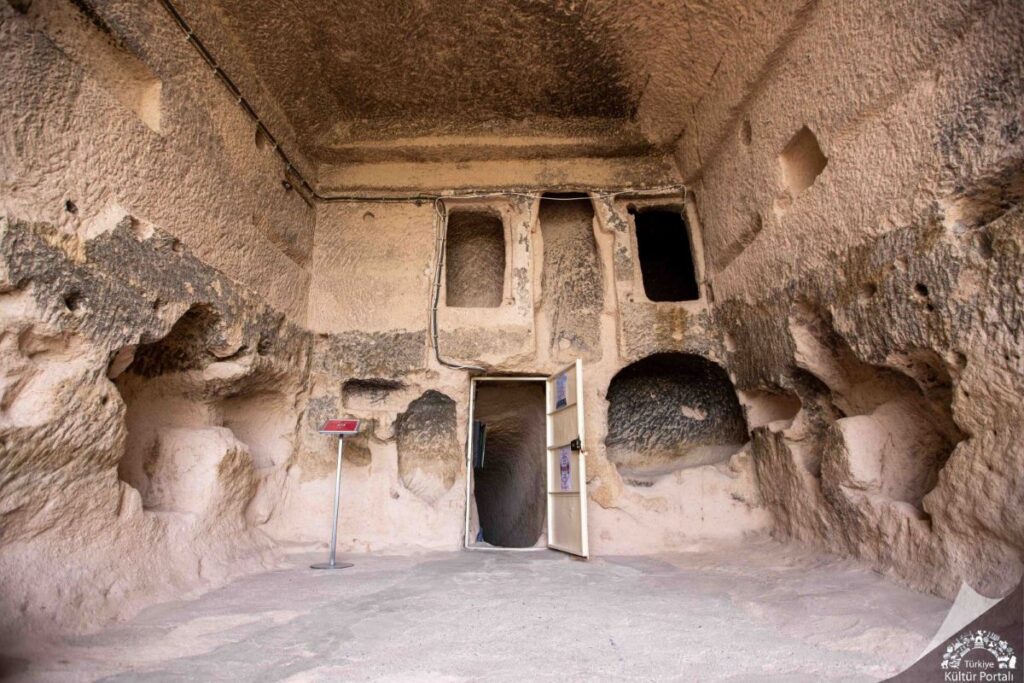
Tatlarin is often overlooked by visitors rushing between Cappadocia’s more famous underground cities.
Yet many archaeologists consider it one of the most interesting sites in the region.
Located near Acıgöl, Tatlarin differs from Derinkuyu and Kaymaklı in both scale and character. Rather than an enormous labyrinth extending endlessly underground, Tatlarin contains a series of unusually large chambers that suggest a different style of occupation.
Excavations have revealed living spaces, storage areas, churches, and communal rooms. Some researchers believe the city may have served a smaller population than Derinkuyu but provided more spacious accommodation for its residents.
One of Tatlarin’s most important discoveries is its church. Religious spaces found within the underground city provide valuable evidence of Christian communities that once lived in Cappadocia during the Byzantine period. These communities left behind a remarkable legacy of cave churches, monasteries, and underground refuges throughout the region.
The city also offers insight into the later phases of underground life in Cappadocia. By the Byzantine era, underground settlements had evolved far beyond simple shelters. They had become sophisticated communities capable of supporting families, storing supplies, and preserving religious traditions during uncertain times.
Although Tatlarin receives fewer visitors than Derinkuyu or Kaymaklı, it rewards travelers interested in archaeology, architecture, and the daily realities of life beneath the earth.
Its combination of large chambers, religious spaces, and relatively quiet atmosphere makes it one of the most underrated underground cities in Cappadocia.
Gaziemir Underground City: Cappadocia’s Underground Caravanserai
Among Cappadocia’s underground cities, Gaziemir stands apart.
Located near Guzelyurt in the southern part of the region, Gaziemir differs from Derinkuyu and Kaymakli in both design and function. While most underground cities were primarily built as refuges, many researchers believe Gaziemir may also have served as an important stop along regional trade routes.
Some archaeologists have described parts of the complex as resembling an underground caravanserai. Large chambers, storage spaces, and communal areas suggest that merchants and travelers may have used the site while moving through central Anatolia.
This would make perfect sense. For centuries, Cappadocia occupied a strategic position between East and West. Trade routes crossed the region long before the Silk Road became famous, bringing merchants, pilgrims, soldiers, and travelers through Anatolia.
To learn more about the trade routes that shaped central Anatolia, read our guide to the Silk Road in Turkey.
Like other underground settlements, Gaziemir contains churches, living quarters, storage rooms, and defensive features. However, its spacious layout creates a noticeably different atmosphere from the narrow corridors of Derinkuyu.
Because it remains relatively unknown to international visitors, Gaziemir offers a fascinating glimpse into a lesser-known chapter of Cappadocia’s underground history.
Saratli Underground City: A Hidden Treasure in Aksaray
Located near Aksaray, Saratli Underground City—sometimes known as Kırkgoz Underground City—is another impressive example of Cappadocia’s hidden world beneath the earth.
Although smaller than Derinkuyu and Kaymakli, Saratli provides valuable insight into how underground settlements functioned throughout the wider Cappadocia region.
The city contains multiple levels connected by corridors, storage rooms, living quarters, ventilation shafts, and communal spaces. Like many underground cities, it was designed to provide security during periods of instability while allowing daily life to continue.
One of Saratli’s advantages today is its relative tranquility. Visitors often encounter far fewer crowds than at the region’s most famous underground cities, allowing for a more relaxed exploration of the site.
For travelers interested in discovering lesser-known corners of Cappadocia, Saratli offers an excellent alternative.
Agirnas Underground City: Beyond Nevsehir
When most people think of Cappadocia, they focus on Nevsehir.
However, the historical region extends beyond modern provincial boundaries, and evidence of underground settlement can also be found around Kayseri.
One of the most interesting examples is Agirnas, the birthplace of the legendary Ottoman architect Sinan.
Beneath the village lies an extensive network of tunnels, storage chambers, and underground spaces that demonstrate how widespread the tradition of subterranean architecture became across central Anatolia.
Although Agirnas is less developed as a tourist attraction than Derinkuyu or Kaymakli, it provides important evidence that underground living was not limited to a handful of famous sites.
Instead, it formed part of a much broader tradition that shaped life throughout Cappadocia for centuries.
The wider history of central Anatolia includes powerful civilizations such as the Hittites, whose influence can still be seen throughout the region.
Which Underground City Should You Visit?
Visitors frequently ask which underground city is best.
The answer depends on your interests.
If you can only visit one underground city during your trip, Derinkuyu is usually the best choice. Its depth, engineering, and scale make it the most impressive introduction to Cappadocia’s underground world.
If you’re interested in understanding how people actually lived underground, Kaymakli offers a more intimate look at daily life.
Travelers who prefer quieter attractions often enjoy Ozkonak, while archaeology enthusiasts may find Tatlarin particularly rewarding.
Mazi appeals to visitors looking for a more authentic and less crowded experience, while Gaziemir provides a fascinating glimpse into the commercial and trading history of the region.
Ultimately, there is no wrong choice. Each underground city reveals a different aspect of Cappadocia’s remarkable past.
If you’re planning a longer stay, our guide on How Many Days in Cappadocia can help you organize your itinerary.
Tips for Visiting Cappadocia’s Underground Cities
Before visiting an underground city, there are a few practical things to keep in mind.
First, some tunnels are narrow and low. Visitors with severe claustrophobia may find certain sections uncomfortable, particularly in Derinkuyu.
Comfortable footwear is recommended, as many passageways include uneven floors, stairs, and sloping surfaces.
Families with children generally find underground cities fascinating, although very young children may become tired in the deeper sections.
Most visitors spend between 45 minutes and 60 minutes exploring a single underground city. Those interested in history and archaeology often spend considerably longer.
Finally, guided tours can significantly enhance the experience. Without context, visitors may simply see a series of rooms and tunnels. With proper explanation, these spaces become living evidence of how generations of people adapted to one of history’s most challenging environments.
Spring and autumn are generally considered the best seasons to explore Cappadocia’s underground cities and outdoor attractions. Read our guide about Best Time to Visit Turkey before arranging your trip in Turkey.
Final Thoughts
The underground cities of Cappadocia are among the most extraordinary archaeological sites in Turkey.
Hidden beneath the valleys, villages, and volcanic landscapes of central Anatolia lies an entire world that remained largely invisible for centuries. These cities tell a story of survival, innovation, trade, faith, and resilience.
They remind us that Cappadocia is far more than hot-air balloons and fairy chimneys.
Beneath the surface lies another Cappadocia—one shaped by generations of people who transformed soft volcanic rock into thriving underground communities.
Whether you explore the vast corridors of Derinkuyu, the living spaces of Kaymakiı, the defensive systems of Ozkonak, or the lesser-known chambers of Gaziemir and Agirnas, one thing becomes clear:
The underground cities are not merely attractions.
They are among the greatest engineering and survival achievements of the ancient world.
Looking for more inspiration? Explore our complete collection of Cappadocia travel guides, history articles, and itinerary suggestions. Here you can find more information about Best Things to Do in Cappadocia.