
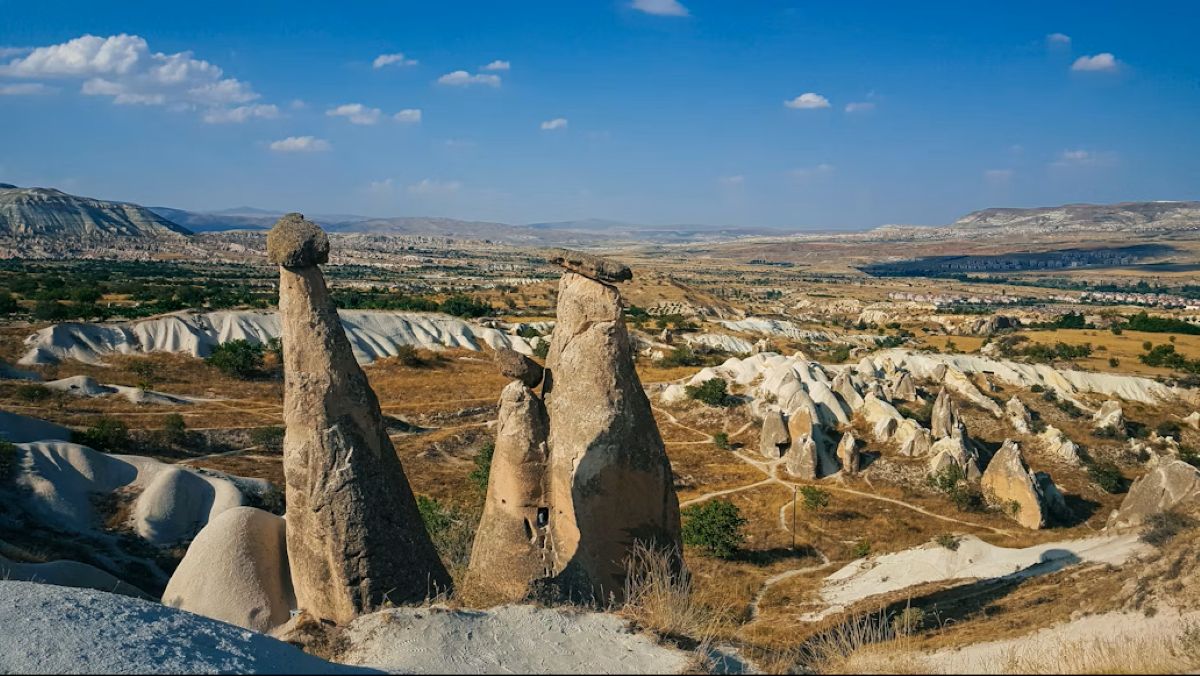
Cappadocia is one of the most extraordinary destinations not only in Turkey but in the world. Famous for its surreal landscapes, fairy chimneys, underground cities, cave churches, and sunrise hot air balloons, this region attracts millions of travelers every year.
Yet Cappadocia is much more than the iconic balloon photos you see on Instagram. Beneath its volcanic valleys lies a fascinating history shaped by ancient civilizations, early Christians, and centuries of human ingenuity. From underground cities that once sheltered thousands of people to rock-cut monasteries decorated with Byzantine frescoes, every corner of Cappadocia tells a story.
As a licensed tour guide who has been guiding travelers in Cappadocia since 2008, I often meet visitors who arrive expecting beautiful scenery and leave amazed by the region’s history, culture, and unique atmosphere. Whether you are planning a short getaway or a longer Turkey itinerary, this guide will help you decide where to stay, what to see, how many days you need, and how to make the most of your visit.
Cappadocia is one of the highlights of our 10 day Turkey itinerary, making it easy to combine with other destinations like Istanbul and Ephesus.
Cappadocia is located in Central Anatolia, roughly in the heart of Turkey. The region lies about 730 kilometers (454 miles) southeast of Istanbul and around 280 kilometers (174 miles) from Ankara.
One of the biggest misconceptions among first-time visitors is that Cappadocia is a city. In reality, Cappadocia is a historical and geographical region made up of several towns, valleys, and villages spread across a large area.
The main tourist centers include:
Goreme is the most popular place to stay in Cappadocia. It offers easy access to major attractions, countless cave hotels, restaurants, and some of the best balloon viewpoints in the region.
Located on the highest point in Cappadocia, Uchisar is known for luxury cave hotels, panoramic views, and a quieter atmosphere.
Urgup combines traditional Cappadocian architecture with modern comforts. It is famous for boutique hotels, wine culture, and excellent restaurants.
Situated along the Kizilirmak (Red) River, Avanos is known for its pottery workshops, relaxed atmosphere, and local character.
Often overlooked by visitors, Ortahisar offers a more authentic experience and is home to one of Cappadocia’s most impressive rock castles.
Many travelers initially come to Cappadocia for the hot air balloons, but the region offers far more than a single sunrise experience.
Millions of years ago, volcanic eruptions from Mount Erciyes, Mount Hasan, and Mount Güllüdağ covered the region with layers of ash. Over time, wind and water erosion sculpted these deposits into the fairy chimneys, valleys, and rock formations that make Cappadocia famous today.
The result is a landscape that often feels more like another planet than a destination in Turkey.
One of Cappadocia’s most fascinating features lies beneath the surface. Ancient communities carved entire underground cities into the soft volcanic rock, creating shelters that could house thousands of people.
Sites such as Derinkuyu and Kaymaklı reveal tunnels, kitchens, storage rooms, churches, and ventilation systems that demonstrate remarkable engineering skills.
Cappadocia played an important role in early Christianity. Monks and local communities carved churches and monasteries directly into the rock, many of which still preserve colorful Byzantine frescoes.
The Goreme Open Air Museum is the best place to explore these remarkable religious monuments and understand the region’s spiritual heritage.
Watching hundreds of colorful balloons rise above the valleys at sunrise is one of the world’s most memorable travel experiences.
Whether you choose to take a flight or simply watch from a viewpoint, the spectacle has become one of Turkey’s most iconic images.
Few destinations offer the opportunity to sleep inside a traditional cave dwelling. Many historic homes have been carefully restored into boutique hotels that combine modern comfort with centuries-old architecture.
For many visitors, staying in a cave hotel becomes one of the highlights of their trip.
Cappadocia is also a paradise for hikers. Valleys such as Red Valley, Rose Valley, Love Valley, and Pigeon Valley offer scenic walking routes through some of the region’s most beautiful landscapes.
These trails provide a completely different perspective from the balloon-filled skies above.
Despite its remote appearance, Cappadocia is surprisingly easy to reach from major cities in Turkey. Most international travelers arrive via Istanbul before continuing to Cappadocia by plane, bus, or rental car.
Flying is the fastest and most convenient way to reach Cappadocia. The region is served by two airports:
Nevsehir Kapadokya Airport (NAV)
Located about 40 km (25 miles) from Goreme, this is the closest airport to Cappadocia’s main tourist areas.
Kayseri Erkilet Airport (ASR)
Located about 75 km (47 miles) from Goreme, Kayseri offers more frequent flights and often provides better connections.
Both airports have regular flights from Istanbul, and airport shuttle services are available to Goreme, Uchisar, Urgup, and other towns.
Long-distance buses connect Cappadocia with many cities across Turkey, including Istanbul, Ankara, Antalya, Izmir, and Pamukkale.
While buses are generally affordable and comfortable, travel times can be long. The overnight bus from Istanbul typically takes between 10 and 12 hours.
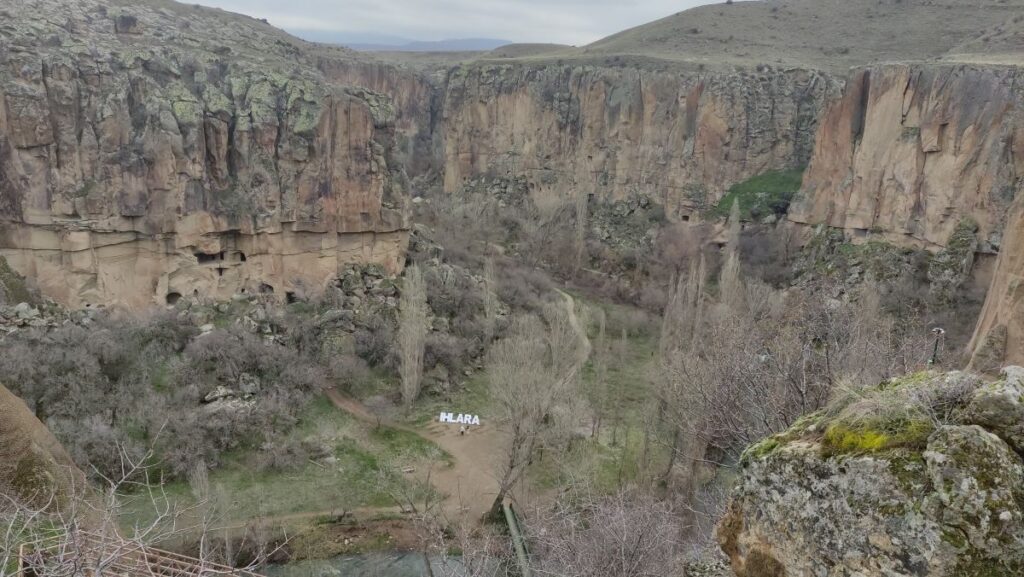
Driving allows you to explore Cappadocia and Central Anatolia at your own pace. Roads are generally in good condition, and having a car can be especially useful if you plan to visit remote attractions such as Ihlara Valley, Selime Monastery, or smaller villages outside the main tourist areas.
Approximate driving times:
Many travelers ask which airport is better.
For most visitors, the difference is relatively small. Nevsehir Airport is closer to Goreme and Uchisar, while Kayseri Airport offers more flight options throughout the year.
When choosing between the two, I usually recommend selecting the flight schedule and price that best fits your itinerary rather than focusing solely on airport location.
While most visitors come to Cappadocia for its fairy chimneys and hot air balloons, the region’s history is just as fascinating as its landscapes. Human settlement in Cappadocia dates back thousands of years, making it one of the oldest continuously inhabited regions in Anatolia.
The story of Cappadocia begins long before the arrival of the Romans or Byzantines. During the Bronze Age, the region was influenced by the powerful Hittite civilization, one of the great kingdoms of the ancient Near East. Archaeological discoveries across Central Anatolia reveal that Cappadocia was connected to important trade routes linking Mesopotamia with the rest of Anatolia. If you are interested in this period, you can read more in our guide to the Hittite Civilization in Anatolia.
Later, Cappadocia became part of the Persian Empire, which gave the region its name. The word “Cappadocia” is believed to derive from the Old Persian term Katpatuka, often translated as “Land of Beautiful Horses.” Persian influence remained visible until the arrival of Alexander the Great and the Hellenistic kingdoms that followed.
Under Roman rule, Cappadocia gained strategic importance as a frontier province. However, it was during the Byzantine period that the region experienced one of its most remarkable transformations. As Christianity spread across Anatolia, monks and local communities carved churches, monasteries, homes, and even entire underground settlements into the soft volcanic rock. Many of these rock-cut churches still preserve colorful frescoes that can be admired today at the Goreme Open Air Museum.
The underground cities of Derinkuyu and Kaymakli also reflect Cappadocia’s turbulent history. These vast subterranean complexes provided shelter during periods of invasion and conflict, allowing entire communities to survive beneath the surface for extended periods.
Cappadocia’s history did not end with the Byzantine Empire. The arrival of the Seljuks and later the Ottomans added new cultural layers to the region, creating the unique blend of traditions, architecture, and local culture that visitors encounter today.
For travelers interested in Turkey’s deeper past, Cappadocia is much more than a beautiful landscape. It is a living museum where traces of the Hittites, Persians, Romans, Byzantines, Seljuks, and Ottomans can still be found within a single journey. To explore Cappadocia and these civilizations in greater detail, you may also enjoy our articles on Cappadocia, Mesopotamia, Gobeklitepe, Karahantepe, and the 15 Ancient Cities of Turkey.
One of the most fascinating aspects of Cappadocia’s history is the creation of underground cities. Because the volcanic rock in the region is soft and easy to carve, ancient communities built extensive underground shelters to protect themselves during times of invasion.
Some of these underground cities extend many levels below the surface and include tunnels, storage rooms, ventilation shafts, churches, and living spaces. Cities such as Derinkuyu and Kaymakli could shelter thousands of people at once.
Cappadocia also became an important center for early Christianity. Many rock-cut churches and monasteries were built during the Byzantine period, and some still contain colorful frescoes that depict scenes from the Bible.
Cappadocia offers a wide variety of experiences that combine adventure, culture, and nature.
The most famous experience is the hot air balloon ride at sunrise. Every morning, hundreds of balloons rise above the valleys, creating one of the most iconic scenes in world travel. The view of the fairy chimneys from the sky is truly unforgettable.
This is one of the most popular experiences in Cappadocia and often sells out quickly, especially during peak season.
Booking in advance is highly recommended.
 Check Prices & Availability
Another popular activity is hiking through Cappadocia’s valleys. Trails wind through rock formations, cave dwellings, and scenic viewpoints that change colors throughout the day.
Visitors can also explore ancient cave churches, underground cities, and hilltop castles that offer panoramic views across the region.
For travelers who want to discover all the highlights, you can read our complete guide here:
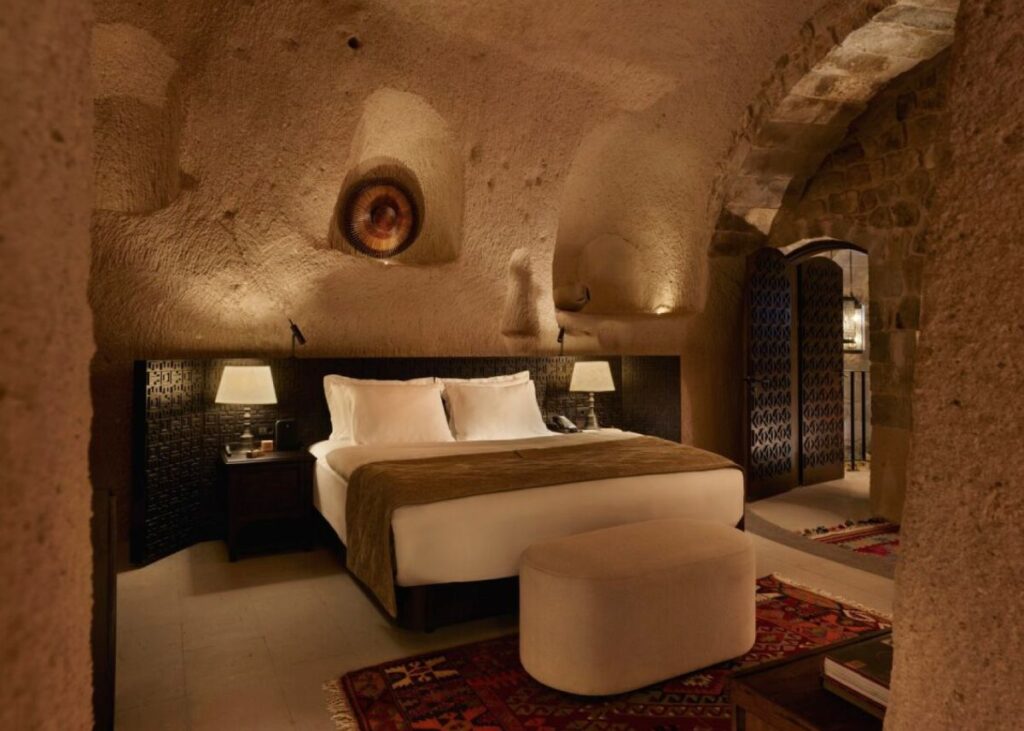
Cappadocia is famous for its unique cave hotels, which are built directly into the rock formations. These hotels combine traditional architecture with modern comfort and provide one of the most memorable accommodation experiences in Turkey.
Many cave hotels feature rooftop terraces where guests can watch the sunrise balloons while enjoying breakfast.
The most popular place to stay is Goreme, which is located close to many viewpoints, restaurants, and tour companies.
Other great towns include:
• Uchisar – known for its panoramic castle viewpoint
• Urgup – a charming town with boutique hotels and restaurants
• Avanos – famous for pottery and located along the Kizilirmak River
• Ortahisar – located between Urgup and Goreme and a smaller town than others
• Mustafapasa – Old Village where Greeks and Turks lived together for centuries. It has Old Greek Mansions to stay.
When planning a trip to Cappadocia, it is recommended to stay at least two or three nights. This allows enough time to explore the valleys, visit underground cities, and experience a hot air balloon flight if weather conditions allow.
Cappadocia is easily accessible from major Turkish cities such as Istanbul, Ankara, and Antalya, with regular domestic flights to nearby airports in Nevsehir and Kayseri.
Many travelers combine Cappadocia with other destinations in Turkey such as Istanbul, Ephesus, and Pamukkale.
You can also explore the best things to do in Istanbul, top things to do in Ephesus, and the must-see experiences in Pamukkale.
One of the most common questions travelers ask is whether they need a car in Cappadocia. The answer depends on how much time you have and what you want to see.
Renting a car is the most flexible way to explore Cappadocia. While major attractions such as Goreme Open Air Museum are close to Goreme, many of the region’s highlights—including Derinkuyu Underground City, Ihlara Valley, and Selime Monastery—are spread across a large area.
A rental car allows you to explore at your own pace and reach scenic viewpoints for sunrise and sunset without relying on tour schedules.
Organized tours are one of the easiest ways to explore Cappadocia, especially if you do not want to drive. Most tours include hotel pick-up, transportation between distant sites, entrance guidance, and a licensed guide who explains the history of the region. Many visitors choose the famous Red Tour and Green Tour. These full-day excursions cover most of Cappadocia’s major attractions and they are a convenient option for travelers with limited time.
The Red Tour typically focuses on northern Cappadocia, including Goreme Open Air Museum, Pasabag, Devrent Valley, and Avanos.
The Green Tour usually visits southern Cappadocia, including Derinkuyu Underground City, Ihlara Valley, and Selime Monastery.
Taxis are available in Goreme, Urgup, and Uchisar. They are useful for short distances but can become expensive if you plan to visit multiple attractions throughout the day.
Public buses connect the main towns of Cappadocia, including Goreme, Urgup, Avanos, and Nevsehir. While affordable, they are not always convenient for reaching valleys, viewpoints, and more remote attractions. Because public buses take you from one town to another town, not exactly to the museums or valleys.
For most first-time visitors, organized tours or a rental car offer the best balance of convenience and flexibility.
Hot air balloon flights are the region’s most popular activity. During spring and autumn, seats often sell out several days in advance.
Many visitors underestimate the size of Cappadocia. A minimum of two nights allows enough time to experience a balloon flight, visit the main attractions, and explore at least one hiking valley.
Even during summer, early mornings can be surprisingly cool, especially before sunrise. Layered clothing is recommended year-round.
Most hotels, restaurants, and shops accept credit cards. However, small local businesses and some rural areas may still prefer cash payments.
Balloon flights depend entirely on weather conditions and can be canceled by aviation authorities for safety reasons. If a balloon ride is a priority, consider spending at least two or three nights in Cappadocia.
Popular attractions such as Goreme Open Air Museum become much busier later in the day. Early morning visits offer a more enjoyable experience and better photography opportunities.
Cappadocia is a year-round destination, but the experience can vary significantly depending on the season. While many travelers focus on hot air balloons, each season offers its own advantages and challenges.
Spring is widely considered the best time to visit Cappadocia. Temperatures are comfortable, valleys are greener, and hiking conditions are ideal.
Daytime temperatures usually range between 15°C and 28°C (59°F–82°F), making sightseeing much more enjoyable than during the summer months.
Spring is also one of the most reliable seasons for hot air balloon flights, although occasional wind and rain can still cause cancellations.
As a local guide, this is usually the season I recommend to first-time visitors.
Summer brings long sunny days and excellent visibility for photography, but temperatures can become very hot, especially in the afternoon.
Daytime temperatures frequently exceed 30°C (86°F), and some days can reach 38°C (95°F) or higher.
The advantage of summer is that almost all attractions remain fully operational, and sunrise balloon flights often provide spectacular views.
If you visit during this period, plan outdoor activities early in the morning and avoid long hikes during the hottest hours of the day.
Autumn is another excellent season to visit Cappadocia. Temperatures become more comfortable after summer, crowds begin to decrease, and the landscape takes on beautiful golden colors.
Many experienced travelers actually prefer autumn over spring because of the stable weather conditions and pleasant hiking temperatures.
September and October are also among the busiest months for hot air balloon flights, so booking accommodation and activities in advance is recommended.
Winter transforms Cappadocia into a completely different destination. Snow-covered fairy chimneys and cave hotels create some of the most magical landscapes in Turkey.
While temperatures can drop below freezing, winter offers fewer crowds, lower hotel prices, and unique photography opportunities.
Balloon flights still operate during winter when weather conditions allow. Seeing the valleys covered in snow from a balloon basket is one of Cappadocia’s most unforgettable experiences.
However, winter weather is less predictable, and flight cancellations become more common.
For most travelers, April to June and September to October offer the ideal balance of comfortable temperatures, excellent hiking conditions, and reliable balloon flight opportunities.
If your priority is photography and unique scenery, winter can be surprisingly rewarding. If you want warm weather and long daylight hours, summer remains a good option despite the heat.
No matter when you visit, Cappadocia offers experiences that are difficult to find anywhere else in the world.
Compared with many popular destinations in Europe, Cappadocia offers excellent value for money. Your daily budget will vary depending on accommodation, transportation, and whether you choose to take a hot air balloon flight.
Expect to spend approximately €40–70 per day.
This budget typically covers:
Expect to spend approximately €80–150 per day.
This budget usually includes:
Expect to spend €200+ per day.
This may include:
Balloon prices vary throughout the year based on demand and weather conditions. During peak season, flights generally range from €150 to €350 per person, although prices can occasionally be higher.
Because flights are weather-dependent, staying at least two nights increases your chances of finding suitable flying conditions.
Cappadocia offers countless experiences, from sunrise balloon rides to hidden valleys and ancient cave monasteries.
To explore the region in more detail and discover all the must-see attractions, check our complete guide below.
This guide includes all must-see attractions, local tips, and unique experiences.
Yes. Families can enjoy outdoor valleys, open-air museums, cave hotels, and short hikes. Many hotels also offer family rooms and swimming pools during summer.
Yes. Modern cave hotels are renovated according to safety standards while preserving their historical character. They offer a unique experience that cannot be found in most destinations.
Absolutely. Many visitors choose to watch the balloons from viewpoints around Goreme, Love Valley, or Sunrise Point without booking a flight.
Definitely. While balloon flights are famous, Cappadocia also offers underground cities, hiking trails, rock-cut churches, cave hotels, and unique landscapes that make the region worth visiting regardless of weather conditions.
Many travelers stay only one night. In my experience as a licensed guide, spending at least two or three nights allows you to enjoy the region at a much more relaxed pace and increases your chances of experiencing a balloon flight.
Planning a trip to Cappadocia? These guides will help you organize the rest of your journey and make the most of your time in Turkey.