Turkey is not a country that can be understood through a single destination.
Some travelers arrive expecting ancient ruins and discover spectacular beaches. Others come for the Mediterranean coast and find themselves standing inside Roman theaters, Byzantine churches, and underground cities. From the bustling streets of Istanbul to the volcanic landscapes of Cappadocia and the mountain-top statues of Mount Nemrut, Turkey offers a remarkable variety of experiences within a single trip.
For first-time visitors, this diversity is both exciting and overwhelming.
The challenge is not finding places to visit.
The challenge is deciding where to begin.
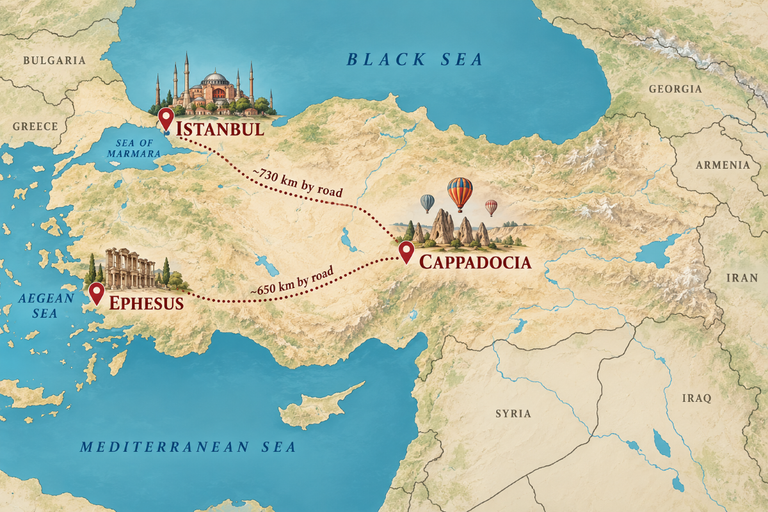
Best places to visit in Turkey and most famous destinations of Turkey are spread across several distinct regions. Istanbul sits in the northwest, Cappadocia lies in central Anatolia, while Ephesus and Pamukkale are located in western Turkey. Travelers willing to venture farther east can discover destinations such as Sanliurfa, Mardin, and Mount Nemrut, where some of the country’s oldest historical treasures are found.
If you are planning your first trip to Turkey, the destinations below offer the perfect introduction to the country’s history, culture, landscapes, food, and traditions. Together, they tell the story of a land that has connected Europe, Asia, and the Middle East for thousands of years.
How Much Time Do You Need in Turkey?
One of the biggest surprises for first-time visitors is the size of Turkey.
Although many travelers think of Turkey as a single destination, the country stretches across two continents and covers a vast area. The places featured in this guide are spread across different regions, from the Aegean coast in the west to the mountains and plains of southeastern Anatolia.
For this reason, trying to see everything in one short trip can feel rushed.
If you have one week, focus on Istanbul, Cappadocia, and either Ephesus or the Mediterranean coast.
With 10 to 14 days, you can comfortably combine Istanbul, Cappadocia, Ephesus, Pamukkale, and a coastal destination such as Kas or Antalya.
Travelers with two to three weeks can venture farther east to discover Sanliurfa, Gobeklitepe, Mardin, and Mount Nemrut, some of the country’s most rewarding cultural and historical destinations.
The good news is that Turkey has an extensive domestic flight network, making it surprisingly easy to travel between distant regions.
Istanbul: Where Europe Meets Asia
If Turkey has a heart, it is Istanbul.
For more than fifteen centuries, the city served as the capital of empires that shaped world history. Romans, Byzantines, and Ottomans all left their mark here, creating a city unlike any other.
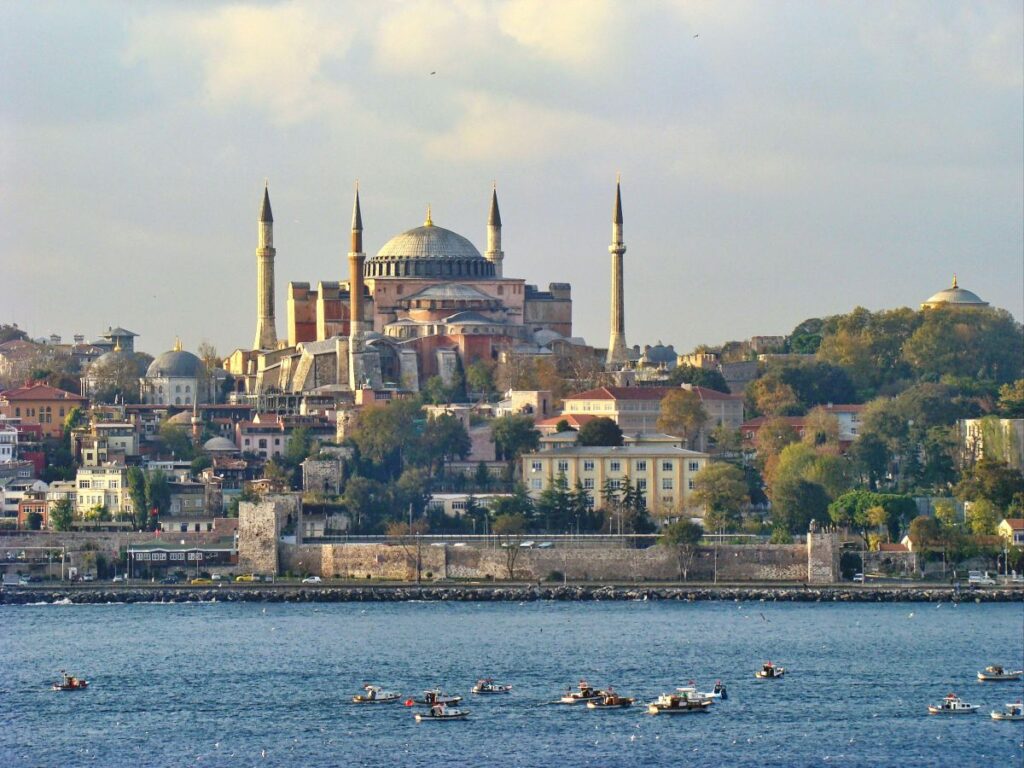
Most first-time visitors begin in Sultanahmet, where some of Turkey’s most important monuments stand within walking distance of one another. Hagia Sophia remains one of the greatest architectural achievements of the ancient world. Built in the sixth century as a Byzantine cathedral, it later became an imperial mosque and today stands as one of Istanbul’s most recognizable landmarks.
Nearby, the Blue Mosque welcomes visitors beneath its elegant domes and six minarets, while the ancient Hippodrome still preserves traces of the city’s Roman past.
Another essential stop is Topkapı Palace, home to Ottoman sultans for nearly four hundred years. Walking through its courtyards, treasury rooms, and imperial chambers offers a fascinating glimpse into the world of the Ottoman Empire.
Visitors looking for a deeper exploration of the city should also read our complete Istanbul Travel Guide.
For a different perspective on the city’s history, visit Dolmabahçe Palace on the Bosphorus. Built during the nineteenth century, the palace reflects the Ottoman Empire’s growing engagement with Europe and displays extraordinary luxury, including one of the world’s largest crystal chandeliers.
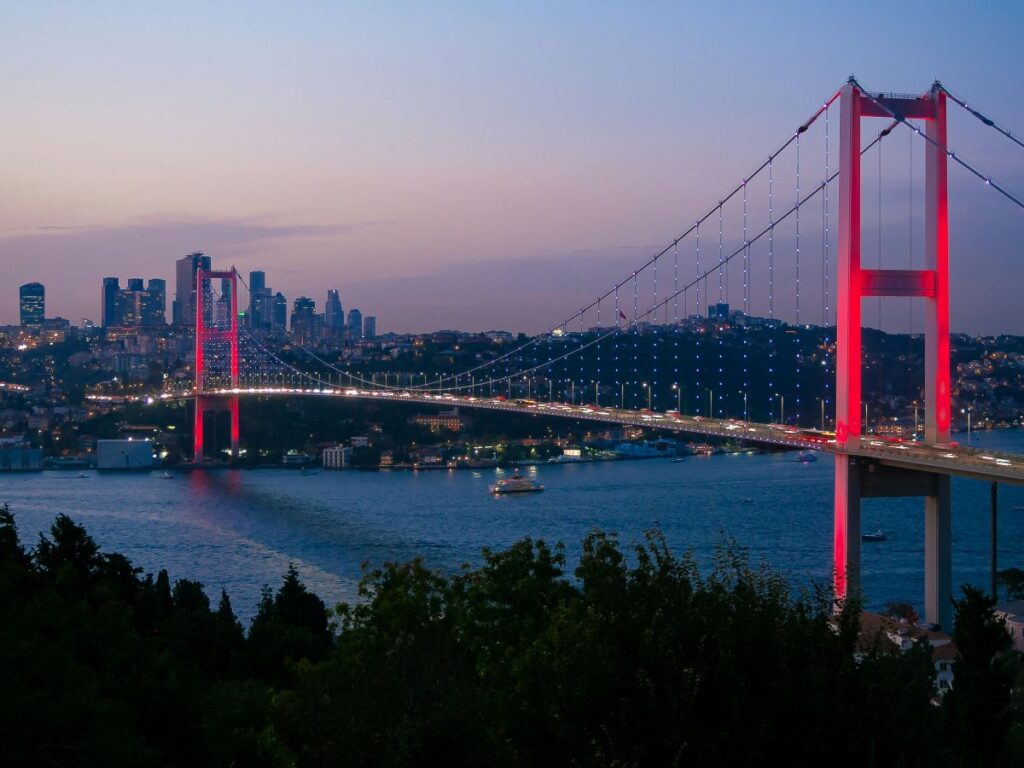
No visit to Istanbul is complete without spending time on the Bosphorus itself. A boat cruise between Europe and Asia reveals elegant waterfront mansions, Ottoman palaces, historic fortresses, fishing villages, and modern neighborhoods stretching along both shores. It is one of the best ways to appreciate the scale and beauty of the city.
As evening approaches, head toward Istiklal Street and the Beyoglu district. Historic buildings, lively restaurants, rooftop bars, bookstores, and street musicians create an atmosphere that continues long after sunset.
For more ideas, see our guide to the Best Things to Do in Istanbul.
Food is an essential part of the Istanbul experience. Whether you’re enjoying fresh seafood beside the Bosphorus, tasting traditional meze, or grabbing a simit from a street vendor, the city offers one of the most diverse culinary scenes in the Mediterranean.
Istanbul’s historic center contains multiple UNESCO-listed monuments reflecting the city’s Byzantine and Ottoman heritage.
Best time to visit: April-May and September-October.
Cappadocia: A Landscape Shaped by Nature and History

Few places in the world look like Cappadocia.
Millions of years ago, volcanic eruptions covered central Anatolia with layers of ash that eventually hardened into soft rock. Wind and water slowly carved this landscape into the valleys, fairy chimneys, and rock formations that attract visitors from around the world today.
The most famous experience is undoubtedly a sunrise hot-air balloon flight. Watching hundreds of colorful balloons rise above the valleys has become one of Turkey’s defining travel images.
Yet Cappadocia offers much more than balloons.
The Goreme Open-Air Museum preserves some of the region’s most important rock-cut churches, where early Christians painted remarkable frescoes that survived for centuries. Underground cities such as Derinkuyu and Kaymaklı reveal how entire communities once lived beneath the surface during times of danger.
For a detailed overview of valleys, museums, and local experiences, read our Cappadocia Travel Guide.
Visitors can spend their days hiking through Rose Valley, Red Valley, Love Valley, and Pigeon Valley before watching sunset from Uchisar Castle, the highest point in the region.
The local food scene is equally memorable. Cappadocia is famous for pottery kebab, a traditional dish slowly cooked inside a sealed clay pot before being dramatically opened at the table.
You may also enjoy our guide to the Best Things to Do in Cappadocia.
Spring and autumn are generally considered the best seasons to visit, although winter can be magical when snow covers the fairy chimneys.
Best time to visit: April-June and September-November.
Ephesus: Walking Through the Roman World
Many archaeological sites contain ruins.
Ephesus feels like an ancient city that is merely waiting for its inhabitants to return.
Once one of the largest cities in the Roman Empire, Ephesus preserves an extraordinary collection of monuments that allow visitors to imagine daily life nearly two thousand years ago.
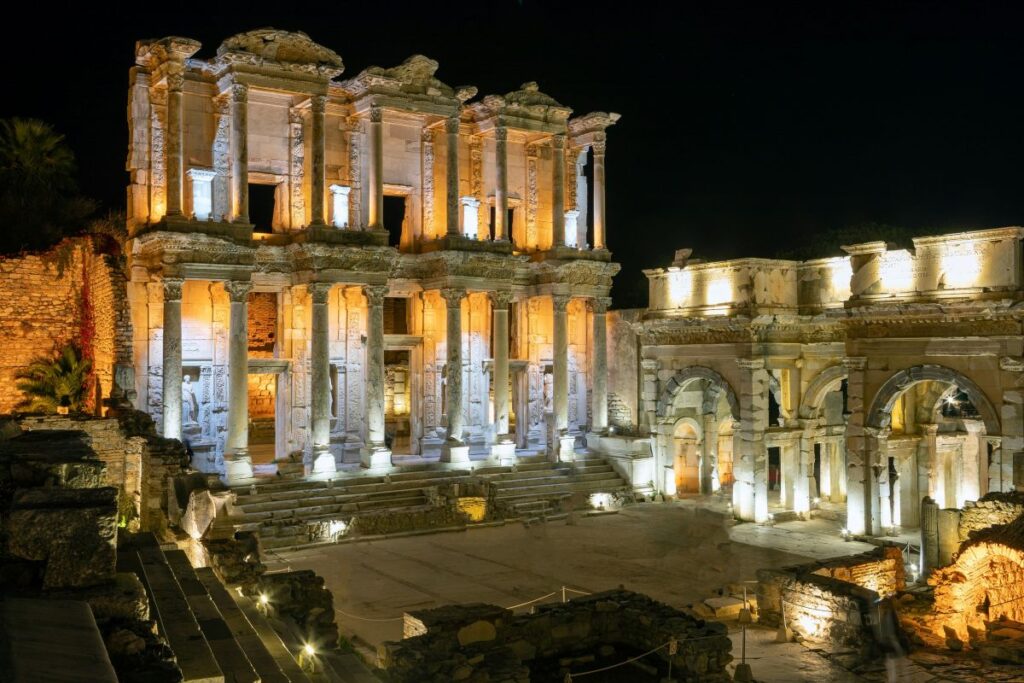
Walking along Curetes Street, you pass marble columns, temples, fountains, bathhouses, and public buildings before arriving at the magnificent Library of Celsus. Its beautifully reconstructed facade has become one of Turkey’s most iconic historical landmarks.
Travelers planning a visit can find practical tips in our complete Ephesus Travel Guide.
Nearby stands the Great Theatre, capable of seating approximately 24,000 spectators. According to Christian tradition, this is the city where Saint Paul preached during his journeys through Asia Minor.
The surrounding area offers equally important sites. The House of the Virgin Mary attracts pilgrims from around the world, while the Basilica of St. John preserves the legacy of one of Christianity’s most influential figures.
After exploring the ruins, many visitors continue to Sirince, a charming hillside village known for its traditional houses, local wines, and relaxed atmosphere.
For more ideas around the region, see our guide to the Best Things to Do in Ephesus.
The wider region is famous for olive oil, fresh vegetables, seafood, and classic Aegean cuisine.
Best time to visit: April-May and September-October.
Pamukkale: Turkey’s Natural Wonder
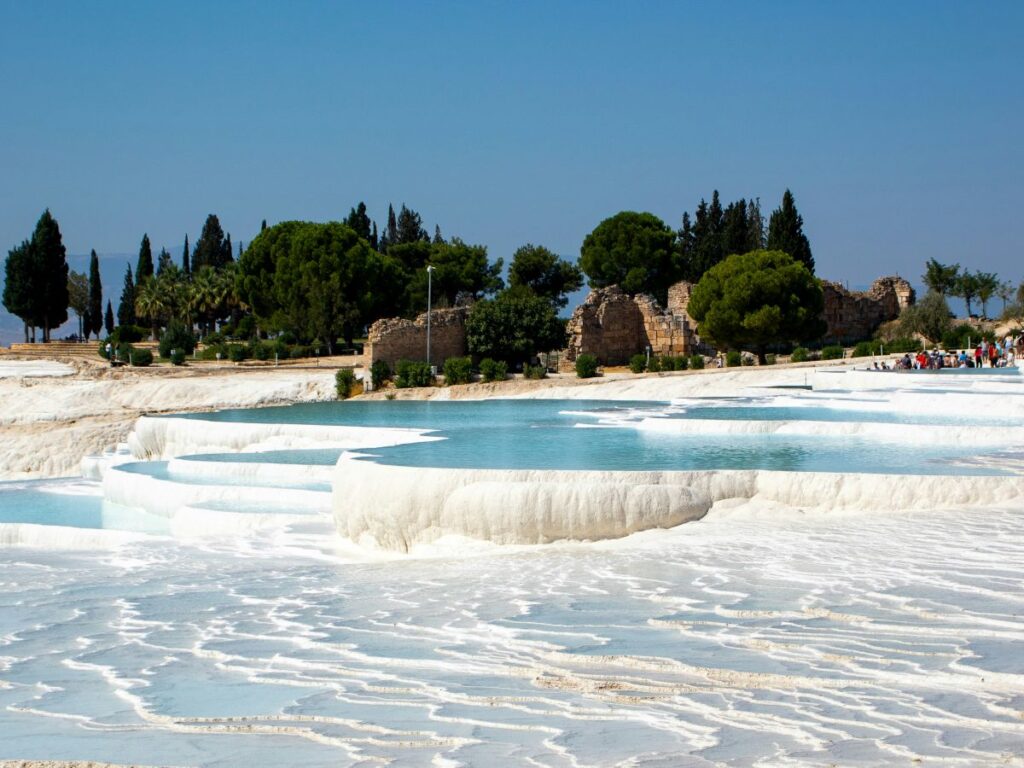
At first glance, Pamukkale almost looks unreal.
Brilliant white terraces cascade down the hillside, creating one of the most recognizable landscapes in Turkey. For thousands of years, mineral-rich thermal waters have flowed from underground springs, depositing calcium and gradually forming the famous travertine pools that visitors see today.
Walking barefoot across the terraces is one of the highlights of any trip to Turkey. The warm water, white formations, and panoramic views create an experience unlike anywhere else in the country.
Yet Pamukkale is far more than a natural attraction.
Above the travertines lies Hierapolis, an ancient spa city founded more than two thousand years ago. Wealthy Romans traveled here seeking the healing properties of the thermal waters, much as visitors do today.
Learn more about the region in our detailed Pamukkale Travel Guide.
The site contains one of the best-preserved Roman theaters in Turkey, an enormous necropolis, ancient streets, baths, and temples. Visitors can also swim in the famous Cleopatra Pool, where submerged Roman columns rest beneath the thermal water.
The surrounding Denizli region is known for its textile industry and local specialties such as Denizli kebab.
Best time to visit:
April-June and September-October.
Antalya: The Gateway to the Turkish Riviera
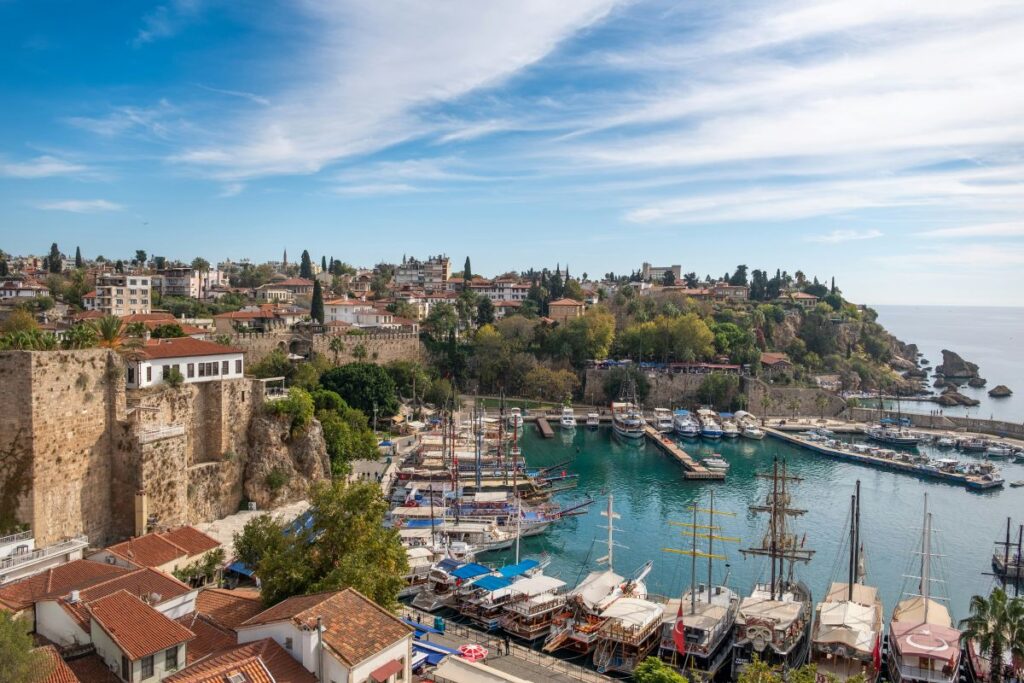
For many travelers, Antalya is where history, beaches, and Mediterranean lifestyle come together.
The city itself sits beside dramatic cliffs overlooking the sea, while the historic district of Kaleiçi preserves narrow streets, Ottoman houses, Roman walls, and charming courtyards filled with cafes and restaurants.
One of the city’s most recognizable landmarks is Hadrian’s Gate, built in honor of the Roman emperor’s visit nearly two thousand years ago.
Beyond the old town, Antalya serves as the gateway to some of Turkey’s most famous archaeological sites. The ancient cities of Perge, Aspendos, and Side are all within easy reach.
Aspendos is particularly impressive. Its Roman theater remains one of the best-preserved examples in the world and still hosts performances today.
Travelers looking for beaches are equally spoiled. Konyaalti Beach stretches along the western side of the city, while Lara Beach offers long sandy shores and luxury resorts.
Travelers interested in Turkey’s coastline should also read our Best Beach Destinations in Turkey guide.
The Mediterranean lifestyle is an essential part of Antalya’s appeal. Days are spent exploring ancient ruins or relaxing by the sea, while evenings are filled with fresh seafood, local wines, and sunset views.
Best time to visit:
April-June and September-October.
Kas: Turkey’s Most Charming Coastal Town
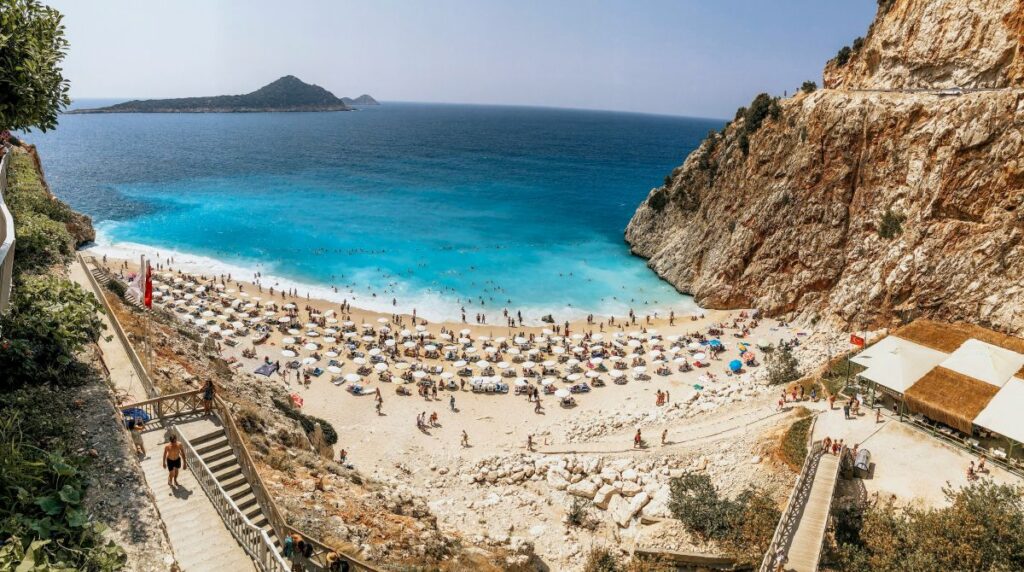
Some destinations are famous for a specific attraction.
People visit Kas for the atmosphere.
Located along the Turquoise Coast, this small Mediterranean town has become one of Turkey’s most beloved destinations. Whitewashed buildings covered in bougainvillea, boutique hotels, waterfront restaurants, and crystal-clear water create a relaxed atmosphere that encourages visitors to slow down.
Unlike larger resort towns, Kas feels personal and authentic.
Days often begin with a swim before continuing with a boat trip to Kekova. Here, visitors can explore hidden bays, small islands, and the famous Sunken City, where ancient ruins remain visible beneath the water’s surface.
Kas is also one of Turkey’s premier diving destinations. The clear water, underwater caves, reefs, and shipwrecks attract divers from around the world.
Nearby attractions include Kaputas Beach, one of the most photographed beaches in Turkey, and Patara Beach, where ancient history and natural beauty meet.
Evenings in Kas are best spent wandering through the old town before settling into a seaside restaurant to enjoy fresh fish and traditional Mediterranean cuisine.
Kas is also featured in our guide to the Best Beach Destinations in Turkey.
Best time to visit:
May-October.
Sanliurfa and Gobeklitepe: Where Civilization Began
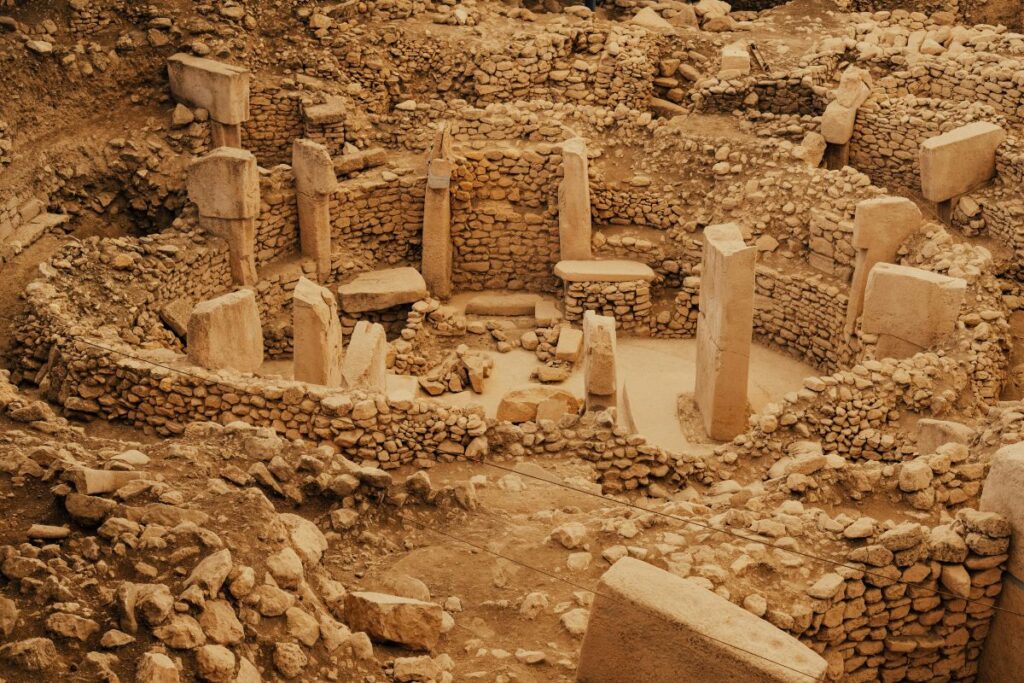
Few places have transformed our understanding of human history as dramatically as Gobeklitepe.
Dating back more than 11,000 years, the site contains massive stone pillars erected long before the invention of pottery, metalworking, or cities. Its discovery forced archaeologists to rethink some of their most fundamental assumptions about the origins of civilization.
Standing among the monumental structures, it becomes easier to understand why Gobeklitepe is often described as one of the most important archaeological discoveries of the modern era.
To explore the site in greater detail, read our complete guide to Gobeklitepe.
Yet the story does not end there.
Nearby Sanliurfa is one of Turkey’s most fascinating cities. Often called the City of Prophets, it is deeply connected to the traditions of Abraham and occupies an important place in regional history.
The heart of the city is Balikligol, a sacred pool surrounded by mosques, gardens, and historic buildings. Traditional bazaars fill the surrounding streets, offering everything from spices and textiles to copperwork and local crafts.
Sanliurfa is also one of Turkey’s great culinary destinations. Visitors can enjoy famous local dishes such as Urfa kebab, lahmacun, liver kebabs, and traditional desserts that reflect centuries of Mesopotamian influence.
Travelers interested in the region’s deep past should also explore our article on Neolithic Sites of Turkey.
Best time to visit:
March-May and October-November.
Mardin: A Stone City Above Mesopotamia
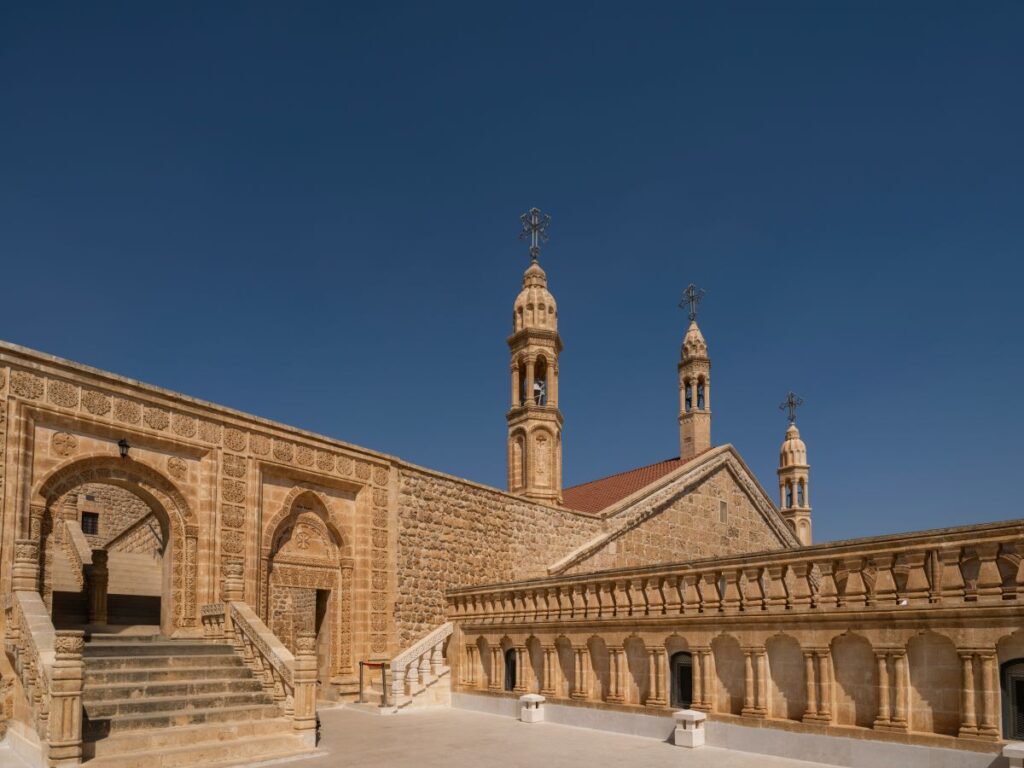
Perched high above the Mesopotamian plains, Mardin is one of Turkey’s most beautiful and atmospheric cities.
Built from honey-colored limestone, the old town seems to rise directly from the hillside. Narrow alleyways wind between historic houses, courtyards, churches, mosques, and madrasas that reflect centuries of coexistence between different cultures and faiths.
Walking through Mardin often feels like stepping back in time.
One of the city’s most impressive viewpoints can be found at Zinciriye Madrasa, where sweeping views extend across the Mesopotamian plains toward modern-day Syria.
Nearby, the Deyrulzafaran Monastery preserves the spiritual heritage of the Syriac Christian community, which has played an important role in the region for centuries.
Mardin’s history is closely connected to the wider story of Mesopotamia, often called the cradle of civilization.
Food is another highlight. Mardin cuisine blends Anatolian, Arab, Kurdish, and Syriac influences, producing dishes rich in spices and flavor. Visitors should also try local almond sweets and Syriac wines.
The city’s beauty changes throughout the day, but sunset is particularly memorable as the golden stone buildings begin to glow beneath the fading light.
Best time to visit:
April-May and September-October.
Mount Nemrut: Sunrise Above an Ancient Kingdom
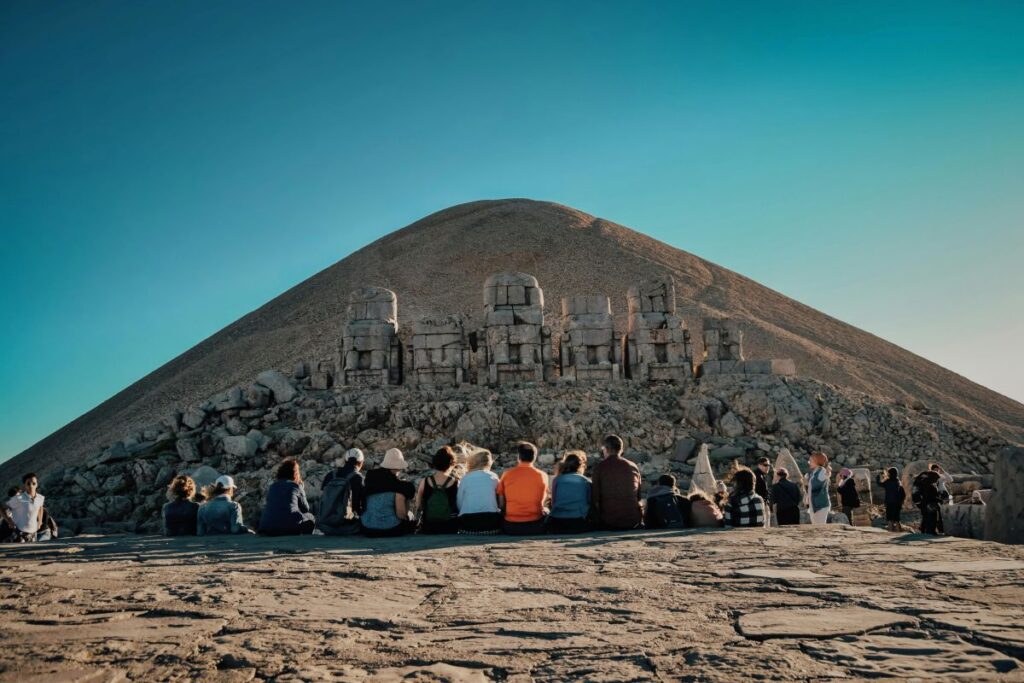
There are many spectacular archaeological sites in Turkey.
None feel quite like Mount Nemrut.
Rising more than 2,000 meters above sea level, the mountain was chosen by King Antiochus I of Commagene as the location for his monumental tomb sanctuary during the first century BC.
At the summit, enormous stone heads representing gods, eagles, lions, and the king himself sit scattered across the mountainside. Despite earthquakes and centuries of exposure, they remain one of the most extraordinary sights in the country.
Most visitors arrive before dawn.
As the first sunlight touches the statues and illuminates the surrounding mountains, the atmosphere becomes unforgettable. It is often considered one of the greatest sunrise experiences in the world.
The journey to Nemrut also includes several fascinating stops. Arsemia, the ancient capital of Commagene, preserves relief carvings and inscriptions, while the Roman Cendere Bridge remains one of the oldest functioning bridges in the world.
Mount Nemrut is also featured in our guide to the Ancient Cities in Turkey.
Winter conditions frequently close access roads due to heavy snowfall, making seasonal planning important.
Best time to visit:
May-October.
Suggested Itineraries for the Best Places to Visit in Turkey
One of the biggest mistakes first-time visitors make is trying to see too much in a short period of time. Turkey is a large country, and while domestic flights make travel relatively easy, distances can still be significant.
The ideal itinerary depends on how much time you have available.
One Week in Turkey
If you only have seven days, focus on Turkey’s most iconic highlights rather than trying to cover too much ground.
A classic first-time itinerary includes three days in Istanbul, two days in Cappadocia, and two days in either Ephesus or Pamukkale.
This route combines imperial history, extraordinary landscapes, and one of the best-preserved ancient cities in the Mediterranean.
10 Days in Turkey
Ten days allows for a much more balanced introduction to the country.
Spend three days exploring Istanbul, two days in Cappadocia, one day in Pamukkale, and two days in Ephesus. Use the remaining time for a short stay along the Mediterranean coast, either in Antalya or Kas.
This itinerary offers a combination of history, culture, natural wonders, and beach time without feeling rushed.
Looking for a ready-made route? Check out our detailed 10 Day Turkey Itinerary.
Two Weeks in Turkey
With fourteen days, travelers can begin exploring beyond the country’s most famous destinations.
A suggested route includes Istanbul, Cappadocia, Pamukkale, Ephesus, and the Mediterranean coast before continuing east to Sanliurfa and Mardin.
This itinerary reveals a different side of Turkey, introducing visitors to the ancient cultures of Mesopotamia, Gobeklitepe, traditional architecture, and regional cuisine that many tourists never experience.
Three Weeks in Turkey
Travelers with three weeks can experience Turkey at a much deeper level.
In addition to Istanbul, Cappadocia, Ephesus, Pamukkale, Antalya, Kas, Sanliurfa, and Mardin, consider adding Mount Nemrut. Watching sunrise among the giant stone heads of the Kingdom of Commagene is one of Turkey’s most unforgettable experiences.
Three weeks also allows time to slow down, spend extra nights in favorite destinations, and enjoy boat trips, local markets, hiking trails, and regional food experiences that are often missed on shorter itineraries.
Should You Visit Eastern Turkey on Your First Trip?
Many travelers wonder whether destinations such as Sanliurfa, Mardin, and Mount Nemrut should be included on a first visit.
The answer depends on your interests.
If your priority is Turkey’s most famous highlights, focus on Istanbul, Cappadocia, Ephesus, Pamukkale, and the Mediterranean coast.
However, travelers interested in archaeology, ancient history, biblical heritage, and local culture often find southeastern Turkey to be the most rewarding part of their journey.
Göbeklitepe, Mardin, and Mount Nemrut offer experiences that are completely different from Turkey’s coastal resorts and major tourist centers, revealing some of the deepest layers of the country’s history.
Final Thoughts
For first-time visitors, Turkey offers an extraordinary variety of experiences.
You can explore Byzantine and Ottoman monuments in Istanbul, watch balloons rise above Cappadocia, walk through the streets of ancient Ephesus, relax beside the Mediterranean in Kas, discover the world’s oldest known sanctuary at Gobeklitepe, admire the stone architecture of Mardin, and watch sunrise from Mount Nemrut—all within a single journey.
Few countries combine history, culture, food, landscapes, and hospitality on such a scale.
The challenge is not finding reasons to visit Turkey.
The challenge is deciding when to return.
Before finalizing your plans, you may also find our guides to the Best Time to Visit Turkey, Turkey Travel Costs, and Is Turkey Safe? helpful.