Turkish cuisine is far more than kebabs and baklava. It is the result of thousands of years of cultural exchange shaped by ancient Anatolian civilizations, Silk Road trade routes, Ottoman palace kitchens, nomadic traditions, Mediterranean ingredients, and regional diversity stretching across two continents.
From the bread culture of the Hittites to the rich flavors of Ottoman palace cuisine and the seafood traditions of the Aegean coast, food in Turkey tells the story of civilizations that lived in Anatolia for thousands of years.
Unlike many national cuisines, Turkish food changes dramatically from region to region. Olive oil dishes dominate the Aegean, spicy kebabs define southeastern Anatolia, butter-rich dishes appear in the Black Sea region, and ancient wheat traditions still survive in central Anatolia.
In this Turkish food guide, you’ll discover:
- the ancient roots of Turkish cuisine
- Ottoman palace food traditions
- regional dishes across Turkey
- Turkish breakfast culture
- street foods
- desserts
- and the cultural stories behind some of Turkey’s most famous flavors
For many travelers, Turkish cuisine becomes one of the most unforgettable parts of visiting Turkey.
Turkish Food Is the Story of Anatolia
When travelers first arrive in Turkey, many expect to find only kebabs, baklava, and grilled meat. But Turkish cuisine is not only kebabs. Actually, they go out to eat kebab and they do not eat kebab at home. It is not a single cuisine born in one city or one empire. Turkish food is the accumulated memory of civilizations that lived in Anatolia for thousands of years.
Every table in Turkey carries traces of history.
Bread baked in stone ovens, olive oil dishes served slowly beside the sea, lamb cooked over fire in southeastern Anatolia, soups warming homes during harsh eastern winters, desserts shared with neighbors during religious holidays — all of them belong to a culinary tradition shaped by geography, migration, empire, trade routes, and daily life stretching back thousands of years.
To understand Turkish food, travelers first need to understand Anatolia itself.
For centuries, Anatolia stood at the crossroads of civilizations. Hittites, Greeks, Romans, Byzantines, Seljuks, Ottomans, Armenians, Arabs, Persians, Kurds, nomadic Turkic tribes, and Mediterranean communities all left traces behind in the kitchens of modern Turkey.
This is why food changes dramatically across the country.
The cuisine of the Aegean coast feels completely different from the food of southeastern Turkey. Black Sea breakfasts share little resemblance with Ottoman palace dishes once prepared in Istanbul. Geography shaped everything: climate, agriculture, trade, migration, and ultimately taste itself.
In many ways, traveling through Turkey is also traveling through different culinary worlds.
Archaeologists and historians continue to study how deeply grain culture shaped ancient Anatolian civilizations.
UNESCO – Hattusha: the Hittite Capital
The Ancient Anatolian Love of Bread
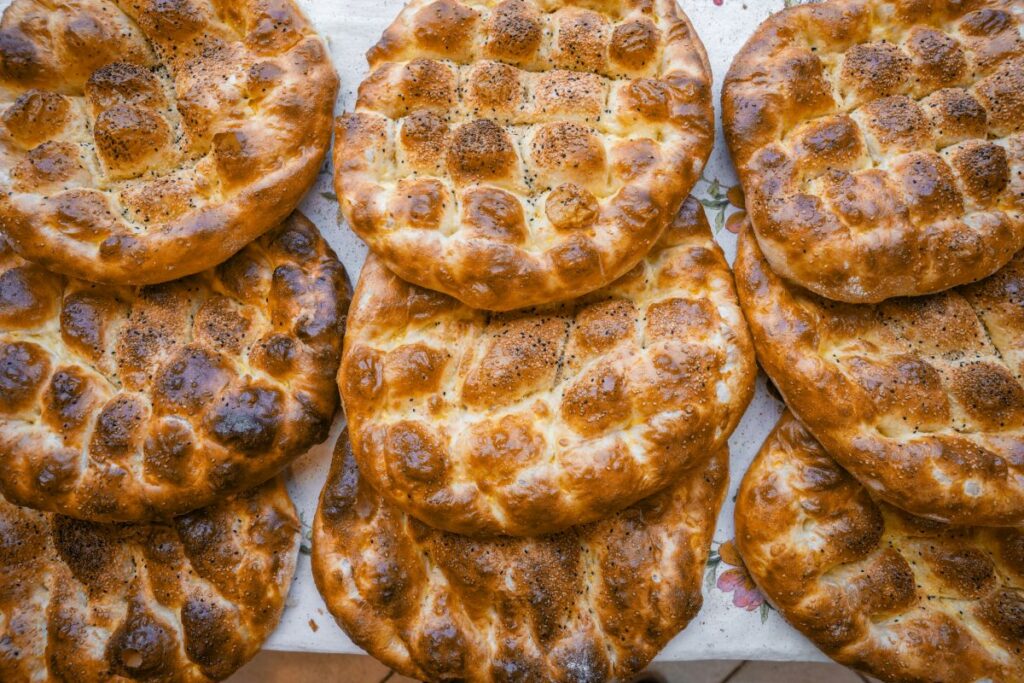
Long before modern Turkey existed, ancient Anatolian civilizations had already developed one of the world’s oldest bread cultures.
The Hittites, who ruled much of central Anatolia during the Bronze Age, built an advanced society based heavily on grain agriculture and wheat production. Archaeologists discovered references to many varieties of bread in Hittite texts, showing that bread was not simply food for survival. It was deeply connected to religion, ritual, and social life.
Even today, travelers quickly notice how central bread remains in Turkey.
Bread is rarely treated casually in Turkish culture. In many homes it still occupies the center of the table. Village bread baked in stone ovens, sesame-covered simit sold from street carts, thin lavaş folded beside kebabs, and warm pide arriving directly from ovens all reflect an ancient continuity stretching back thousands of years into Anatolia’s past.
Unlike industrial bread cultures in many countries, bread in Turkey still feels alive and deeply connected to place.
A loaf baked in Cappadocia does not taste like bread from the Black Sea region. A village tandir bread from eastern Anatolia feels entirely different from a soft Istanbul bakery loaf.
This diversity tells the story of Anatolia itself.
The ancient grain traditions of Anatolia can still be felt today in many parts of central Turkey. Travelers interested in Anatolian history may also enjoy our guide to the Hittite Civilization in Anatolia.
➡️ Hittite Civilization in Anatolia
Before Tomatoes: The Forgotten World of Ottoman Cuisine
Modern visitors are often surprised when they learn that classical Ottoman cuisine looked very different from the Turkish food served in restaurants today.
Tomatoes, peppers, tomato paste, and potatoes — ingredients now central to Turkish cooking — did not exist in Ottoman kitchens for centuries. These ingredients arrived from the Americas much later and slowly transformed the cuisine of Anatolia.
Earlier Ottoman food relied on completely different flavor structures.
Palace cooks in Istanbul prepared dishes using:
- lamb
- clarified butter
- almonds
- pistachios
- saffron
- cinnamon
- vinegar
- honey
- dried apricots
- figs
- quince
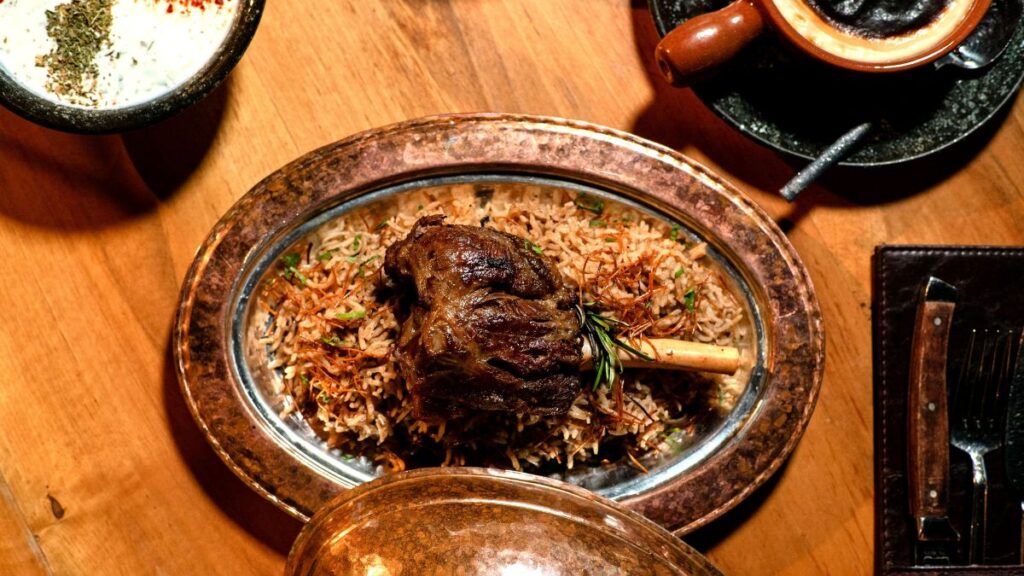
To modern tastes, some of these combinations may sound unusual. Meat was often cooked together with fruit. Rice dishes were scented with cinnamon. Sweet and sour flavors appeared in the same plate. Food was designed not to be spicy or aggressive, but refined, layered, aromatic, and balanced.
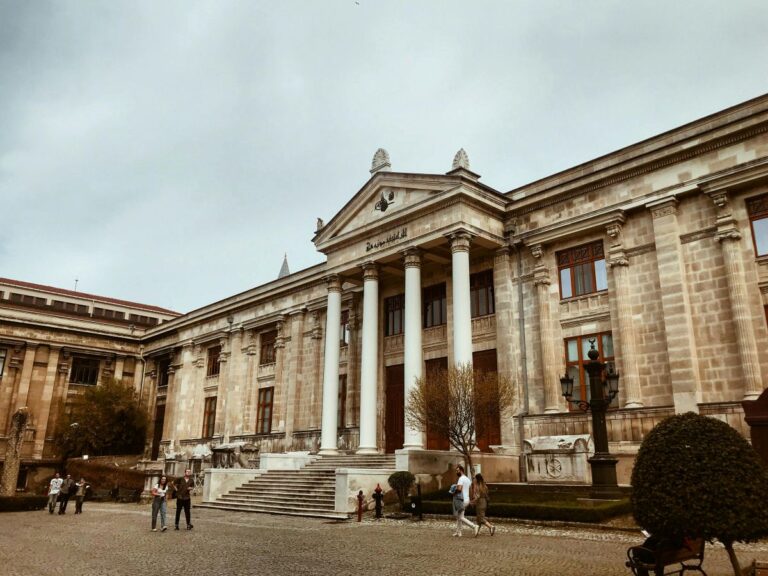
Inside Topkapi Palace, enormous kitchens prepared meals for sultans, guests, diplomats, ceremonies, and thousands of palace residents. Ottoman cuisine absorbed influences from Persia, the Arab world, Byzantium, Central Asia, and the Balkans, eventually creating one of the most sophisticated palace cuisines in the world.
Yet Ottoman food was never only about luxury.
It also reflected empire geography itself. Spices arrived through trade routes. Rice came from fertile regions. Dried fruits traveled across Anatolia. Lamb remained central because nomadic Turkic traditions still shaped daily life.
Even today, traces of Ottoman cuisine survive quietly in Turkish cooking, especially in dishes balancing sweetness, spice, meat, and slow cooking techniques.
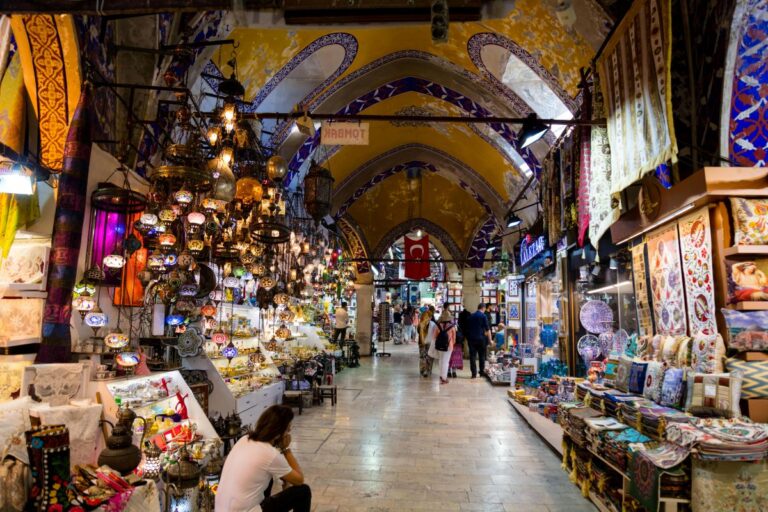
Many of the Ottoman Empire’s most important culinary traditions developed in Istanbul, the imperial capital for centuries. From palace kitchens to street food culture, the city remains one of the best places to experience Turkish cuisine today.
The Aegean Coast: Olive Oil, Meze, and Slow Evenings
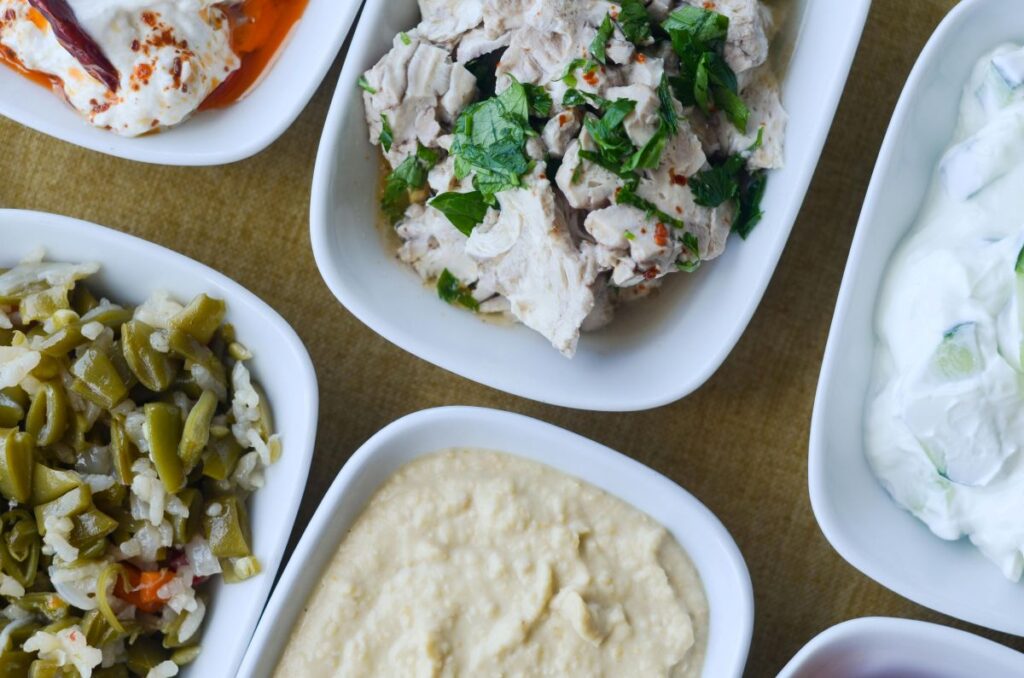
On the western coast of Turkey, food begins to feel lighter, calmer, and deeply Mediterranean.
The Aegean region is shaped by olive trees, sea air, herbs growing wild in the hills, fishing culture, and long evening meals shared slowly beside the water.
In places like Izmir, Ayvalık, Bodrum, and coastal villages along the Aegean Sea, meals are often built around olive oil dishes and meze culture rather than heavy meat.
A table may slowly fill with:
- stuffed zucchini flowers
- grilled octopus
- artichokes cooked in olive oil
- yogurt with herbs
- eggplant salads
- sea bass
- fresh bread
- white cheese
- rakı
Unlike the fast rhythm of many modern cities, Aegean food culture encourages people to sit for hours, talking while small dishes continue arriving one after another.
Even the atmosphere feels different from central Anatolia or the southeast. The food reflects climate itself: softer sunlight, olive groves, fishing boats, vineyards, and slower evenings by the sea.
Travelers exploring western Turkey often combine Aegean food culture with visits to ancient coastal cities and UNESCO sites.
➡️ UNESCO World Heritage Sites in Turkey
Southeastern Turkey: Fire, Lamb, and the Depth of Mesopotamia
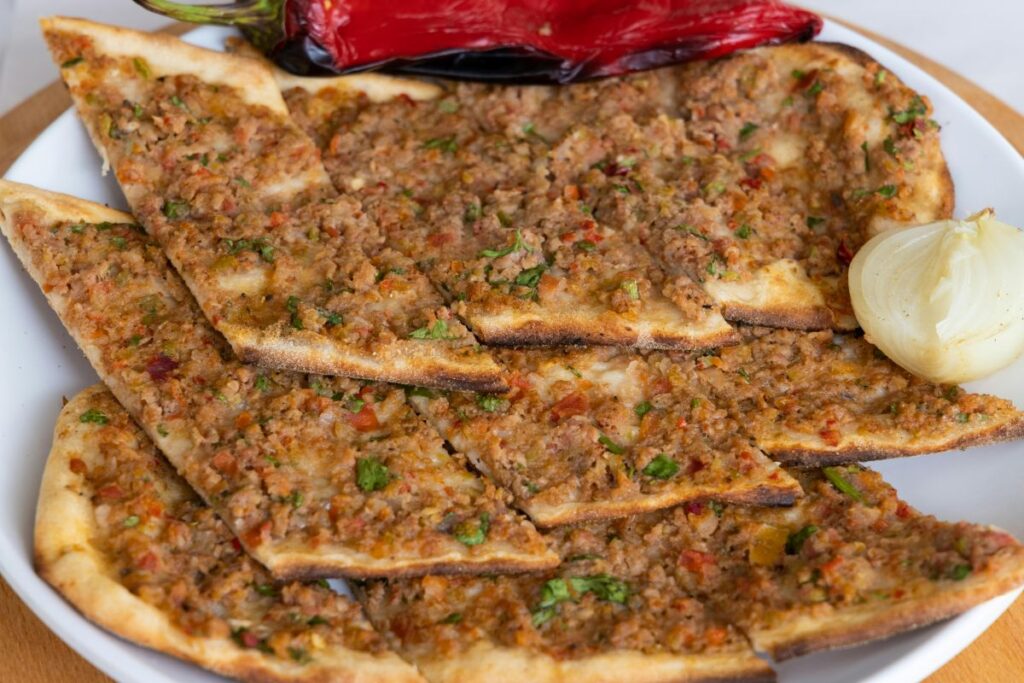
If the Aegean tastes light and Mediterranean, southeastern Turkey feels ancient, intense, and deeply connected to fire.
Cities like Gaziantep, Sanliurfa, Adana, and Mardin carry the culinary memory of Mesopotamia itself. Here food is bold, emotional, and heavily tied to hospitality.
Lamb dominates many dishes. Spices are used with confidence. Pistachios appear in desserts and savory meals alike. Charcoal smoke fills streets where kebabs cook late into the night.
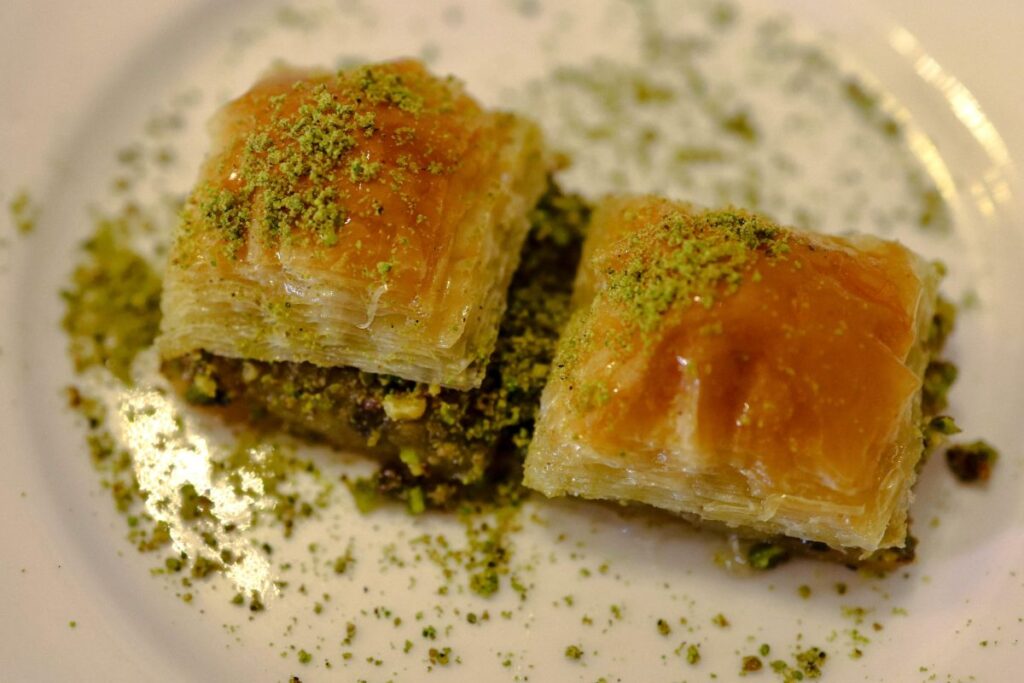
In Gaziantep, baklava is treated almost like architecture. Thin pastry layers are stretched with extraordinary precision before being filled with pistachios and baked with clarified butter.
In Sanliurfa, isot pepper gives dishes a dark, smoky heat different from the sharper spice profiles found elsewhere.
Breakfast itself can feel intense for foreign travelers. In some cities, people begin the morning with rich soups like beyran — a powerful mixture of lamb, garlic, rice, and spices originally designed to restore energy after long nights and early work.
Food in southeastern Turkey feels shaped by centuries of trade routes, caravans, desert climates, and ancient urban culture. Compared to western Turkey, meals are often heavier, spicier, richer, and emotionally tied to family identity.
Southeastern Turkey is not only one of the country’s richest culinary regions, but also one of the oldest continuously inhabited areas in the world. Its food culture is deeply connected to the civilizations of ancient Mesopotamia.
The Black Sea: Rain, Tea, Butter, and Mountains
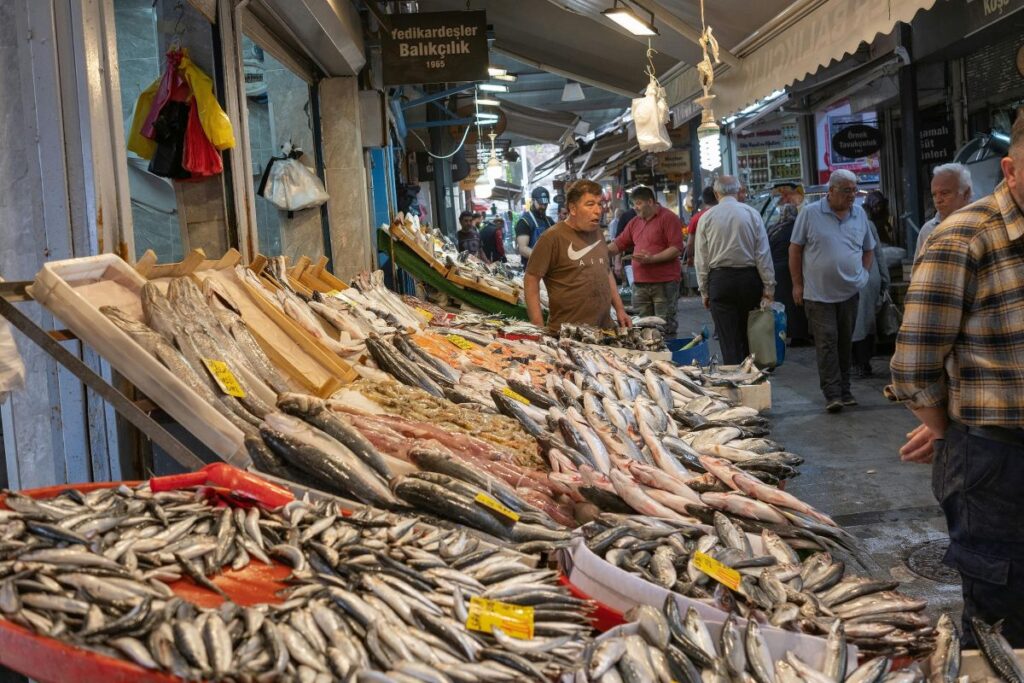
The Black Sea region feels like another country entirely.
Mountains rise sharply behind the coastline. Rain falls constantly. Tea plantations cover hillsides. Forests dominate the landscape.
Naturally, the cuisine evolved differently too.
Black Sea food is warm, filling, and strongly connected to local farming and fishing traditions. Anchovies — known as hamsi — are everywhere. They are fried, baked into rice dishes, placed inside bread, and treated almost like a cultural symbol.
Breakfast culture in the region also feels unique.
One of the best-known dishes is kuymak (or mıhlama), a rich melted mixture of butter, cheese, and cornmeal stretching endlessly from the pan.
The food here reflects survival in a humid mountainous environment. Butter is used heavily. Corn became important because wheat agriculture was harder in steep terrain. Tea eventually became central to regional identity after large-scale cultivation spread during the modern era.
Unlike Ottoman palace cuisine, Black Sea food feels rustic, practical, and deeply tied to nature.
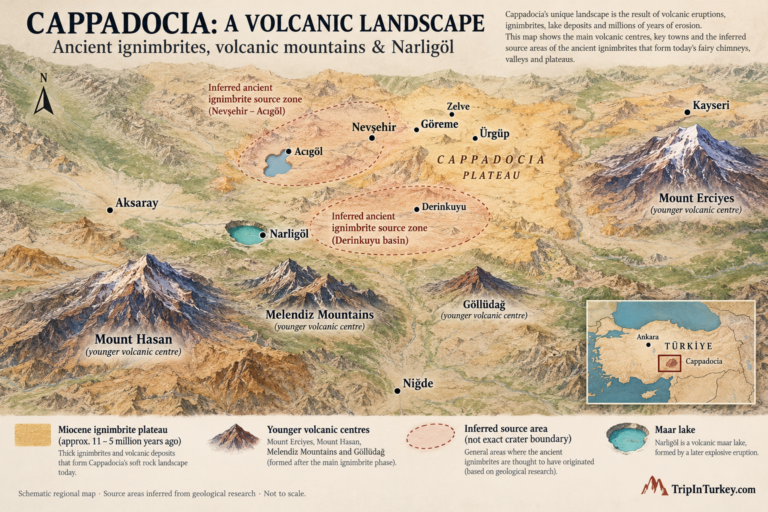
Cappadocia and Central Anatolia: Wheat, Clay, and Caravan Roads
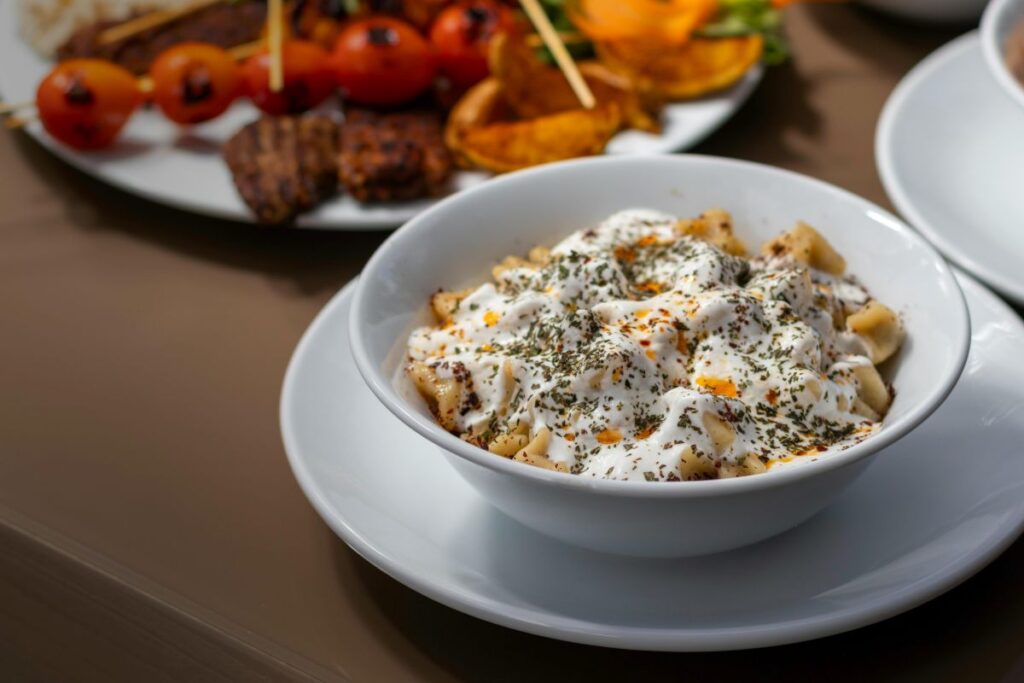
Central Anatolia carries the memory of caravan trade routes and ancient village culture.
Here wheat remains central to daily life. Bread, pastries, noodles, soups, and dough-based dishes dominate many regional kitchens.
One of the most famous Cappadocian dishes is testi kebabı, where meat and vegetables are sealed inside clay pots and cooked slowly for hours before the pot is dramatically cracked open at the table.
The dish reflects the region itself.
Cappadocia has always been shaped by stone, clay, underground storage systems, farming villages, and long trade connections between east and west. Slow cooking techniques developed naturally in this environment.
Even dishes like mantı — tiny stuffed dumplings served with yogurt and butter sauce — reflect the mixture of Central Asian Turkic influence and Anatolian adaptation over centuries.
Compared to coastal cuisines, food in central Anatolia feels warmer, slower, and closely tied to wheat culture and village traditions.
Cappadocia’s pottery kebab tradition reflects the region’s long history of village cooking, clay craftsmanship, and caravan culture across central Anatolia.
➡️ Best Things to Do in Cappadocia
Why Turkish Breakfast Feels Different
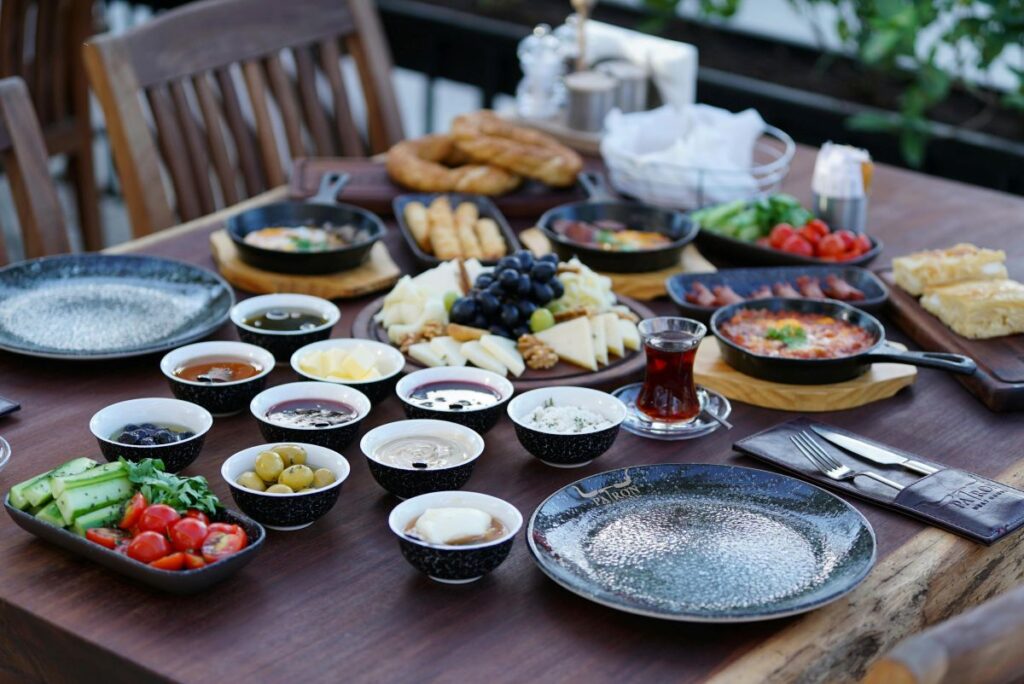
For many travelers, Turkish breakfast becomes one of the most memorable experiences in the country.
This is because breakfast in Turkey is rarely treated as a rushed meal.
A Turkish breakfast table grows slowly. Tea arrives constantly. Bread is shared endlessly. Small plates cover the table:
- cheeses
- olives
- tomatoes
- cucumbers
- eggs
- honey
- jams
- clotted cream
- herbs
- pastries
But the real importance of Turkish breakfast is social.
Families stay at the table for long periods talking, sharing, and eating slowly. Especially on weekends, breakfast becomes less about hunger and more about time spent together.
Regional differences appear here too.
In the southeast, breakfast may include spicy meat dishes and liver kebabs. In the Black Sea region, melted cheese and butter dominate. Along the Aegean coast, olives, herbs, tomatoes, and olive oil take center stage.
There is no single Turkish breakfast — only many regional versions connected by the culture of sharing.
Asure: A Dessert That Explains Anatolia
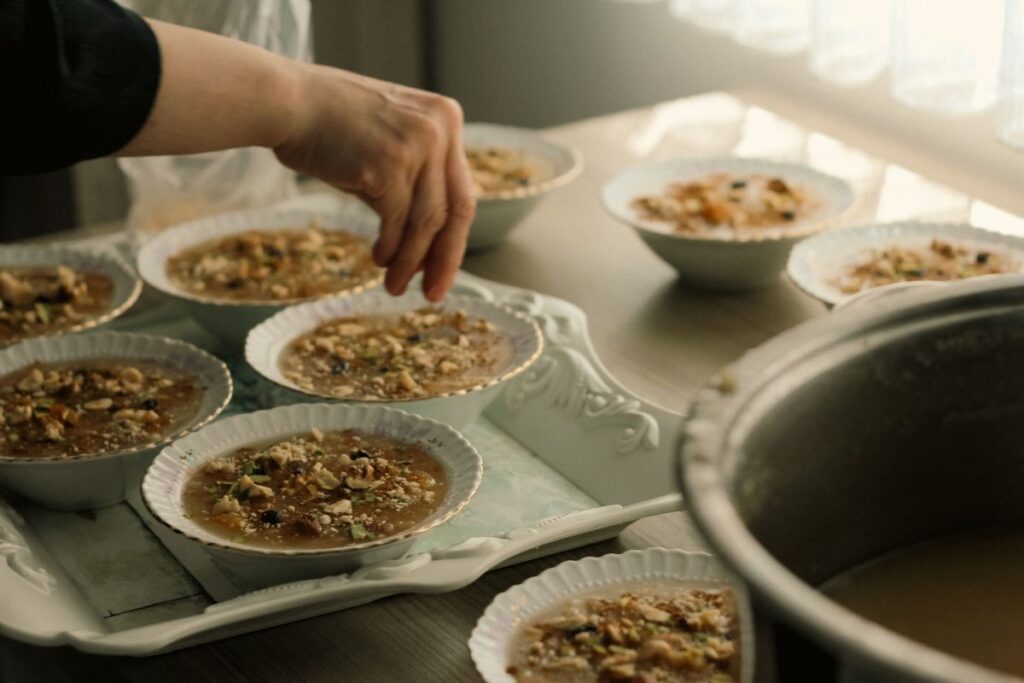
Few foods represent Anatolia better than asure.
At first glance, it may look unusual: wheat, beans, chickpeas, raisins, dried apricots, nuts, cinnamon, and pomegranate combined together in one dessert.
But asure is not only about flavor.
In Turkey, families traditionally prepare large pots of aşure and distribute it to neighbors, relatives, and friends. The dessert became a symbol of abundance, generosity, and community.
In many ways, asure reflects Anatolia itself.
Different ingredients, cultures, histories, climates, and traditions all blend together into one bowl — just as countless civilizations blended together across Anatolia for thousands of years.
This may be the best way to understand Turkish cuisine as a whole.
It is not one single tradition.
It is the meeting point of many worlds.
Street Food and the Rhythm of Turkish Cities
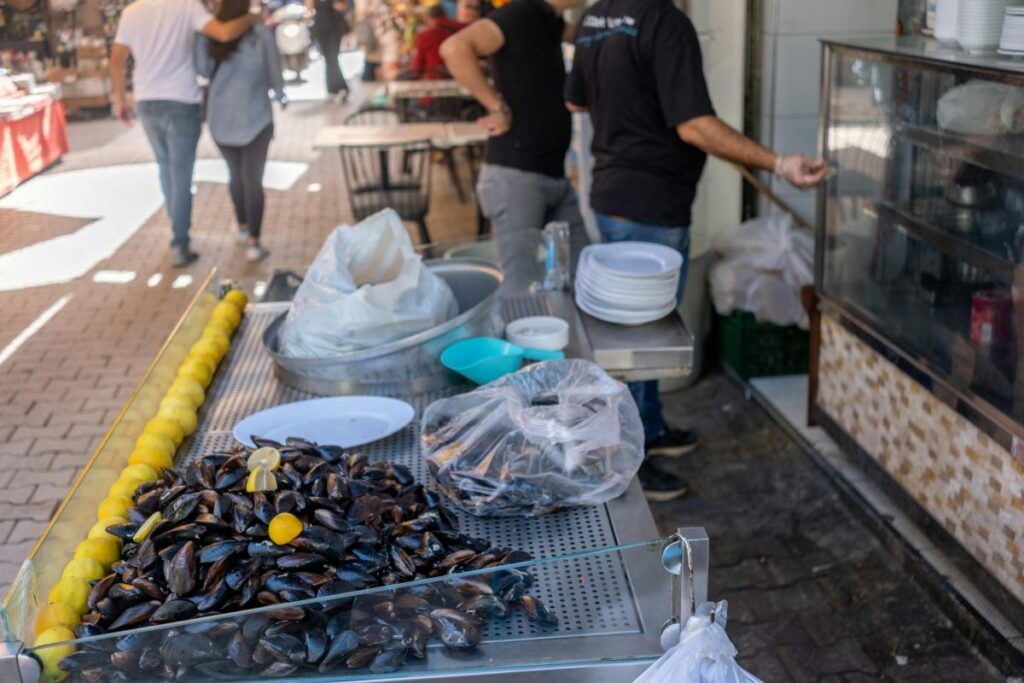
To truly understand Turkish food culture, travelers must eventually leave restaurants behind and walk into the streets.
Street food in Turkey is not simply cheap fast food. It is woven into the rhythm of everyday life.
In Istanbul, simit sellers push red carts through crowded ferry terminals early in the morning while ferries cross between Europe and Asia. The smell of roasted chestnuts fills winter streets near Galata and Istiklal Avenue. Late at night, long lines gather around kokorec shops where lamb intestines are chopped loudly on hot metal grills beside piles of spices and bread.
For many foreign visitors, Turkish street food feels surprisingly alive because it remains deeply connected to daily routines rather than tourism alone.
A ferry passenger grabs simit before work.
Students eat durum standing beside small shops.
Families share midye dolma while walking along the Bosphorus at night.
Food in Turkey often exists in motion.
Even something simple like simit carries historical depth. Covered in sesame seeds and sold everywhere from Istanbul to small Anatolian towns, simit reflects the old bread culture of Anatolia while also becoming part of modern urban life.
Kokorec tells another story entirely.
Many travelers hesitate when they first hear what it is: seasoned lamb intestines grilled over charcoal. But dishes like kokoreç reveal something important about Turkish culinary culture — historically, little was wasted. Rural and pastoral traditions shaped a cuisine where every ingredient had value.
This practical relationship with food still survives strongly in Anatolia today.
Istanbul is one of the best cities in Turkey to experience traditional street food culture, from simit and doner to kokorec and midye dolma.
➡️ Best Things to Do in Istanbul
Food, Hospitality, and Turkish Culture
In Turkey, food is rarely separated from hospitality.
Visitors quickly notice that meals are often larger than necessary, tea appears constantly, and refusing food can sometimes feel almost impossible.
This comes from a long cultural tradition where feeding guests is closely connected to generosity and honor.
In villages especially, travelers may still encounter situations where locals insist on offering:
- tea
- bread
- soup
- fruit
- homemade desserts
even to complete strangers.
During the Ottoman period, large charitable kitchens called imarets distributed food to travelers, students, and the poor as part of religious and social life.
This culture of sharing never completely disappeared.
Even today, many Turkish families continue traditions of preparing food not only for themselves but also for neighbors, relatives, and guests.
Desserts like aşure reflect this beautifully. The dish is traditionally cooked in large quantities and distributed throughout neighborhoods, transforming food into a social ritual rather than an individual experience.
In many parts of Turkey, inviting someone to eat is still considered one of the most meaningful expressions of hospitality.
Why Regional Food Matters in Turkey
One of the biggest mistakes travelers make is assuming there is one single “Turkish cuisine.”
In reality, Turkey contains multiple culinary identities shaped by geography and history.
The food of the Black Sea region developed in rainy mountains where corn, anchovies, and dairy became essential.
The cuisine of southeastern Turkey evolved through trade routes connected to Mesopotamia and the Arab world, creating intense spice traditions and lamb culture.
Along the Aegean coast, olive oil, seafood, herbs, and wine culture shaped lighter Mediterranean flavors.
Meanwhile, central Anatolia preserved ancient wheat traditions connected to caravan roads, farming villages, and nomadic cooking techniques.
This diversity is one reason Turkish cuisine feels endlessly rich.
Travelers moving across Turkey often feel as though they are entering entirely different culinary civilizations every few hundred kilometers.
Even breakfast changes dramatically from one region to another.
Tea glasses may remain constant, but the table itself transforms depending on climate, agriculture, and local memory.
Istanbul: Where All the Flavors Meet
Perhaps no city represents Turkish food culture better than Istanbul itself.
For centuries, Istanbul stood at the center of empires connecting Europe, Asia, the Balkans, the Mediterranean, the Caucasus, and the Middle East.
As a result, the city became a meeting point of countless food traditions.
Inside Istanbul, travelers can experience:
- Ottoman palace dishes
- Black Sea breakfasts
- southeastern kebabs
- Aegean meze culture
- Armenian pastries
- Balkan influences
- seafood traditions
- modern street food culture
all within the same city.
This is one reason food feels so alive in Istanbul.
The city never developed one single culinary identity. Instead, it absorbed influences from everywhere.
Walking through Istanbul today means constantly moving between layers of history through food itself:
Byzantine foundations, Ottoman kitchens, migration waves, village traditions, modern urban life, and global influences all existing side by side.
For many visitors, this becomes one of the most unforgettable parts of Turkey.
Final Thoughts
Turkish cuisine cannot be reduced to a list of famous dishes.
It is the story of Anatolia itself — a land shaped by civilizations, migration, geography, trade routes, empire, religion, climate, and memory over thousands of years.
Bread baked in village ovens, Ottoman dishes balancing sweet and savory flavors, lamb cooked slowly over fire in southeastern cities, tea shared beside the Black Sea, olive oil meze eaten during long Aegean evenings, and desserts like aşure passed between neighbors all reflect different layers of this story.
For travelers, understanding Turkish food is also a way of understanding Turkey itself.
Because in Turkey, food is rarely just food.
It is history, hospitality, identity, memory, and culture placed together on a table.
Food is one of the best ways to understand Turkey beyond museums and landmarks. For travelers planning a larger journey across the country, our complete Turkey itineraries and destination guides can help connect these regional food cultures with the places where they originated.