Introduction: The Birthplace of the Civilization
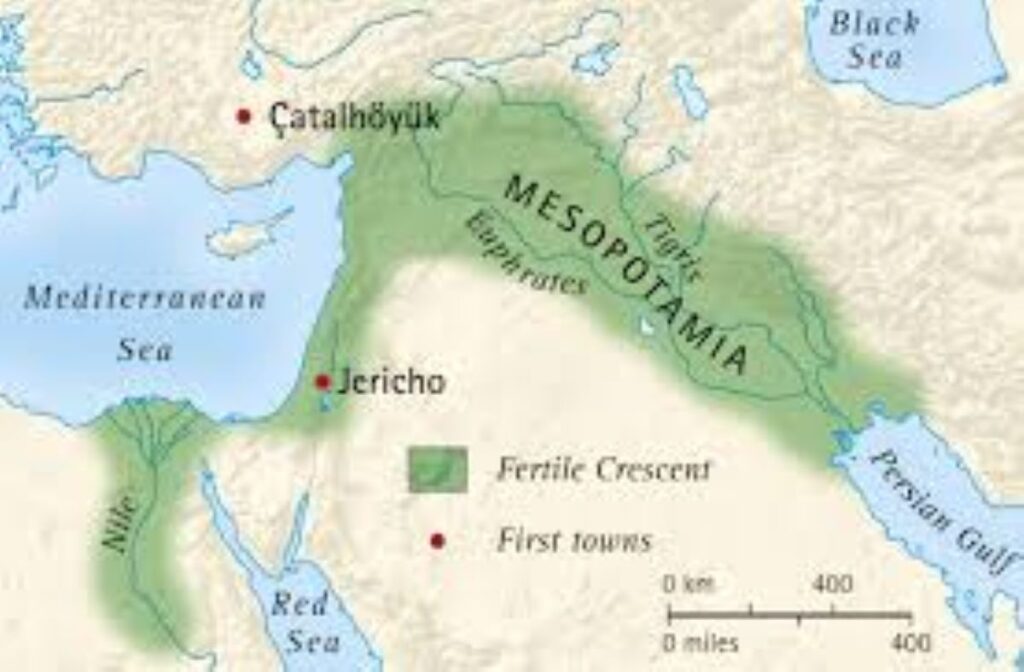
The term Mesopotamia, derived from Greek, means “the land between the rivers.” It refers to the fertile region located between the Tigris and Euphrates rivers, encompassing much of modern-day Iraq and extending into parts of southeastern Turkey and Syria.
This region is widely known as the Cradle of Civilization, a title earned through its unparalleled contributions to human development. Beginning around 3500 BCE, Mesopotamia witnessed the rise of the world’s first cities, writing systems, legal codes, and organized states.
But Mesopotamia was never isolated. Its influence extended far beyond its geographical boundaries, shaping neighboring regions such as Anatolia, where early societies like the Hittites and trading centers like Kültepe were deeply connected to Mesopotamian culture and economy.
To understand Mesopotamia is to understand the foundations of human civilization itself.
The Geography of Mesopotamia and the Fertile Crescent
Mesopotamia formed part of a larger region known as the Fertile Crescent, a crescent-shaped area stretching from the Levant through Mesopotamia and into southeastern Anatolia.
The region’s defining feature was its two great rivers which begin in Turkey:
- the Tigris
- the Euphrates
These rivers provided fertile soil through seasonal flooding, allowing early agricultural societies to flourish.
Unlike the predictable flooding of the Nile in Egypt, Mesopotamian rivers were less stable and often destructive. This unpredictability influenced the worldview of Mesopotamian societies, whose religions often emphasized powerful and sometimes chaotic deities.
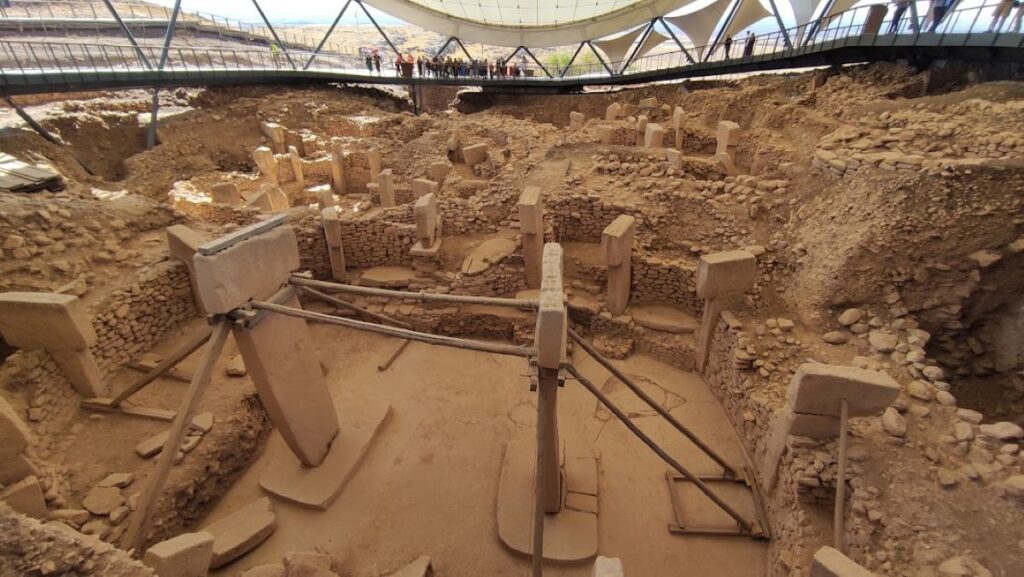
The northern part of Mesopotamia—known as Upper Mesopotamia—extended into what is now southeastern Turkey where Gobeklitepe is also located. This region played a key role in connecting Mesopotamia with Anatolia.
The Rise of the First Cities
The earliest civilization in Mesopotamia was developed by the Sumerians around 3500 BCE.
They established some of the world’s first cities, including:
- Uruk
- Ur
- Lagash
- Eridu
Among these, Uruk is often considered the first true city in human history. With a population estimated between 40,000 and 50,000, it marked a revolutionary shift from village life to urban society.
This transformation required:
- centralized administration
- organized labor
- complex social hierarchies
- economic systems
The rise of cities also led to one of the most important inventions in human history.
The Invention of Writing: Cuneiform
Around 3200 BCE, scribes in Mesopotamia developed the earliest known writing system, called cuneiform.
Using a reed stylus pressed into clay tablets, scribes recorded economic transactions, laws, religious texts, and historical events.
Over time, cuneiform evolved into a complex writing system used by multiple civilizations, including:
• Sumerians
• Akkadians
• Babylonians
• Assyrians
• Hittites
The thousands of surviving clay tablets from Mesopotamia provide historians with an unparalleled record of ancient life. Hittites founded their kingdom in central Anatolia nearby Cappadocia but afterwards expanded their land all the way to Mesopotamia.
Akkadian Empire: The First Empire in History
Around 2334 BCE, a ruler named Sargon of Akkad established what is often considered the first empire in human history.
The Akkadian Empire unified much of Mesopotamia under a centralized authority.
This marked a major shift from independent city-states to large territorial empires.
The Akkadian period also saw the spread of:
- Semitic languages
- administrative systems
- imperial governance
After its collapse, Mesopotamia continued to produce powerful states.
Babylon and the Code of Hammurabi
One of the most famous Mesopotamian rulers was Hammurabi, king of Babylon (r. 1792–1750 BCE).
Hammurabi is best known for his law code, one of the earliest written legal systems in history.
The Code of Hammurabi included nearly 300 laws covering:
- property rights
- trade
- family law
- criminal justice
The code is famous for its principle:
“An eye for an eye.”
This system of laws demonstrates the increasing complexity of Mesopotamian society and the need for structured governance.
Assyrian Empire: Power, Warfare, and Administration
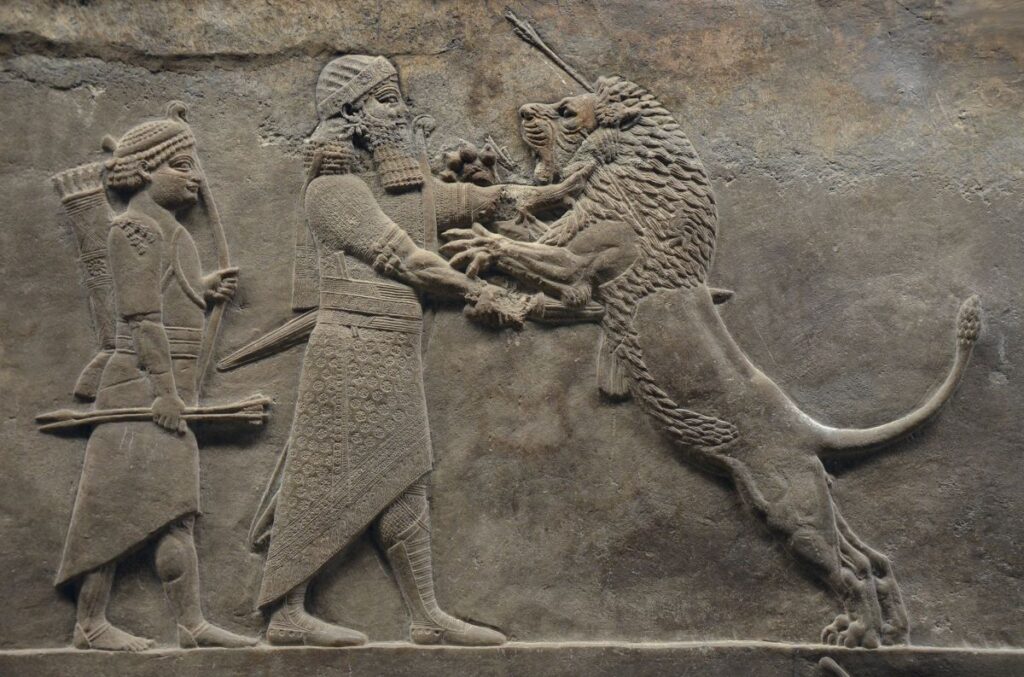
The Assyrians created one of the most powerful and militarized empires of the ancient world.
Their empire, centered in northern Mesopotamia, reached its height between 900 and 600 BCE.
Major Assyrian cities included:
- Nineveh
- Assur
- Nimrud
The Assyrians were known for:
- advanced military tactics
- siege warfare
- administrative efficiency
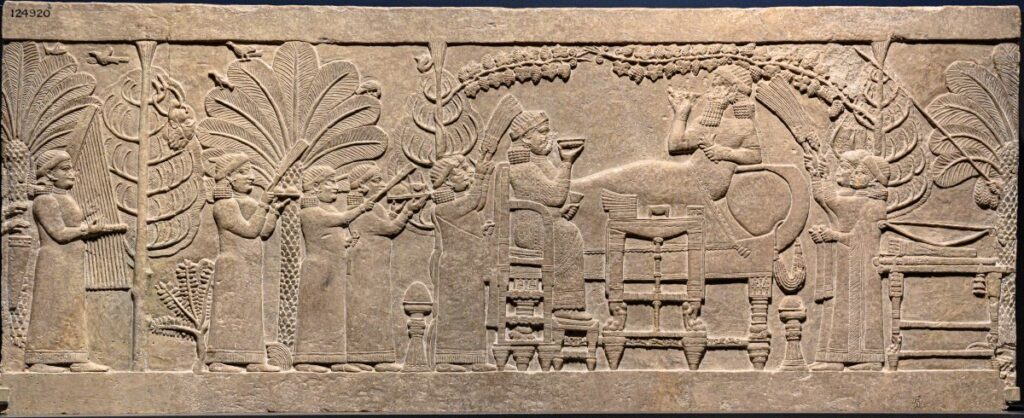
They also built vast libraries, including the famous Library of Ashurbanipal, which preserved thousands of clay tablets.
Mesopotamia and Anatolia: Trade and Cultural Exchange
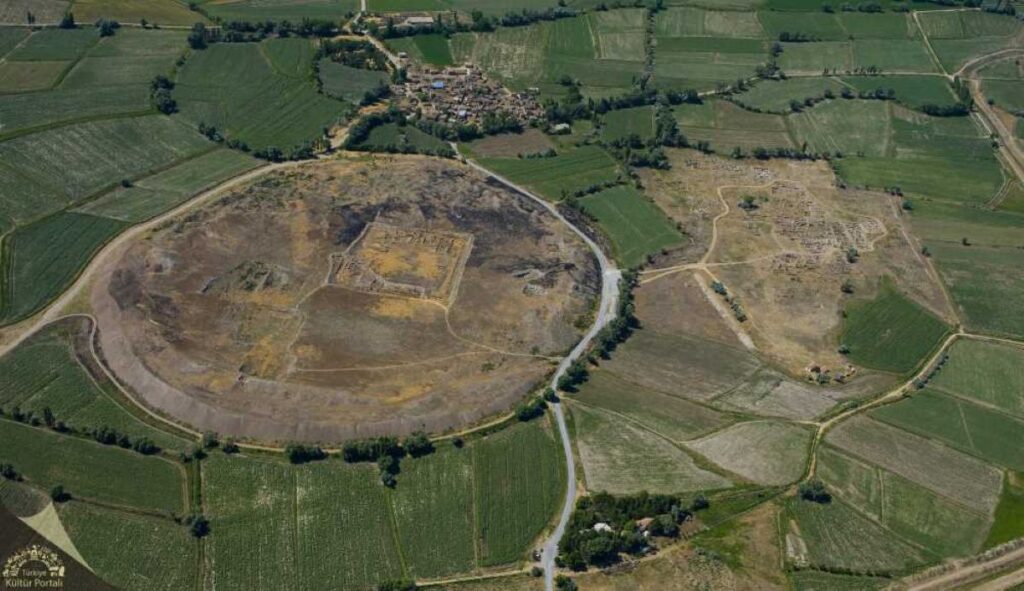
Mesopotamia maintained strong connections with Anatolia through extensive trade networks.
One of the most important examples is the Assyrian trade colony system.
Kültepe (Kanesh)
Located near modern Kayseri, Kültepe was a major trading center where Assyrian merchants established a karum (trade colony).
These merchants traded:
- tin (essential for bronze production)
- textiles
- silver and gold
Thousands of clay tablets found at Kültepe reveal detailed records of:
- commercial transactions
- legal contracts
- family life
These documents demonstrate how Mesopotamian economic systems influenced Anatolian societies.
Interaction with the Hittite Civilization
The rise of the Hittite Empire in Anatolia was closely linked to earlier Mesopotamian influences.
The Hittites adopted:
- cuneiform writing
- diplomatic practices
- administrative systems
Their capital, Hattusa, contained archives written in Akkadian, the diplomatic language of the ancient Near East.
The famous Treaty of Kadesh between the Hittites and Egypt was written in Akkadian, showing the widespread influence of Mesopotamian culture.
Religion and Mythology
Mesopotamian religion was polytheistic and deeply connected to nature and cosmic forces.
Major deities included:
- Anu (sky god)
- Enlil (air and authority)
- Enki (wisdom and water)
- Ishtar (love and war)
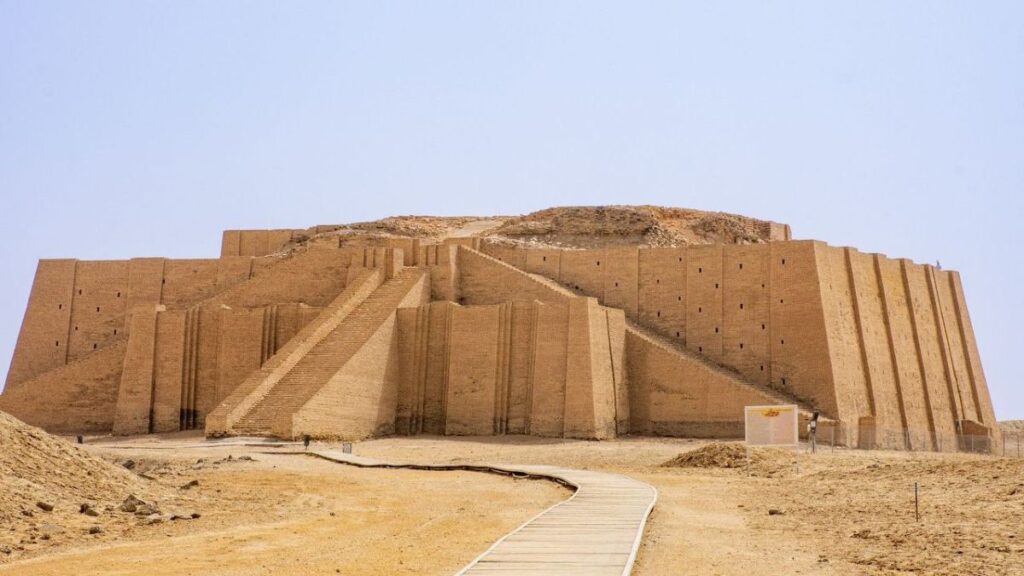
Temples known as ziggurats served as religious centers.
One of the most famous myths is the Epic of Gilgamesh, one of the earliest works of literature in human history.
Science, Mathematics, and Innovation
Mesopotamian societies made significant advances in:
- mathematics (base-60 system)
- astronomy
- engineering
- irrigation systems
Their innovations influenced later civilizations, including the Greeks and Romans.
Legacy of Mesopotamian Civilization
Mesopotamian societies laid the foundations for many aspects of modern civilization.
Their innovations included:
• writing
• law
• astronomy
• urban planning
The cultural achievements of Mesopotamia influenced later civilizations across the Near East and Mediterranean.
Conclusion
Mesopotamia stands as one of the most important regions in human history. As the birthplace of cities, writing, and complex societies, it shaped the course of civilization.
Its connections with Anatolia demonstrate how ancient cultures were deeply interconnected, forming networks of trade, diplomacy, and shared knowledge that laid the foundations of the modern world.
FAQ
What is Mesopotamia?
Mesopotamia is a historical region between the Tigris and Euphrates rivers where some of the first civilizations developed.
Why is Mesopotamia called the cradle of civilization?
Because it was the birthplace of writing, cities, and organized states.
Which civilizations lived in Mesopotamia?
The Sumerians, Akkadians, Babylonians, and Assyrians.
How is Mesopotamia connected to Turkey?
Northern Mesopotamia extended into southeastern Turkey and influenced early Anatolian civilizations.