Turkey is one of the most important lands in the history of Christianity. Long before Christianity spread across Europe, the message of the Gospel traveled through the cities of Anatolia. Apostles preached in ancient Roman cities, early churches were founded here, major Christian councils shaped Christian doctrine, and some of the world’s oldest Christian communities survived in these lands for centuries.
From the journeys of Saint Paul to the Seven Churches of Revelation, from Cappadocia’s underground churches to the Council of Nicaea, modern Turkey preserves an extraordinary biblical and Christian heritage.
Even today, Christianity remains part of Anatolia’s cultural identity. Ancient churches still stand across the country, Christian communities continue to live in Turkey, and Istanbul remains the seat of the Ecumenical Patriarch of the Eastern Orthodox Church.
In This Guide
Saint Paul of Tarsus and His Journey Through Anatolia
Saint Paul played one of the most important roles in spreading Christianity across Anatolia during the 1st century AD. Born in Tarsus, Paul traveled through many cities of Asia Minor, preaching the Gospel, establishing churches, and helping Christianity spread throughout the Roman world.
Many of the cities visited by Saint Paul can still be explored in modern Turkey today.
1. Tarsus — The Birthplace of Saint Paul
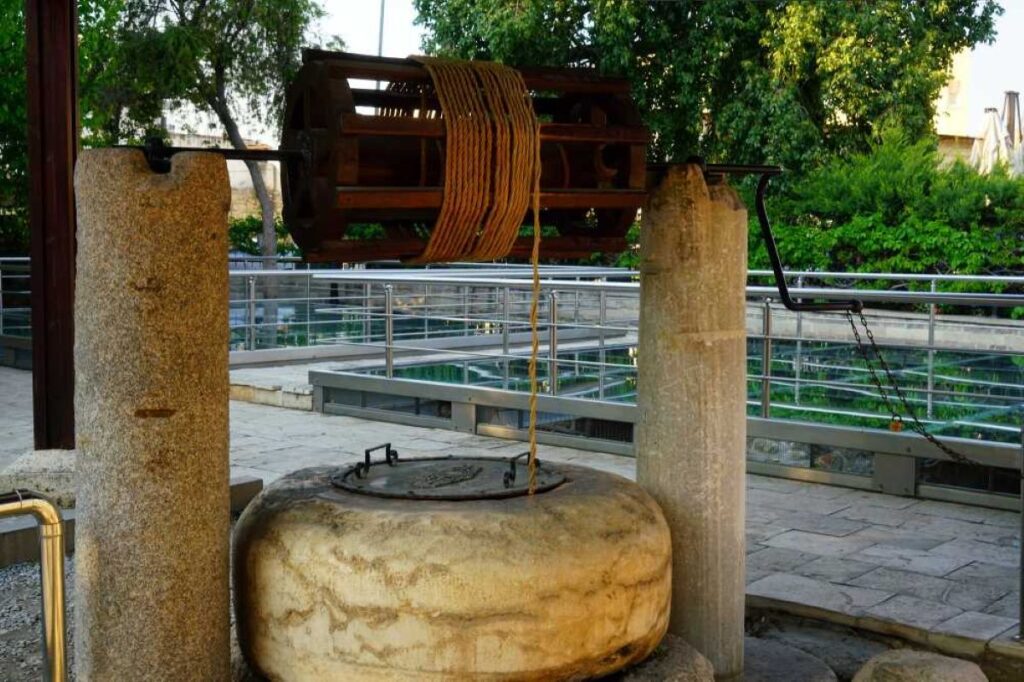
Tarsus was one of the great intellectual and commercial cities of the Roman East. This is where Saint Paul, originally known as Saul, was born.
Growing up in a multicultural Roman city strongly influenced Paul’s education and worldview. Tarsus later became an important destination for Christian pilgrims interested in the life of the apostle.
Visitors today can explore:
- St. Paul Well
- Roman-era streets
- historic churches and religious landmarks
Tarsus represents the beginning of Paul’s extraordinary journey across Anatolia and beyond.
2. Antakya — One of the First Christian Centers
Ancient Antioch became one of the earliest and most influential Christian communities in history.
According to the Bible, the followers of Jesus were first called “Christians” in Antioch. The city became a major center for missionary work and theological discussion during the early years of Christianity.
Saint Paul used Antioch as an important base during his missionary journeys.
One of the city’s most important Christian landmarks is:
- St. Pierre Kilisesi
Traditionally considered one of the world’s oldest churches, the cave church reflects Antioch’s central role in early Christianity.
3. Ephesus — A Major Biblical City
Ephesus became one of the most important Christian cities of the Roman Empire.
Saint Paul spent several years preaching in Ephesus and helped establish a large Christian community there. His teachings strongly influenced the region, and the “Letter to the Ephesians” later became part of the New Testament.
Ephesus is also closely connected to:
- House of the Virgin Mary
- Basilica of St. John
The city later became one of the famous Seven Churches of Revelation.
4. Iconium — An Early Christian Community
Known today as Konya, Iconium was one of the important cities visited by Saint Paul and Barnabas during their missionary journeys.
According to the Book of Acts, Paul preached here and gained many followers, although opposition also emerged within the city. Despite persecution and tensions, Christianity continued to spread throughout the region.
During the Byzantine era, Iconium remained an important Christian center in central Anatolia.
5. Lystra — The City of Miracles
Lystra occupies a special place in the story of Saint Paul’s travels.
According to the New Testament, Paul performed miracles here, causing local people to mistakenly believe that Paul and Barnabas were divine beings from Greek mythology.
Lystra is also traditionally associated with:
- Saint Timothy
Timothy later became one of Paul’s closest companions and an important leader in early Christianity.
The story of Lystra illustrates how Christianity spread into rural Anatolian communities beyond the great Roman cities.
6. Derbe — Christianity Reaches Inner Anatolia
Derbe was another important stop during Saint Paul’s journeys across central Anatolia.
Although smaller than cities such as Ephesus or Antioch, Derbe became one of the early Christian communities established during Paul’s missions.
The city demonstrates how Christianity expanded beyond major urban centers into the interior regions of Anatolia.
Today, Derbe remains historically important for understanding the geographical spread of early Christianity across Asia Minor.
7. Perge — Gateway to Anatolia
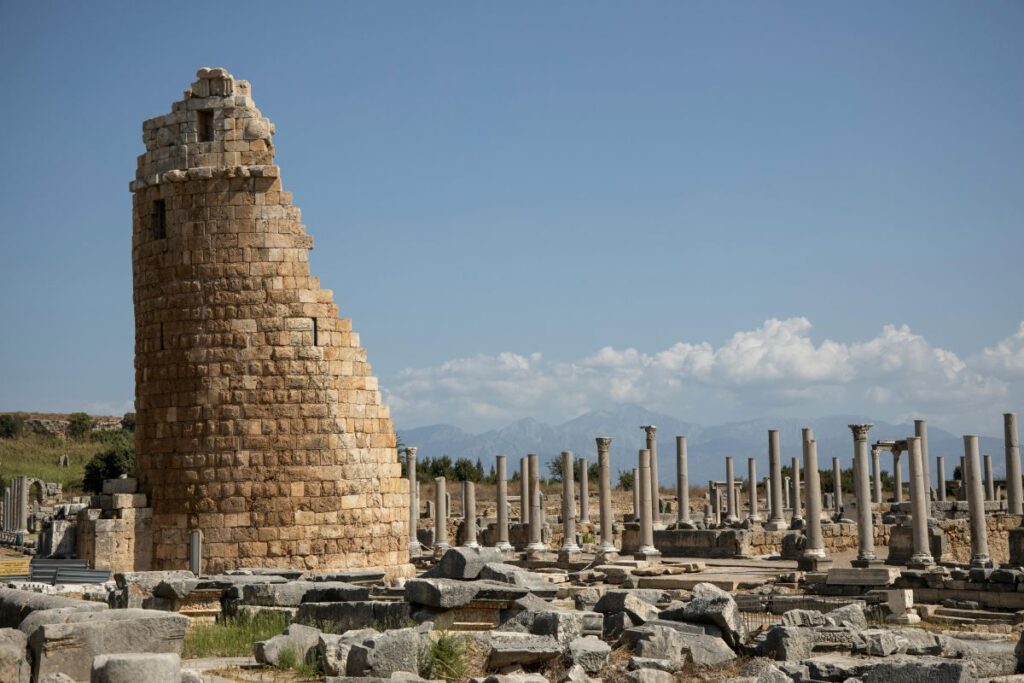
Perga was one of the first Anatolian cities visited by Saint Paul after arriving from Cyprus.
Located near modern Antalya, Perge was a wealthy Roman city famous for its monumental architecture, colonnaded streets, and cultural importance.
Saint Paul preached here during his missionary journeys through southern Anatolia before continuing inland toward central Anatolia.
Today, visitors can still explore:
- Roman streets
- theaters
- baths
- monumental gates
- ancient ruins connected to the biblical world
Perge represents the beginning of Paul’s missionary route through Anatolia.
Together, these cities form part of one of the most important religious and historical routes in the world — the path through which Christianity spread across Anatolia and eventually into Europe.
Antioch – One of Christianity’s Earliest Centers
Antakya, known as ancient Antioch, became one of the most important cities of early Christianity.
According to the Bible, the followers of Jesus were first called “Christians” here.
The city became a major center for missionary activity and theological development. Saint Peter is believed to have preached in Antioch before traveling to Rome.
One of the most important Christian landmarks is:
- St. Pierre Church
This cave church is traditionally considered one of the oldest churches in the world.
Ephesus – A Major Biblical City
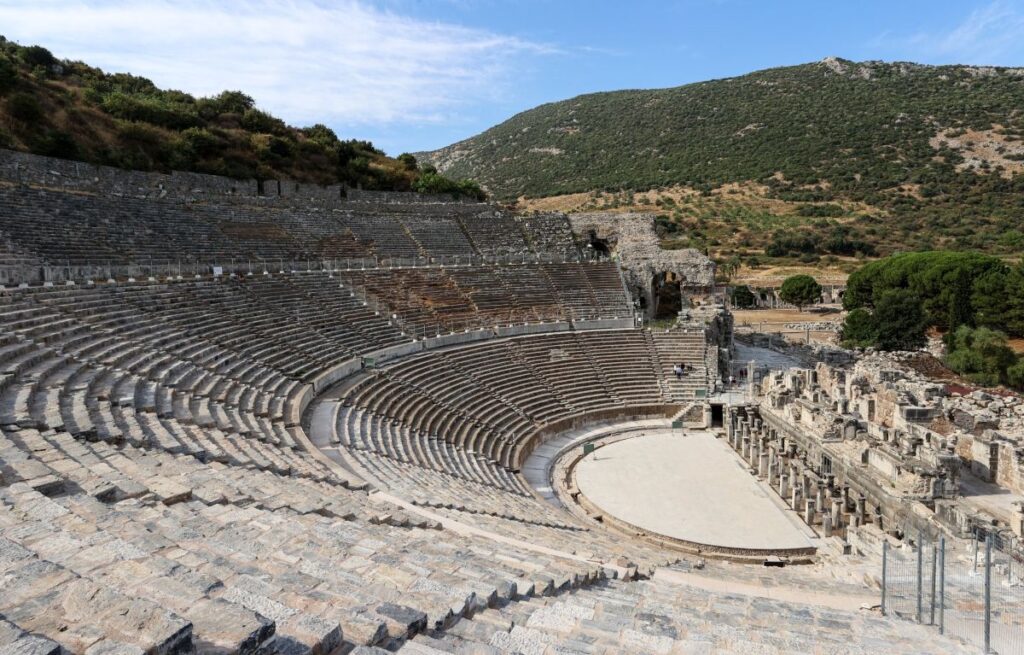
Ephesus was one of the largest cities of the Roman Empire and one of the most important Christian communities in Anatolia.
Saint Paul preached here for years, and the “Letter to the Ephesians” was addressed to believers in this city.
Ephesus is also associated with:
- House of the Virgin Mary
- Basilica of St. John
According to Christian tradition, the Apostle John and the Virgin Mary spent their final years in Ephesus.
You can also explore our detailed guide to the best things to do in Ephesus, including biblical landmarks and Roman ruins.
The Seven Churches of Revelation
One of the most important biblical routes in the world is located entirely in western Turkey.
The Seven Churches mentioned in the Book of Revelation were Christian communities addressed by Saint John.
These churches were not single buildings, but entire Christian communities living in important Roman cities.
1. Ephesus
Known for its strong church community, but criticized in Revelation for losing its “first love.”
2. Smyrna
One of the few churches praised for remaining faithful despite persecution.
3. Pergamon
A major religious and political center of the Roman world, described as the place “where Satan’s throne is,” likely referring to its pagan temples and imperial cult.
4. Thyatira
Known for trade guilds and commercial life, but warned against false teachings.
5. Sardis
Once wealthy and powerful, Sardis was criticized spiritually for appearing alive but being “dead.”
6. Philadelphia
Praised for remaining faithful despite difficulties. It later became an important Byzantine Christian center.
7. Laodicea
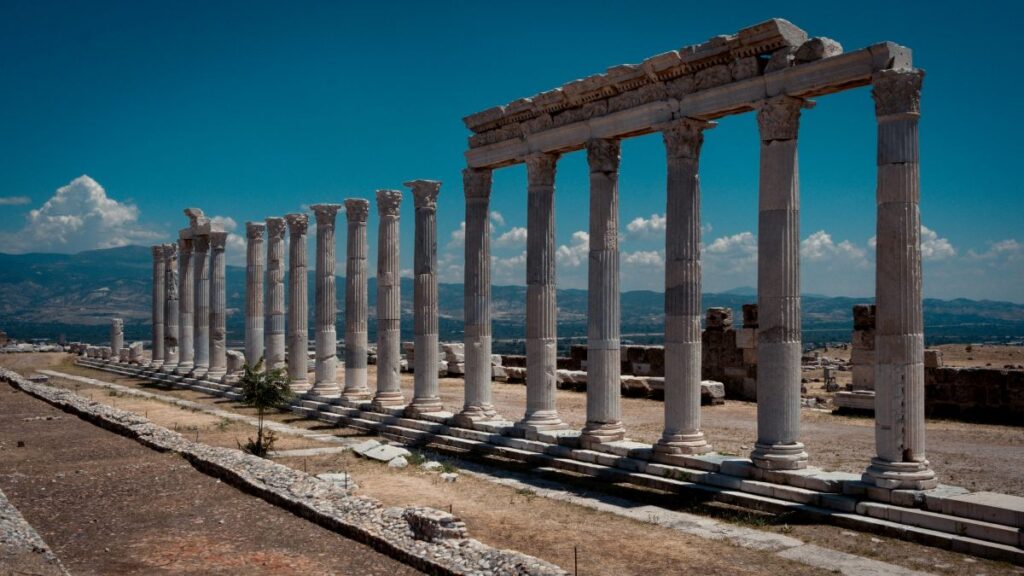
Famous for the biblical warning about being “lukewarm.” The city was wealthy but spiritually criticized in Revelation.
Today, these sites attract thousands of biblical travelers, archaeologists, and Christian pilgrims every year.
Laodicea is often visited together with nearby Pamukkale, one of Turkey’s most famous historical and natural attractions.
Nicaea and the First Ecumenical Council
Iznik, known in antiquity as Nicaea, hosted one of the most important events in Christian history.
In 325 AD, Roman Emperor Constantine gathered bishops from across the Christian world for the First Council of Nicaea.
Several foundational decisions were made during this council, including:
- The creation of the Nicene Creed
- Defining core Christian beliefs about the nature of Jesus Christ
- Addressing theological disputes such as Arianism
- Establishing greater unity within Christianity
- Standardizing the calculation of Easter
The Council of Nicaea shaped Christianity for centuries and remains fundamental to many Christian denominations today.
Istanbul and the Eastern Orthodox Patriarchate
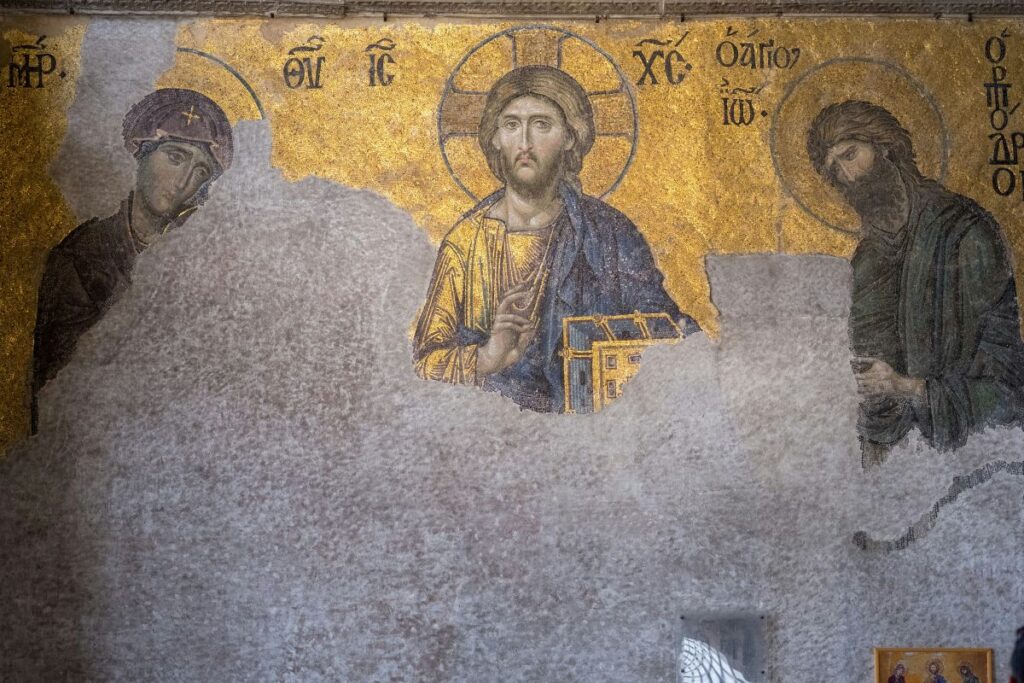
Istanbul has been one of the most important cities in Christian history for more than 1,500 years.
Originally founded as Byzantium, the city was transformed into Constantinople by Roman Emperor Constantine the Great in the 4th century AD. After Christianity became increasingly accepted within the Roman Empire, Constantinople emerged as one of the most powerful religious centers of the Christian world.
For over a thousand years, the city served as the capital of the Byzantine Empire, preserving Christian theology, art, architecture, and scholarship throughout the medieval period.
Constantinople became famous for:
- magnificent churches
- monasteries
- theological schools
- mosaics and religious art
- imperial ceremonies connected to Christianity
The city also played a major role in shaping Eastern Orthodox Christianity.
One of the most iconic monuments of Christian history is:
- Hagia Sophia
Built in the 6th century under Emperor Justinian, Hagia Sophia was the largest cathedral in the Christian world for nearly a thousand years. Its enormous dome, mosaics, and architectural innovations influenced religious architecture across Europe and the Middle East.
Another important Byzantine landmark is:
- Chora Church
Known for its extraordinary Byzantine mosaics and frescoes, Chora reflects the artistic and spiritual richness of late Byzantine Christianity.
Today, Istanbul still remains deeply connected to the Christian world through:
- Ecumenical Patriarchate of Constantinople
Located in the historic Fener district, the Ecumenical Patriarchate continues to serve as the spiritual center of Eastern Orthodox Christianity. The Ecumenical Patriarch is regarded as the “first among equals” within the Orthodox world.
Despite centuries of political and cultural transformation, Istanbul continues to preserve its Byzantine and Christian heritage through churches, monasteries, museums, and historic neighborhoods.
Many of Istanbul’s most important Christian and Byzantine landmarks can still be explored today, including Hagia Sophia, Chora Church, and the historic Fener district. You can discover more in our guide to the best things to do in Istanbul.
Cappadocia – Early Christianity in Roman Empire Time
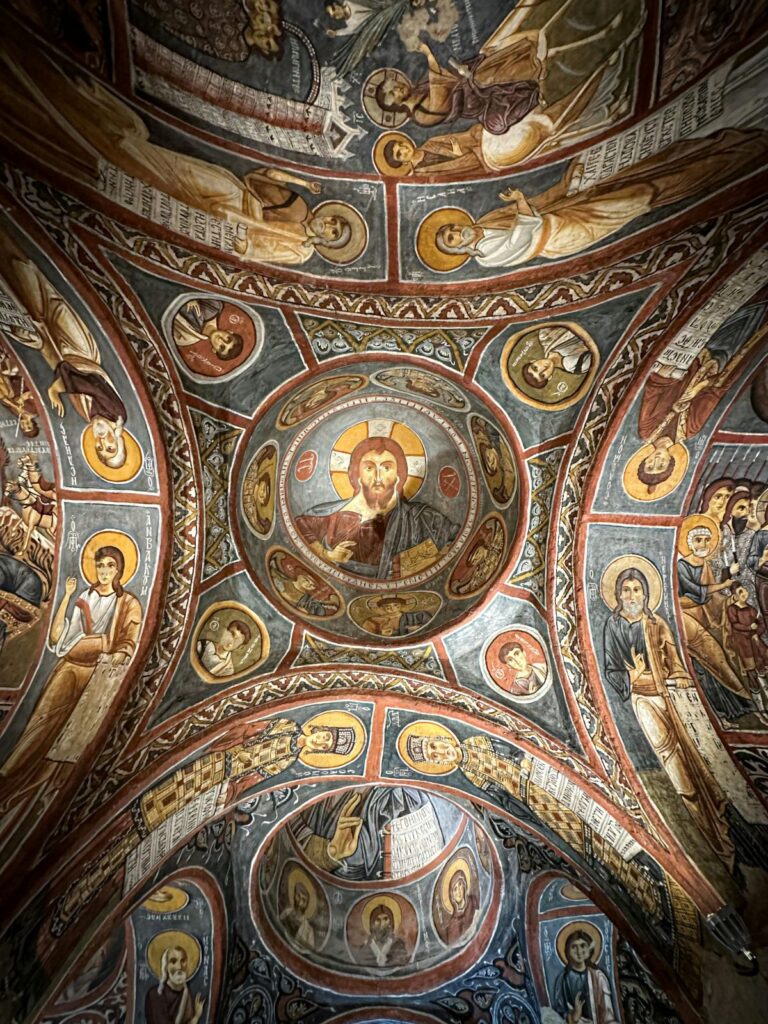
Cappadocia became one of the most important Christian centers of Anatolia during the Roman and Byzantine periods.
As Christianity spread across the region, many believers escaped Roman persecution by hiding within Cappadocia’s valleys and volcanic rock formations. Entire underground cities, monasteries, chapels, and churches were carved into the soft tuff stone.
Early Christians created hidden communities where they could worship safely, preserve religious manuscripts, and continue their traditions during times of persecution.
Important Christian sites in Cappadocia include:
- Goreme Open Air Museum
- Derinkuyu Underground City
- Kaymakli Underground City
- Ihlara Valley
Cappadocia also became deeply connected to one of the most influential figures in early Christianity:
- Saint Basil the Great
Born in Cappadocia during the 4th century, Saint Basil became one of the most important theologians of Eastern Christianity and one of the “Cappadocian Fathers.”
He helped shape Christian monastic life by organizing communities of monks focused on prayer, discipline, education, and charity. His ideas strongly influenced Eastern Orthodox monastic traditions for centuries.
Saint Basil also defended the Nicene Creed after the Council of Nicaea and played a major role in developing Christian theology during a critical period of church history.
Many monasteries and religious communities in Cappadocia were inspired by the teachings of Saint Basil, helping transform the region into a major spiritual center of the Byzantine world.
Today, visitors can still see:
- rock-cut monasteries
- hidden chapels
- biblical frescoes
- underground shelters used by Christian communities
Cappadocia remains one of the most extraordinary places in the world to explore the history of early Christianity.
For a deeper look into Cappadocia’s cave churches, underground cities, and historical valleys, explore the best things to do in Cappadocia.
Christianity in Modern Turkey
Although Christianity represents a minority religion in modern Turkey, Christian communities have continued to live in Anatolia for nearly two thousand years.
Today, Turkey is home to several historic Christian traditions, including:
- Greek Orthodox Christians
- Armenian Apostolic Christians
- Syriac Orthodox Christians
- Catholics
- Protestant communities
Many ancient churches and monasteries are still active places of worship, especially in southeastern Anatolia and Istanbul.
One of the most important centers of Syriac Christianity is:
- Mardin
The region around Mardin has preserved Syriac Christian culture, language, and religious traditions for centuries.
Important monasteries include:
- Mor Gabriel Monastery
- Deyrulzafaran Monastery
These monasteries remain among the oldest active Christian monasteries in the world.
Christian heritage also survives in:
- Hatay
- Sirnak
- Istanbul
Throughout Anatolia, visitors can still encounter churches, monasteries, Christian villages, and ancient religious traditions that connect modern Turkey to its early Christian past.
Additional Important Christian Sites in Turkey
Beyond the major biblical cities, Turkey is also home to many extraordinary Christian monuments connected to Byzantine, Armenian, and Syriac history.
Ani — The City of 1001 Churches
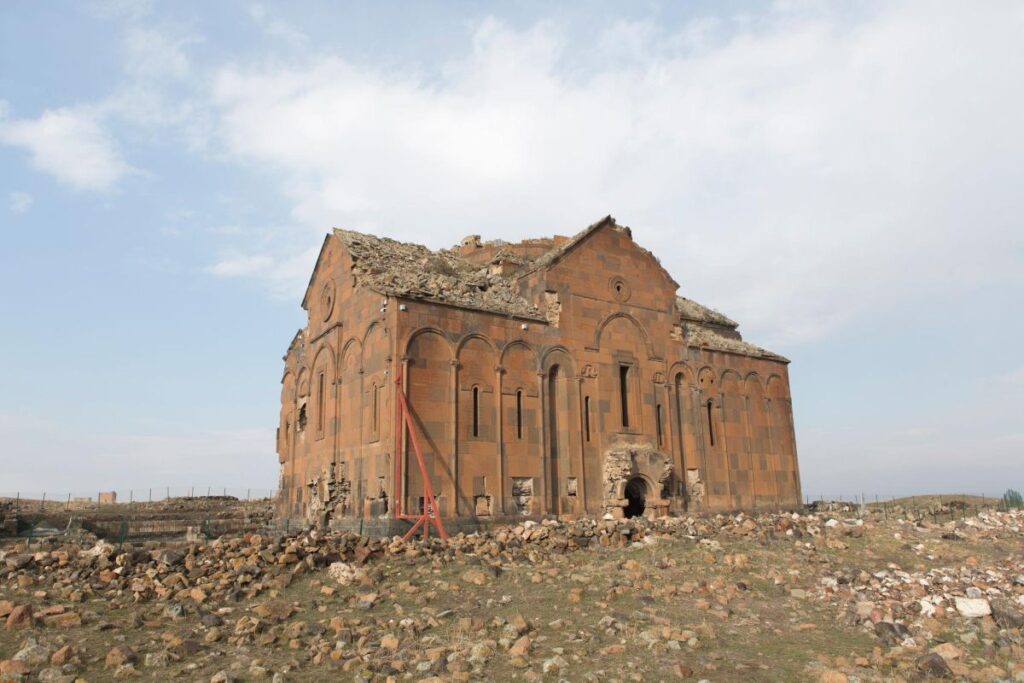
Located near the modern Armenian border, Ani was once a magnificent medieval Armenian capital known as the “City of 1001 Churches.”
During the Middle Ages, Ani became one of the most important Christian cities in the region. Its churches, cathedrals, and monasteries reflected the wealth and artistic achievements of Armenian Christianity.
Today, visitors can explore:
- the Cathedral of Ani
- frescoed churches
- defensive walls
- medieval ruins overlooking dramatic landscapes
Ani is now recognized as a UNESCO World Heritage Site and remains one of eastern Turkey’s most remarkable historical destinations.
Sumela Monastery — A Monastery in the Black Sea Mountains
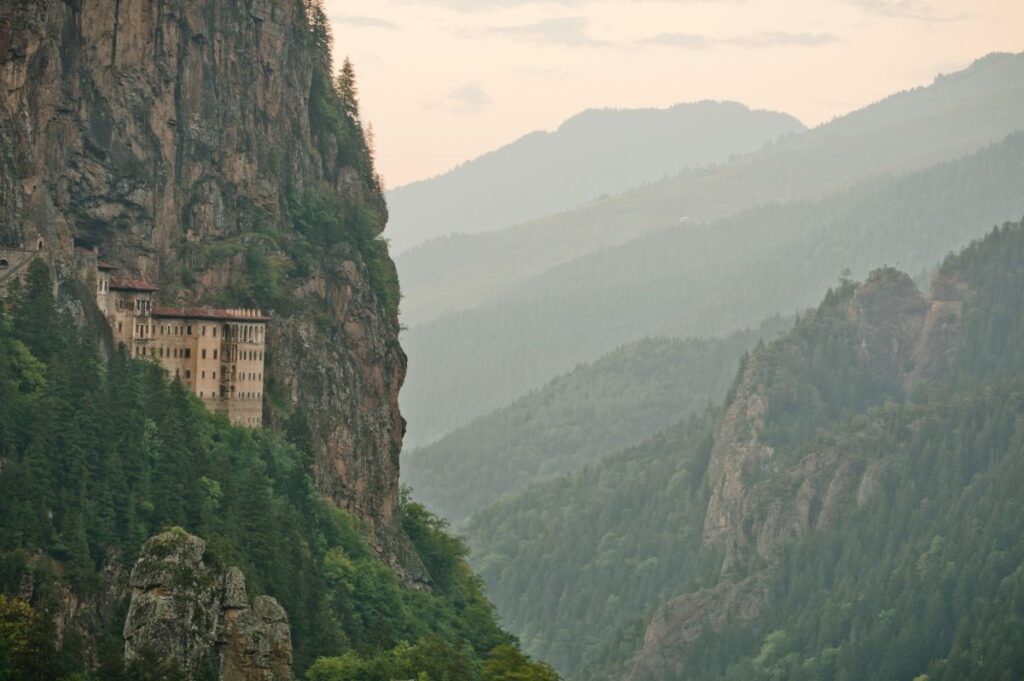
Built dramatically into steep cliffs in the Pontic Mountains, Sumela Monastery is one of Turkey’s most iconic Christian landmarks.
Founded during the Byzantine period, the monastery became an important center of Greek Orthodox Christianity in the Black Sea region.
The monastery is famous for:
- mountain scenery
- cliffside architecture
- Byzantine frescoes
- remote spiritual atmosphere
Today, Sumela remains one of the most visited historical and religious sites in northern Turkey.
Akdamar Church — Armenian Christian Heritage on Lake Van
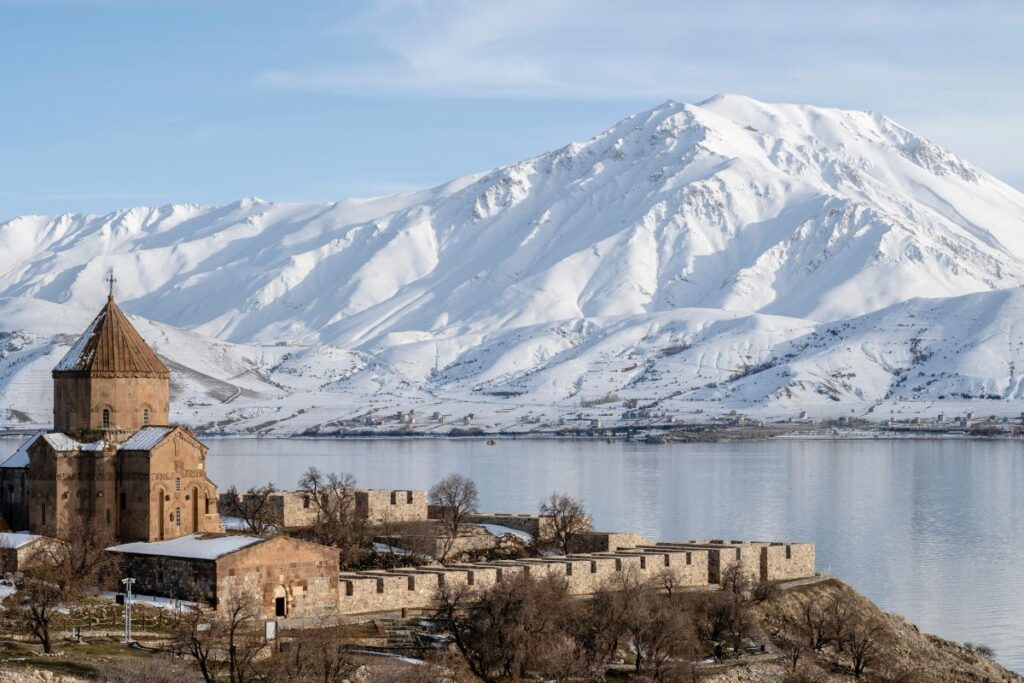
Located on Akdamar Island in Lake Van, this 10th-century Armenian church is one of the masterpieces of medieval Armenian architecture.
The church is famous for its:
- stone carvings
- biblical reliefs
- lakeside setting
- Armenian artistic traditions
Akdamar reflects the deep historical roots of Christianity in eastern Anatolia and remains an important cultural symbol for Armenians around the world.
Together, these churches, monasteries, and ancient Christian communities demonstrate that Anatolia was not only a bridge between civilizations, but also one of the foundational regions of Christian history.
Papal Visits to Turkey and Modern Christian Pilgrimage
Turkey continues to hold great importance for the Christian world, attracting pilgrims, religious leaders, and international visitors interested in biblical history and early Christianity.
Over the decades, several popes have visited Turkey to emphasize the country’s historical role in Christianity and to strengthen dialogue between Christian communities.
Important papal visits included:
- Pope Paul VI in 1967
- Pope John Paul II in 1979
- Pope Benedict XVI in 2006
- Pope Francis in 2014
These visits included important Christian sites such as:
- Istanbul
- Ephesus
- Antakya
The popes met with the Ecumenical Patriarch of Constantinople, visited historic churches, and highlighted Anatolia’s importance in the history of Christianity.
In 2025, Pope Leo XIV visited Iznik to commemorate the 1700th anniversary of the First Council of Nicaea.
The visit brought global attention to Turkey’s Christian heritage and emphasized the continuing spiritual importance of Anatolia for both Catholic and Orthodox Christians.
During the visit, Pope Leo XIV participated in ecumenical prayers near the ancient council site and met with:
- Bartholomew I
- Christian community leaders in Turkey
The visit symbolized Christian unity, interfaith dialogue, and the enduring historical connection between Anatolia and the Christian world today.
Why Turkey Matters in Biblical History
Turkey offers a unique connection between biblical history, archaeology, Roman civilization, Byzantine heritage, and living Christian traditions.
Travelers can explore:
- Cities visited by Saint Paul
- The Seven Churches of Revelation
- Ancient monasteries and underground churches
- Early Christian pilgrimage sites
- Byzantine churches and mosaics
- The birthplace of major church councils
For anyone interested in biblical history, early Christianity, archaeology, or religious travel, Anatolia remains one of the most fascinating regions in the world.