
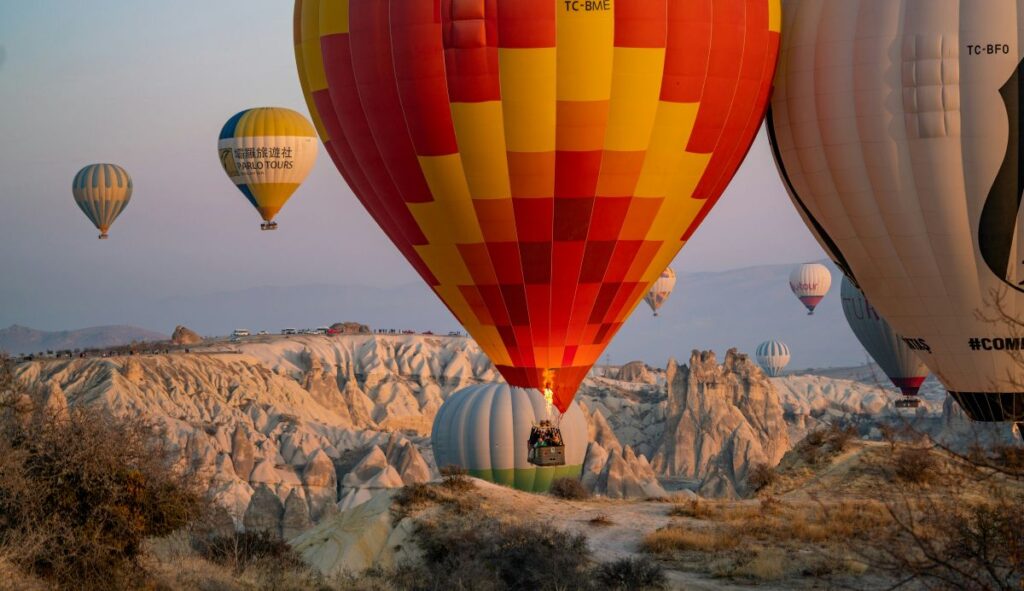
Cappadocia is one of the most extraordinary travel destinations in the world. Located in the heart of Turkey, this region is famous for its surreal landscapes, fairy chimneys, underground cities, and breathtaking hot air balloon rides.
But Cappadocia is not just about natural beauty and hot air balloon ride— it is also a place where thousands of years of history come alive. From the Hittites to the Romans and Byzantines, many civilizations have left their mark on this unique land.
As most videos on social media are about balloon ride for Cappadocia, it makes travellers think that balloon is the only reason to visit Cappadocia but that is not true.
As a licensed tour guide working in Cappadocia since 2008, I’ve guided thousands of travelers through this region. In this guide, I’ll show you not only the must-see attractions but also local tips and hidden gems that most tourists miss and the main reasons why to visit Cappadocia.
Most travelers come to Cappadocia dreaming about hot air balloons and it is very beautiful but after years of guiding visitors through the region, I have noticed something interesting: many leave talking more about underground cities, hidden churches, and sunset hikes than the balloon flight itself.
⭐ Top-rated experience in Cappadocia
✔️ Book early — limited availability
⭐ 5.0 rated experience with 5000+ reviews
✔️ Recommended by a licensed local guide
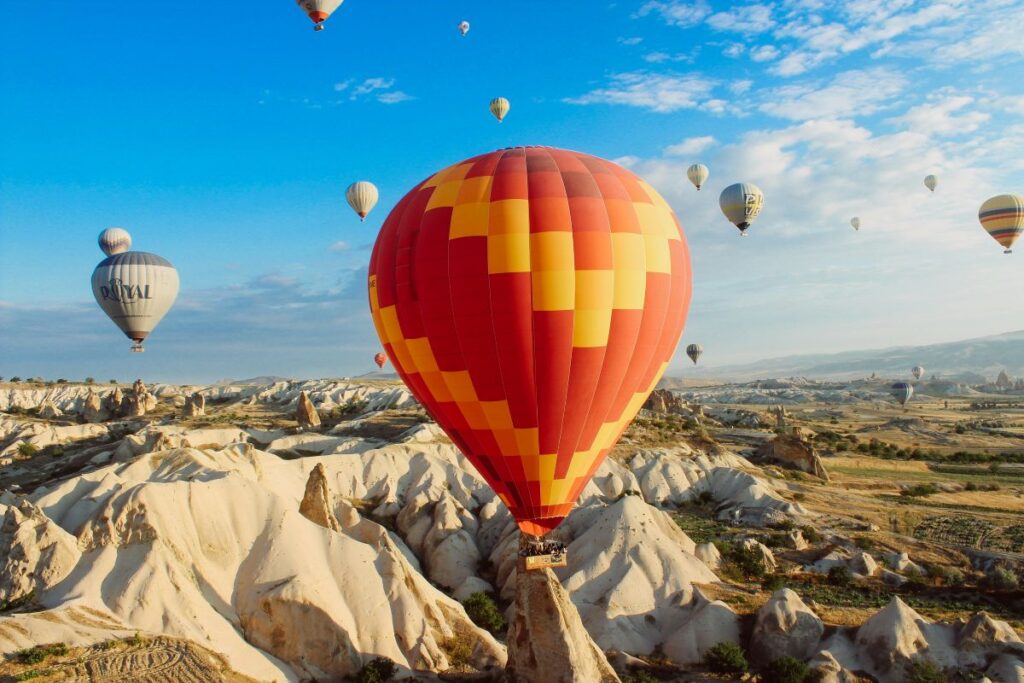
If there is one experience that defines Cappadocia, it is watching the sun rise over a landscape filled with hundreds of colorful hot air balloons.
The day begins long before sunrise. While most of the region is still asleep, balloon crews prepare their aircraft in the darkness, and visitors are driven to launch sites scattered across the valleys. As the burners ignite and the balloons slowly inflate, anticipation begins to build.
Then, just as the first light appears on the horizon, the balloons start to rise.
From above, Cappadocia reveals a completely different side of itself. Fairy chimneys, vineyards, hidden churches, and winding valleys stretch across the volcanic landscape below. It is easy to understand why so many travelers describe this as one of the most memorable experiences of their lives.
As a guide in Cappadocia, I often meet visitors who arrive thinking the balloon flight is overrated. Almost all of them change their minds once they see the valleys from above.
If the weather cooperates, a balloon flight is an experience you will remember long after your trip to Turkey has ended.
Local Tip:
As a guide, I always recommend booking your balloon ride at least a few days in advance, especially during spring and autumn. Weather conditions can cause cancellations, so plan it for your first morning. Weather conditions play an important role, so staying at least two nights improves your chances of flying.
Price (2026):
Prices usually range between 150–350 euros per person, depending on the season.
One of Cappadocia’s best experiences is also completely free.
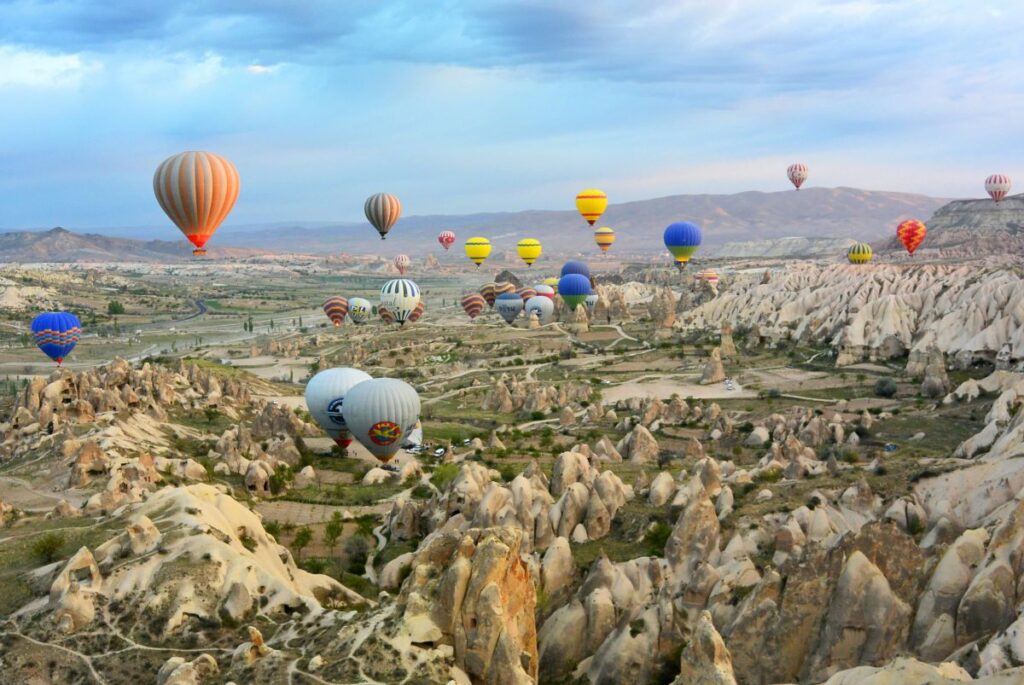
Not everyone wants to spend money on a balloon flight, and some visitors are unlucky enough to face weather cancellations. Fortunately, watching the balloons from the ground can be just as magical.
Before sunrise, viewpoints around Göreme, Love Valley, and Uçhisar begin to fill with photographers, couples, and early risers carrying cups of Turkish tea or coffee. As the sky changes from deep blue to orange and pink, dozens of balloons gradually appear above the valleys.
What makes this moment special is the silence. Apart from the occasional sound of a burner in the distance, the landscape remains remarkably peaceful.
For many travelers, this sunrise experience becomes one of their favorite memories of Cappadocia—even without ever stepping into a balloon basket.
Many visitors come to Cappadocia expecting dramatic landscapes. What often surprises them is the region’s extraordinary history.
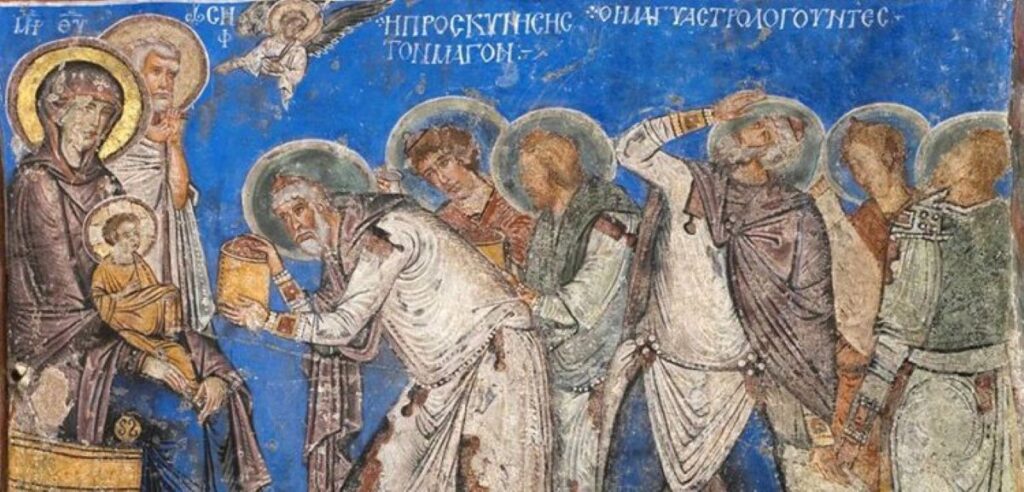
The Goreme Open Air Museum offers one of the best introductions to that history. Hidden among the volcanic rock formations are churches, monasteries, chapels, and living quarters carved directly into the stone by early Christian communities.
Walking through the site feels like stepping into another world. Behind simple rock-cut entrances, you will discover colorful frescoes that have survived for centuries. Some still retain remarkably vivid shades of red, blue, and gold.
The Dark Church is usually the highlight. Because very little sunlight entered the building over the centuries, many of its paintings remain exceptionally well preserved.
Even travelers with little interest in religious history often leave impressed by the scale and craftsmanship of the complex.
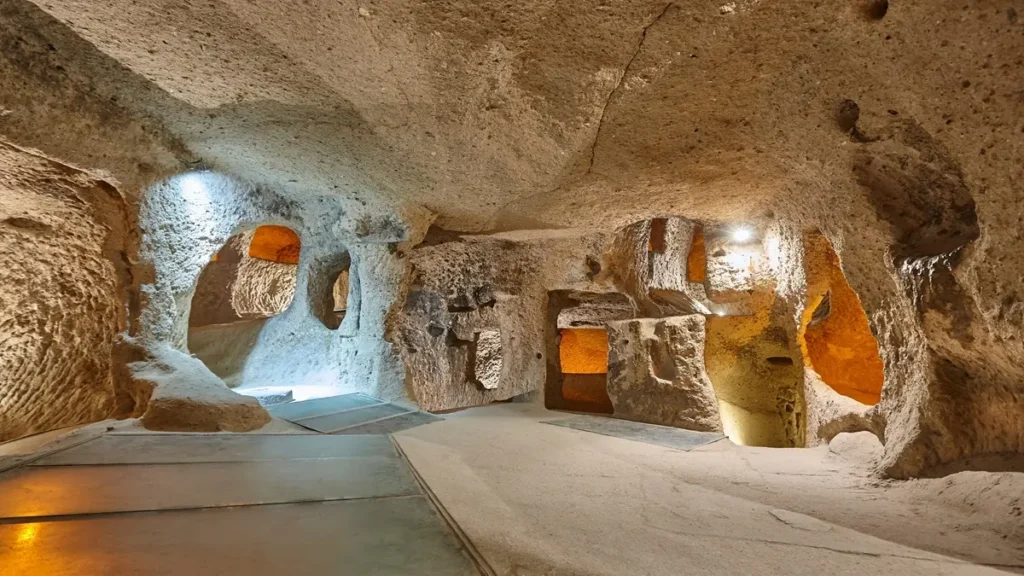
At first glance, Derinkuyu looks surprisingly ordinary.
From the surface, there is little indication that one of the world’s most remarkable underground settlements lies hidden beneath your feet.
Then you begin descending.
Level after level, narrow tunnels lead visitors deeper into the earth. Ventilation shafts, storage rooms, kitchens, churches, and living spaces reveal how entire communities once survived underground during periods of conflict and invasion.
The city reaches depths of around 85 meters and is believed to have sheltered thousands of people.
For many visitors, Derinkuyu becomes one of the most unexpected highlights of Cappadocia. The fairy chimneys may attract the attention, but the underground cities reveal the ingenuity and resilience of the people who once called this region home.
While Derinkuyu is known for its depth, Kaymaklı offers a very different experience.
The tunnels here are wider, the rooms feel more connected, and it is often easier to imagine how people actually lived underground. Walking through the city, you pass storage areas, kitchens, wine cellars, ventilation shafts, and communal spaces that once supported entire families.
What makes Kaymaklı particularly fascinating is the sense of scale. Although only a small portion is open to visitors today, archaeologists believe the underground complex once extended far beyond the areas that can currently be explored.
As a guide, I often tell visitors that Derinkuyu feels more dramatic, while Kaymaklı feels more personal. In Derinkuyu, you are amazed by the engineering. In Kaymaklı, you begin to picture everyday life beneath the surface.
If you have time, visiting both underground cities is the best way to understand one of Cappadocia’s most extraordinary chapters of history.
If someone asked me where to find the most iconic fairy chimneys in Cappadocia, Pasabag would be one of my first recommendations.
Also known as Monks Valley, this area contains some of the region’s most unusual rock formations. Towering columns of volcanic stone rise from the valley floor, many topped with distinctive mushroom-shaped caps created by thousands of years of erosion.
The scenery feels almost surreal, especially during the early morning or late afternoon when the sunlight highlights the textures and colors of the rock.
Pasabag is also closely connected to Cappadocia’s early Christian history. Hermits once carved small living spaces into the fairy chimneys and spent years in solitude among the rocks.
Today, the valley is one of the easiest places to appreciate both the natural beauty and the spiritual history that make Cappadocia so unique.
Unlike many of Cappadocia’s famous valleys, Devrent Valley has no churches, monasteries, or cave dwellings hidden among the rocks.
People come here for a different reason: imagination.
As you walk through the valley, the unusual rock formations begin to resemble animals, people, and objects. Some visitors spot dolphins, seals, or birds, while others see entirely different shapes. The most famous formation is the camel-shaped rock, which has become one of Cappadocia’s most photographed landmarks.
Millions of years of erosion created this natural sculpture garden, and every visitor experiences it differently. That is part of its charm.
Devrent may not have the historical significance of Göreme or the dramatic scenery of Red Valley, but it remains one of the most entertaining stops in Cappadocia.
If I could recommend only one hike in Cappadocia, Red Valley would be near the top of the list.
The trail winds through narrow canyons, hidden churches, vineyards, and some of the most colorful landscapes in the region. Depending on the time of day, the volcanic rock changes from soft pink and orange to deep shades of red.
Unlike many viewpoints that can be reached by car, Red Valley rewards those willing to explore on foot. Around every corner, new rock formations and panoramic views appear.
The best time to visit is late afternoon when the sunlight transforms the valley into a sea of warm colors. As sunset approaches, the scenery becomes even more spectacular.
For hikers, photographers, and nature lovers, Red Valley is one of Cappadocia’s greatest treasures.
Connected to Red Valley, Rose Valley offers a quieter and often more peaceful hiking experience.
The landscape here feels softer and more intimate. Narrow trails weave between pink-colored cliffs, hidden cave churches, and small tunnels carved into the volcanic rock. In spring and autumn, the valley is particularly beautiful, with comfortable temperatures and fewer crowds.
One of the things I enjoy most about Rose Valley is the sense of discovery. Unlike some of Cappadocia’s major attractions, there is no single highlight. Instead, the experience comes from wandering through the landscape and finding unexpected viewpoints along the way.
Many travelers rush through Cappadocia’s valleys. Rose Valley is one place where slowing down is worth it.
The first time most visitors see Love Valley, they usually stop talking for a moment.
The valley is famous for its unusual fairy chimneys, some of which rise dramatically from the valley floor. Over thousands of years, wind and rain sculpted these volcanic formations into some of Cappadocia’s most recognizable landscapes.
But what makes Love Valley special is not simply the shape of the rocks. It is the feeling of walking through a landscape that seems completely disconnected from the modern world. The valley stretches between towering formations, vineyards, and quiet trails that invite exploration.
Love Valley is also one of the best places in Cappadocia to watch hot air balloons drift across the sky at sunrise.
Whether you visit for photography, hiking, or simply to admire the scenery, Love Valley leaves a lasting impression.
Pigeon Valley offers one of the most rewarding walks in Cappadocia while telling an important story about the region’s past.
For centuries, local people carved thousands of small pigeon houses into the cliffs. The birds were not kept for food but for their droppings, which were used to fertilize vineyards and fields throughout the region.
Today, many of those pigeon houses can still be seen scattered across the valley walls.
The hiking route between Goreme and Uchisar combines beautiful scenery with fascinating history. Along the way, visitors pass fairy chimneys, panoramic viewpoints, and some of Cappadocia’s most photogenic landscapes.
For those who enjoy walking, Pigeon Valley offers a perfect combination of nature, history, and local culture.
Rising above the surrounding valleys, Uchisar Castle is the highest point in Cappadocia and one of the best places to understand the scale of the region.
At first glance, it looks like a giant natural rock formation. But as you get closer, you begin to notice windows, tunnels, rooms, and passageways carved into the stone. For centuries, local communities used the castle as both a fortress and a lookout point.
The climb to the top is relatively short, but the reward is extraordinary. On a clear day, you can see Göreme, Pigeon Valley, Ortahisar, and even Mount Erciyes in the distance.
Many visitors come here for sunset, but I actually prefer visiting in the morning when the air is clearer and the crowds are smaller. Either way, the panoramic view helps you appreciate just how vast Cappadocia really is.
Before Goreme became Cappadocia’s most famous open-air museum, Zelve was one of the region’s most important settlements.
Unlike Goreme Open Air Museum, which focuses heavily on churches and religious art, Zelve feels more like an abandoned village frozen in time. Walking through the three interconnected valleys, you can explore homes, tunnels, churches, storage rooms, and communal spaces carved directly into the rock.
What makes Zelve special is the atmosphere. There are fewer crowds, more open space, and a stronger sense of everyday life. It is easier to imagine families living here, children playing between the caves, and entire communities adapting to the volcanic landscape.
For travelers who enjoy photography or want to experience a quieter side of Cappadocia, Zelve is often one of the most underrated places in the region.
Not every memorable experience in Cappadocia involves fairy chimneys or ancient churches.
The town of Avanos, located on the banks of the Kizilirmak River, has been famous for pottery production for thousands of years. The tradition dates back to the Hittites, making it one of the oldest crafts still practiced in the region.
Walking through Avanos, you will find workshops where artisans shape clay using techniques passed down through generations. Many workshops invite visitors to sit at the wheel and try pottery making for themselves.
The results are often far from perfect, but that is part of the fun.
Even if you have no interest in ceramics, visiting Avanos offers a refreshing change from Cappadocia’s valleys and historical sites. It provides a glimpse into the region’s living culture rather than its ancient past.
While Goreme and Uchisar attract most visitors, Ortahisar remains one of my favorite towns in Cappadocia.
The centerpiece of the town is Ortahisar Castle, a massive rock formation that rises above traditional stone houses and quiet streets. Like Uchisar, the castle was used for defense and shelter, but the atmosphere here feels noticeably more local.
Many visitors pass through Ortahisar quickly as part of a tour. That is a mistake.
Take time to wander the narrow streets, stop at a local café, and enjoy the slower pace of life. Compared with some of the busier tourist centers, Ortahisar offers a more authentic glimpse of everyday Cappadocia.
The views from around the castle are excellent, and the town itself is one of the best places to experience the region beyond the typical tourist route.
Most people imagine Cappadocia as a dry landscape filled with fairy chimneys and volcanic rock formations.
That is why Ihlara Valley surprises so many visitors.
Stretching for roughly 14 kilometers, the valley is carved by the Melendiz River and feels completely different from the rest of the region. Instead of open plateaus and rocky hills, you will find a green canyon lined with trees, flowing water, and hidden cave churches.
The hiking trail follows the river through some of the most beautiful scenery in Central Anatolia. Along the way, visitors discover Byzantine churches decorated with faded frescoes, many of which remain hidden among the cliffs.
For travelers who enjoy nature, history, and walking, Ihlara Valley is one of the most rewarding day trips in Cappadocia. It offers a completely different perspective on the region and reminds visitors that Cappadocia is far more diverse than its famous balloon photos suggest.
At the end of Ihlara Valley stands one of the most impressive rock-cut complexes in Cappadocia.
Selime Monastery is often included in Green Tour itineraries, but many visitors are surprised by its scale. Unlike the small cave churches scattered throughout the region, Selime feels almost like an entire city carved into the rock.
As you climb through its chambers, you will pass kitchens, living quarters, storage rooms, chapels, and enormous halls that once formed part of a thriving monastic community. The views from the upper levels stretch across the surrounding landscape and help explain why this location was chosen centuries ago.
For history lovers, Selime is one of the most rewarding sites in Cappadocia. It combines dramatic scenery with a fascinating glimpse into the region’s Byzantine past.
Some experiences in Cappadocia are not attractions at all—they are part of everyday life.
Staying in a cave hotel is one of them.
For centuries, local people carved homes into the soft volcanic rock. Today, many of these traditional dwellings have been carefully restored and transformed into boutique hotels that combine modern comfort with historic architecture.
Waking up inside a cave room and stepping onto a terrace overlooking the valleys is something that feels uniquely Cappadocian. In Göreme and Uçhisar, many hotels offer rooftop views where guests can watch the balloons drift across the sky at sunrise.
Even travelers who do not take a balloon flight often describe their cave hotel stay as one of the highlights of their trip.
Wine and Cappadocia have a much longer relationship than many visitors realize.
The region’s volcanic soil, high elevation, and continental climate create excellent conditions for vineyards. Wine production here dates back thousands of years and continues to play an important role in local culture.
Today, visitors can sample both indigenous Turkish grape varieties and international wines produced by local wineries. Many restaurants in Urgup and Uchisar offer excellent wine lists featuring regional labels.
After a day spent hiking through valleys and exploring ancient sites, sitting on a terrace with a glass of local wine is one of the simplest pleasures Cappadocia has to offer.
If there is one dish that visitors associate with Cappadocia, it is Testi Kebab.
Traditionally prepared inside a sealed clay pot, the dish combines meat, vegetables, herbs, and spices before being slowly cooked for several hours.
The real show comes when it is served.
In many restaurants, the clay pot is dramatically cracked open at the table, releasing the aromas that have been trapped inside during cooking. While the presentation attracts attention, the dish itself is genuinely delicious and reflects the culinary traditions of Central Anatolia.
Trying Testi Kebab is more than just a meal—it is a small part of the local culture.
Cappadocia is full of incredible attractions beyond the main highlights. Some must-see places include:
These attractions offer a deeper understanding of the region’s culture and landscape.
Yes — Cappadocia is considered one of the safest destinations in Turkey.
Turkey is sometimes perceived as part of the Middle East, but it is also culturally and geographically connected to Europe. It is a NATO member and a major tourist destination visited by millions every year.
As a professional guide, I can confidently say that Cappadocia is very safe for travelers, including solo travelers and families.
If you want to escape the crowds, here are some hidden gems:
These places offer a more local and peaceful experience.
As someone who has been guiding in Cappadocia since 2008, here are my personal tips:
If you only have two days in Cappadocia, it is still possible to experience many of the region’s highlights.
Start your morning by watching the balloons at sunrise or taking a hot air balloon flight. After breakfast, visit the Goreme Open Air Museum before continuing to Pasabag and Devrent Valley. Spend the afternoon in Avanos and finish the day with sunset in Red Valley.
Explore Derinkuyu Underground City before heading to Ihlara Valley and Selime Monastery. On your return, stop at Pigeon Valley and Uchisar Castle for some of the best views in Cappadocia.
Cappadocia is one of those rare destinations that exceeds expectations.
Visitors may arrive for the balloons, but they often leave remembering the underground cities, hidden churches, hiking trails, local food, and unforgettable landscapes. Few places combine natural beauty, history, and culture in such a unique way.
Whether you spend two days or a full week exploring the region, Cappadocia offers experiences that stay with you long after the journey ends.
Don’t miss the most iconic experience in Cappadocia.
Ready to explore Cappadocia? These guides will help you plan the rest of your journey and make the most of your time in Turkey.
Looking for practical travel information? Our complete Cappadocia Travel Guide covers where to stay, how to get there, transportation options, travel costs, the best time to visit, and essential tips for first-time visitors.
 Read the complete Cappadocia Travel Guide
Not sure how long to stay? Whether you have one day, two days, or a full week, this guide helps you choose the ideal length of stay and plan your itinerary.
Read How Many Days in Cappadocia
Wondering how much to budget for your trip? Learn what to expect for accommodation, transportation, food, attraction tickets, and activities throughout Turkey.
Read Turkey Travel Costs
Turkey offers very different experiences depending on the season. This guide compares spring, summer, autumn, and winter to help you decide when to visit.
Read Best Time to Visit Turkey
For most international visitors, Istanbul is the starting point of a trip to Turkey. Discover the city’s historic landmarks, neighborhoods, food, and transportation tips.