
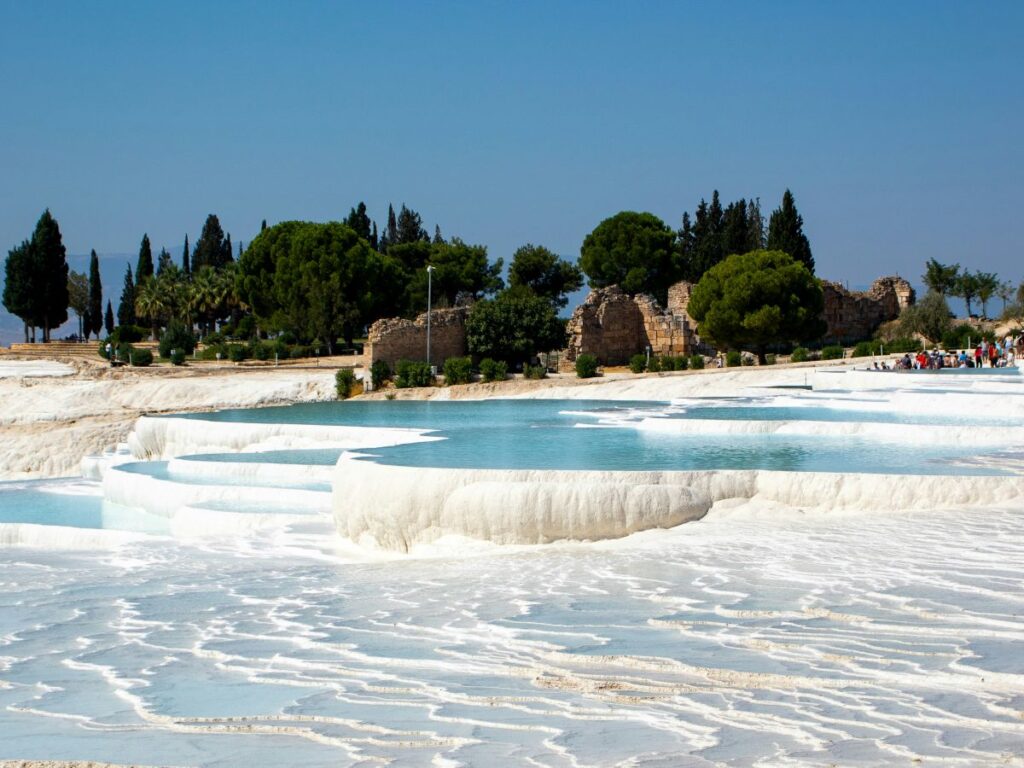
Pamukkale is one of Turkey’s most famous natural landmarks, but many visitors quickly discover that it is much more than a hillside covered in white terraces.
For thousands of years, people have traveled here for the same reason: water.
The mineral-rich thermal springs that created Pamukkale’s famous travertines also attracted ancient civilizations, leading to the foundation of Hierapolis, a thriving Roman spa city that welcomed visitors seeking health, relaxation, and healing.
Today, travelers can walk barefoot across the white terraces, explore remarkably preserved Roman ruins, swim in thermal waters, and enjoy one of Turkey’s most unique landscapes.
As a licensed tour guide, I have visited Pamukkale countless times. While the travertines are often what bring visitors here, many leave most impressed by the history that surrounds them. The combination of natural beauty and ancient heritage makes Pamukkale unlike any other destination in Turkey.
Whether you are interested in history, archaeology, photography, or simply experiencing one of the world’s most unusual landscapes, Pamukkale deserves a place on your itinerary.
If you’re planning a trip across Turkey, don’t miss our 10 day Turkey itinerary to see how Pamukkale fits into a complete route.
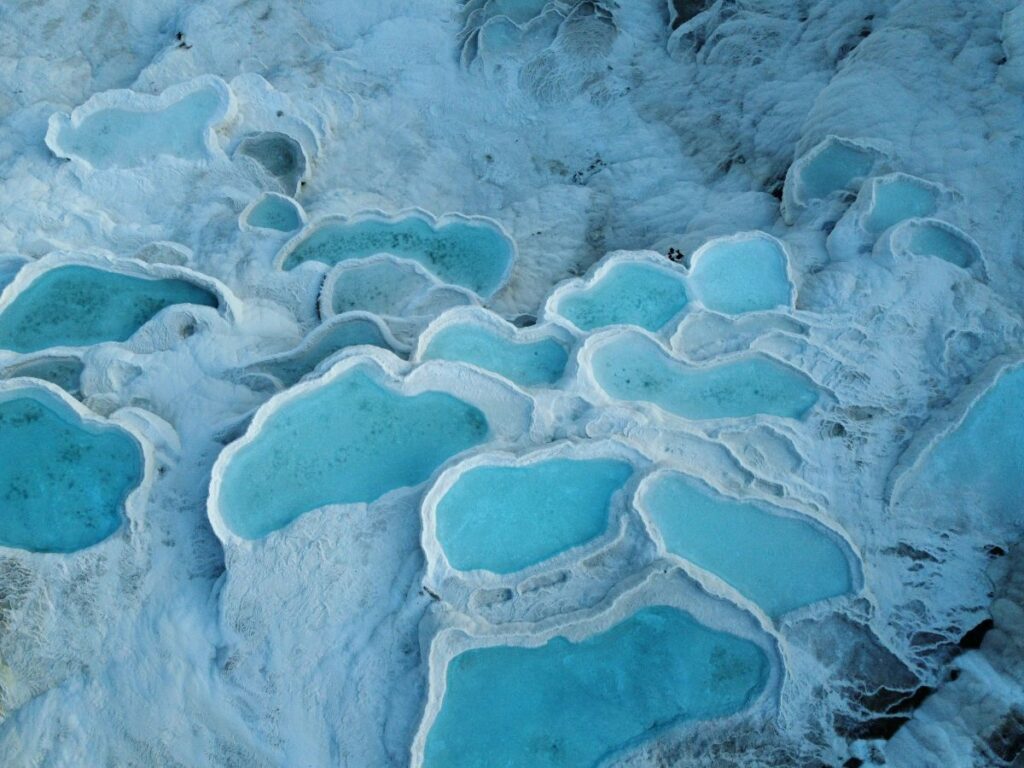
The dazzling white landscape of Pamukkale is entirely natural and has been forming for thousands of years.
The name Pamukkale means “Cotton Castle” in Turkish, a reference to the soft, white appearance of the terraces that cascade down the hillside. While they may look like snow, ice, or even frozen waterfalls from a distance, the formations are actually made of travertine, a type of limestone created by mineral-rich thermal water.
Deep beneath the earth, groundwater is naturally heated by geothermal activity before rising to the surface through a network of hot springs. As this water flows down the hillside, it carries large amounts of dissolved calcium carbonate.
When the water reaches the open air, it begins to cool. During this process, the calcium carbonate gradually solidifies and forms thin layers of bright white limestone. Over thousands of years, these deposits have accumulated to create the terraces, pools, and cascading formations that visitors see today.
The process is still ongoing.
Every day, thermal water continues to flow across parts of the terraces, slowly adding new mineral deposits and reshaping the landscape. This constant interaction between water and stone is what makes Pamukkale one of the world’s most remarkable geological formations.
What makes Pamukkale particularly unique is the combination of this natural phenomenon with the ancient city of Hierapolis. The same thermal waters that created the travertines also attracted Roman settlers, pilgrims, and travelers seeking healing and relaxation nearly two thousand years ago.
Today, visitors can walk across a landscape that is still being shaped by nature, just as it has been for millennia.
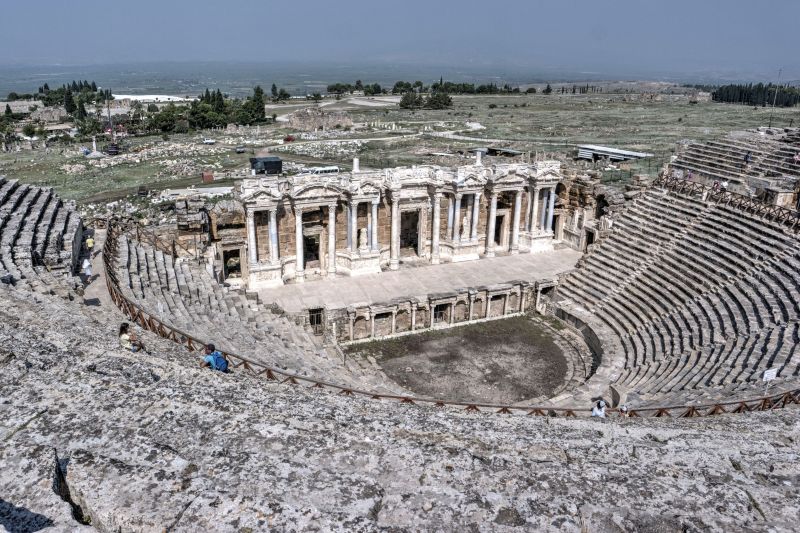
Long before modern travelers arrived to photograph Pamukkale’s famous white terraces, people journeyed here in search of healing.
The story of Pamukkale is inseparable from the ancient city of Hierapolis, which was founded during the Hellenistic period and later flourished under Roman rule. The mineral-rich thermal waters that created the dazzling travertines also attracted merchants, pilgrims, nobles, and patients from across the ancient world.
For the Romans, Hierapolis was far more than a beautiful destination. It was one of the most important spa cities in Anatolia. Visitors came hoping to benefit from the therapeutic properties of the hot springs, while wealthy citizens built baths, temples, public buildings, and grand residences around the city.
One of the most remarkable features of Hierapolis is its enormous necropolis. Stretching for more than two kilometers, it is among the largest ancient cemeteries in the Mediterranean world. Thousands of tombs, sarcophagi, and funerary monuments line the roads leading into the city. Their presence reflects Hierapolis’s reputation as a place of healing, where many visitors arrived seeking cures and some spent their final days.
Hierapolis also played an important role in early Christianity. According to Christian tradition, the Apostle Philip was martyred here during the first century AD. In later centuries, the city became an important pilgrimage destination, and a large martyrium was constructed in his honor. Today, visitors can still explore the remains of the Church and Tomb of Saint Philip on the hills overlooking the ancient city.
As Christianity spread across Anatolia, Hierapolis developed into an important religious center while continuing to attract visitors to its thermal waters. Roman, Byzantine, and Christian influences combined to shape the city that travelers explore today.
What makes Pamukkale unique is the way nature and history exist side by side. Few places in the world allow visitors to walk across brilliant white travertines, explore a Roman spa city, visit one of the largest necropolises of the ancient world, and follow the footsteps of early Christian pilgrims—all within a single day.
For many travelers, the travertines are what bring them to Pamukkale. The history of Hierapolis is what makes them stay longer than expected.
To explore all the highlights and plan your visit in detail, check our best things to do in Pamukkale guide.
At first glance, Pamukkale looks almost unreal.
The brilliant white terraces cascading down the hillside resemble snow, frozen waterfalls, or even clouds turned to stone. It is one of the most photographed landscapes in Turkey and one of the country’s most recognizable natural landmarks.
Yet what makes Pamukkale special is not the travertines alone.
Few destinations combine natural beauty and ancient history so successfully. Within a single visit, travelers can walk barefoot across mineral-rich terraces, explore the ruins of a Roman spa city, swim in thermal waters, and discover sites connected to early Christianity.
Pamukkale also offers one of the most unique archaeological experiences in Turkey. Unlike many ancient cities where history and nature exist separately, Hierapolis was built because of the thermal springs. The landscape and the city developed together, creating a destination unlike any other in the Mediterranean.
Whether you are interested in history, photography, archaeology, or simply experiencing one of Turkey’s most iconic landmarks, Pamukkale is well worth the journey.
Visiting with a guided tour can help you explore both Pamukkale and the ancient city of Hierapolis more efficiently.
Most visitors can explore Pamukkale in one day, but staying overnight allows for a more relaxed experience and the chance to visit early in the morning or at sunset.
Pamukkale is easily accessible from cities such as Denizli, Izmir, and Antalya, making it a popular stop on many Turkey itineraries.
Many travelers combine Pamukkale with destinations like Ephesus or Cappadocia for a more complete travel experience.
Before your visit, you may also want to check the best time to visit Turkey to choose the ideal season for exploring Pamukkale.
Pamukkale is located in southwestern Turkey within Denizli Province.
Although many travelers refer to Pamukkale as a town, the name actually describes the famous travertine terraces and the surrounding area. The nearest major city is Denizli, which serves as the region’s transportation hub.
Approximate travel times include:
Because of its location, Pamukkale is often combined with Ephesus, Kuşadası, or Antalya as part of a larger itinerary through western Turkey.
Want the full experience?
To discover the most popular attractions, hidden spots, and expert travel tips, read our complete guide:
One of the most common mistakes visitors make is underestimating Pamukkale.
Many travelers assume the site can be explored in an hour or two. In reality, the combination of travertines, Hierapolis, Cleopatra’s Pool, and surrounding attractions deserves much more time.
If your schedule is limited, allow at least 3–4 hours.
This provides enough time to walk across the travertines, visit the main monuments of Hierapolis, and enjoy the panoramic views.
A full day is ideal for most travelers.
This allows you to explore Hierapolis at a relaxed pace, visit Cleopatra’s Pool, walk through the Necropolis, and spend time enjoying the travertines without feeling rushed.
Travelers staying overnight can also visit nearby sites such as Laodicea and Aphrodisias, two of the most important ancient cities in western Turkey.
For history enthusiasts, these additional sites can easily justify a second day in the region.
You want to be within walking distance of the travertines and archaeological site.
The village offers a relaxed atmosphere, family-run guesthouses, boutique hotels, and easy access to sunrise and sunset views. Staying here allows visitors to enter the site early before larger tour groups arrive.
For most leisure travelers, this is usually the best option.
You prefer larger hotels, business-class accommodation, and greater transportation connections.
Denizli provides more hotel choices and serves as the region’s main transportation center. It can also be a convenient base for travelers exploring multiple destinations in the area.
However, you will need transportation to reach the archaeological site each day.
For most visitors focused primarily on Pamukkale, staying in the village is usually the more rewarding choice.
Pamukkale can be visited throughout the year, but some seasons offer a much more comfortable experience than others.
For most travelers, spring is the ideal time to visit.
Temperatures are pleasant, the surrounding countryside is green, and exploring Hierapolis becomes far more enjoyable than during the intense summer heat. The travertines are particularly beautiful during this season, and photography conditions are excellent throughout the day.
If you are planning a first visit, spring is usually my recommendation.
Summer is the busiest and hottest period of the year.
The white travertines reflect sunlight, and temperatures can become uncomfortable by midday. Walking through Hierapolis, especially around the Necropolis and upper sections of the site, requires considerably more energy than many visitors expect.
If you visit during summer, arrive as early as possible and bring plenty of water.
Autumn offers many of the same advantages as spring.
Temperatures become more comfortable, crowds gradually decrease, and the softer afternoon light creates excellent photography opportunities.
For many travelers, September and October are among the best months to visit Pamukkale.
Winter provides a quieter experience.
The site receives fewer visitors, hotel prices are often lower, and exploring Hierapolis becomes much easier without large crowds. While temperatures can be cool, the thermal waters remain active throughout the year.
Travelers interested in history and archaeology often find winter surprisingly rewarding.
For the best overall experience, visit between April and June or September and October.
Regardless of the season, early morning and late afternoon are usually the most enjoyable times to explore the site.
A little preparation can make your visit significantly more enjoyable.
Pamukkale is one of Turkey’s most popular attractions. Arriving early allows you to enjoy the travertines before larger tour groups arrive and before the midday heat becomes intense.
Although shoes are not allowed on the travertines themselves, you will spend much of your day exploring Hierapolis. The archaeological site is extensive, and many paths are uneven.
Shade is limited throughout much of the site. A hat, sunscreen, and plenty of water are especially important during summer.
Many visitors focus only on the travertines and miss one of Hierapolis’s most fascinating areas.
The Necropolis is among the largest ancient cemeteries in the Mediterranean world and provides valuable insight into the city’s role as a healing center.
The travertines may be the most famous attraction, but Hierapolis is what gives Pamukkale much of its historical significance.
Take time to explore the theater, baths, streets, gates, and religious monuments that once formed one of the Roman Empire’s most important spa cities.
Day trips are popular, but staying overnight allows visitors to experience both sunrise and sunset when the travertines often appear at their most beautiful.
It also provides time to visit nearby attractions such as Laodicea or Aphrodisias.
If you intend to visit Cleopatra’s Pool, bringing a towel and swimwear will save time and allow you to fully enjoy the experience.
While the famous white travertines attract most visitors, Pamukkale offers much more than its iconic terraces.
Highlights include walking barefoot across the travertines, exploring the ancient city of Hierapolis, swimming in Cleopatra’s Pool, visiting the Necropolis, discovering the Tomb of Saint Philip, and watching sunset over one of Turkey’s most unique landscapes.
History enthusiasts should also consider visiting nearby Laodicea and Aphrodisias, two of the most important archaeological sites in western Turkey.
 Read our complete Best Things to Do in Pamukkale guide.
Pamukkale is often described as one of Turkey’s most beautiful natural wonders.
While that description is certainly true, it tells only part of the story.
The white terraces may be what first capture your attention, but the history of Hierapolis, the legacy of Saint Philip, the vast Necropolis, and the centuries-old tradition of thermal bathing are what make the destination truly memorable.
Few places combine natural beauty, archaeology, Roman history, and Christian heritage so successfully.
Whether you spend a few hours exploring the travertines or several days discovering the wider region, Pamukkale offers an experience that is difficult to find anywhere else in the world.
For many travelers, it becomes far more than a photo stop—it becomes one of the highlights of their journey through Turkey.