
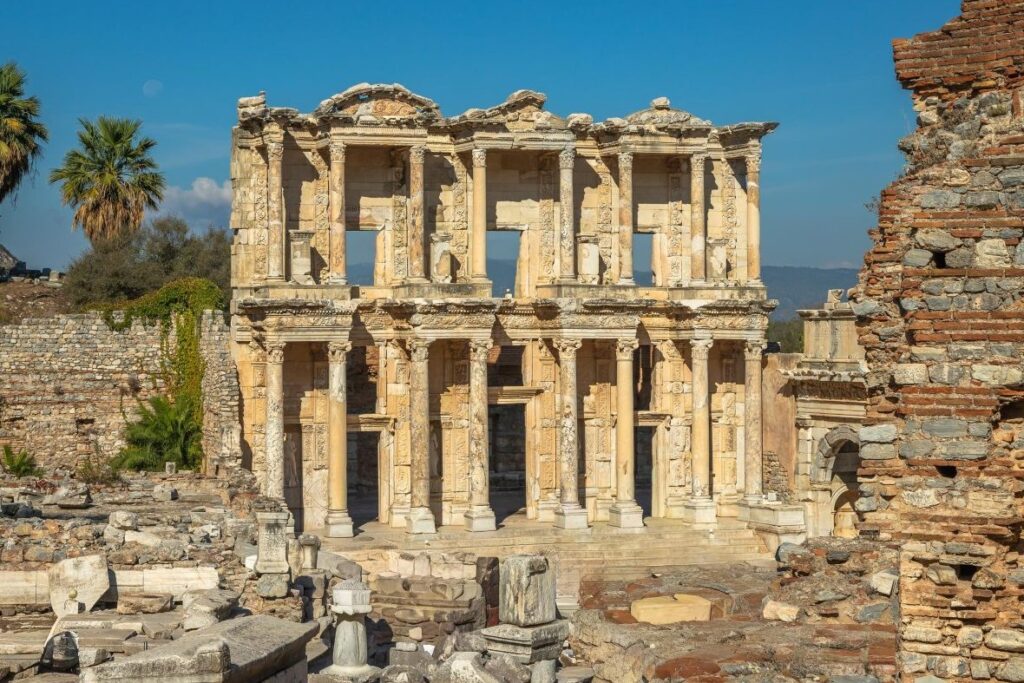
Ephesus is one of the most impressive ancient cities in the world. In this guide, you will discover the best things to do in Ephesus, the most important historical sites, and helpful travel tips for visiting this incredible archaeological site in Turkey. Ephesus is one of the most important ancient cities in the Aegean and a highlight for anyone exploring the best things to do in Ephesus today. Its history stretches back more than 8,000 years, making it one of the oldest continuously inhabited settlements in the region.
Ionian Greeks established a city near the mouth of the Cayster River. Because of its strategic location on major trade routes between East and West, Ephesus quickly developed into a powerful commercial center. Merchants, sailors, and travelers from across the ancient world passed through its busy harbor, bringing wealth and cultural influence to the city.
⭐ Top-rated tour for cruise passengers
✔️ Skip the lines and explore with a guide
Many visitors arrive at Ephesus expecting a collection of ruins.
What they discover instead is an entire city.
The experience begins the moment you enter the archaeological site. Marble streets stretch into the distance, ancient columns line the roads, and public buildings rise from the landscape in a way that feels surprisingly complete. Unlike many archaeological sites where imagination is required to fill in the gaps, Ephesus still retains enough of its original structure to make the ancient city feel real.
At its peak, Ephesus was home to more than 200,000 people and ranked among the most important cities in the Roman Empire. Merchants arrived from across the Mediterranean, ships filled its harbor, and citizens gathered in temples, baths, theaters, and public squares.
As a guide, one thing I often notice is that visitors immediately begin looking for the Library of Celsus. While the library is undoubtedly impressive, the true magic of Ephesus lies in the journey between its monuments.
Walking along Curetes Street, passing fountains, temples, shops, and administrative buildings, allows you to experience the city much as its residents would have nearly two thousand years ago.
Few archaeological sites offer such an immersive experience.
⭐ Best-selling Ephesus tour
✔ Includes Library of Celsus & Great Theatre
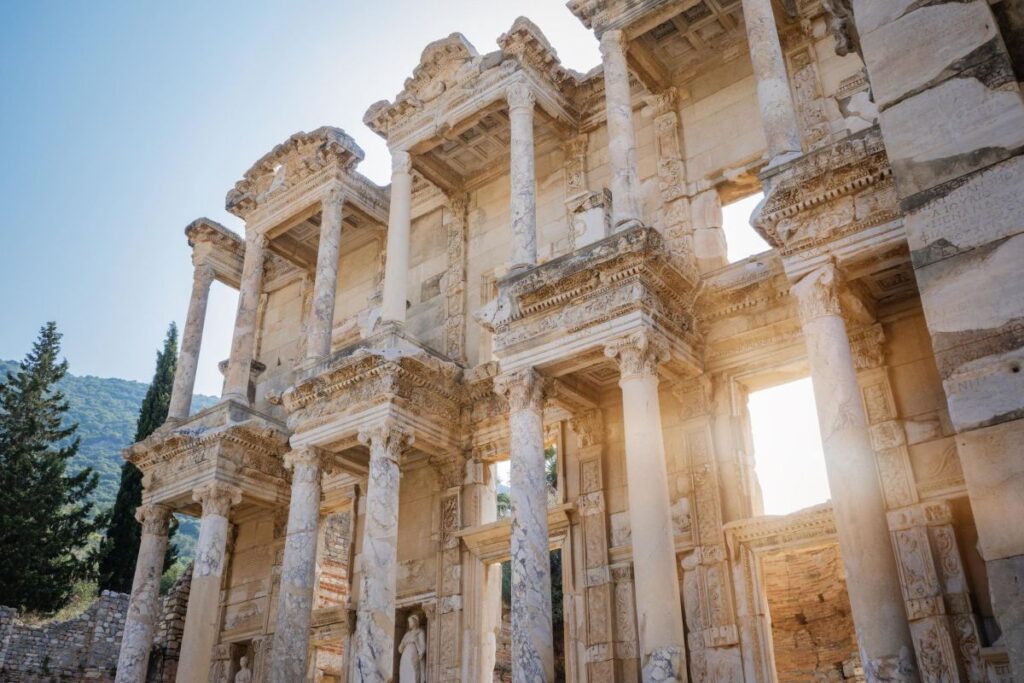
If Ephesus has a symbol, it is undoubtedly the Library of Celsus.
Its magnificent façade appears on countless guidebooks, postcards, and travel websites, yet seeing it in person is something entirely different.
Built in the second century AD, the library once housed thousands of scrolls and served as one of the most important intellectual centers in the Roman world. The structure we see today is the result of extensive restoration, but it remains one of the finest examples of Roman architecture anywhere in the Mediterranean.
Most visitors spend several minutes simply admiring the symmetry of the building. The elegant columns, decorative statues, and intricate details create one of the most photogenic scenes in Turkey.
As a guide, I often encourage visitors to step back and imagine the library in its original setting. Rather than standing alone as it does today, it once formed part of a bustling urban landscape filled with merchants, scholars, and travelers.
Understanding that context makes the monument even more impressive.
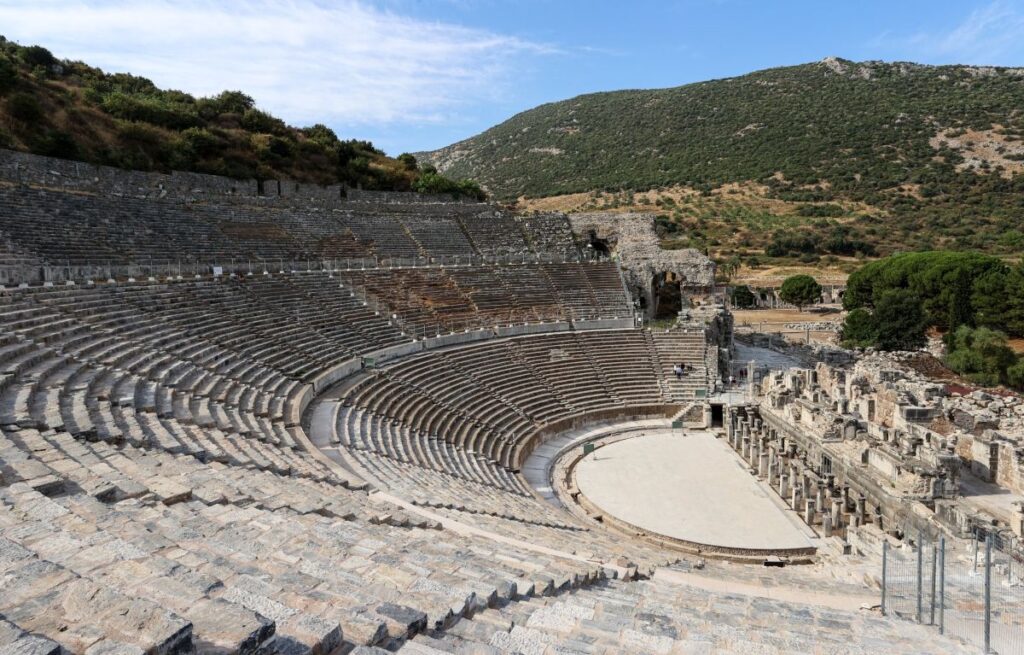
At the far end of Marble Street stands one of the largest theaters of the ancient world.
The Great Theatre of Ephesus could accommodate approximately 24,000 spectators and served as the city’s primary venue for entertainment, political gatherings, and public events.
Climbing the upper rows rewards visitors with breathtaking views across the ancient city and toward the distant plains where the harbor once existed.
Yet the theater is important for more than its size.
According to Christian tradition, Saint Paul preached in Ephesus and encountered opposition from local craftsmen whose livelihoods depended on the worship of Artemis. The events described in the Book of Acts are often associated with this very place.
Whether viewed from a historical, religious, or architectural perspective, the Great Theatre remains one of the highlights of any visit.
Standing at the top and looking across the ruins helps visitors appreciate just how large and influential Ephesus once was.
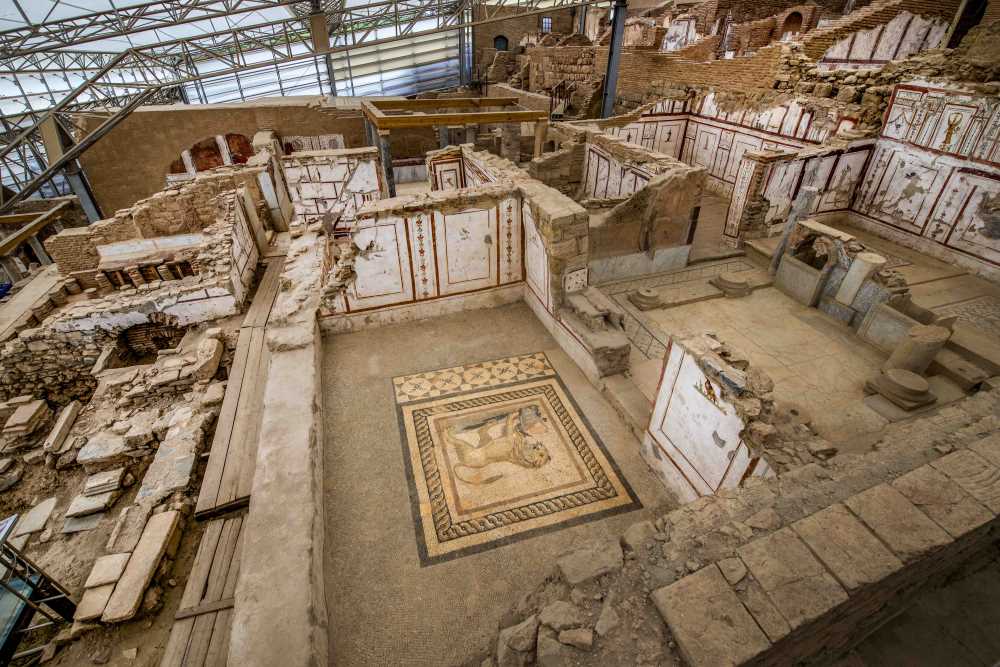
While the grand monuments of Ephesus attract most of the attention, the Terrace Houses often leave the deepest impression.
Hidden beneath protective structures overlooking Curetes Street, these remarkably preserved residences offer a rare glimpse into everyday life during the Roman period.
The wealthy families who lived here enjoyed comforts that seem surprisingly modern. Their homes featured indoor plumbing, heating systems, colorful frescoes, elaborate mosaics, and carefully designed living spaces. Walking through the complex feels less like visiting ruins and more like entering an ancient neighborhood frozen in time.
As a guide, I often notice that visitors rush toward the Library of Celsus without realizing what they are missing. Yet if someone asked me which part of Ephesus best reveals how ordinary people lived, worked, and entertained guests, I would point to the Terrace Houses.
The public monuments show the power of the city.
The Terrace Houses show the lives of the people who called it home.
For travelers interested in daily life rather than just grand architecture, this is one of the most fascinating areas of the site.
Long before Ephesus became a major tourist destination, it was already attracting pilgrims.
The city occupies an important place in Christian history and is mentioned several times in the New Testament. Saint Paul spent time preaching in Ephesus, and the Epistle to the Ephesians was addressed to the early Christian community that lived here.
For many visitors, Ephesus is more than an archaeological site. It is a place where some of the most important events of early Christianity unfolded.
Walking through the ancient streets, it is easy to imagine the challenges faced by the first Christian communities as they lived within one of the Roman Empire’s largest and most influential cities.
Whether you are religious or simply interested in history, understanding this Christian heritage adds another layer of meaning to a visit.
Ephesus is one of the rare places where Roman history and biblical history intersect so clearly.
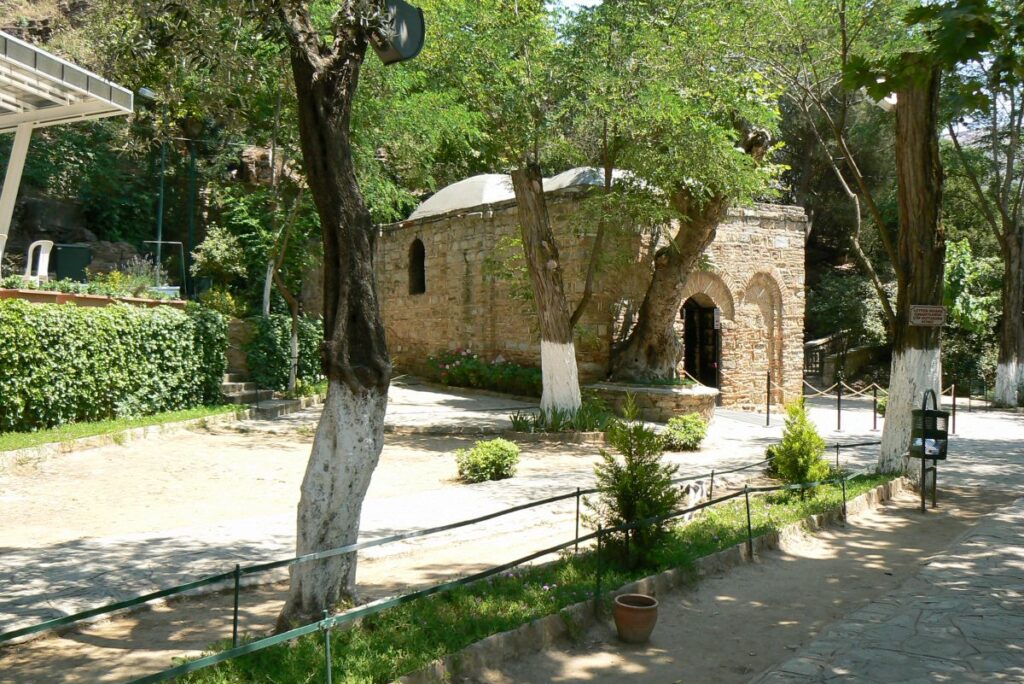
A short drive from the ancient city brings visitors to one of the most important pilgrimage sites in Turkey.
According to Christian tradition, the Virgin Mary spent her final years near Ephesus under the care of Saint John. While historians continue to debate the exact details, the site has become an important destination for Christian pilgrims from around the world.
The atmosphere here feels very different from the bustling archaeological site below.
Surrounded by pine-covered hills, the small stone house offers a quiet and reflective setting. Visitors often light candles, leave written prayers, or simply spend a few moments enjoying the peaceful surroundings.
Several popes have visited the site over the years, further strengthening its importance within the Christian world.
Even for travelers who are not religious, the setting itself makes the visit worthwhile.
After the crowds and grandeur of Ephesus, the calm atmosphere of the House of the Virgin Mary provides a welcome contrast.
Few places tell the story of Ephesus after the Roman period better than the Basilica of Saint John.
Built during the reign of Emperor Justinian in the sixth century, the basilica was constructed over what is traditionally believed to be the burial place of Saint John the Apostle.
Today, only parts of the original structure survive, yet the scale of the ruins still hints at its former importance. During the Byzantine period, this was one of the most significant pilgrimage destinations in the Christian world.
The site also offers excellent views across Selcuk and the surrounding countryside.
Many visitors focus entirely on the ancient city and overlook the basilica, but doing so means missing an important chapter of Ephesus’s story.
Roman Ephesus may have declined, but the city continued to thrive for centuries as a center of Christian pilgrimage and Byzantine culture.
The Basilica of Saint John helps bridge those two worlds.
Most first-time visitors are surprised when they arrive at the Temple of Artemis.
After the grandeur of Ephesus, many expect another spectacular monument. Instead, they find a quiet field, a single reconstructed column, and the distant silhouette of Ayasuluk Hill.
At first glance, it may seem underwhelming.
Yet the significance of the site lies in its history rather than what survives today.
The Temple of Artemis was once considered one of the Seven Wonders of the Ancient World. Pilgrims and travelers journeyed from across the Mediterranean to admire its immense scale and architectural beauty. Ancient writers described it as one of the most remarkable structures ever built.
Although centuries of earthquakes, invasions, and reuse of building materials eventually reduced the temple to ruins, standing here provides an important reminder of Ephesus’s former importance.
Few places in the world allow visitors to stand on the site of a lost wonder.
Sometimes imagination becomes the most powerful tool of all.
Many travelers make the mistake of visiting Ephesus and skipping the museum.
In my opinion, that is one of the biggest missed opportunities in the region.
While the archaeological site reveals the scale of the city, the Ephesus Museum reveals the people who lived there.
Statues, mosaics, coins, household objects, religious artifacts, and architectural fragments help bring the ancient city to life. Some of the museum’s most impressive exhibits include statues of Artemis, whose cult once attracted worshippers from across the ancient world.
The museum is also compact and easy to explore, making it an ideal addition to an Ephesus itinerary.
As a guide, I often recommend visiting the museum either before entering the site or immediately afterward. Doing so provides valuable context and helps visitors better understand what they are seeing among the ruins.
Think of the museum as the missing pieces of the puzzle.
After a day spent exploring Roman streets, theaters, and temples, Sirince offers something completely different.
Located in the hills above Selcuk, this charming village is known for its traditional stone houses, narrow streets, vineyards, and relaxed atmosphere.
For centuries, Greek and Turkish communities shaped the character of the village, leaving behind an architectural style that feels distinct from many other settlements in western Turkey.
Today, visitors wander through small shops, family-run cafes, local markets, and scenic viewpoints overlooking the surrounding countryside.
The pace of life here feels noticeably slower than at the busy archaeological site below.
Many travelers arrive planning a short stop and end up staying far longer than expected.
Şirince is not simply an excursion from Ephesus.
It is one of the most enjoyable destinations in the region in its own right.
Many archaeological sites impress visitors for a few hours.
Ephesus tends to stay in their memory much longer.
Part of that comes from the scale of the city. Walking along marble streets that have survived for nearly two thousand years creates a connection to the past that few destinations can match.
Part of it comes from the layers of history. Roman emperors, merchants, philosophers, early Christians, Byzantine pilgrims, and modern travelers have all passed through this landscape.
But perhaps the most powerful aspect of Ephesus is how human it feels.
The city is not simply a collection of monuments. It is a place where people lived, worked, worshipped, argued, traded, and dreamed. The Terrace Houses reveal family life. The Great Theatre reflects entertainment and politics. The churches and pilgrimage sites tell stories of faith and devotion.
As a guide, I have watched visitors from every corner of the world react to Ephesus in different ways. Some are fascinated by Roman engineering. Others are drawn to biblical history. Many simply stand before the Library of Celsus and marvel at what human beings were capable of building nearly two millennia ago.
Whatever brings you here, Ephesus rarely disappoints.
It is not only one of Turkey’s greatest historical treasures—it is one of the most remarkable ancient cities anywhere in the world.
Most visitors only spend a single day in Ephesus.
The good news is that one day is usually enough to experience the highlights of both the ancient city and the surrounding attractions. Rather than rushing from one site to another, I recommend approaching the day as a journey through different layers of history.
Start your day as early as possible.
Not only will you avoid the largest crowds, but you will also enjoy cooler temperatures, especially during the summer months.
Begin at the upper entrance of Ephesus and slowly make your way downhill through the ancient city. Take time to appreciate the layout rather than focusing only on the famous landmarks. The marble streets, public squares, fountains, temples, and monuments all help tell the story of one of the Roman Empire’s greatest cities.
Along the way, explore the Terrace Houses, stand before the Library of Celsus, and climb the Great Theatre for a broader perspective of the city.
By the time you reach the lower gate, you will have experienced nearly two thousand years of history in just a few hours.
After exploring the archaeological site, continue into the nearby hills to visit the House of the Virgin Mary.
The atmosphere here is completely different from the bustling ruins below. Surrounded by pine trees and quiet countryside, the site offers a peaceful place for reflection regardless of religious background.
Later, return toward Selçuk and visit the Basilica of Saint John, one of the most important Christian pilgrimage sites of the Byzantine period.
Together, these locations reveal why Ephesus remains significant not only for Roman history but also for biblical history.
Many travelers leave immediately after visiting the ruins.
I think that is a mistake.
The Ephesus Museum contains some of the most important artifacts discovered during excavations and helps bring the ancient city to life. Statues, mosaics, household objects, and religious artifacts provide valuable context for everything you saw earlier in the day.
Afterward, spend some time walking around Selcuk. The town moves at a much slower pace than nearby resort areas and offers a glimpse into everyday life in the region.
Finish your Ephesus experience in the hillside village of Sirince.
Known for its stone houses, narrow streets, vineyards, and traditional atmosphere, the village provides a relaxing contrast to the archaeological sites visited earlier in the day.
Find a small cafe, enjoy dinner overlooking the surrounding hills, and watch the day come to an end.
After spending the morning in a Roman city, the afternoon among Christian landmarks, and the evening in a traditional Anatolian village, you will have experienced far more than just the ruins of Ephesus.
You will have explored the many layers of history that make this corner of Turkey one of the country’s most fascinating destinations.
Ephesus is one of the most extraordinary archaeological sites in the world. From the magnificent Library of Celsus to the vast Great Theatre and the historic Temple of Artemis, the city offers an unforgettable journey into the past. Ephesus offers an extraordinary journey into the ancient world. Walking through its marble streets and monumental ruins gives visitors a rare glimpse into life during the Roman Empire.
Whether you are passionate about history, architecture, or ancient civilizations, Ephesus is undoubtedly one of the best places to visit in Turkey.
Many travelers visit Ephesus after exploring Istanbul and Cappadocia, making it an essential part of a complete Turkey itinerary.
Ephesus is listed as a UNESCO World Heritage Site in Turkey.
Prefer a more flexible and personalized experience? Private Ephesus tour is a great option for travelers who want more comfort and a custom pace.
Ideal for families and small groups
Flexible itinerary with a personal guide