
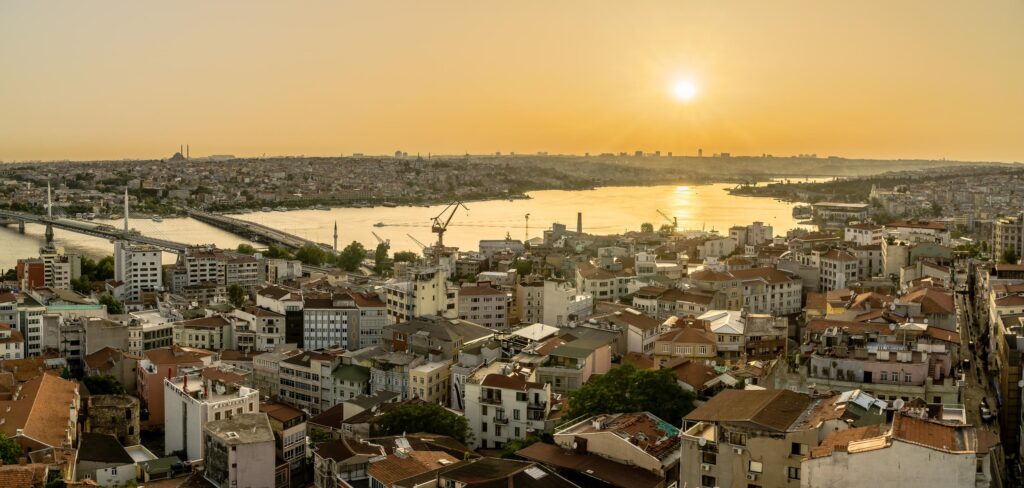
Istanbul is one of the most fascinating cities in the world, where history, culture, and modern life come together. From iconic landmarks like Hagia Sophia and the Blue Mosque to bustling bazaars, Bosphorus cruises, and vibrant neighborhoods, this guide covers the best things to do in Istanbul and the city’s must-see attractions.
Straddling two continents, Europe and Asia, Istanbul offers a unique blend of ancient history, Ottoman heritage, world-class cuisine, and breathtaking architecture. Few cities in the world can match its rich cultural diversity and historical significance.
Istanbul served as the capital of the Roman, Byzantine, and Ottoman Empires, shaping the course of history for nearly two thousand years. Today, visitors can explore magnificent mosques, grand palaces, colorful markets, hidden local neighborhoods, and unforgettable views across the Bosphorus.
Whether you’re visiting for a weekend or planning a longer Turkey itinerary, these are the best things to do in Istanbul for first-time visitors and returning travelers alike.
If you’re planning a trip to Turkey, here are the best things to do in Istanbul to experience the city’s rich heritage and unique atmosphere.
⭐ Top-rated Istanbul guided tours
✔ Skip-the-line access to major attractions
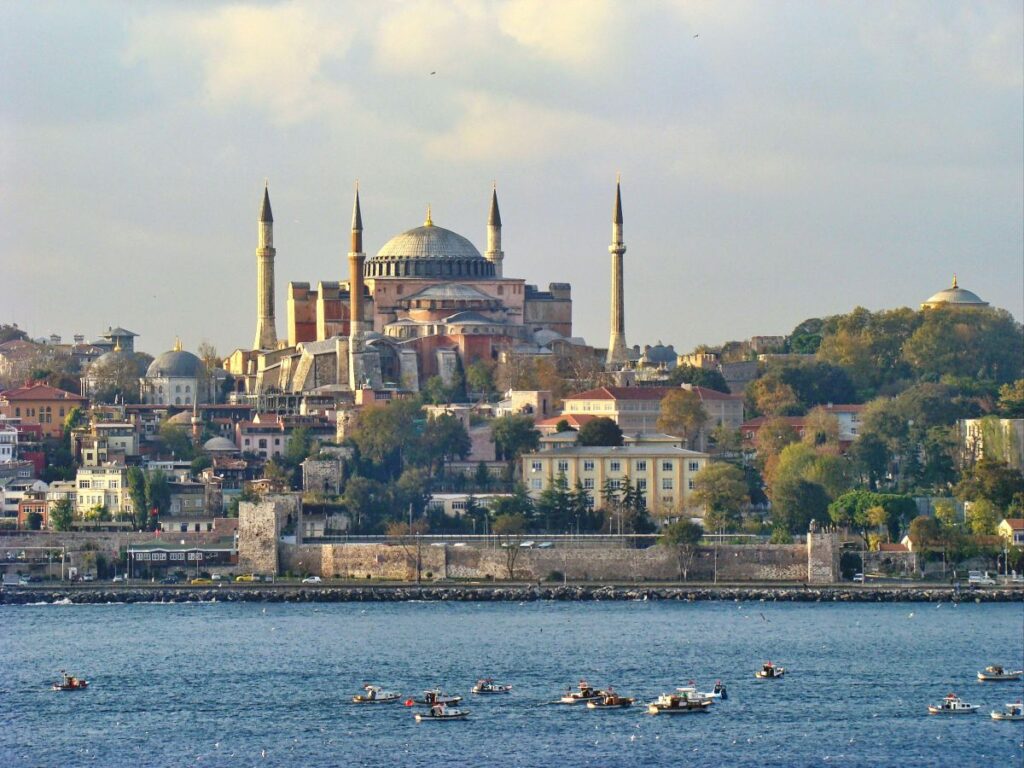
There are famous landmarks, and then there is Hagia Sophia.
Few buildings in the world can match its history. For nearly 1,500 years, this extraordinary structure has stood at the center of empires, religions, and civilizations. It has been a Byzantine cathedral, an Ottoman mosque, a museum, and today once again a mosque.
Yet what surprises most visitors is not its history but its scale.
No photograph truly prepares you for the moment you walk beneath its massive dome. Sunlight filters through the windows high above, illuminating marble columns, ancient mosaics, and Arabic calligraphy that share the same space. Few places illustrate Istanbul’s layered history so vividly.
As a guide, I have watched countless visitors enter Hagia Sophia for the first time. Almost everyone pauses for a moment and simply looks up.
That reaction says everything.
If you’re interested in exploring beyond Istanbul, our complete Museums in Turkey guide introduces the country’s finest archaeological, mosaic, and regional museums
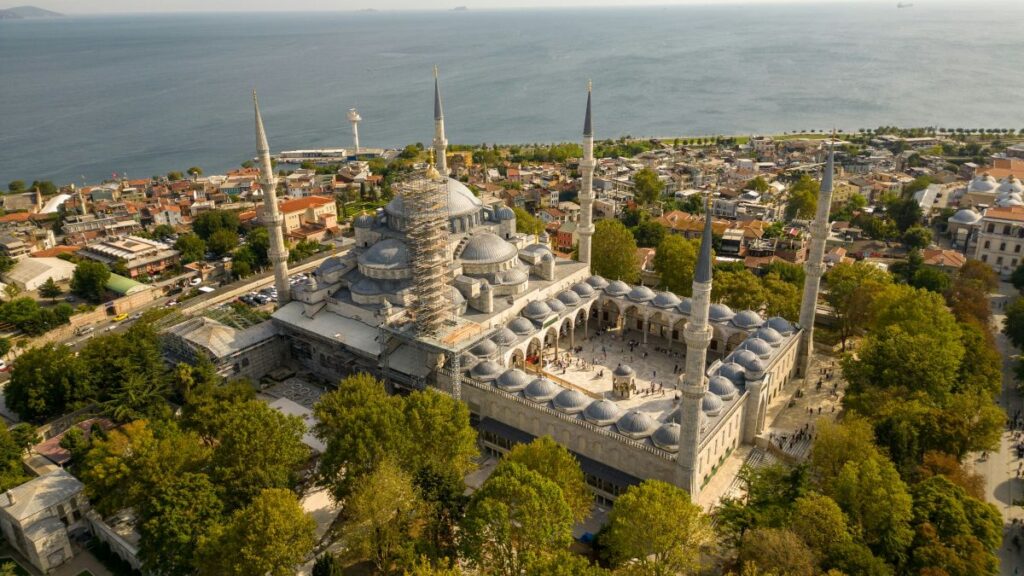
Standing opposite Hagia Sophia, the Blue Mosque is one of Istanbul’s most recognizable landmarks.
Many visitors arrive expecting another historic building and leave surprised by its atmosphere. Unlike many monuments around the world, the Blue Mosque remains an active place of worship. Throughout the day, worshippers gather beneath its elegant domes while visitors quietly explore the interior.
Its nickname comes from the thousands of blue İznik tiles that decorate the walls, although the building itself is equally impressive from the outside. Six slender minarets rise above the skyline, creating one of the most iconic views in Turkey.
The best time to visit is early in the morning when the crowds are smaller and the surrounding square is still relatively peaceful.
Standing between Hagia Sophia and the Blue Mosque, it becomes easy to understand why Istanbul was once considered the center of an empire.
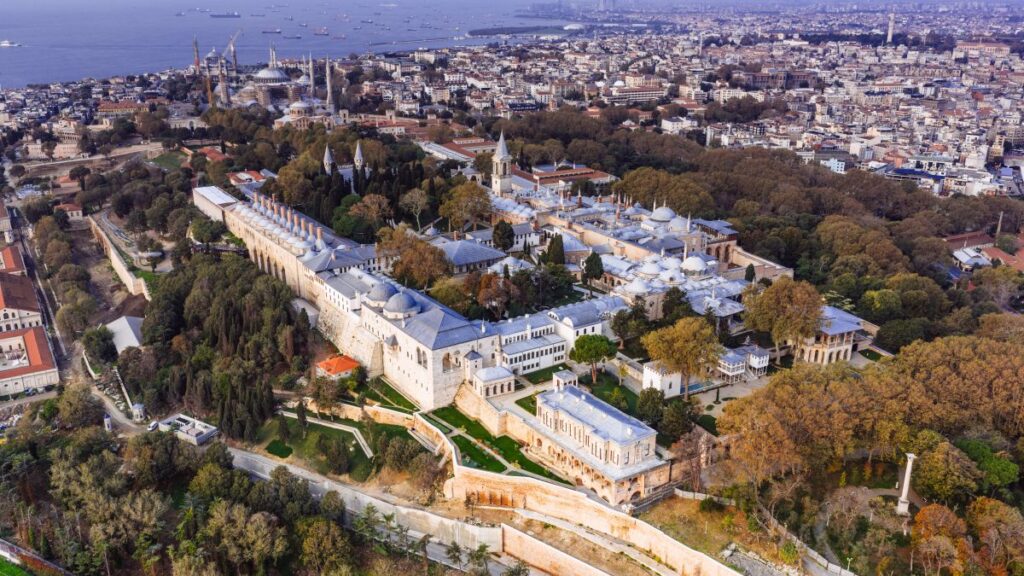
For nearly four centuries, Topkapi Palace served as the heart of the Ottoman Empire.
This was not simply a royal residence. It was the administrative center of one of the most powerful states in the world. Decisions affecting three continents were made within these walls.
Walking through the palace today feels less like visiting a museum and more like entering a city within a city. Courtyards, pavilions, treasury rooms, kitchens, gardens, and audience chambers reveal how Ottoman sultans lived and ruled.
The palace’s location is equally impressive. Perched above the Bosphorus and the Golden Horn, it offers some of the finest views in Istanbul.
Many travelers focus on the famous jewels and relics, but I often find the quieter courtyards just as memorable. Sitting beneath the trees while overlooking the water provides a rare opportunity to imagine what life might have felt like at the height of the Ottoman Empire.
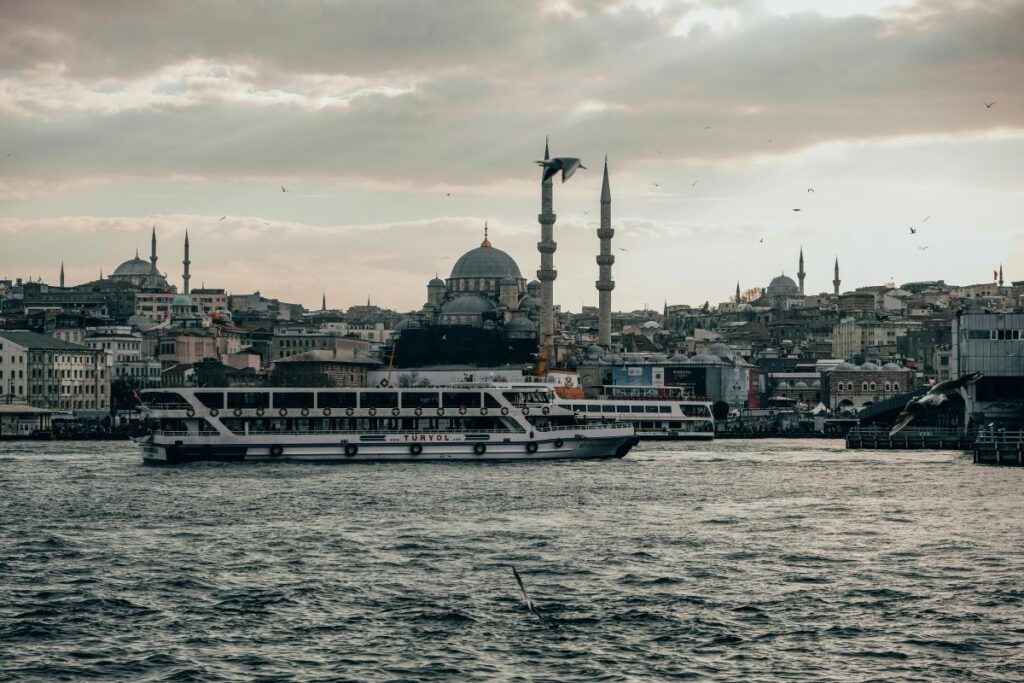
Beneath the busy streets of Sultanahmet lies one of Istanbul’s most atmospheric attractions.
At street level, the city feels energetic and crowded. Descend the steps into the Basilica Cistern, and everything changes.
Rows of ancient columns disappear into the darkness while reflections ripple across the water below. Soft lighting and the sound of dripping water create an almost cinematic atmosphere.
Built during the reign of Emperor Justinian in the sixth century, the cistern once supplied water to Constantinople’s palaces and public buildings. Today, it offers visitors a glimpse into the remarkable engineering achievements of the Byzantine Empire.
The famous Medusa heads hidden among the columns add another layer of mystery, and visitors often spend as much time photographing the space as they do exploring it.
Among Istanbul’s many attractions, few create such a strong sense of stepping into another world.
The Grand Bazaar is often described as one of the oldest and largest covered markets in the world.
While that is true, statistics do not capture what makes it special.
The real experience begins when you leave the main corridors and start wandering.
Around every corner, merchants sell carpets, ceramics, jewelry, spices, lamps, antiques, and countless other goods. Voices echo through the narrow passageways as shopkeepers greet visitors from around the world. The atmosphere is busy, colorful, and sometimes wonderfully chaotic.
Many travelers arrive expecting a shopping center and discover something closer to a living piece of history.
The Grand Bazaar has been a commercial hub for centuries, and despite the rise of modern shopping malls, it still retains much of its character.
Even if you have no intention of buying anything, simply wandering through its labyrinth of streets is one of the essential Istanbul experiences.
While the Grand Bazaar impresses visitors with its size, the Spice Bazaar appeals to the senses.
The moment you enter, the air changes. The scent of saffron, cinnamon, Turkish tea, dried fruits, and freshly ground spices fills the narrow corridors. Colorful displays line the shops, creating one of the most vibrant scenes in Istanbul.
Originally built in the 17th century as part of the New Mosque complex, the market played an important role in the trade routes that connected Istanbul with Asia, the Middle East, and beyond.
Today, many visitors come here to buy Turkish delight, spices, teas, and local delicacies. But even if you are not interested in shopping, the atmosphere alone makes it worth a visit.
I often tell travelers to visit before exploring the nearby waterfront. Few places provide a better introduction to Istanbul’s trading heritage.
If Hagia Sophia tells the story of Istanbul’s history, the Bosphorus tells the story of the city itself.
The waterway has shaped Istanbul for centuries. Empires fought to control it, merchants sailed through it, and entire neighborhoods developed along its shores.
A Bosphorus cruise allows visitors to see the city from a completely different perspective. Ottoman palaces, waterfront mansions, medieval fortresses, elegant mosques, and modern neighborhoods appear one after another as the boat moves between Europe and Asia.
The views are spectacular, but what I enjoy most is the feeling of being on the water. The constant movement of ferries, fishing boats, and cargo ships reminds you that the Bosphorus is not simply a tourist attraction—it remains one of the world’s most important waterways.
For many visitors, this becomes one of their favorite experiences in Istanbul.
⭐ One of the most popular experiences in Istanbul
✔ Sunset and dinner cruise options available
One of the most unique experiences in Istanbul costs little more than a public transportation ticket.
Boarding a ferry and crossing from Europe to Asia may sound like a small thing, but it remains one of the city’s great pleasures.
As the ferry pulls away from the dock, Istanbul’s skyline slowly unfolds behind you. Minarets, domes, ferries, seagulls, and the Bosphorus create a scene that feels unmistakably Turkish.
Many visitors arrive expecting the Asian side to feel completely different. In reality, it offers another layer of the same city. The atmosphere is generally more local, less rushed, and often less crowded than the historic center.
Even after years of visiting Istanbul, I never get tired of ferry rides across the Bosphorus.
If you want to see how many Istanbul residents actually spend their weekends, head to Kadıkoy.
Located on the Asian side, this lively district is known for its cafés, bookstores, restaurants, bars, and one of the city’s best food markets.
Walking through the market is an experience in itself. Fishmongers display their daily catch, bakers sell fresh pastries, spice vendors fill the air with aromas, and small shops offer everything from olives to Turkish cheeses.
Unlike some of the city’s more tourist-focused areas, Kadıkoy feels authentic and lived-in.
Many travelers plan a quick visit and end up spending an entire afternoon exploring the neighborhood’s streets and waterfront.
If Istanbul has a local soul, Kadıkoy is one of the best places to find it.
Long before modern skyscrapers appeared on the skyline, Galata Tower watched over Istanbul.
Built by the Genoese in the 14th century, the tower has become one of the city’s most recognizable landmarks. From the top, visitors enjoy sweeping views of the Bosphorus, the Golden Horn, Sultanahmet, and the sprawling city beyond.
But the tower is only part of the experience.
The surrounding Galata neighborhood is one of Istanbul’s most enjoyable areas to explore on foot. Narrow streets wind between historic buildings, art galleries, cafés, boutique hotels, and small shops.
Some of my favorite walks in Istanbul begin around Galata and continue downhill toward Karakoy, where the city gradually transitions from historic streets to the waterfront.
The tower may draw visitors to the area, but it is often the neighborhood itself that leaves the strongest impression.
Many visitors consider Hagia Sophia the most impressive building in Istanbul.
I understand why.
Yet if you ask many locals, historians, or guides which mosque best represents the Ottoman Empire at its height, the answer is often Süleymaniye Mosque.
Built by the legendary architect Mimar Sinan for Sultan Suleiman the Magnificent, the mosque sits high above the Golden Horn and dominates the surrounding skyline. Unlike some of Istanbul’s busiest attractions, Süleymaniye often feels calm and peaceful.
The courtyard offers one of the finest panoramic views in the city. Ferries cross the Golden Horn below while the rooftops of the old city stretch toward the Bosphorus.
Inside, the design feels remarkably balanced. The vast interior creates a sense of space and harmony rather than overwhelming decoration.
For travelers interested in Ottoman history, architecture, or simply escaping the crowds, Süleymaniye is one of Istanbul’s most rewarding places to visit.
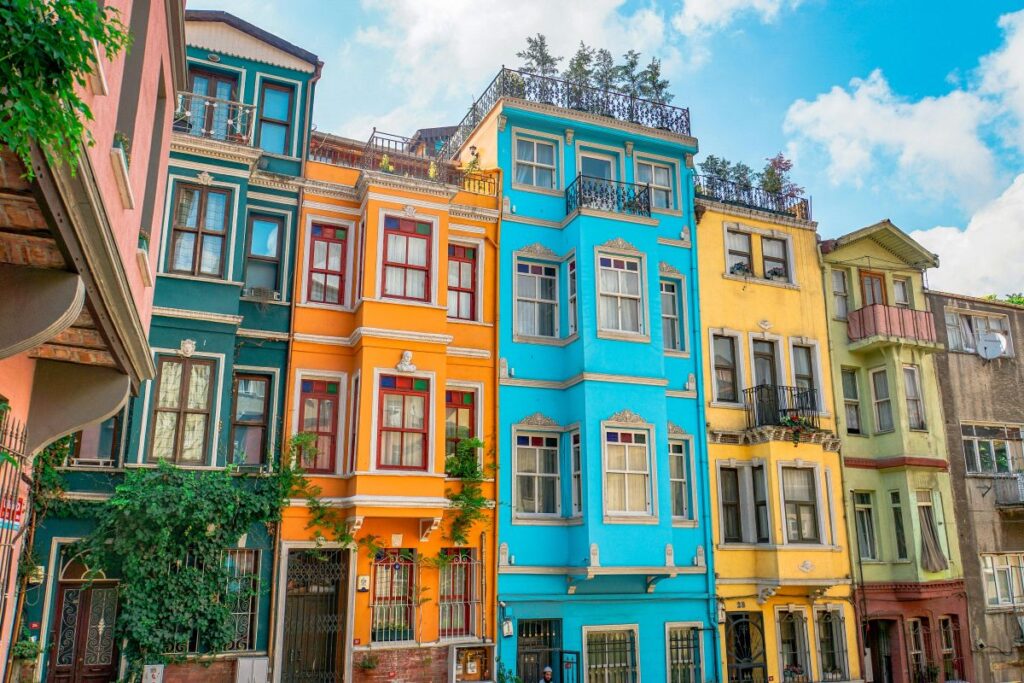
Many visitors consider Hagia Sophia the most impressive building in Istanbul.
I understand why.
Yet if you ask many locals, historians, or guides which mosque best represents the Ottoman Empire at its height, the answer is often Süleymaniye Mosque.
Built by the legendary architect Mimar Sinan for Sultan Suleiman the Magnificent, the mosque sits high above the Golden Horn and dominates the surrounding skyline. Unlike some of Istanbul’s busiest attractions, Suleymaniye often feels calm and peaceful.
The courtyard offers one of the finest panoramic views in the city. Ferries cross the Golden Horn below while the rooftops of the old city stretch toward the Bosphorus.
Inside, the design feels remarkably balanced. The vast interior creates a sense of space and harmony rather than overwhelming decoration.
For travelers interested in Ottoman history, architecture, or simply escaping the crowds, Suleymaniye is one of Istanbul’s most rewarding places to visit.
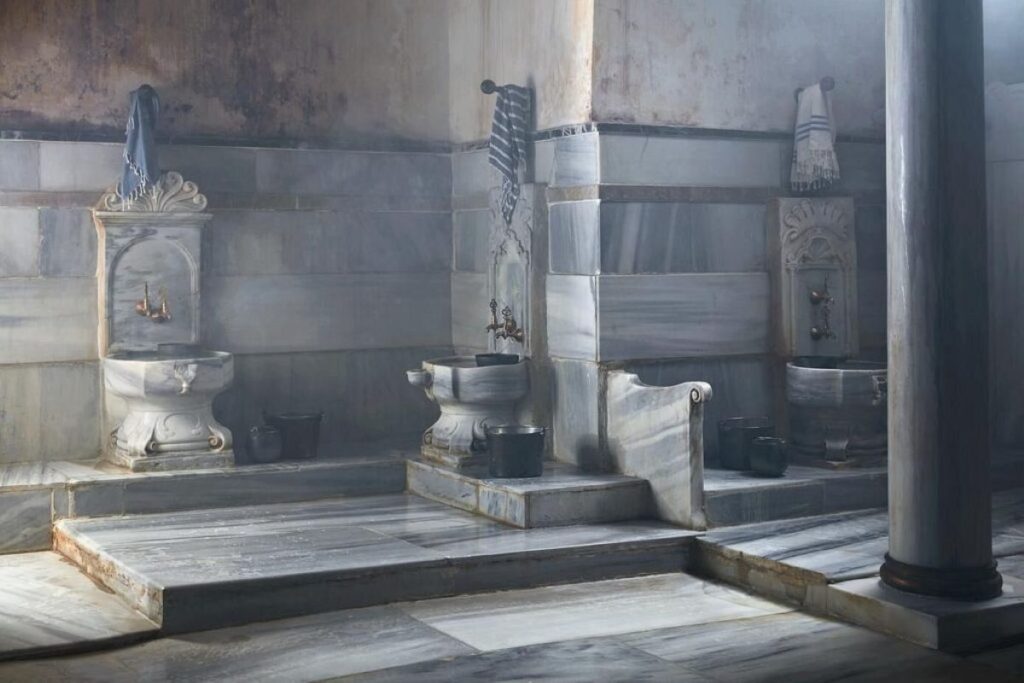
Few experiences connect visitors to Turkish culture quite like a hammam.
For centuries, Turkish baths served not only as places of cleanliness but also as important social spaces where people gathered, relaxed, and celebrated important moments in life.
Stepping inside a historic hammam feels like entering another era. Marble surfaces, domed ceilings, warm steam, and the sound of running water create an atmosphere unlike anything most travelers have experienced before.
The traditional scrubbing and foam massage can be surprising at first, but many visitors leave feeling more relaxed than they have in years.
In a city filled with museums and historical monuments, a hammam offers something different: the opportunity to experience a living tradition that remains part of everyday Turkish culture.
If Topkapi Palace tells the story of the Ottoman Empire’s classical period, Dolmabahce Palace reveals its final chapter.
Built during the 19th century, the palace reflects a time when the empire increasingly looked toward Europe for inspiration. Crystal chandeliers, grand staircases, gold decorations, and lavish reception halls create a very different atmosphere from the more intimate courtyards of Topkapi.
Visitors are often surprised by the scale of the interiors. The Ceremonial Hall alone feels more like a European royal palace than an Ottoman residence.
The palace also holds special significance in modern Turkish history. Mustafa Kemal Ataturk spent his final days here, and the room where he passed away remains preserved.
Standing inside Dolmabahce, it becomes easier to understand how Istanbul bridges not only continents but also different eras of history.
Every city has sunsets.
Few have sunsets quite like Istanbul.
As evening approaches, the light begins to soften across the Bosphorus. Ferries glide between continents, mosque silhouettes darken against the sky, and the water reflects shades of gold, orange, and pink.
There is no single perfect place to watch the sunset. Some travelers prefer a Bosphorus cruise. Others choose a rooftop terrace, the waterfront in Üsküdar, the shores of Ortakoy, or the hills around Galata.
What matters is slowing down long enough to appreciate the moment.
After a day spent exploring palaces, mosques, and markets, watching the city transition from day to night often becomes one of the most memorable experiences of a trip to Istanbul.
It is also a reminder that Istanbul’s greatest attraction is not always a monument. Sometimes it is simply the city itself.
While Hagia Sophia attracts most of the attention, many art historians consider Chora one of Istanbul’s greatest treasures.
Tucked away in the quieter neighborhoods near the old city walls, the building appears relatively modest from the outside. Inside, however, it contains some of the finest surviving Byzantine mosaics and frescoes in the world.
Scenes from the life of Christ and the Virgin Mary cover walls and ceilings with remarkable detail, offering a rare glimpse into the artistic achievements of the Byzantine Empire.
Unlike some of Istanbul’s larger attractions, Chora rewards visitors willing to venture beyond the usual tourist route.
For anyone interested in history, religion, or art, it is one of the most fascinating places in the city.
Not every memorable experience in Istanbul happens inside a palace or museum.
Sometimes it comes wrapped in bread.
Balık Ekmek, Istanbul’s famous fish sandwich, has become a local institution. Along the waterfront near Eminonu, fishermen, ferries, and food vendors create one of the city’s most recognizable scenes.
Freshly grilled fish is served inside crusty bread with onions, lettuce, and a squeeze of lemon. The recipe is simple, but the experience is what matters.
Find a spot overlooking the Golden Horn, watch the ferries come and go, and enjoy one of Istanbul’s most iconic street foods.
It is a small experience, but one that many travelers remember long after returning home.
Few neighborhoods illustrate Istanbul’s transformation as clearly as Karakoy.
For centuries, this waterfront district served as an important commercial and maritime center. Today, historic buildings stand alongside modern cafés, art spaces, boutique hotels, and restaurants.
Walking through Karakoy reveals a city constantly reinventing itself while preserving its past.
One street may contain a centuries-old mosque, while the next features contemporary galleries and coffee roasters. The contrast feels distinctly Istanbul.
Many visitors simply pass through on their way to Galata or a Bosphorus ferry. Those who take time to explore usually discover one of the city’s most vibrant neighborhoods.
Long before Istanbul became the capital of the Ottoman Empire, it was Constantinople, the heart of the Byzantine world.
The Hippodrome was once the center of public life. Chariot races attracted thousands of spectators, political rivalries played out before enormous crowds, and emperors used the arena to demonstrate their power.
Today, much of the original structure lies beneath the modern city, but important monuments remain.
The Egyptian Obelisk, the Serpent Column, and the Walled Obelisk still stand where crowds gathered centuries ago.
Many visitors walk through the square without realizing they are standing in what was once one of the most important public spaces in the ancient world.
Understanding the Hippodrome helps reveal just how much history lies hidden beneath modern Istanbul.
Most visitors arrive with a list.
See Hagia Sophia.
Visit Topkapi Palace.
Take a Bosphorus cruise.
Explore the Grand Bazaar.
All of those experiences deserve their place on an itinerary.
But some of my favorite memories of Istanbul have nothing to do with famous landmarks.
They come from drinking tea beside the Bosphorus, wandering through side streets without a destination, watching fishermen cast their lines from Galata Bridge, or taking a ferry simply because the view was too beautiful to resist.
Istanbul is not a city that reveals itself all at once.
The longer you stay, the more layers you discover. Historic monuments tell one story, neighborhoods tell another, and everyday life tells yet another.
That is why so many travelers return.
You may arrive for the famous attractions, but chances are your strongest memories will come from the moments in between.
Istanbul is a large and dynamic city, and a few practical tips can help visitors enjoy their trip more comfortably.
First, plan your sightseeing by neighborhood. Many of the city’s most famous attractions — including Hagia Sophia, the Blue Mosque, and Topkapi Palace — are located close to each other in the Sultanahmet district. Exploring this historic area on foot is the best way to experience its atmosphere.
Public transportation in Istanbul is efficient and affordable. Trams, metro lines, ferries, and buses connect most parts of the city, making it easy to travel between districts. The Istanbulkart travel card is highly recommended because it works on almost all forms of public transportation.
Another essential experience is taking a ferry across the Bosphorus. This short boat ride provides beautiful views of the city skyline and allows visitors to travel between the European and Asian sides of Istanbul.
Visitors should also leave time to explore Istanbul’s markets and food culture. The Grand Bazaar and Spice Bazaar offer a lively shopping experience, while local restaurants serve famous dishes such as kebabs, mezes, and Turkish desserts.
Finally, take time to slow down and enjoy the atmosphere of the city. Sitting at a café overlooking the Bosphorus or wandering through historic streets can often become the most memorable moments of a trip to Istanbul.
If it is your first time in Istanbul, trying to see everything can quickly become overwhelming.
The city is simply too large and too layered to “complete” in a few days. Instead of rushing between attractions, I usually recommend focusing on a different side of Istanbul each day.
This approach creates a more enjoyable experience and allows you to understand how the city evolved from an imperial capital into the vibrant metropolis it is today.
Begin your journey in Sultanahmet, where much of Istanbul’s story began.
Start early at Hagia Sophia before the crowds arrive. Standing beneath its massive dome provides the perfect introduction to the city’s Byzantine and Ottoman heritage. From there, walk across the square to the Blue Mosque and continue through the ancient Hippodrome, where chariot races once entertained the people of Constantinople.
After lunch, explore the Basilica Cistern and then spend the afternoon at Topkapi Palace. As you walk through its courtyards and pavilions overlooking the Bosphorus, it becomes easy to imagine Istanbul at the height of the Ottoman Empire.
Finish the day with a stroll through the Grand Bazaar, where merchants have traded goods for centuries.
By evening, you will have experienced the imperial heart of Istanbul.
The second day is about understanding the city beyond its monuments.
Begin in Galata and climb Galata Tower for one of the finest views in Istanbul. Then wander downhill through the narrow streets toward Karakoy, stopping at cafes, bakeries, and hidden corners along the way.
From Karakoy or Eminonu, board a Bosphorus cruise or public ferry. Watching palaces, mosques, waterfront mansions, and modern neighborhoods pass by from the water offers a completely different perspective on the city.
In the afternoon, visit Dolmabahce Palace before continuing toward Ortakoy or Besiktas.
As the sun begins to set, find a spot along the Bosphorus and watch the city change color. Few experiences capture the spirit of Istanbul better than an evening beside the water.
By the third day, it is time to move beyond the famous landmarks.
Take a ferry to Kadıköy and spend the morning exploring its lively market, cafés, bookstores, and waterfront streets. This is where many Istanbul residents spend their weekends, and it offers a more authentic view of daily life.
Later, return to the European side and explore Balat and Fener. Colorful houses, historic churches, old schools, and quiet side streets reveal a very different chapter of Istanbul’s history.
If time allows, visit Chora Church (Kariye Mosque), home to some of the finest Byzantine mosaics in the city.
End your final day as many locals do: with a glass of tea overlooking the Bosphorus, watching ferries cross between Europe and Asia.
By this point, you will have seen far more than Istanbul’s famous monuments. You will have experienced the different layers that make the city one of the most fascinating destinations in the world.
Yes, Istanbul is generally safe for tourists. Like any major city, visitors should stay aware of their surroundings and take normal precautions in crowded areas.
Most visitors spend 3 to 4 days exploring the city but you can extend your visit up to a week.
Compared to many European cities, Istanbul can be relatively affordable depending on accommodation and dining choices.
English is widely spoken in tourist areas, hotels, and restaurants.
First-time visitors should not miss Hagia Sophia, the Blue Mosque, Topkapi Palace, a Bosphorus cruise, the Grand Bazaar, and Galata Tower.
Istanbul is a city where history, culture, and modern life blend together in a unique way.
From ancient mosques and bustling markets to scenic Bosphorus views and vibrant neighborhoods, the city offers unforgettable experiences for every traveler.
Many travelers start their journey in Istanbul before exploring other incredible destinations in Turkey such as Cappadocia, famous for its fairy chimneys and hot air balloons, Pamukkale, very unique landscape with white terraces and Hierapolis ancient city or Ephesus, one of the most impressive archaeological sites in the world.
No matter how long you stay, Istanbul is a city that will leave you wanting to return again and again.
Istanbul is listed as UNESCO World Heritage Site