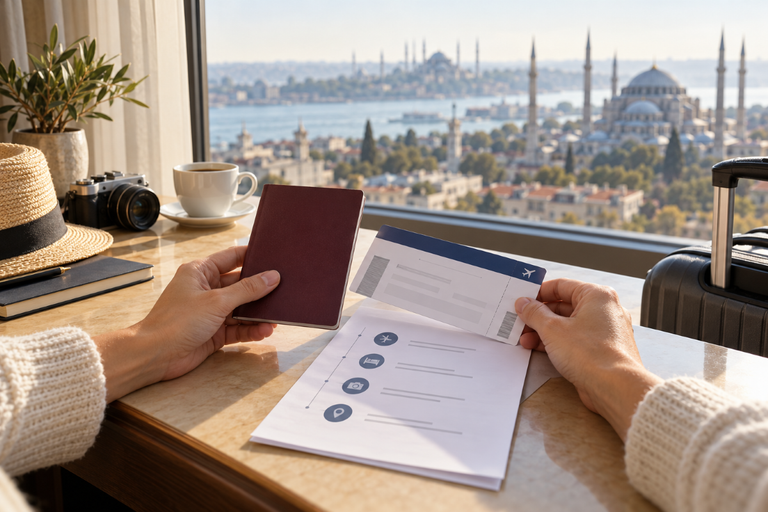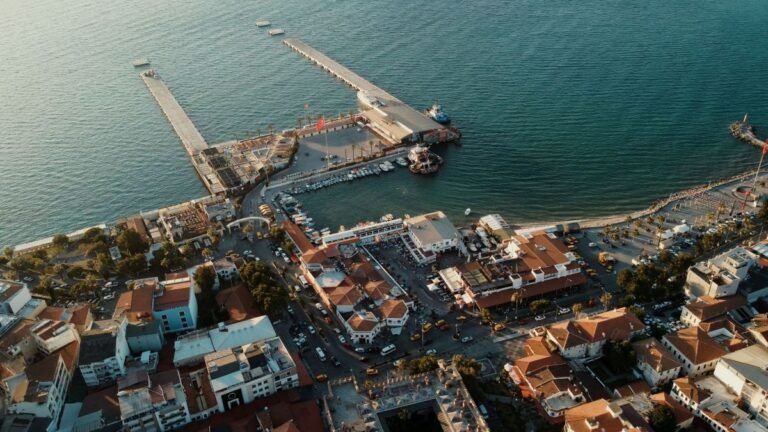
Getting around Turkey means choosing the right transport for each leg of a long and varied journey. Distances can be greater than they look on a map: a bus ride may take much of a day, a flight still needs airport transfers, and trains work best on selected routes. A rental car can make regional stops easier.
There is no single best way to travel around Turkey. The right choice depends on your route, time, budget and the kind of trip you want. As a licensed guide who has travelled across the country with visitors since 2008, I usually recommend combining transport modes: fly between distant regions, use buses or trains where their routes fit, and consider a car for places that are difficult to reach independently.
This guide explains the main options and how to choose between them. For a complete route, see the 10-day Turkey itinerary or the Eastern Turkey itinerary.
Turkey Transportation at a Glance
| Transport | Best for | Main drawback |
|---|---|---|
| Domestic flights | Long distances and short holidays | Airport transfers, baggage rules and check-in time add to the journey |
| Intercity buses | Reaching many towns and keeping costs controlled | Long travel times and overnight journeys can be tiring |
| Trains | Comfortable travel on selected corridors | The rail network does not reach every destination |
| Rental car | Regional routes, coastlines and rural stops | Parking, tolls, traffic and long driving days |
| Local public transport | Moving around larger cities | Each city has its own system and payment arrangements |
Domestic Flights: The Fastest Way Between Distant Regions
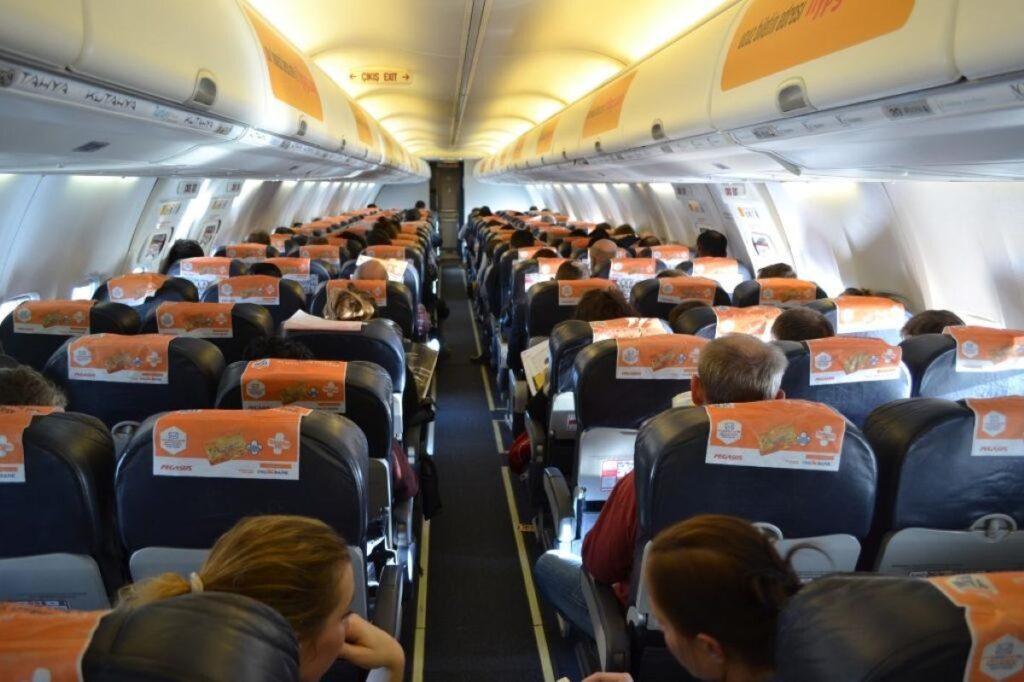
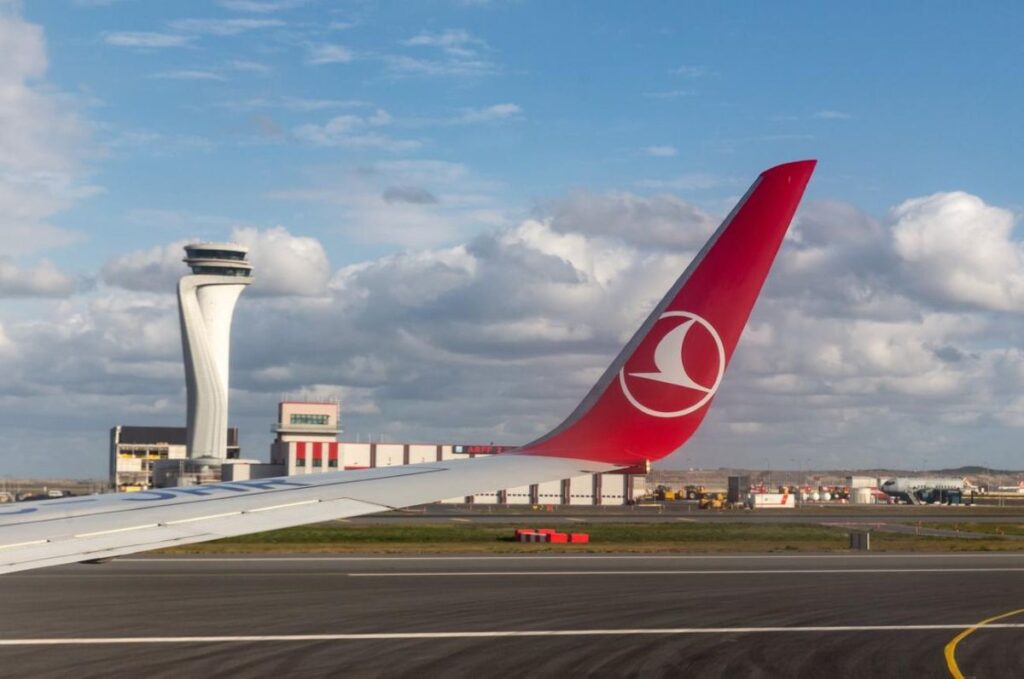
For long distances, flying is often the most practical option. Domestic routes connect Istanbul with many major cities and holiday destinations. The flight itself can be short, but remember to include the journey to the airport, security, boarding and transport from the arrival airport to your hotel.
Istanbul has two major airports: Istanbul Airport (IST) on the European side and Sabiha Gökçen Airport (SAW) on the Asian side. They are far apart, so check which airport your ticket uses and leave enough time if you are connecting between them. Do not plan a tight same-day connection between airports without checking the traffic and transfer options first.
Cappadocia is a region rather than a city, and it has no airport in Göreme or Ürgüp. Flights normally use Nevşehir Kapadokya Airport (NAV) or Kayseri Erkilet Airport (ASR); both require onward ground transport to the towns and hotels. Compare the complete journey, not only the airfare. Our Cappadocia travel guide explains how the region is laid out, and our separate Istanbul to Cappadocia guide compares the route options in more detail.
For Ephesus, many visitors fly to İzmir and continue by road or rail to Selçuk. Pamukkale is inland from the Aegean coast, so compare the full airport-to-hotel journey before choosing a flight. On some itineraries, a bus, train or private transfer may be simpler than flying.
Domestic fares and routes change. Check the airlines’ current schedules, baggage allowance and airport details before booking; a low headline fare may not include the baggage you need. Pegasus publishes its current flight network.
Choose a flight when: you are crossing a large part of the country, have limited holiday time, or need to connect regions that would take most of a day by road.
Intercity Buses: Extensive Coverage and Useful Direct Routes
Intercity buses reach many towns that do not have an airport or convenient rail connection. They can be a good choice when you want a direct route, are watching your budget, or prefer not to rent a car. Turkey’s bus network is widely used, and companies sell tickets online and at bus terminals.
The bus station is usually called an otogar. Many otogars sit outside the old town or city centre, so include the local transfer in your journey plan. In larger cities, some operators provide a connection between the otogar and central points, but the service and meeting place vary. Confirm the details with the bus company rather than assuming the ticket includes a hotel pickup.
Long-distance services may run overnight. An overnight bus can save the cost of a hotel night, but it does not always mean you arrive rested and ready to sightsee. Consider your arrival time, the length of the route, and whether your hotel can store luggage or allow an early check-in.
When booking, check the departure and arrival terminals, luggage allowance, seat selection and whether the service is direct. Keep your ticket and passport accessible, and arrive early enough to find the correct platform. If a route includes a change, make sure you understand where you transfer and how much time you have.
Buses work particularly well between many major cities and regional centres. They can also be useful for reaching places such as Pamukkale or the Aegean coast, depending on your starting point and the current timetable. Compare the total door-to-door time with a flight before deciding.
Choose a bus when: the route is direct, you have time, or the destination is not conveniently served by rail or air.
Trains: Comfortable on the Routes They Serve
Turkey’s trains can be an enjoyable and comfortable way to travel, especially on routes where the railway fits your itinerary. High-speed trains operate on selected corridors, including routes connecting Ankara with cities such as Istanbul, Eskişehir, Konya and Sivas. Other conventional services cover different parts of the country, but rail does not connect every popular destination directly.
That distinction matters. A train may be an excellent choice between two cities and an awkward choice for the next leg. Before planning around rail, look up the exact origin and destination stations, journey time, departure frequency and ticket availability for your dates. Use the official TCDD Taşımacılık ticket portal for current services and fares.
Some travellers choose a long-distance or sleeper train for the journey itself, rather than as the fastest way to reach a destination. These services can be popular, so check the official timetable and booking window well ahead of travel. Do not assume a scenic train runs every day or has seats available for your dates.
Trains are usually most helpful when you are visiting cities on a connected rail corridor. They are less useful for places that require a long onward transfer from the station. Check the station location before booking a hotel or arranging a connection.
Choose a train when: the cities on your route are linked by a convenient service and you value a relaxed journey over the fastest possible arrival.
Rental Cars: Best for Regional Exploration
A rental car gives you flexibility and can make a regional trip much easier. It is especially useful when you want to stop at several archaeological sites, villages or viewpoints that are not connected by frequent public transport. A car can also help families or small groups carry luggage without changing vehicles repeatedly.
Driving is not automatically the easiest option for every visitor. Istanbul traffic can be heavy, parking in historic areas may be difficult, and a long intercity drive can take more energy than expected. In large cities, it is often simpler to use public transport and taxis or pre-arranged transfers, then rent a car later for a specific region.
Before setting off, check your rental agreement, insurance, fuel policy, toll arrangements and the process for paying road tolls. Ask the rental company how toll charges are handled. Check the route and road conditions on the day, allow for breaks, and avoid planning a full sightseeing day after a very long drive.
Aegean and Mediterranean itineraries can work well with a car if you want to combine coastal towns and ancient sites at your own pace. The same is true for some rural routes. By contrast, a first-time visitor following the classic Istanbul–Cappadocia–Ephesus route may find that domestic flights and local transfers are easier than renting a car for the entire trip.
Choose a rental car when: you want to explore beyond the main transport corridors, make several stops in one region, or need flexibility around your schedule.
Getting Around Turkey’s Cities
Large cities have local buses, rail systems, ferries or a combination of these. The exact network and payment rules differ from city to city. In Istanbul, public transport includes metro, tram, bus, ferry and other services; visitors commonly use an İstanbulkart or the current digital payment options. Check the official İstanbulkart website for the latest information.
In other cities, look up the local transport card, airport connection and route planner before you arrive. A payment card that works in one city should not be assumed to work everywhere in Turkey.
Taxis and app-based rides can help with short journeys, luggage or late arrivals. Use clearly identified vehicles, check that the meter is running where applicable, and confirm the destination before departure. At airports and bus terminals, use the official taxi rank or a transfer arranged through your hotel or a reputable provider.
In historic districts, walking is often the best way to explore, but pavements can be uneven and distances between sights can be longer than they appear. Wear comfortable shoes and use public transport for the steepest or longest sections.
How to Choose Transport for a Classic Turkey Itinerary
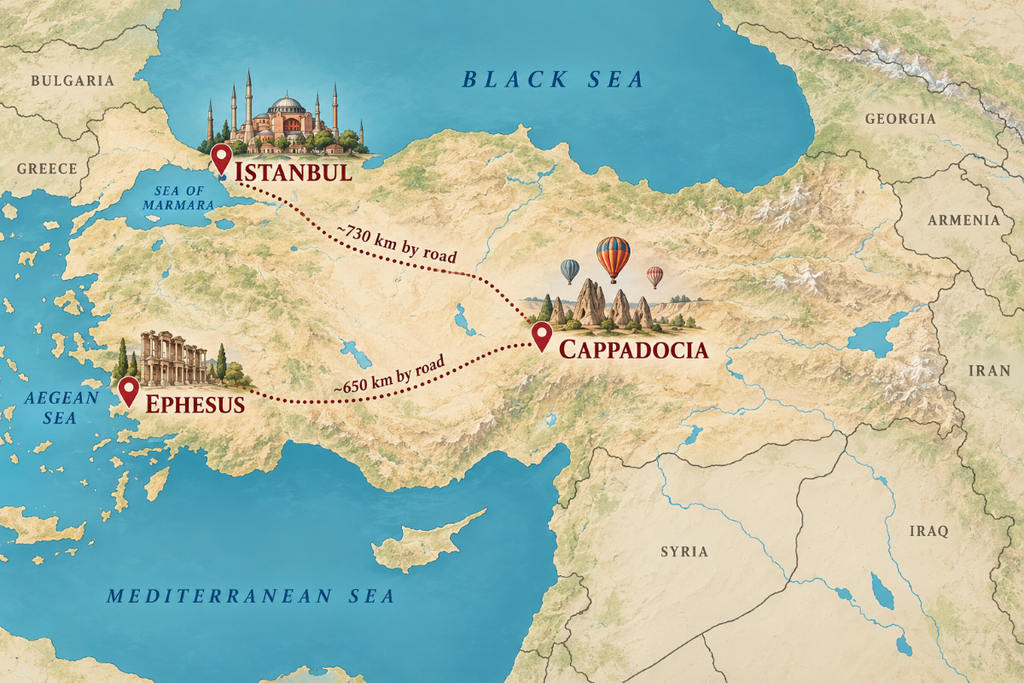
For a first visit combining Istanbul, Cappadocia, Ephesus and Pamukkale, it usually makes sense to compare flights for the longest jumps, then use road or rail connections for shorter regional legs. Keep in mind that every flight involves airport transfers and security time. A bus or train may be more convenient when the station is closer to your hotel and the service runs at a useful time.
The best sequence also depends on your arrival and departure airports. Some routes can end near İzmir, which avoids returning to Istanbul solely for an international flight. Our 10-day Turkey itinerary shows one way to connect the main highlights while controlling transfer time.
For an Eastern Turkey journey, domestic flights can help connect distant starting and ending points, while a rental car or organised ground transport may be useful for the regional sites between them. Distances are substantial, so leave room for realistic driving days. See the Eastern Turkey itinerary for a route through Cappadocia and Southeastern Anatolia.
Practical Tips Before You Book
- Compare door-to-door time, not just flight or train duration.
- Check which airport or station you will use; similarly named destinations may be far from the city centre.
- Allow a generous connection time if you are changing airports, stations or transport companies.
- Confirm the baggage allowance and any extra charges before purchasing a ticket.
- Check current timetables and prices directly with the operator; transport schedules and fares change.
- For overnight travel, think about your arrival time and whether you will be rested enough to explore.
- Avoid squeezing too many distant regions into one short holiday. Turkey is larger than many first-time visitors expect.
- Use our Turkey travel costs guide to plan transport alongside accommodation, food and activities.
Frequently Asked Questions
What is the best way to travel around Turkey?
There is no single best option. Flights save time across long distances, buses reach many towns, trains are comfortable on selected routes, and rental cars are useful for regional exploration. Many visitors combine several methods.
Is it easy to travel around Turkey without a car?
Yes, if your itinerary focuses on well-connected cities and major tourist destinations. Flights, intercity buses, trains on selected corridors, local transport and organised transfers can cover much of a typical first-time route. A car becomes more useful when you want to visit rural places or make several stops in one region.
Are trains a good way to travel around Turkey?
They can be, when your destinations are connected by a convenient service. Check the current TCDD timetable for the exact stations and dates; the rail network does not serve every major tourist site directly.
Should I rent a car in Istanbul?
Most visitors do not need a car while sightseeing in central Istanbul. Traffic and parking can add stress, while public transport reaches many visitor areas. You can use tram, metro, ferry and they are great. Consider renting a car later if your itinerary includes a regional road trip.
How do I get from Istanbul to Cappadocia?
Most travellers compare a domestic flight with an overnight bus. Flying is quicker, but the full journey includes travel to and from the airports. Cappadocia’s airports are outside the main towns, so arrange onward transport before you travel. See our Istanbul to Cappadocia guide for the route details.
Can I use one transport card across Turkey?
Do not assume so. Local transport cards and payment systems vary by city. Check the official transport information for each city you plan to visit.
Final Advice
The most comfortable Turkey itinerary is rarely built around one transport method. Use flights where distance would otherwise consume a day, buses or trains when their routes and times fit naturally, and a rental car when it gives you access to places you would otherwise miss. Plan the connections between stations, airports and hotels as carefully as the main journey, and leave enough time to enjoy the places you came to see.
For official rail schedules, check TCDD Taşımacılık. For Turkey’s public transport overview, see GoTürkiye’s transport guide.