
Introduction: The Discovery That Changed Human History
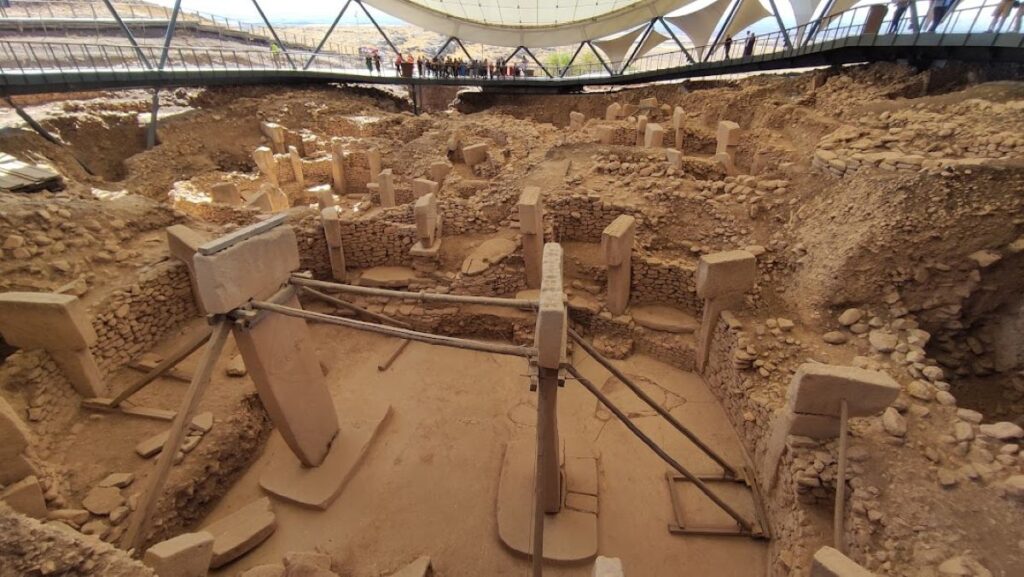
In the dry hills of southeastern Turkey, near the modern city of Şanlıurfa, stands one of the most extraordinary archaeological sites ever discovered. Known as Gobekli Tepe, this ancient sanctuary dates back to approximately 9600 BCE, making it the oldest known monumental temple complex in the world.
To grasp the magnitude of this discovery, it is important to consider the historical timeline. When Göbekli Tepe was constructed:
- the Egyptian pyramids were still 7,000 years in the future
- Stonehenge had not yet been imagined
- agriculture was only beginning to emerge in parts of the Near East
- humans were still largely hunter-gatherers
Yet despite this early stage of human development, the builders of Göbekli Tepe erected massive stone monuments weighing up to 20 tons and decorated them with sophisticated carvings of animals and symbolic figures.
The discovery of the site revolutionized the way archaeologists understand the origins of civilization. For decades, scholars believed that agriculture led to permanent settlements, which then produced religion and monumental architecture. Göbekli Tepe suggests the opposite may be true.
Rather than farming creating religion, it is possible that shared spiritual beliefs and ritual gatherings were among the forces that brought human communities together, ultimately leading to agriculture and organized society.
Today, Göbekli Tepe is widely considered one of the most important archaeological discoveries of the 21st century, and in 2018 it was officially recognized as a UNESCO World Heritage Site. UNESCO
The Geographic Setting of Gobekli Tepe
Göbekli Tepe lies in the Upper Mesopotamia region, an area often described as one of the cradles of human civilization. The site sits on a limestone plateau approximately 760 meters above sea level, overlooking fertile plains that stretch toward the Euphrates River.
This location was ideal for prehistoric communities. The surrounding landscape offered:
- abundant wild cereals such as einkorn wheat
- plentiful game animals including gazelles and wild boar
- natural limestone suitable for construction
- access to seasonal water sources
During the early Neolithic period, this region was a cultural crossroads connecting Anatolia, Mesopotamia, and the Levant. Archaeologists believe that different groups of hunter-gatherers likely traveled across this landscape, meeting at sites such as Göbekli Tepe for ritual gatherings and social exchange.
Early Discovery and Archaeological Investigations
Although the site was first recorded during a 1963 archaeological survey conducted by Istanbul University and the University of Chicago, its importance was not recognized at the time. Researchers believed the mound contained medieval graves.
The true significance of Göbekli Tepe was discovered in 1994, when German archaeologist Klaus Schmidt visited the site while conducting surveys in southeastern Turkey. Schmidt immediately noticed the distinctive shape of limestone pillars protruding from the surface.
Unlike ordinary gravestones, these pillars had a unique T-shape, a form previously associated with early Neolithic ritual structures found in nearby regions.
Schmidt later recalled realizing instantly that the hill concealed something extraordinary.
Excavations began in 1995 under the direction of the German Archaeological Institute and the Şanlıurfa Museum. Within a short time, archaeologists uncovered the first of several monumental circular structures.
What they found would transform the understanding of prehistoric society.
The Monumental Architecture of Gobekli Tepe
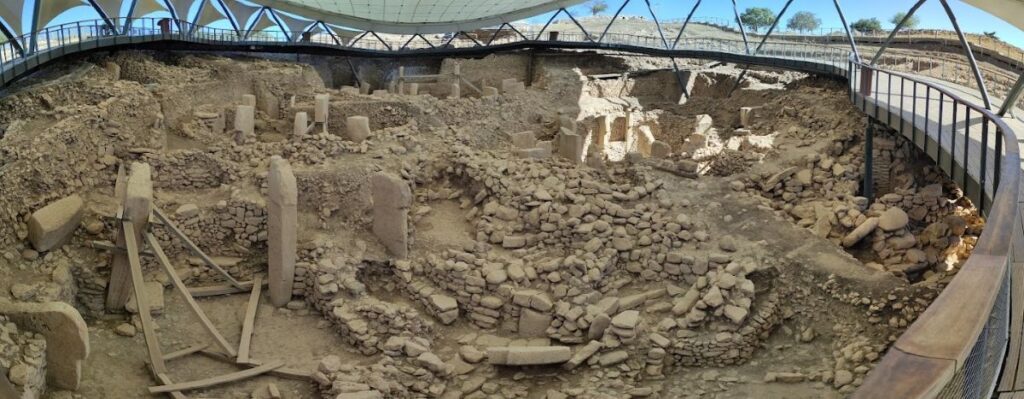
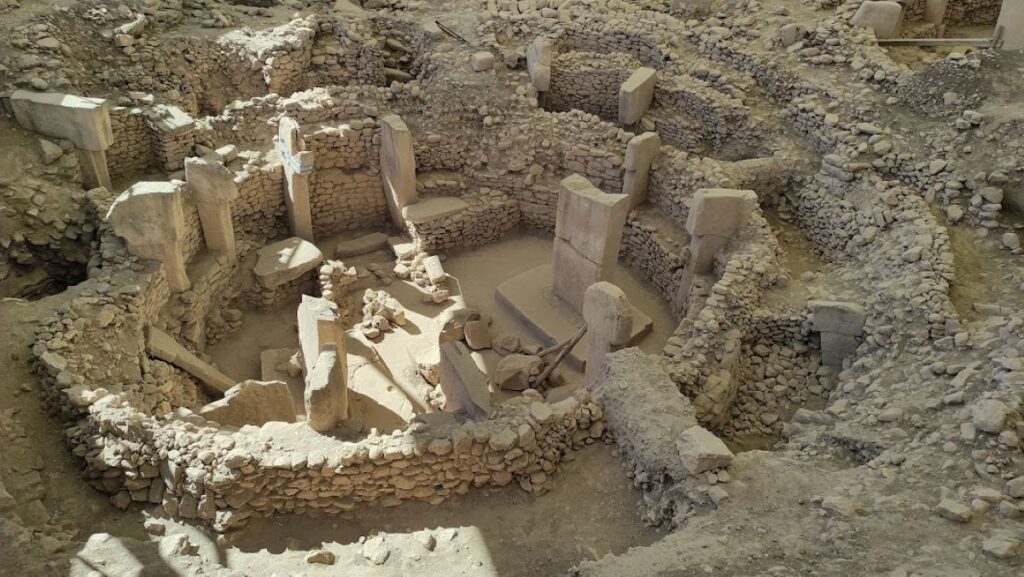
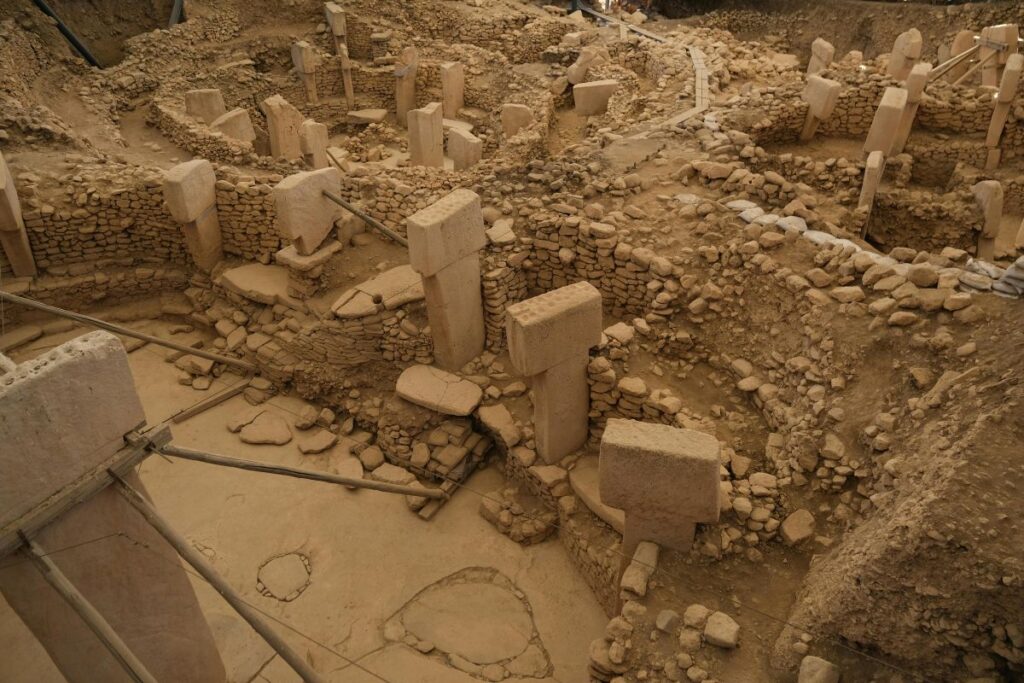
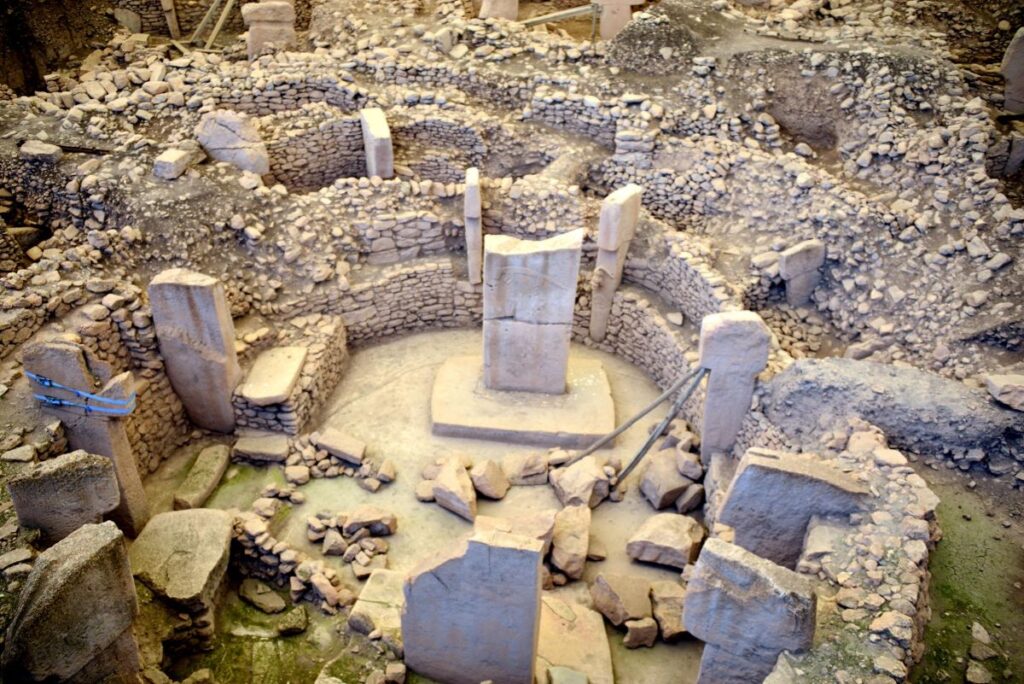
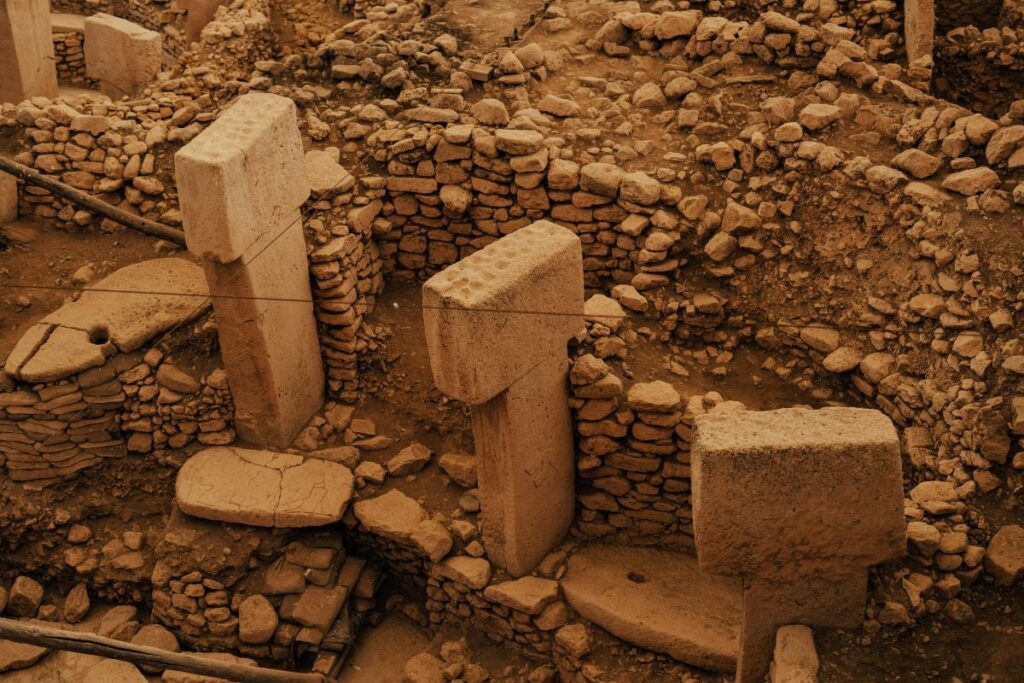
The site consists of a series of large circular or oval enclosures, constructed using dry-stone walls and monumental limestone pillars.
Each enclosure generally includes:
- two large central pillars
- multiple smaller pillars embedded within surrounding walls
- circular retaining walls built from limestone blocks
The central pillars often reach heights of 5 to 5.5 meters and weigh up to 20 tons.
Archaeologists have identified more than twenty enclosures through excavation and ground-penetrating radar. However, only a small portion of the site has been uncovered, meaning many structures may still lie buried beneath the mound.
The arrangement of the pillars suggests that these spaces were not ordinary dwellings but ceremonial or ritual centers.
Unlike later temples, Göbekli Tepe shows no evidence of domestic life. Archaeologists have found:
- no houses
- no cooking hearths
- no permanent living quarters
This indicates that the site likely served as a ritual gathering place rather than a permanent settlement.
The T-Shaped Pillars: Symbolism and Meaning
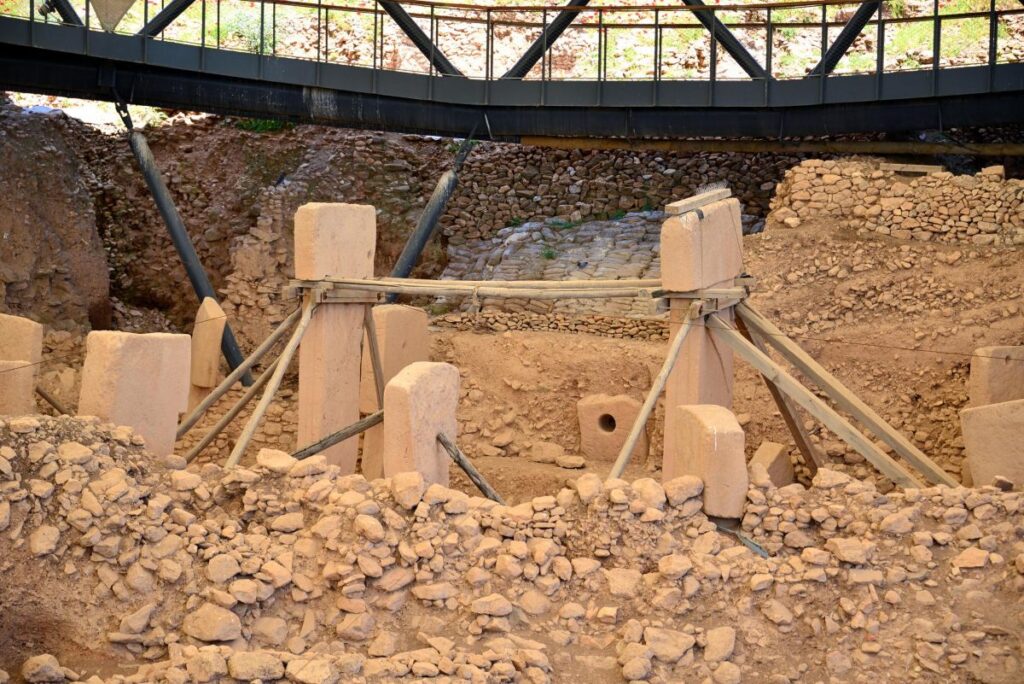
The most iconic feature of Göbekli Tepe is its T-shaped limestone pillars, which dominate the enclosures.
These pillars were carved from local limestone using stone tools. Despite the technological limitations of the time, the craftsmanship is remarkably sophisticated.
Many pillars feature carved details that suggest they represent stylized human figures.
These features include:
- carved arms along the sides
- hands resting on the front
- belts and loincloths
Because of these anthropomorphic elements, many scholars believe the pillars represent ancestors, spirits, or supernatural beings.
The pillars may have symbolized important mythological figures or guardians within the spiritual worldview of the Neolithic communities that built the site.
Animal Carvings and Symbolic Art
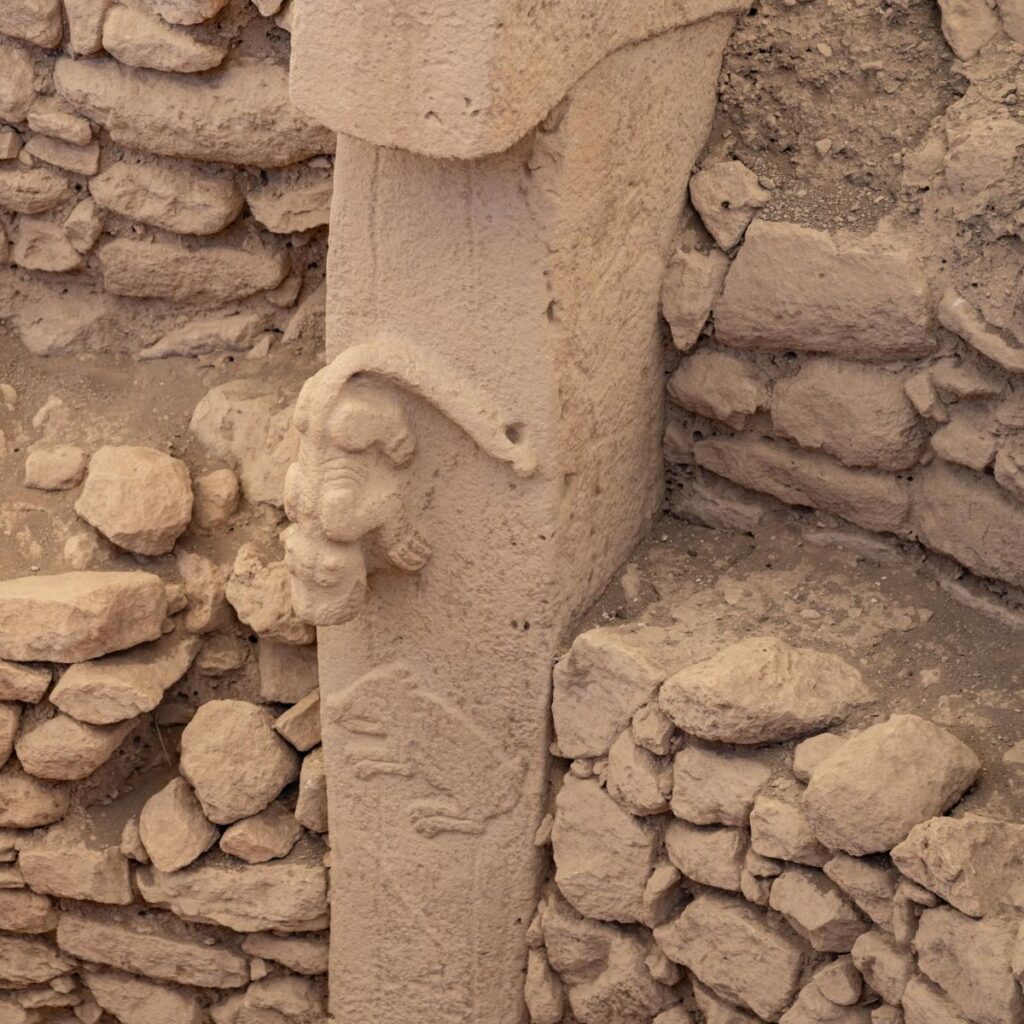
One of the most fascinating aspects of Göbekli Tepe is the extraordinary collection of animal carvings that decorate the pillars.
Among the animals depicted are:
- foxes
- snakes
- scorpions
- wild boars
- gazelles
- cranes
- vultures
- lions
These carvings represent some of the oldest large-scale sculptural works ever created by humans.
Many of the animals depicted were dangerous predators or creatures associated with death. This has led some scholars to interpret the carvings as symbols of power, protection, or mythological narratives.
The repeated depiction of vultures is particularly intriguing. In other Neolithic cultures of the Near East, vultures were associated with funerary rituals in which the bodies of the dead were exposed to birds before burial.
This suggests that Göbekli Tepe may have been connected to ritual practices surrounding death and ancestor worship.
Quarrying and Construction Techniques
The construction of Göbekli Tepe required remarkable engineering skill.
Archaeologists have discovered limestone quarries located only a few hundred meters from the site. In these quarries, partially carved pillars remain attached to the bedrock, providing evidence of how the stones were extracted.
The process likely involved:
- carving the pillar directly from the limestone bedrock
- separating it using stone tools
- transporting the pillar to the construction site
- erecting it within a prepared stone enclosure
Transporting stones weighing up to 20 tons without metal tools or wheeled vehicles would have required large coordinated labor forces.
Researchers believe teams of workers may have used:
- wooden sledges
- ropes
- rollers
- earthen ramps
The scale of construction indicates that the builders possessed a high level of social organization and cooperation.
Ritual Feasting and Social Gatherings
Evidence from animal bones found at the site suggests that large feasts may have taken place at Göbekli Tepe.
Archaeologists have uncovered thousands of bones belonging primarily to:
- gazelles
- wild cattle
- wild boars
- birds
These remains indicate that large groups of people gathered periodically, possibly for ceremonial events.
Such gatherings may have helped strengthen social bonds between different groups of hunter-gatherers. Ritual feasting could have played a role in creating alliances and reinforcing shared cultural traditions.
These communal events may also have contributed to the early domestication of plants and animals, as communities sought more reliable food supplies for large gatherings.
Religion Before Agriculture
One of the most groundbreaking ideas associated with Göbekli Tepe concerns the relationship between religion and the development of civilization.
Traditional theories suggested the following sequence:
- agriculture develops
- permanent settlements appear
- social hierarchy emerges
- religion and temples are built
Göbekli Tepe challenges this model.
The site was built before the widespread adoption of agriculture. This suggests that religion may have been one of the driving forces behind social cooperation.
The archaeologist Klaus Schmidt famously proposed the idea that:
“First came the temple, then the city.”
According to this theory, ritual centers such as Göbekli Tepe may have encouraged communities to gather regularly, eventually leading to the development of farming and settled life.
Why the Site Was Deliberately Buried
Around 8000 BCE, the monumental enclosures of Göbekli Tepe were intentionally buried under layers of soil, stone debris, and animal bones.
This burial was not the result of natural collapse. Instead, it appears to have been a deliberate act carried out by the site’s builders.
Archaeologists believe the burial may have served several possible purposes:
- ritual closure of sacred spaces
- cultural transition to new traditions
- protection of sacred structures
Ironically, this burial preserved the site exceptionally well for thousands of years.
Gobekli Tepe and the Origins of Civilization
The discovery of Göbekli Tepe has forced scholars to reconsider many assumptions about early human societies.
The site demonstrates that:
- complex religious beliefs existed more than 11,000 years ago
- hunter-gatherer societies were capable of monumental architecture
- symbolic art and mythology were highly developed in the Neolithic period
Rather than being simple nomadic groups, early humans may have possessed sophisticated cultural traditions long before the rise of cities and states.
Göbekli Tepe suggests that the roots of civilization may lie not only in economic innovation but also in shared spiritual beliefs and social cooperation.
UNESCO World Heritage Site
In recognition of its global significance, Göbekli Tepe was added to the UNESCO World Heritage List in 2018.
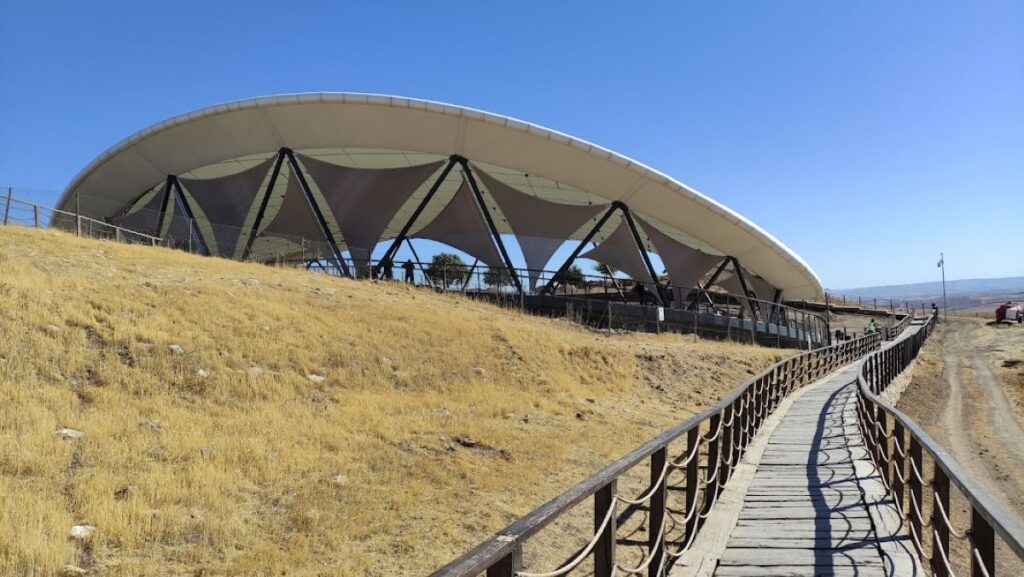
Today the site is protected within Göbekli Tepe Archaeological Park, where visitors can walk along elevated pathways and view the ancient structures beneath a modern protective roof.
Excavations continue today, and archaeologists estimate that more than 90 percent of the site remains buried.
Future discoveries may reveal additional enclosures and further insights into the spiritual world of the Neolithic communities who built this remarkable sanctuary.
Here is more information about Gobeklitepe Archaeology.org
Conclusion
Göbekli Tepe is one of the most extraordinary archaeological discoveries in human history. Built more than 11,000 years ago, it represents the earliest known example of monumental religious architecture.
By challenging traditional ideas about the origins of civilization, the site has opened new debates about the role of religion, ritual, and social cooperation in human development.
As archaeologists continue to uncover new evidence, Göbekli Tepe may yet provide further clues about one of the greatest mysteries in human history: how and why civilization began.