
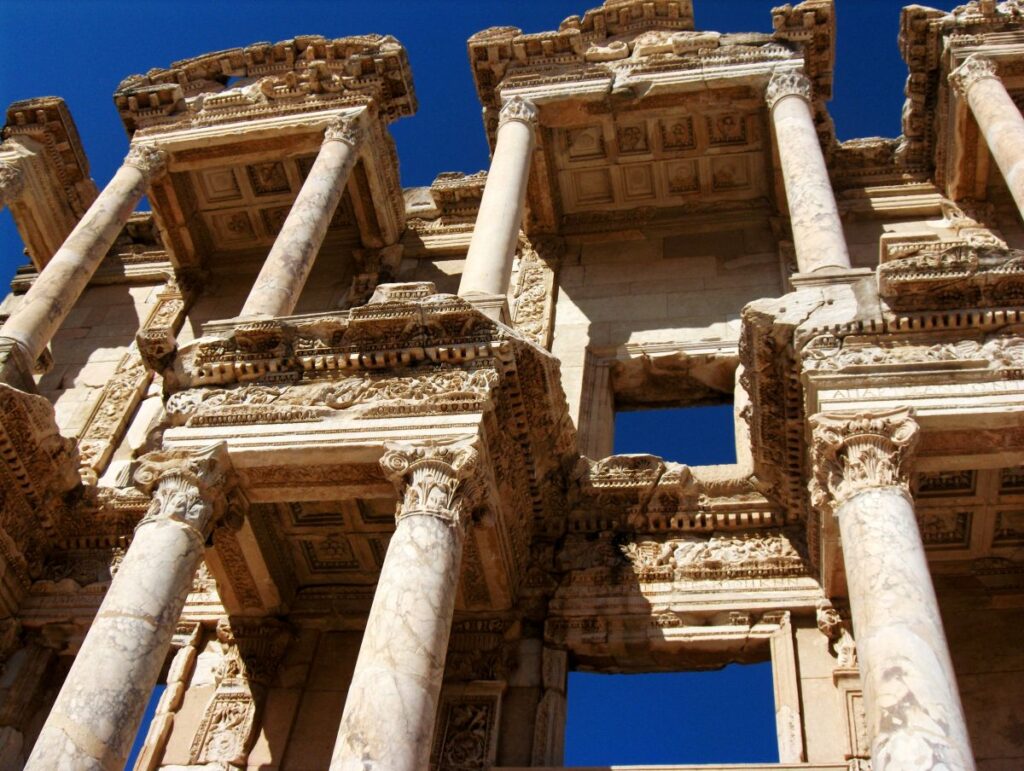
Ephesus is one of the most impressive ancient cities in the world. In this guide, you will discover the best things to do in Ephesus, the most important historical sites, and helpful travel tips for visiting this incredible archaeological site in Turkey. Ephesus is one of the most important ancient cities in the Aegean and a highlight for anyone exploring the best things to do in Ephesus today. Its history stretches back more than 8,000 years, making it one of the oldest continuously inhabited settlements in the region.
Ionian Greeks established a city near the mouth of the Cayster River. Because of its strategic location on major trade routes between East and West, Ephesus quickly developed into a powerful commercial center. Merchants, sailors, and travelers from across the ancient world passed through its busy harbor, bringing wealth and cultural influence to the city.
One of the most famous landmarks of ancient Ephesus was the Temple of Artemis, built around the 6th century BC. This magnificent temple was dedicated to the goddess Artemis and became one of the Seven Wonders of the Ancient World. Pilgrims from all over the Mediterranean traveled to Ephesus to see the temple and participate in religious ceremonies.
During the Roman period, Ephesus reached the peak of its prosperity. By the 1st century AD, it had become one of the largest cities in the Roman Empire, with a population estimated at more than 200,000 people. Many of the impressive ruins visitors see today — including the Library of Celsus, the Great Theatre, and the marble streets — were built during this flourishing era.
Ephesus also played an important role in early Christianity. According to tradition, the Apostle Paul preached in the city, and it is believed that the Virgin Mary spent her final years nearby.
Over time, the harbor gradually filled with silt, trade declined, and the city was eventually abandoned. Today, however, the remarkably preserved ruins of Ephesus allow visitors to walk through the streets of a once-great ancient metropolis and experience thousands of years of history.
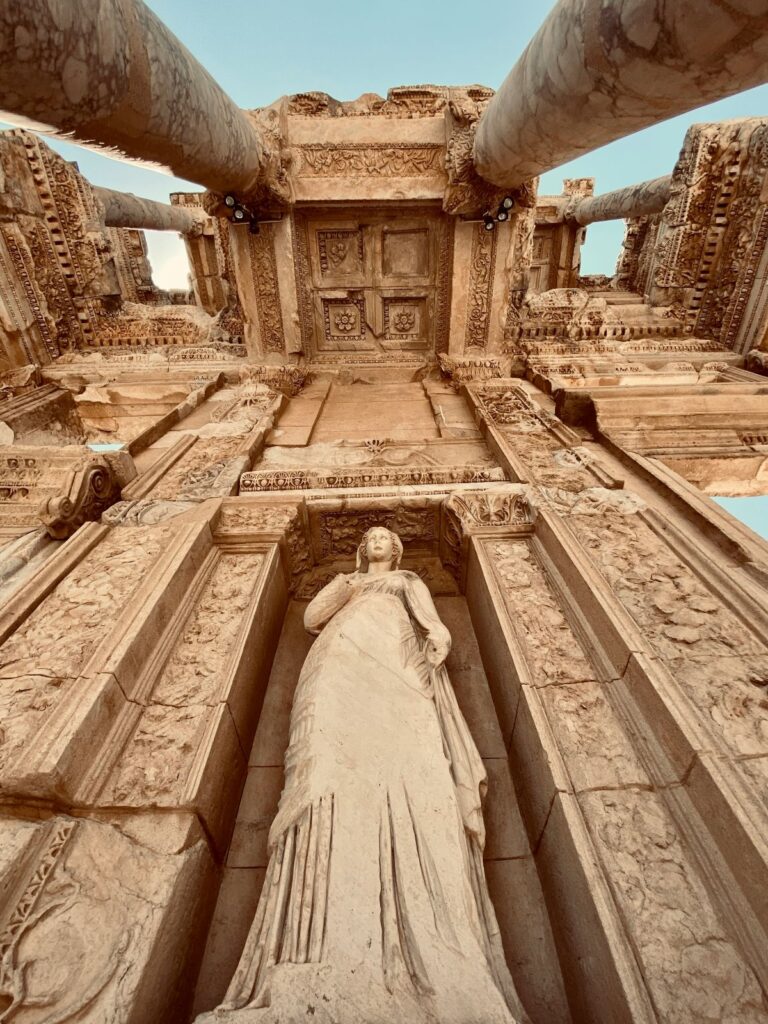
The Library of Celsus is the most iconic structure in Ephesus and one of the most photographed landmarks in Turkey.
Built in the 2nd century AD, the library once held more than 12,000 scrolls and served as a monumental tomb for the Roman senator Tiberius Julius Celsus. This was the third biggest library after Alexandria and Pergamon libraries in the ancient world. Alexandria library had about 400,000 scrolls and Pergamon library had about 200,000 scrolls.
The impressive facade with its intricate columns and statues has been carefully restored, making it one of the most beautiful examples of Roman architecture in the ancient world.
Today, the Library of Celsus stands as the symbol of Ephesus and is the highlight of every visit.
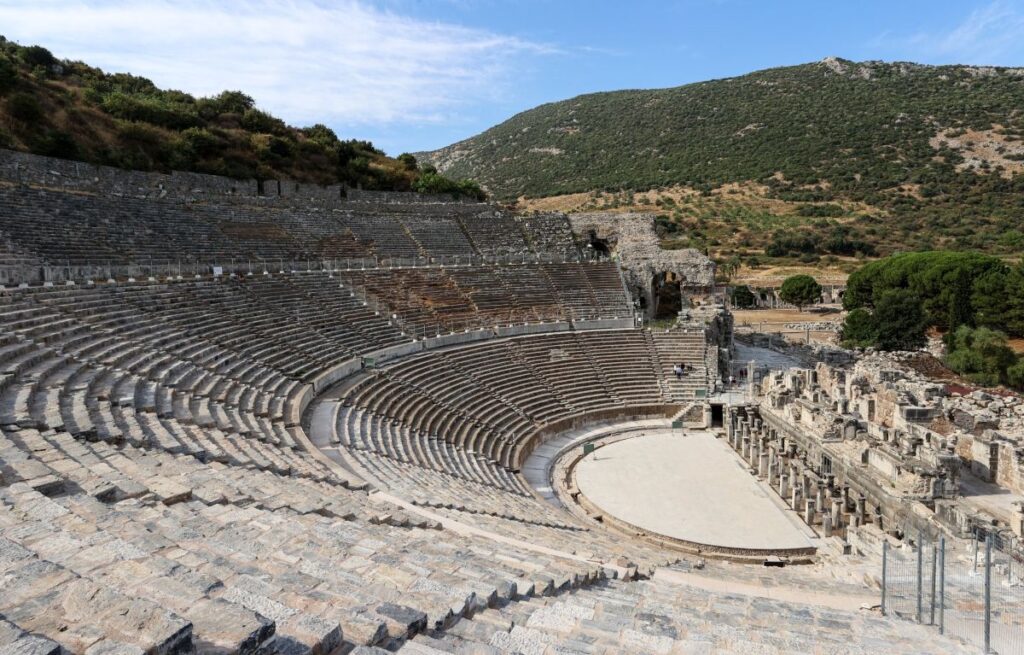
The Great Theatre of Ephesus is another remarkable monument that shows the grandeur of the ancient city.
This massive amphitheater could hold up to 25,000 spectators, making it one of the largest theaters in the ancient world.
It was used for theatrical performances, public events, and even gladiator fights during Roman times.
Standing at the top of the theater offers a breathtaking view over the ancient streets of Ephesus and the surrounding valley is the best thing to do in Ephesus.
Curetes Street is one of the most important roads in the ancient city.
This marble-paved street was once lined with statues, temples, fountains, and shops. Walking along this historic avenue allows visitors to imagine what life was like in Ephesus during the Roman Empire.
Along the way you will see several impressive structures including the Temple of Hadrian and the Hercules Gate.
The Temple of Hadrian is one of the most beautifully decorated buildings in Ephesus.
Built in honor of the Roman Emperor Hadrian in the 2nd century AD, the temple features stunning reliefs that depict mythological scenes and important moments in the city’s history.
Although relatively small compared to other structures, its detailed carvings make it one of the most fascinating stops in Ephesus.
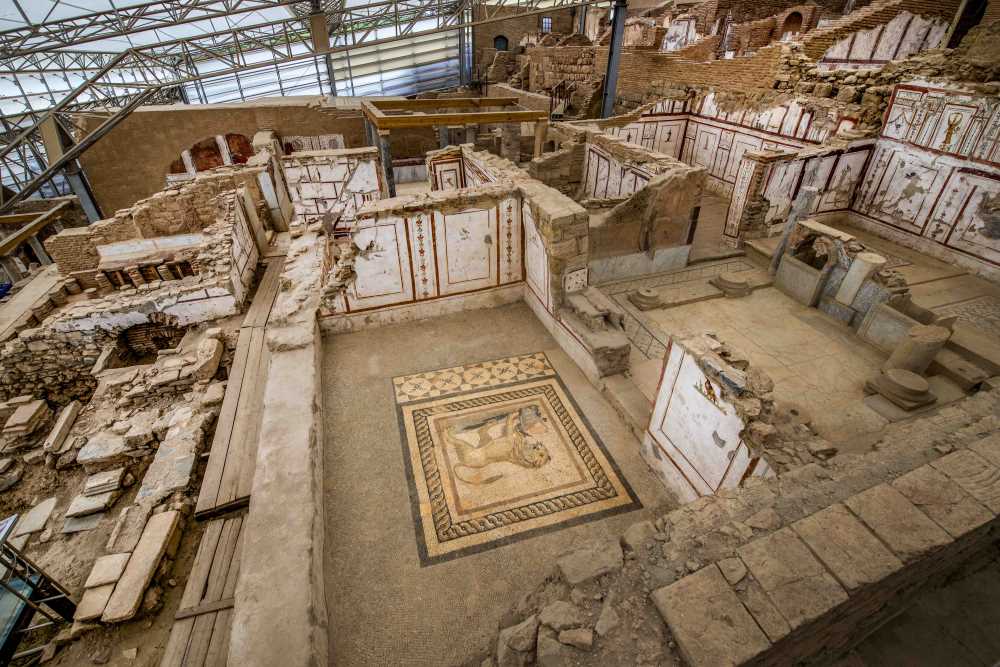
The Terrace Houses offer a unique glimpse into the luxurious lifestyle of wealthy citizens of Ephesus. This optional visit in Ephesus is highly recommended and it is one of the answers to why visit Ephesus.
These well-preserved houses feature:
-
intricate mosaics
-
colorful frescoes
-
advanced heating systems
The complex shows how sophisticated Roman urban living was nearly 2,000 years ago.
Many historians consider the Terrace Houses one of the most important archaeological discoveries in Ephesus.
Located just a short distance from the ancient city, the Temple of Artemis was once one of the Seven Wonders of the Ancient World.
Although only a few columns remain today, the site still holds great historical significance.
The temple was originally built around 550 BC and attracted pilgrims and travelers from across the ancient Mediterranean world.
Even in its ruined state, the Temple of Artemis remains an essential stop when visiting Ephesus
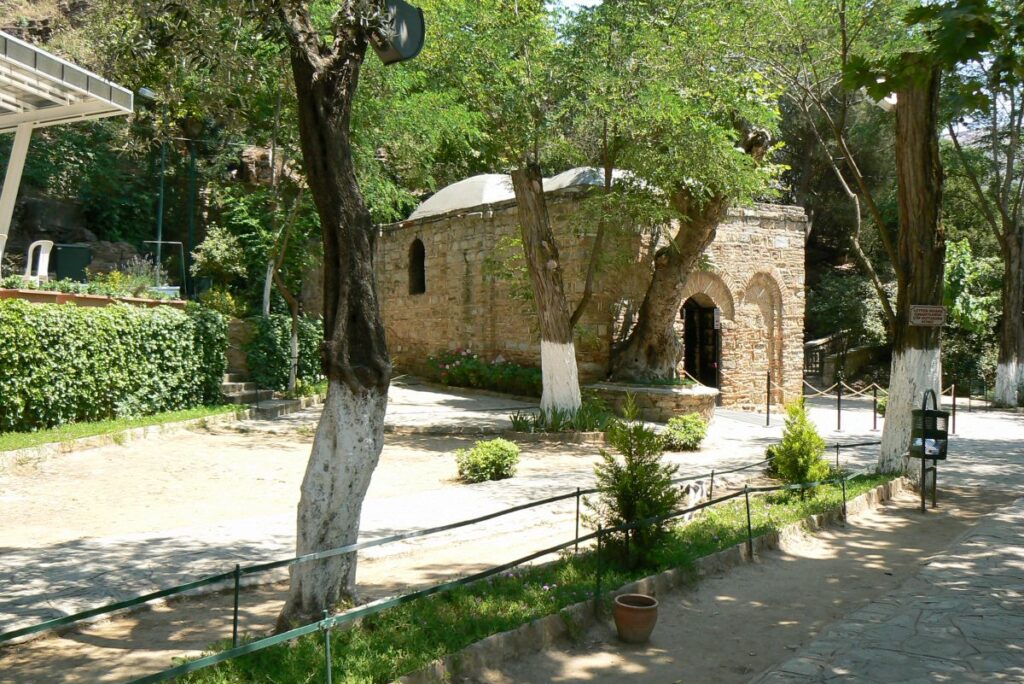
Not far from Ephesus lies the House of the Virgin Mary, a sacred pilgrimage site visited by thousands of people each year.
According to Christian tradition, the Virgin Mary spent her final years here after being brought to the region by the Apostle John.
Today, the site is considered holy by both Christians and Muslims and offers a peaceful atmosphere surrounded by nature.
Morning 09:30 am
Explore the Ancient City of Ephesus. This may take between 2-3 hours
Afternoon
Visit the House of the Virgin Mary
Also visit the temple of Artemis
Evening
Explore Selcuk town or relax in Kusadasi
Most visitors stay in:
Selcuk
Ephesus is located in this town.
Kusadasi
Popular coastal resort town with its port for cruise ships, many hotels and restaurants. It is only about 20 – 30 minute drive from Ephesus.
Izmir
The best time to visit Ephesus is during the spring and autumn months when the weather is pleasant and the crowds are smaller. Between April and June and again from September to October, temperatures are comfortable for walking around the large archaeological site.
Summer can be very hot in this region of Turkey, especially between July and August. Temperatures often exceed 35°C (95°F), and there is very little shade inside the ancient city. If you visit during summer, it is highly recommended to arrive early in the morning or later in the afternoon to avoid the intense heat.
Spring is one of the most beautiful times to visit Ephesus. The surrounding countryside becomes green, and wildflowers often bloom around the ruins, creating a unique atmosphere for photography and exploration.
Autumn is another excellent season, with warm temperatures and fewer tour groups compared to summer. Many travelers find that September and October offer the perfect balance of comfortable weather and manageable crowds.
No matter when you visit, arriving early in the day is the best strategy. Not only will you avoid large tour groups, but you will also enjoy softer light that makes the ancient ruins even more impressive.
Visiting Ephesus is an unforgettable experience, but a little preparation can make your trip even better. The ancient city is quite large, and exploring it comfortably requires some planning.
First, wear comfortable walking shoes. Most of the streets in Ephesus are made of ancient marble stones that can be uneven and slippery. Good footwear will help you walk safely while exploring the ruins.
Second, bring water, sunscreen, and a hat, especially during warmer months. The site is mostly open and exposed to the sun, so protecting yourself from heat is very important.
Another helpful tip is to start your visit from the upper entrance and walk downhill toward the lower gate. This route allows you to see the most famous monuments — including the Library of Celsus, Curetes Street, and the Great Theatre — while walking mostly downhill.
If you want a deeper understanding of the history, consider hiring a local guide or using an audio guide. Many fascinating stories about Roman life, religion, and trade in Ephesus become much clearer with expert explanations.
Finally, take your time. Ephesus is not just a collection of ruins — it is a place where thousands of years of history come together, and exploring it slowly allows you to truly appreciate its significance.
Ephesus is one of the most extraordinary archaeological sites in the world. From the magnificent Library of Celsus to the vast Great Theatre and the historic Temple of Artemis, the city offers an unforgettable journey into the past. Ephesus offers an extraordinary journey into the ancient world. Walking through its marble streets and monumental ruins gives visitors a rare glimpse into life during the Roman Empire.
Whether you are passionate about history, architecture, or ancient civilizations, Ephesus is undoubtedly one of the best places to visit in Turkey.
Many travelers visit Ephesus after exploring Istanbul and Cappadocia, making it an essential part of a complete Turkey itinerary.
You can check and find Ephesus UNESCO below;
https://whc.unesco.org/en/list/1018/