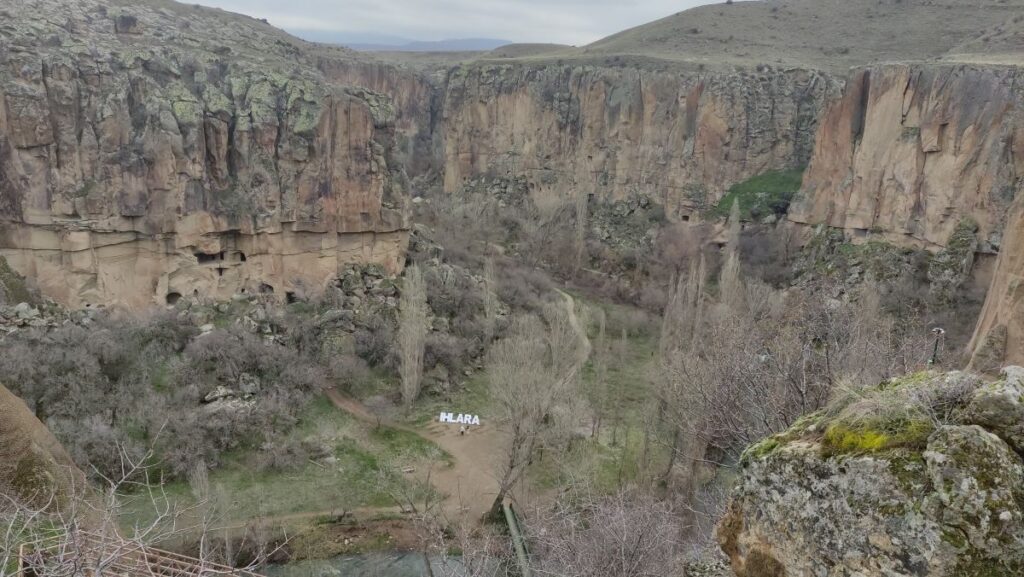
Cappadocia is often reduced to hot air balloons and fairy chimneys—but in reality, it is one of the deepest historical landscapes in the world. Stretching across modern-day Nevsehir, Kayseri, Aksaray, Nigde, and parts of Kirsehir, Cappadocia covers a big portion of Central Anatolia. History of Cappadocia started in neolithic age around 8.500 BC.
This is not just a region—it is a layered archive of human civilization.
History of Cappadocia: Asikli Hoyuk and the First Settlements (c. 8500–7500 BC)
Long before empires, before writing, and even before pottery, Cappadocia was already home to organized human communities.
Today, this region offers much more than ancient history. 👉 Explore Cappadocia’s top attractions
Asikli Hoyuk, located near the Melendiz River, is one of the earliest known Neolithic settlements in Anatolia. Dating back to around 8500 BC, it represents a critical stage in human evolution—from nomadic hunter-gatherers to settled life.
Here, archaeologists discovered:
- Early examples of planned housing
- Evidence of one of the first brain surgeries (trepanation)
- The controlled use of fire within homes
- Social organization within tightly packed communities
Unlike later civilizations, these people lived in mudbrick houses without streets—moving across rooftops. This early architectural logic foreshadows something uniquely Cappadocian: living within and adapting to the environment.
The Hattians: The First Anatolian Culture (c. 2500–2000 BC)
Before the Indo-European Hittites arrived, central Anatolia—including Cappadocia—was inhabited by the Hattians.
The Hattians were not an empire in the classical sense, but a network of city-based cultures with deep spiritual traditions. Their influence is still visible in later Hittite religion and mythology.
They worshipped nature-based deities, and their cultural legacy laid the foundation for one of the greatest powers of the Bronze Age.
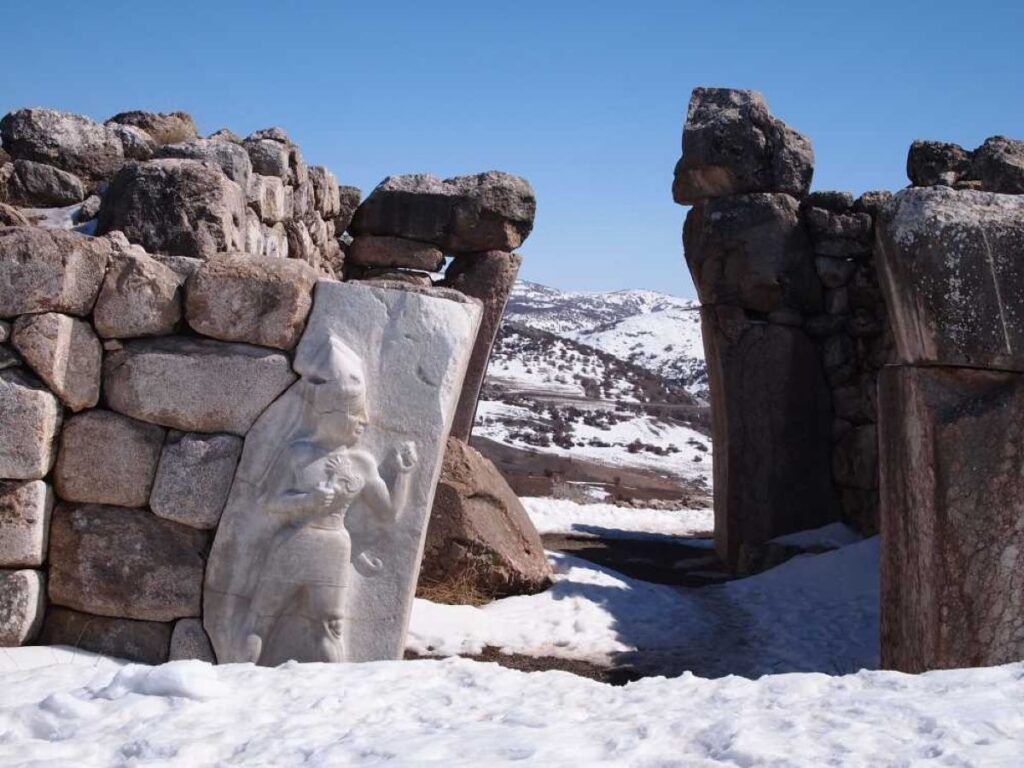
The Hittites: The First Great Anatolian Empire (c. 2000–1200 BC)
With the arrival of the Hittites, Cappadocia entered recorded history.
Although their capital was Hattusa (modern Boğazkale), Cappadocia became a strategic heartland of the empire. The Hittites developed advanced administrative systems, diplomacy, and law codes.
They were among the first civilizations to:
- Sign international treaties
- Use written legal systems
- Develop complex state organization
Cappadocia’s geography—protected, central, and fertile—made it ideal for sustaining imperial control.
Kultepe (Kanesh) and the Assyrian Trade Colonies (c. 2000 BC)
One of the most fascinating chapters of Cappadocia’s history comes from Kultepe (ancient Kanesh), near modern Kayseri.
Here, Assyrian merchants established trading colonies known as karum. These were not military occupations but commercial hubs.
Thousands of clay tablets found at Kultepe reveal:
- The oldest written records in Anatolia
- Detailed trade agreements and contracts
- Early examples of credit, debt, and partnership systems
This was essentially one of the first known international trade networks in human history—linking Mesopotamia with Anatolia.
If you’re planning to visit Central Anatolia, 👉 check this 10-day Turkey itinerary
Phrygians and the Aftermath of Collapse (c. 1200–700 BC)
After the collapse of the Hittite Empire, likely due to invasions and internal instability, the region saw new powers emerge.
The Phrygians, known for their legendary king Midas, brought a different cultural identity to Anatolia. You may remember the famous myth of Midas that everything he touched turned to gold. While their political center was further west, their influence extended into Cappadocia
This period represents transition—less centralized power, but continued cultural exchange.
The Persian Empire and the Birth of “Cappadocia” (6th century BC)
When the Persia conquered Anatolia in 546 BC, they reorganized the region into administrative provinces.
It was during this time that the name “Cappadocia” (Katpatuka) appeared—often translated as “Land of Beautiful Horses.”
The name Cappadocia is believed to come from the Persian word “Katpatuka” 👉 see historical origins
The Persians ruled through satraps, allowing local traditions to continue while integrating Cappadocia into one of the largest empires in history.
Alexander the Great and the Hellenistic Kingdom
Alexander the Great conquered the whole Anatolia around 330 BC and reached all the way to India after taking over Syria and Egypt as well but he died when he was only 32 years old in Babylon on his way back from India. Although his powerful commanders shared the land he conquered, Cappadocia remained relatively independent for a time under local rulers.
Eventually, it became a Hellenistic kingdom influenced by Greek culture, language, and political structures.
This blending of Eastern and Western traditions further enriched the region’s identity.
Roman Rule: Stability and Strategic Importance (17 AD onward)
Cappadocia was formally incorporated into the Roman Empire in 17 AD.
Under Roman rule:
- Roads connected the region to major cities
- Military presence increased due to eastern threats
- Urbanization expanded
But Cappadocia’s real significance during this period was not military—it was spiritual.
Early Christianity and the Underground Cities (3rd–7th centuries AD)
As Christianity spread and persecution intensified, Cappadocia became a refuge.
Thanks to its soft volcanic rock, entire underground cities were carved beneath the surface—such as Derinkuyu and Kaymakli.
Curious to explore these incredible underground cities yourself? 👉 Explore Cappadocia’s underground cities and top attractions
These were not temporary shelters, but highly engineered living spaces:
- Multi-level systems descending deep underground
- Ventilation shafts ensuring airflow
- Hidden entrances and defensive stone doors
- Churches, kitchens, storage areas, and communal rooms
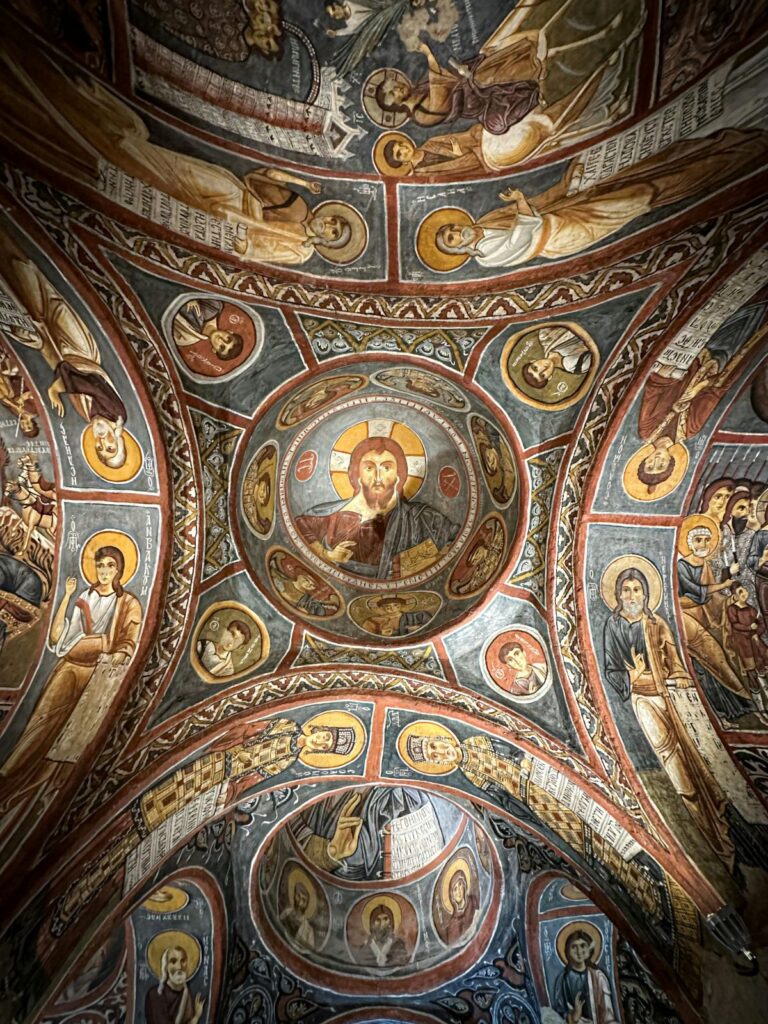
At the same time, above ground, valleys filled with rock-cut churches and monasteries.
The Goreme region became a major monastic center, and its churches were decorated with extraordinary Byzantine frescoes depicting biblical scenes.
Eastern Roman (Byzantine) Golden Age: Faith and Art
Roman Empire divided in 395 AD as west and east. Anatolia was ruled by the Eastern Roman Empire also known as Byzantine. During the Eastern Roman period, Cappadocia flourished as a religious center.
Monks and hermits carved entire spiritual landscapes into rock formations. The region became one of the most important centers of early Christian theology and art.
The frescoes from this period remain among the best-preserved examples of Byzantine religious art in the world.
Seljuk Period: Trade and Transformation (11th–13th centuries)
With the arrival of the Seljuks, Cappadocia entered a new cultural phase.
Islamic architecture, caravanserais, and trade routes became dominant features. Cappadocia’s location along major trade corridors made it an important stop for merchants traveling across Anatolia.
Despite these changes, earlier Christian heritage remained preserved within the landscape.
Cappadocia is just one part of a much larger story. 👉 Find the best time to visit Turkey
Ottoman Era: Continuity and Coexistence
The Ottoman Empire conquered Istanbul in 1453 and Eastern Roman Empire fell. Under Ottoman rule, Cappadocia became a quieter, rural region.
Different communities—Turks, Greeks, and Armenians—lived side by side for centuries. Villages, churches, and mosques coexisted, reflecting a layered cultural identity.
Cappadocia Today: A Living Heritage
In 1985, Cappadocia was recognized as a UNESCO World Heritage Site.
But what makes it truly unique is not just its beauty—it is the continuity of human presence.
From Neolithic farmers at Aşıklı Höyük to early Christians carving underground cities, from Hittite administrators to modern travelers—Cappadocia has always been a place where humans adapt, survive, and create.
Final Thought
As a local guide, I always recommend exploring these places with context 👉 see the top experiences here
Cappadocia is not just a destination—it is a timeline you can walk through.
Every valley, every cave, and every carved church tells a story that connects the earliest humans to the modern world.
And once you understand its history, you don’t just visit Cappadocia—you experience it.