Introduction: A Silent Revolution Beneath Anatolia
For decades, historians believed that civilization began with agriculture. According to this traditional model, humans first settled, began farming, and only then developed religion, social structures, and monumental architecture.
But in the hills of southeastern Turkey, this narrative is being completely rewritten.
With the discovery of Göbeklitepe, and more recently Karahantepe, archaeologists are uncovering evidence that challenges everything we thought we knew.
Today, under the umbrella of the Taş Tepeler (Stone Hills Project), a vast prehistoric landscape is emerging—one that suggests organized belief systems, symbolic thinking, and monumental architecture existed long before cities, farming, or even pottery.
As a licensed tour guide working across Turkey, I can confidently say:
- This is not just another archaeological discovery.
- This is the story of how humanity became human.
The Stone Hills Project: A Network, Not a Single Site
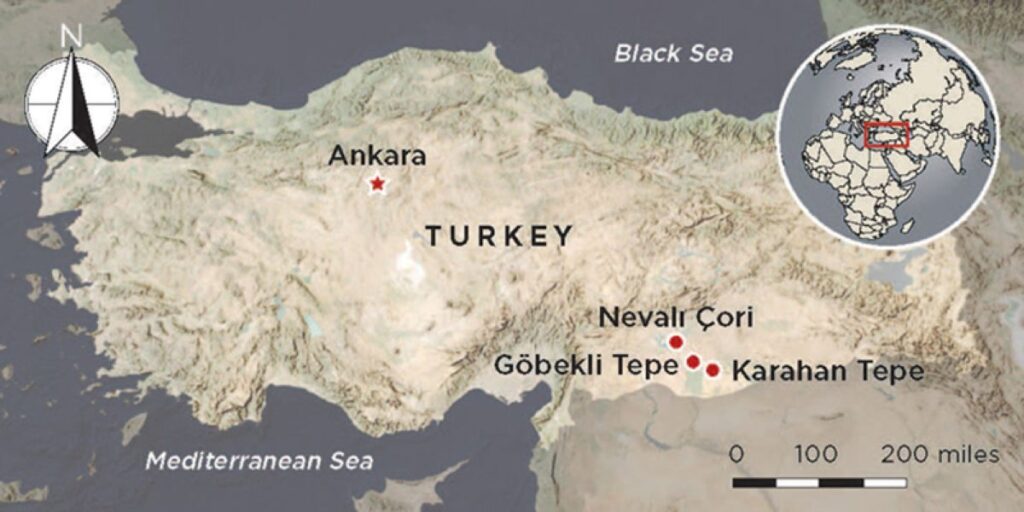
The Taş Tepeler Project is one of the most ambitious archaeological initiatives ever launched in Turkey. It focuses on a series of Neolithic sites spread across the Şanlıurfa region, all dating roughly between 10,000 and 8,000 BCE.
Key sites include:
- Göbeklitepe
- Karahantepe
- Nevali Çori
- Sefer Tepe
- Sayburç
- Hamzan Tepe
What makes this project extraordinary is not just the age of these sites—but their connection.
- These were not isolated settlements.
- They were part of a shared cultural system.
Archaeologists now believe that this region functioned as a kind of ritual landscape, where different groups gathered, interacted, and possibly shared beliefs, symbols, and knowledge.
Karahantepe: The Human Side of Prehistory
While Göbeklitepe shocked the world, Karahantepe deepens the mystery.
Located about 35 kilometers from Göbeklitepe, Karahantepe was identified earlier but only recently excavated in detail under the direction of Necmi Karul.
What makes Karahantepe unique is its intimacy.
Here, archaeologists have uncovered:
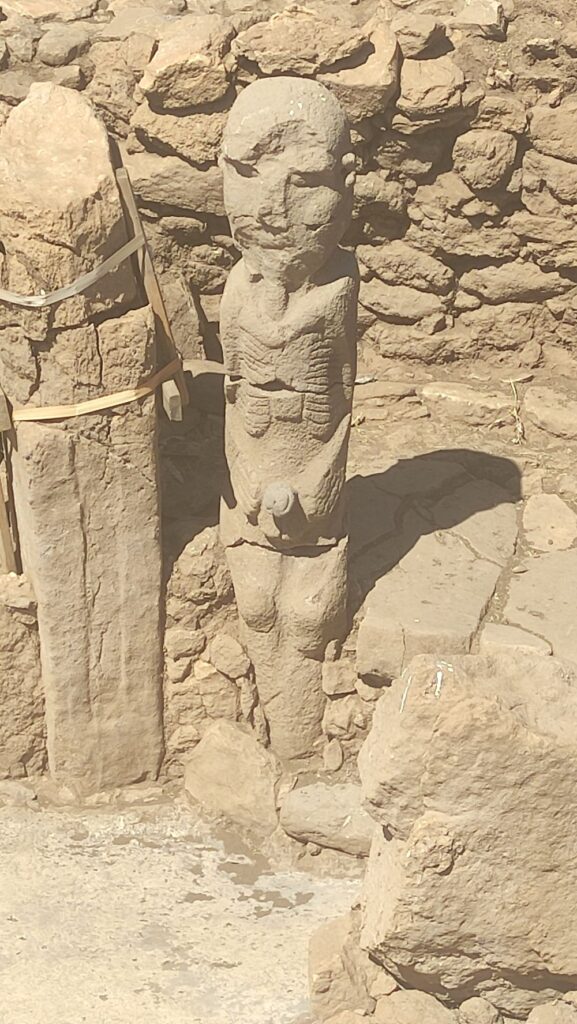
- A seated human sculpture, one of the oldest known statues in the world
- Human heads carved directly into bedrock
- A large communal structure with stone benches
- A carved chamber that appears intentionally designed for ritual use
Unlike Göbeklitepe, which feels monumental and symbolic, Karahantepe feels:
- more personal
- more experimental
- more connected to daily human life
Some researchers suggest that Karahantepe may represent a transition point—a place where ritual space begins to merge with early settlement behavior.
The Archaeological Revolution: Rethinking Civilization
The discoveries in this region are closely tied to the groundbreaking ideas of Klaus Schmidt, who led excavations at Göbeklitepe for decades.
Schmidt famously proposed:
“First came the temple, then the city.”
This statement fundamentally challenges traditional archaeology.
Old Model:
- Agriculture → Settlement → Religion
New Model:
- Religion → Gathering → Settlement → Agriculture
This shift has enormous implications.
It suggests that:
- Humans did not come together because they had food
- They came together because they had belief
Engineering Without Metal or Wheels
One of the most astonishing aspects of both Karahantepe and Göbeklitepe is the level of engineering involved.
Consider this:
- Some T-shaped pillars weigh up to 15 tons
- They were carved using only stone tools
- No metal, no wheels, no domesticated animals
Yet:
- Stones were quarried
- Transported over distance
- Erected with precision
- Arranged in symmetrical layouts
At Karahantepe, the situation becomes even more impressive.
Instead of transporting stone:
- People carved directly into bedrock
This includes:
- Seating platforms
- Ritual chambers
- Sculptural figures
This suggests:
- Advanced planning
- Skilled labor coordination
- A shared architectural vision
Symbolism: The Language Before Writing
Perhaps the most mysterious aspect of these sites is their symbolic world.
At both Karahantepe and Göbeklitepe, we see:
- Human figures without clear facial identity
- Strong emphasis on body posture
- Repeated animal motifs: snakes, foxes, birds, vultures
What do these mean?
There are several interpretations:
1. Ancestor Worship
Some believe these figures represent ancestors—early forms of spiritual connection with the dead.
2. Mythological Beings
Others suggest these are mythological entities, part of an early belief system.
3. Totemic Symbols
Animal carvings may represent clans or social groups.
- What is clear is this:
These people were not primitive.
They were capable of:
- Abstract thinking
- Symbolic communication
- Shared belief systems
Excavations: What Has Been Found So Far?
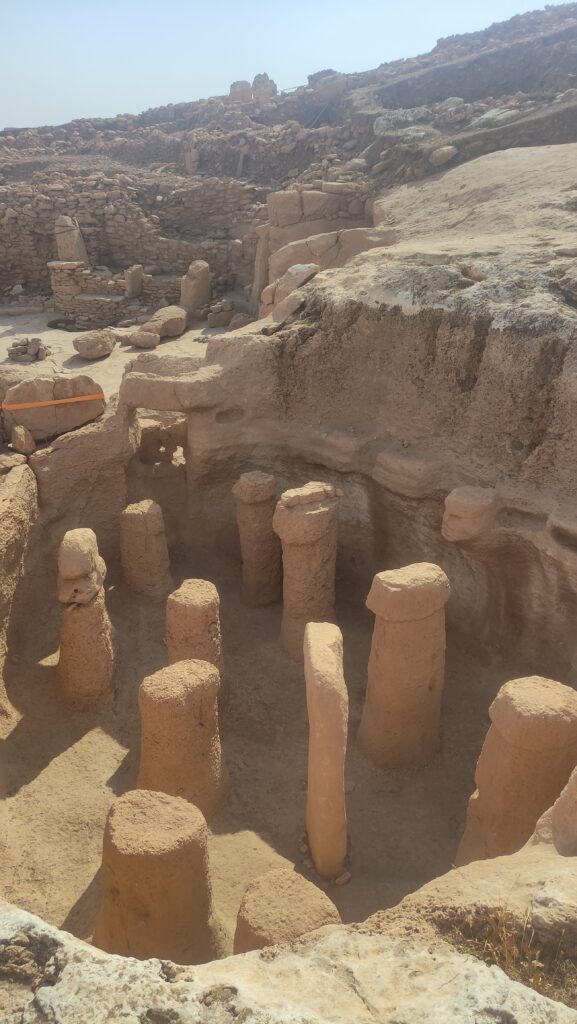
Excavations at Karahantepe are still ongoing, but the discoveries so far include:
- More than 250 T-shaped pillars
- Sculptures integrated into architecture
- Evidence of controlled spaces
- Signs of repeated human activity
Archaeologists are particularly interested in:
- Whether Karahantepe was permanently inhabited
- Or used seasonally like Göbeklitepe
Each excavation season reveals new layers, and with them, new questions.
Excavation Process and Ongoing Discoveries
Unlike many ancient sites that were discovered decades ago and fully excavated, Karahantepe is still in its early stages. This makes it one of the most exciting archaeological projects in the world today.
Excavations are being carried out seasonally, with teams carefully removing layers of soil to reveal structures that have remained untouched for over 10,000 years.
What makes this process particularly fascinating is the level of preservation. Because the site was intentionally buried in ancient times—similar to Göbeklitepe—many structures have survived in remarkable condition.
Archaeologists believe that this burial was not accidental.
- It may have been a deliberate act, possibly ritualistic in nature.
Each excavation season brings new discoveries:
- Additional pillars emerging from the ground
- New sculptural forms integrated into architecture
- Evidence of controlled and repeated human activity
And perhaps most importantly:
- New questions that challenge existing theories
How Were These Structures Built?
One of the biggest mysteries surrounding Karahantepe and the Stone Hills Project is not just why these structures were built—but how.
Without metal tools, without wheels, and without domesticated animals, Neolithic communities managed to create monumental architecture that still stands today.
Researchers suggest a multi-step process:
1. Quarrying the Stone
Nearby limestone bedrock was used as the primary material. Instead of transporting large stones from distant locations, communities often carved directly into the natural rock.
2. Shaping the Pillars
Using harder stones as tools, workers carved T-shaped pillars and sculptural elements with surprising precision.
3. Transport and Placement
Where transport was necessary, it likely involved coordinated human labor—possibly dozens of individuals working together using ropes and wooden supports.
4. Symbolic Planning
The layout of structures was not random. Many enclosures follow geometric patterns, suggesting:
- intentional design
- shared knowledge
- possibly even early forms of architectural planning
The Psychology of Early Humans
One of the most fascinating aspects of these discoveries is what they reveal about the human mind.
10,000 years ago, humans were already capable of:
- Creating symbolic representations
- Organizing large-scale construction projects
- Sharing complex belief systems
This suggests that:
- Cognitive modernity existed much earlier than previously believed
In simple terms:
- These people thought like us
Why Karahantepe Matters More Than Ever
Karahantepe is not just another archaeological site.
It represents a turning point in our understanding of human history.
For years, textbooks have taught that civilization began with:
- farming
- permanent settlements
- economic systems
But now, we are beginning to see a different picture: Civilization may have begun with ideas
Ideas about:
- life
- death
- the universe
- and our place within it
The Fertile Crescent and the Birthplace of Ideas
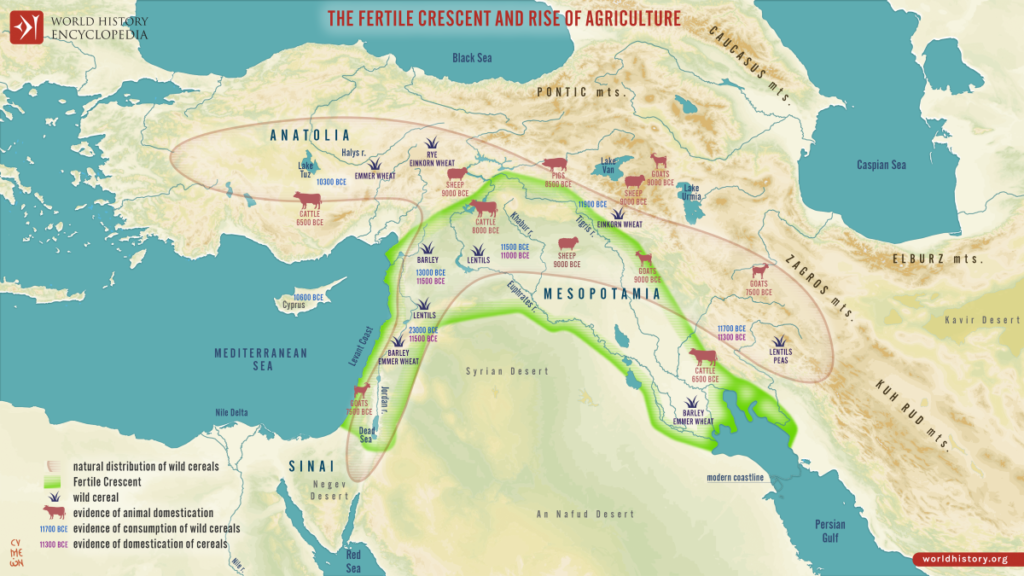
This entire region lies within what is known as the Fertile Crescent.
Traditionally, this area has been considered the birthplace of:
- Agriculture
- Writing
- Urban life
But now, with the Taş Tepeler discoveries, we must expand that definition.
- This is not just the birthplace of farming
- This is the birthplace of human thought itself
Visiting the Region Today
As someone who actively guides tours across Turkey more than 15 years, I can say this:
Visiting this region is unlike visiting any other destination in the world. If you travel to Şanlıurfa today, you are standing at the edge of one of the most important archaeological landscapes in the world.
It is safe to visit and people are very welcoming and super hospitable in this region in Turkey.
Recommended route:
- Göbeklitepe (20 min from city)
- Karahantepe (45 min drive)
- Şanlıurfa Archaeology Museum
- Harran
- Visiting these places is not just tourism.
- It is a journey into the deep past of humanity
Final Thoughts: We Are Only Beginning
Karahantepe and the Stone Hills Project are still in early stages.
What we know is already revolutionary.
What we don’t know may be even more profound.
- Civilization may not have started with cities
- It may have started with belief, imagination, and shared meaning
And in the hills of southeastern Turkey, that story is still being uncovered—stone by stone.