
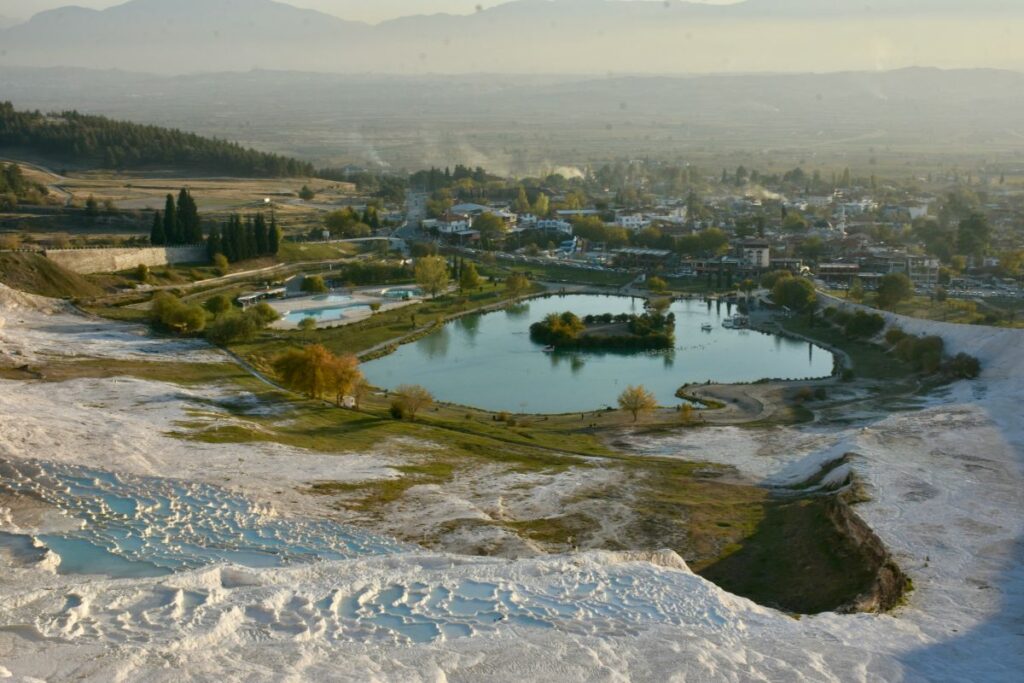
Pamukkale is one of the most iconic destinations in Turkey—but also one of the most misunderstood.
At first glance, it looks like a surreal natural wonder: cascading white terraces filled with thermal water. But beneath this landscape lies something far more complex.
Pamukkale is not just a place shaped by nature.
It is a place where geology, religion, healing, and death have been intertwined for over two thousand years.
Most travelers walk on the terraces, take a few photos, and leave.
But if you look deeper—if you explore Hierapolis, understand the thermal waters, and walk through its necropolis—you will realize something:
– This was not just a destination.
– This was a place people came to be healed… and sometimes, to die.
As a licensed Turkish tour guide, I can tell you this clearly:
If you skip the history of Hierapolis, you miss half of Pamukkale.
In this complete guide, you will discover everything you need to plan your perfect 10-day Turkey itinerary
Guided tours help you understand the history behind Pamukkale and Hierapolis
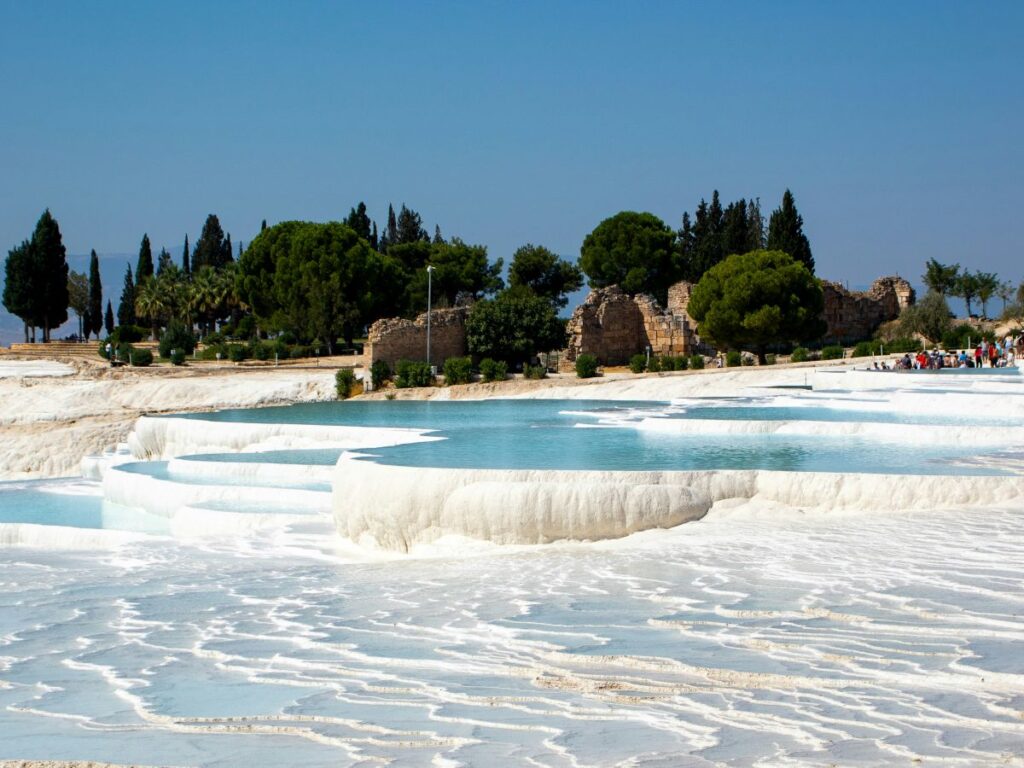
There are few landscapes in the world that look as surreal as Pamukkale.
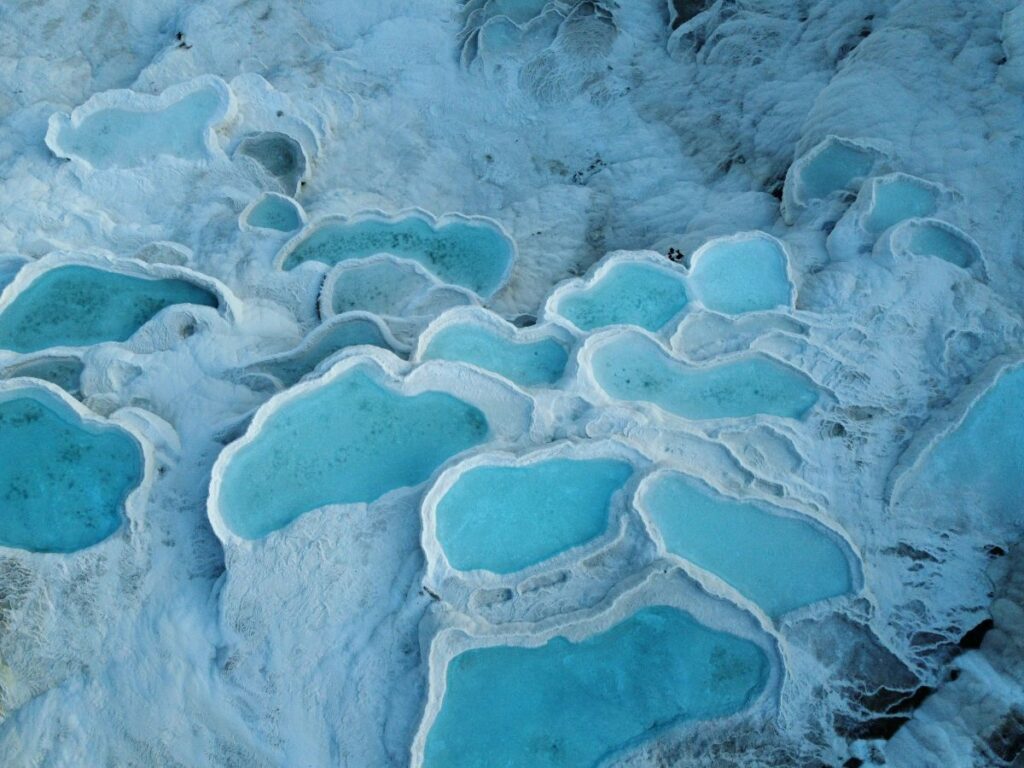
From a distance, the brilliant white terraces resemble snow-covered cliffs or frozen waterfalls cascading down the hillside. Yet what visitors see today is the result of thousands of years of mineral-rich thermal water flowing across the landscape and gradually depositing calcium carbonate.
The experience begins the moment you remove your shoes.
Walking barefoot across the warm, mineral-rich water is unlike anything most travelers have experienced before. The surface can feel smooth in some places and surprisingly textured in others, constantly reminding visitors that this is not a man-made attraction but a natural wonder still forming today.
As a guide, I often notice that travelers spend far more time here than they originally planned. What looks impressive in photographs becomes even more memorable when experienced in person.
The travertines may be Pamukkale’s most famous attraction, but they are also the reason an entire ancient city was built here nearly two thousand years ago.
Many visitors arrive for the travertines and discover that Hierapolis is equally fascinating.
Founded because of the thermal springs, Hierapolis became one of the most important spa cities of the Roman world. Wealthy citizens, merchants, pilgrims, and patients traveled here seeking both relaxation and healing.
Today, visitors can walk through streets that once bustled with activity and explore the remains of temples, baths, gates, public buildings, and marketplaces.
What makes Hierapolis particularly enjoyable is its openness. Unlike many archaeological sites where monuments are concentrated in a small area, Hierapolis spreads across a large plateau overlooking the surrounding countryside. This creates a sense of space that allows visitors to imagine the city much as it once appeared.
Walking through Hierapolis feels less like visiting ruins and more like exploring the remains of a forgotten city.
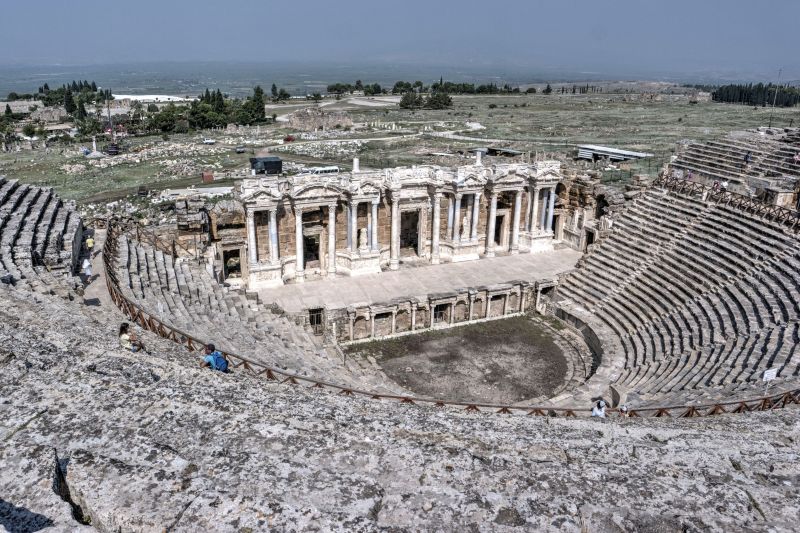
At the far end of the ancient city stands one of the finest Roman theaters in Turkey.
Unlike the more famous theater of Ephesus, the theatre of Hierapolis is often less crowded, allowing visitors to appreciate its scale and details at a more relaxed pace.
Built into the hillside, the structure once accommodated thousands of spectators who gathered for performances, ceremonies, and public events.
The upper rows offer spectacular views across the ruins and the surrounding valley.
As a guide, I often encourage visitors to spend a few extra minutes here. Looking down over the stage and across the ancient city helps reveal the true scale of Hierapolis and the importance it once held within the Roman world.
For many travelers, the theatre becomes one of the most unexpected highlights of the site.
Like Ephesus travel guide Hierapolis was not an ordinary ancient city. It was built on a paradox:
A place believed to heal… and a place that constantly reminded people of death.
Few places allow visitors to swim among ancient ruins.
Cleopatra’s Pool, also known as the Antique Pool, offers exactly that experience.
The thermal waters maintain a pleasant temperature throughout the year, while fallen Roman columns rest beneath the surface, creating one of the most unusual swimming environments in Turkey.
According to local legend, Cleopatra herself once visited these waters, although the story remains unproven.
Whether or not the legend is true, the pool has attracted visitors for generations.
Some come for relaxation, others for the unique setting, and many simply for the opportunity to experience one of Pamukkale’s most famous attractions.
After spending hours exploring Hierapolis, the warm thermal water provides a welcome break.
Most visitors focus on the travertines and the main monuments of Hierapolis.
Few realize that one of the most remarkable parts of the site lies just beyond the city walls.
The Necropolis of Hierapolis stretches for more than two kilometers and contains hundreds of tombs, sarcophagi, mausoleums, and funerary monuments. It is among the largest ancient cemeteries in the Mediterranean world.
At first glance, the sheer number of tombs can feel surprising.
Why would a city need such an enormous burial ground?
The answer lies in Hierapolis’s reputation as a healing center. For centuries, people traveled here hoping to benefit from the therapeutic thermal waters. Some recovered and returned home. Others spent their final days in the city and were buried here.
Walking through the Necropolis provides a powerful reminder that Hierapolis was not only a place of life and prosperity but also a destination where people sought hope, healing, and comfort.
For travelers interested in understanding the human side of the ancient world, this is one of the most fascinating areas of the site.
Pamukkale is not only important for Roman history.
It also holds a special place in the history of Christianity.
According to Christian tradition, the Apostle Philip was martyred in Hierapolis during the first century AD while preaching the Christian faith. His death transformed the city into an important pilgrimage destination for centuries.
Today, visitors can explore the remains of the Church and Martyrium of Saint Philip located on the hills above Hierapolis.
The setting offers beautiful views across the surrounding landscape, but the site’s significance goes far beyond its scenery.
Pilgrims traveled here from across the Byzantine world to honor one of Christianity’s earliest apostles. Recent archaeological discoveries have further strengthened the connection between Hierapolis and Saint Philip, adding another layer to the city’s remarkable history.
Whether you are interested in biblical history or simply exploring a lesser-known corner of the site, the story of Philip adds depth to any visit.
Pamukkale changes dramatically throughout the day.
During the afternoon, the terraces shine bright white beneath the sun. As evening approaches, however, the landscape begins to transform.
Soft golden light spreads across the travertines while the surrounding mountains gradually fade into shades of blue and purple. Reflections shimmer across the shallow pools, creating one of the most photogenic moments in the entire region.
Many day-trippers leave before sunset.
That is a mistake.
As a guide, I often find that visitors who stay until the evening remember this moment more vividly than anything else they experienced during the day.
The crowds become smaller, temperatures become more comfortable, and the atmosphere feels noticeably calmer.
Few places in Turkey offer a more beautiful end to the day.
Just a short drive from Pamukkale lies one of Turkey’s most underrated archaeological sites.
Laodicea was once a wealthy Roman city famous for banking, textile production, and medicine. It was also one of the Seven Churches mentioned in the Book of Revelation.
Unlike many ancient cities, Laodicea has undergone extensive restoration in recent years, allowing visitors to appreciate the scale of its streets, churches, theaters, and public buildings.
The site receives only a fraction of the visitors seen at Ephesus or Pamukkale, making exploration feel far more relaxed.
For travelers interested in biblical history or archaeology, Laodicea is one of the most rewarding day trips in western Turkey.
Travelers interested in biblical history should also consider visiting Laodicea, one of the Seven Churches of Revelation located just a short drive
from Pamukkale.
If Ephesus showcases the grandeur of a Roman metropolis and Pamukkale highlights the connection between nature and history, Aphrodisias reveals the artistic side of the ancient world.
Dedicated to Aphrodite, the goddess of love, the city became famous throughout the Roman Empire for its sculpture workshops and highly skilled craftsmen.
Today, visitors can explore one of the best-preserved stadiums in the ancient world, impressive temples, monumental gateways, and an excellent museum filled with masterpieces discovered during excavations.
Despite its significance, Aphrodisias remains relatively unknown compared to many of Turkey’s more famous archaeological sites.
For travelers willing to venture a little farther, it is often one of the most memorable ancient cities they visit.
Many travelers arrive expecting little more than a beautiful natural wonder.
They leave having experienced much more.
Pamukkale is one of the rare destinations where nature, Roman history, early Christianity, archaeology, and local culture all come together in a single landscape.
The travertines may be the most photographed attraction, but they are only one chapter of the story.
The ruins of Hierapolis reveal the ambitions of a Roman spa city. The vast Necropolis tells stories of healing and mortality. The legacy of Apostle Philip connects the site to the early Christian world. Nearby Laodicea and Aphrodisias expand the journey even further.
As a guide, I have seen countless visitors arrive expecting a quick stop and leave wishing they had planned more time.
That is perhaps the best compliment Pamukkale can receive.
It is not simply one of Turkey’s most famous landmarks.
It is one of the most fascinating places in the country to understand how nature and history have shaped one another for thousands of years.
Most visitors miss half of Pamukkale without a guided tour
As a guide, I often hear visitors say they expected to spend one or two hours in Pamukkale. Most end up staying much longer. While the travertines attract attention first, it is usually Hierapolis, the Necropolis, or the story of Saint Philip that visitors continue talking about long after they leave.
Pamukkale is far more than a natural wonder. It is a place where geology shaped belief, where thermal water created both a healing culture and a city of memory, and where the ruins of Hierapolis still preserve the complexity of ancient life.
If you approach Pamukkale with time and curiosity, it becomes much more than a famous photo spot. It becomes one of the most meaningful historical landscapes in Turkey.
Find the best-rated experiences and skip the crowds